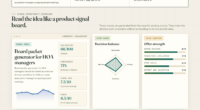
📊 Full opportunity report: China Sphere Capability Gap, Q2 2026 Update: Five Labs, Five Strategies, One Narrowing Frontier on ThorstenMeyerAI.com — validation score, market gap, and execution plan.

Prime made for students and young adults
- Fast, free delivery for dorm and study essentials
- Prime Video and Amazon Music included
- Member-only deals
TL;DR
In April 2026, five Chinese AI labs released frontier-tier models within four weeks, signaling a significant shift in China’s AI landscape. While the US still leads in top-tier capabilities, China is closing the gap on several key metrics, especially cost and independence.
In April 2026, five Chinese AI labs shipped frontier-tier models within a four-week window, marking a major milestone in China’s AI development and signaling a shift in the global capability gap.
During April 2026, Chinese labs released Z.ai’s GLM-5.1, Moonshot’s Kimi K2.6, DeepSeek’s V4 Pro and V4 Flash, and Alibaba’s Qwen 3.6 series. These launches demonstrate coordinated capability across multiple labs, with models featuring parameters from 754 billion to 1.6 trillion and employing innovative architectures like mixture-of-experts. Notably, GLM-5.1 trained entirely on Huawei Ascend silicon, marking a significant achievement in hardware independence, and is licensed under MIT, allowing broad redistribution.
While US frontier labs such as OpenAI, Anthropic, and Google still lead in top-tier capabilities and closed-benchmark performance, Chinese models now rival in cost, licensing openness, and agent orchestration scale. For example, DeepSeek’s V4 Flash costs approximately $0.14 per million tokens, vastly cheaper than Western equivalents, which has substantial implications for deployment economics. Chinese models also lead in agent orchestration and sovereign silicon validation, with models like Kimi K2.6 demonstrating autonomous coding at competitive levels.
Five labs. One narrowing frontier.
April 2026 was the most consequential month for Chinese frontier AI since DeepSeek R1 in January 2025.
Five Chinese labs shipped frontier-tier models in a four-week window. Kimi K2.6, Qwen 3.6, DeepSeek V4 Pro/Flash, GLM-5.1 (MIT, 754B params on Huawei Ascend), MiniMax M2.7. Cost gap 5–30× cheaper. Top-of-pyramid gap 10 points and narrowing. Multi-model routing is now production architecture.
Top of pyramid still Western. Mid-frontier is now Chinese.
AkitaOnRails benchmark · Rails + RubyLLM + Hotwire + Docker app from fixed prompt · 23 models scored against actual gem source. Tier A: only Kimi K2.6 (87) from China alongside Western trio (Opus 4.7, GPT-5.4 xHigh, GPT-5.5 at 96-97). Tier B is Chinese-dominated.
Different dimensions. Different leaders.
“China has caught up” and “Western frontier still ahead” are both partially right, on different dimensions. The dimensions where China leads are the ones that matter most for production deployment economics.
- Top hard-benchmark scoresOpus 4.7 + GPT-5.4 xHigh tied 97/100. 10-point gap to Chinese top.
- Generalization to unseen tasksDecontaminated benchmarks show clear edge. Where Chinese labs lag most.
- Arena Elo top tierAnthropic 1503 leads Alibaba 1449 by ~3.5%. Narrowing but real.
- Lab count: 4 frontier (Anthropic, OpenAI, Google, xAI)Stable; not growing.
- Cost per M tokensDeepSeek V4 Flash $0.14 vs Opus $15. 5–30× advantage at scale.
- Open-weight licensingGLM-5.1 under MIT. 754B params, no restrictions. Most permissive frontier model.
- Agent orchestration scaleKimi K2.6 · 300-agent swarm. Architecturally distinct, not incremental.
- Sovereign silicon validationGLM-5.1 trained entirely on Huawei Ascend. Export-restriction lever compressed.
- Lab count: 5+ frontierPlus Xiaomi, StepFun in second tier. Growing.
Five labs, five strategies, one narrowing frontier.
Different positioning, different competitive moats, different routing destinations. The Chinese frontier is no longer DeepSeek-plus-Qwen-plus-tail. It’s a five-lab ecosystem with differentiated strategies.
frontier
lineup
orchestration
+ sovereign
mid-tier
The capability gap will continue narrowing through 2026-2027. The cost gap will not.
Four assignments. By role.
Implement multi-model routing as default architecture.
Route top-of-pyramid hard workloads to Anthropic Opus 4.7 / GPT-5.5 / Gemini 3.1 Pro. Production-tier to DeepSeek V4 Flash for cost or Qwen 3.6 for breadth. Self-hosting requirements to GLM-5.1 (MIT). Single-vendor commitment that was rational 18 months ago is now structurally suboptimal.
Articulate the open-weight strategy.
Status quo (closed frontier, API-only) is ceding enterprise self-hosting market share to Chinese labs at structural rate. Either release open-weight variants below flagship tier or explicitly accept the strategic position. Either is coherent. Current ambiguity is not.
Update production-cost models.
5–30× cost gap on Chinese vs. Western pricing is structural and will compress Western lab gross margins on production-tier workloads through 2027. Anthropic’s S-1 disclosure and OpenAI’s eventual S-1 will need to address this as forward-looking risk. 2024 margin levels are not durable.
Decontaminated benchmarks remain cleanest signal.
“China has caught up” narrative is supported by some benchmarks and contradicted by others. Genuine generalization gap remains where Chinese labs lag most. Future benchmarks should explicitly target generalization to genuinely unseen tasks, where the Western frontier advantage is most durable.
Impact of April 2026 Chinese AI Model Releases
The coordinated release of five frontier-tier models in China signifies a strategic shift toward multi-vendor capability, reducing dependence on Western hardware and software. It highlights China’s progress in scaling agent orchestration, open licensing, and sovereign silicon validation, which could reshape global AI deployment and competitiveness. While top-tier capability gaps remain, especially in closed benchmarks, China’s advantages in cost and independence are increasingly influential for downstream applications and commercialization.
As an affiliate, we earn on qualifying purchases.
Recent Trends in Chinese AI Capability Development
Since early 2025, Chinese AI labs have been rapidly closing the capability gap with Western counterparts, driven by strategic investments and hardware independence initiatives. The DeepSeek R1 launch in January 2025 marked the start of a wave of frontier model development, culminating in April 2026 with five major releases. These models span architectures, parameter sizes, and licensing models, reflecting a diversified ecosystem. The US retains leadership at the top of the capability pyramid, especially in generalization and closed benchmarks, but China has made significant strides in cost efficiency, open licensing, and agent orchestration, positioning itself as a formidable competitor in practical deployment scenarios.
“Our V4 Flash model offers production-level performance at a fraction of Western costs, enabling broader deployment possibilities.”
— DeepSeek spokesperson
high-performance AI model training servers
As an affiliate, we earn on qualifying purchases.
As an affiliate, we earn on qualifying purchases.
Unconfirmed Aspects of China’s AI Capability Progress
While the capability of Chinese models is evident, independent verification of performance claims, especially for models like GLM-5.1 and Kimi K2.6, remains limited. The extent to which these models can generalize to unseen tasks at the same level as US models is still under evaluation. Additionally, the long-term impact of hardware independence and open licensing on the global AI ecosystem is uncertain, as Western models continue to lead in closed benchmarks and generalization.
As an affiliate, we earn on qualifying purchases.
Upcoming Developments in Chinese AI Ecosystem
The focus will shift toward evaluating the real-world deployment of these models, especially in enterprise and government sectors. Further independent benchmarking and performance validation are expected. Additionally, Chinese labs are likely to continue expanding their agent orchestration capabilities and hardware independence initiatives, aiming to challenge US dominance in high-end AI tasks and accelerate commercialization. Monitoring policy developments and hardware advancements will also be key to understanding the evolving landscape.
As an affiliate, we earn on qualifying purchases.
Key Questions
How do Chinese models compare to US models in performance?
Chinese models like GLM-5.1 and Kimi K2.6 are closing the gap in certain metrics, such as cost and agent orchestration, but US models still lead in top-tier capabilities and closed benchmarks. Independent validation is ongoing.
What is the significance of China’s hardware independence?
Training models entirely on Huawei Ascend silicon demonstrates China’s ability to develop sovereign hardware, reducing reliance on Western technology and enhancing strategic autonomy.
Will Chinese models replace Western models in the near future?
While Chinese models are rapidly advancing and expanding deployment capabilities, top-tier performance and closed benchmark dominance remain with US labs. The landscape is becoming more competitive across multiple dimensions.
What are the economic implications of the recent Chinese model launches?
The significantly lower costs of Chinese models like DeepSeek’s V4 Flash could enable broader adoption in commercial and enterprise sectors, potentially reshaping the economics of AI deployment globally.
What should we expect next from Chinese AI labs?
Further scaling of agent orchestration, validation of performance claims, and increased focus on deployment in practical applications are expected, alongside continued hardware independence efforts.
Source: ThorstenMeyerAI.com
Halloween Picks
halloween
As an affiliate, we earn on qualifying purchases.