📊 Full opportunity report: Best Quiet CPU Coolers for Sustained AI/Compute Loads on ThorstenMeyerAI.com — validation score, market gap, and execution plan.

Prime made for students and young adults
- Fast, free delivery for dorm and study essentials
- Prime Video and Amazon Music included
- Member-only deals
TL;DR
This article reviews the best quiet CPU coolers suited for continuous AI and compute tasks in 2026. It covers air and liquid cooling options, emphasizing reliability and noise levels for long workloads.
In 2026, the leading coolers for AI and continuous compute workloads are identified as the Noctua NH-D15 G2 for air cooling and the Arctic Liquid Freezer III Pro 360 for liquid cooling, offering reliable, quiet operation under sustained loads.
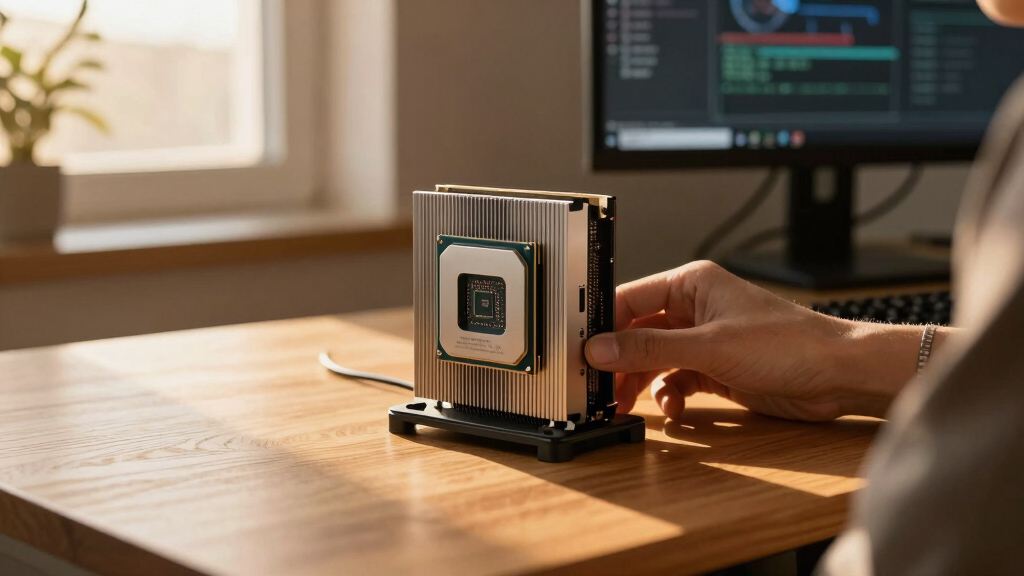
For AI and long-duration compute tasks, cooling solutions must maintain steady temperatures with minimal noise. The Noctua NH-D15 G2 remains the top choice for high-end air cooling, delivering liquid-cooling-like performance quietly and reliably. It features a dual-tower heatsink and large 140mm fans, capable of handling demanding workloads without fan noise becoming noticeable.
The Arctic Liquid Freezer III Pro 360 continues to set the standard among AIO liquid coolers, offering superior thermal capacity for high-TDP CPUs during prolonged operation. Its 360mm radiator and pump design ensure steady temperatures and low noise, making it suitable for sustained inference and training workloads. Both solutions are favored for their reliability over years of continuous use, with air coolers having no pump failure risk and AIOs providing better thermal stability under extreme loads.
Best quiet CPU coolers
for sustained AI loads.
A cooler that’s fine for gaming bursts can run out of headroom on hour three of an inference job. What matters here isn’t peak capacity — it’s holding a steady temperature at a quiet fan speed, all day. Tap your priority in Part 3 to find your pick.
- Mainstream to high-end CPU, power-capped.
- You run it 24/7 — no pump to fail, ever.
- You want zero maintenance for years.
- Quiet matters more than the last few degrees.
- Top-tier CPU under sustained all-core load.
- A big air tower won’t physically fit (multi-GPU case).
- You want maximum sustained thermal headroom.
- You’ll accept a pump as one more moving part.
Why Quiet Cooling Matters for AI and Compute Tasks
Choosing the right cooler affects the reliability, noise levels, and overall efficiency of AI workstations. Sustained workloads generate continuous heat, requiring cooling solutions that can operate quietly over long periods without thermal throttling or noise disruptions. This impacts productivity, equipment lifespan, and user comfort, especially in office or shared environments.
High-performance, quiet cooling solutions like the Noctua NH-D15 G2 and Arctic Liquid Freezer III Pro 360 are increasingly essential as AI workloads grow in complexity and duration. Proper cooling can prevent overheating, reduce maintenance, and ensure consistent performance, which is critical for AI research, development, and deployment.
As an affiliate, we earn on qualifying purchases.
Evolution of Cooling for AI Workstations in 2026
Historically, CPU cooling focused on peak performance for gaming or short bursts of activity. However, AI and continuous compute tasks demand sustained cooling solutions capable of maintaining steady temperatures over many hours or days. In recent years, larger heatsinks, slower fans, and high-capacity liquid coolers have gained prominence. The shift toward reliability and noise reduction reflects the increasing importance of AI workloads in professional settings.
Leading brands like Noctua and Arctic have refined their designs to meet these demands, with models optimized for long-term, low-noise operation. The choice between air and liquid cooling remains influenced by workload intensity, system size, and reliability considerations.
"For sustained AI workloads, thermal capacity and quiet operation are paramount. The Noctua NH-D15 G2 exemplifies this balance, providing near-liquid cooling performance without the risk of pump failure."
— Thorsten Meyer, AI cooling expert
Arctic Liquid Freezer III Pro 360 liquid CPU cooler
As an affiliate, we earn on qualifying purchases.
As an affiliate, we earn on qualifying purchases.
Remaining Questions About Long-Term Cooling Performance
While these coolers are proven effective in current testing, long-term durability under continuous, high-load AI workloads over multiple years remains less documented. The impact of dust buildup, pump wear in AIOs, and evolving CPU TDPs could influence performance and reliability, but definitive data over extended periods is still emerging.
quiet high-performance CPU cooler for AI workloads
As an affiliate, we earn on qualifying purchases.
As an affiliate, we earn on qualifying purchases.
Next Steps for AI Workstation Cooling in 2026
Manufacturers are expected to release updated models with enhanced thermal capacity and quieter operation tailored for AI workloads. Further independent testing over years will clarify long-term reliability. Users should monitor new releases and consider future upgrades as AI demands evolve, especially for systems running 24/7 in professional settings.
best low noise CPU cooler for sustained loads
As an affiliate, we earn on qualifying purchases.
As an affiliate, we earn on qualifying purchases.
Key Questions
Are air coolers sufficient for all AI workloads?
Most mainstream and high-end CPUs can be cooled effectively with top air coolers like the Noctua NH-D15 G2 for sustained workloads, but extremely high TDP CPUs may benefit from liquid cooling for better thermal stability.
What are the main advantages of liquid cooling for AI tasks?
Liquid coolers generally provide better thermal capacity and steadier temperatures during prolonged heavy workloads, which can improve performance and longevity of hardware in demanding AI applications.
How important is noise level in choosing a CPU cooler for AI workstations?
Very important. Sustained workloads require coolers that operate quietly at low fan speeds. Cooler models like the Noctua NH-D15 G2 and Dark Rock Pro 5 are designed for near-silent operation, reducing noise disruptions in office environments.
Will the cooling needs change as AI hardware advances?
Yes. As CPUs and accelerators increase in power consumption and TDP, cooling solutions will need to evolve, possibly favoring larger radiators, improved fan designs, and more efficient pump systems to maintain steady, quiet operation.
Source: ThorstenMeyerAI.com
Fall Picks
fall essentials
As an affiliate, we earn on qualifying purchases.