
📊 Full opportunity report: The Switch: You Never Owned the AI You Depend On on ThorstenMeyerAI.com — validation score, market gap, and execution plan.
TL;DR
In 2026, both government and corporate actions demonstrated that AI models are not owned but accessed, and this access can be revoked instantly. This shift impacts AI reliance and control.
On June 12, 2026, the U.S. government issued an export-control directive that forced Anthropic to disable its latest models, Fable 5 and Mythos 5, worldwide within approximately ninety minutes, citing national security concerns. This action exemplifies how AI access can be revoked instantly, regardless of the model’s deployment or user location, emphasizing a critical vulnerability in AI dependence.
The U.S. directive effectively shut down access to Anthropic’s models for all users, including foreign nationals and employees, with no prior warning or detailed explanation. This move demonstrates that government actions can serve as an immediate ‘off switch’ for AI models via export controls, which are traditionally designed for physical goods but now applied to software and AI models served over APIs.
Meanwhile, private companies are also deprecating models for economic or operational reasons. In February 2026, OpenAI retired GPT-4o and other models from ChatGPT, with API shutdowns following within weeks, often after user backlash. These deprecations, reprice adjustments, and geofencing highlight how access can be silently restricted or altered without direct government intervention, often with minimal notice.
Both scenarios reveal a core issue: users and developers rely heavily on external APIs, which are controlled by third parties. This reliance means they do not own the models they depend on; instead, they operate on a controllable ‘access’ point that can be turned off instantly, exposing a significant chokepoint in AI infrastructure.
The Switch: You Never Owned It
In 2026 a government turned off a frontier model worldwide in ~90 minutes — and a company retired a beloved one with ~2 weeks’ notice. You don’t own the model you build on. You access it. Access can be revoked.
Access is the only chokepoint that flips in an afternoon — and the version that hits you won’t be Washington, it’ll be a deprecation. Open weights you host can’t be deprecated, geofenced, repriced, or revoked. Short of that: route through a provider-agnostic gateway, keep a tested fallback, and treat every model string as a dependency that will be pulled.
Implications of Instant AI Model Disabling
This development underscores a fundamental vulnerability: reliance on external AI models via APIs means dependence on access, not ownership. Governments and companies can disable models at will, impacting everything from cyber defense to daily business operations. For users, this means that AI tools are not guaranteed assets but services subject to sudden termination, raising questions about security, sovereignty, and strategic autonomy in AI deployment.
As AI becomes embedded in critical infrastructure and decision-making processes, the ability for external actors to switch off models instantly could have severe consequences, including disruptions in security, finance, and public services. This shift challenges the narrative of AI democratization and highlights the importance of owning or controlling models directly to ensure reliability.

A Cowboy's Guide to Setting Up Your Own Garage AI Agent: Run Local AI Models on a Budget Using Apple Silicon, Ollama, MCP, RAG & More (THE COWBOY'S GUIDE SERIES)
As an affiliate, we earn on qualifying purchases.
As an affiliate, we earn on qualifying purchases.
The Evolution of AI Access Control
Historically, AI development involved training and owning models outright, but recent shifts toward API-based access have transformed the landscape. The ‘democratization’ of AI through APIs allowed rapid adoption without heavy infrastructure, but it also created a dependency on external providers. The 2026 events mark a turning point, illustrating how this dependence can be exploited or enforced by governments and corporations alike.
Earlier, companies like OpenAI began retiring older models, citing economic reasons, but these actions also serve as a reminder that model availability is subject to change. The recent government intervention, however, is unprecedented in its immediacy and scope, demonstrating that access can be revoked instantly through legal or regulatory means, regardless of user dependence.
“Export controls were never meant for software as dynamic as AI models. Applying them as an emergency off-switch is both powerful and dangerous.”
— Former AI policy advisor
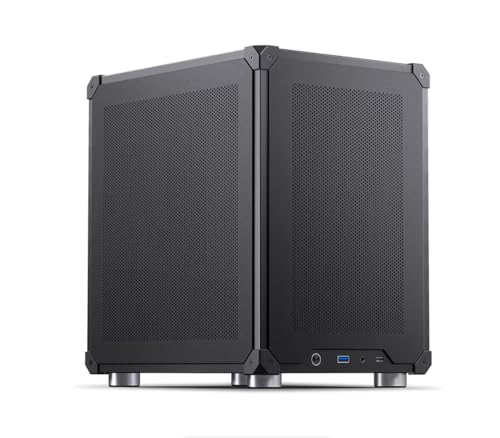
Compact Local AI Server, AI Mini PC,Serve Local LLM Models Right Out of Box, 30+ Tokens/Second, Pre-Installed Ubuntu Linux, Qwen3, LLama3, RAG, OCR, vLLM, TensorRT LLM, NVIDIA RTX 5060 Ti (16GB)
Based on Ubuntu 24.0 Linux, This local AI server is ready to Serve Local LLM Models directly out…
As an affiliate, we earn on qualifying purchases.
As an affiliate, we earn on qualifying purchases.
Unclear Long-Term Impact of Instant Disabling
It remains uncertain how widespread or frequent such instant shutdowns will become, and what legal, technical, or strategic measures users can adopt to mitigate this dependency. The full scope of government powers and private company policies in this context is still evolving, and future regulations or industry standards are not yet clear.

AI Privacy Pen Hidden Camera Detector,Portable Anti-Spy Bug Finder with Listening Device Detection,GPS Tracker Detector with RF & WiFi Signal Scanner, Privacy Protection for Hotels,Travel,Home,Office
【3-in-1 Hidden Camera Detector】 Privacy pen hidden cam;;era detector Combines lens reflection, infrared auto-scan, and RF signal detection…
As an affiliate, we earn on qualifying purchases.
As an affiliate, we earn on qualifying purchases.
Anticipated Responses and Policy Developments
Expect ongoing discussions between regulators, industry stakeholders, and security experts regarding AI access control. Potential measures include developing ownership models, creating resilient infrastructure, or establishing legal safeguards to prevent abrupt shutdowns. Additionally, companies may accelerate efforts to own or localize models to reduce reliance on external APIs, while governments may refine regulatory frameworks around AI security and sovereignty.

Enterprise AI Governance: Data Sovereignty Compliance and Audit Frameworks for Self-Hosted Intelligence Platforms Using Local Models in 2026 (Autonomous Intelligence Systems Series)
As an affiliate, we earn on qualifying purchases.
As an affiliate, we earn on qualifying purchases.
Key Questions
Can AI models be permanently owned instead of accessed?
Currently, most AI models are accessed via APIs, and true ownership—owning the trained model and infrastructure—is complex and costly. However, some organizations are exploring on-premises deployment to mitigate reliance on external access.
What legal powers does the U.S. government have to disable AI models?
The government can use export controls and national security designations to restrict or disable access to certain models, especially if deemed a security risk. These powers are evolving as AI becomes more strategically important.
How can businesses protect themselves from sudden AI shutdowns?
Businesses can consider developing in-house models, diversifying providers, or implementing hybrid solutions to reduce dependency on any single API or provider, though these options involve significant investment.
Does this mean AI is no longer a democratized technology?
While API-based access enabled rapid, widespread adoption, recent developments highlight that reliance on external access points introduces vulnerabilities, challenging the notion of AI as an entirely democratized or open technology.
Source: ThorstenMeyerAI.com