
TL;DR

Prime made for students and young adults
- Fast, free delivery for dorm and study essentials
- Prime Video and Amazon Music included
- Member-only deals
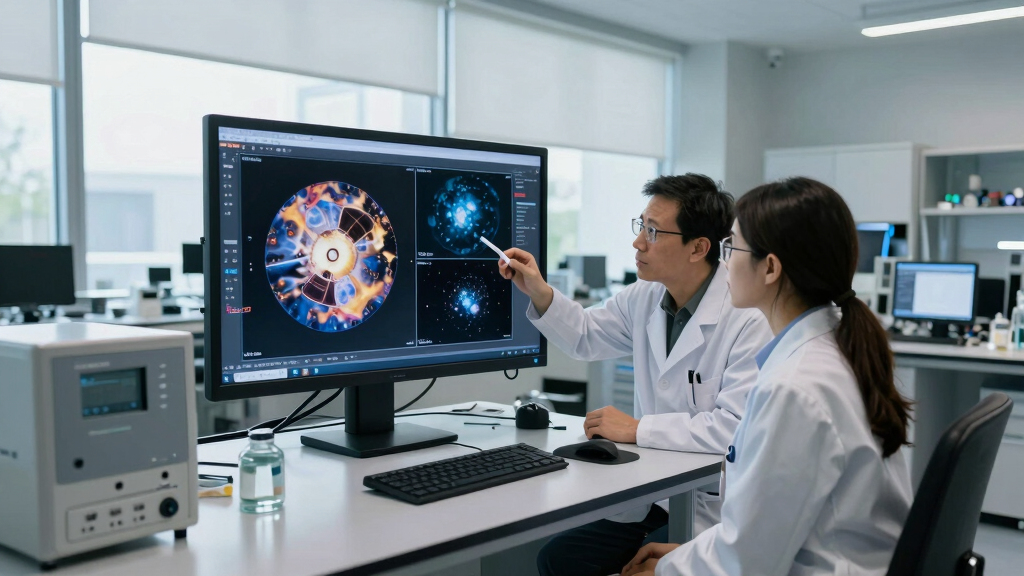
The James Webb Space Telescope has detected anomalies in the early universe that astrophysicists cannot yet explain. Researchers are analyzing these findings to understand their implications, which could alter current cosmological theories.
Scientists are investigating unexpected observations from the James Webb Space Telescope that challenge existing models of the early universe. The anomalies include unusual galaxy formations and cosmic structures that do not fit current understanding, prompting a flurry of research and analysis among astrophysicists worldwide.
Since its first images were released in July 2022, the James Webb Space Telescope (Webb) has provided unprecedented views of the universe’s earliest galaxies. However, recent data collected during its ongoing survey programs reveal features that defy current cosmological models. Notably, some distant galaxies appear to be more mature and massive than expected for their age, and certain cosmic structures show unexpected distributions of matter.
Leading researchers from NASA and collaborating institutions have confirmed these anomalies through multiple data sets. Dr. Lisa Nguyen, a cosmologist at the Space Telescope Science Institute, stated, “The characteristics of these galaxies are surprising; they seem to have formed faster and more efficiently than our models predict.” The findings are based on Webb’s infrared observations, which can peer further back in time than previous telescopes.
Implications of Webb’s Anomalies for Cosmology
The unexpected observations could have implications for our understanding of the universe’s formation and evolution. If confirmed, these anomalies might suggest that current models of galaxy formation and cosmic growth need to be revised. This could influence theories related to dark matter, dark energy, or the physics governing early cosmic history.
Scientists note that these findings are preliminary but highlight the potential for Webb to contribute to our understanding of cosmology. The anomalies also raise questions about the timeline of structure formation in the universe, possibly indicating that the universe’s development is more complex than previously thought.
Popular right now

Vitamix 5200 Professional-Grade Blender, 64 oz. Container, Black

Sony BRAVIA XR8B 65-Inch 4K OLED Google TV (K-65XR8B)

Ninja Foodi 10-Qt DualZone Air Fryer, 6-in-1, Black (DZ302)
As an affiliate, we earn on qualifying purchases.
Webb’s Breakthroughs and the Expectations for Early Universe Studies
The James Webb Space Telescope, launched in December 2021, has been regarded as a significant advancement for studying the universe’s earliest epochs. Its infrared capabilities enable it to observe galaxies formed just a few hundred million years after the Big Bang, providing insights into the universe’s infancy. Initial observations confirmed the presence of ancient galaxies, but recent anomalies have introduced new considerations.
Previous models, based on data from the Hubble Space Telescope and theoretical simulations, predicted a gradual buildup of galaxy mass and structure. Webb’s initial data largely supported these models but also indicated the presence of phenomena that warrant further investigation. As more data has been collected, these anomalies are becoming more apparent and are prompting re-evaluation of existing theories.
“The characteristics of these galaxies are surprising; they seem to have formed faster and more efficiently than our models predict.”
— Dr. Lisa Nguyen, Space Telescope Science Institute
Unconfirmed Nature and Broader Implications of the Anomalies
While the anomalies have been confirmed through multiple data sets, their full implications are still under investigation. It remains uncertain whether these features are due to observational artifacts, data processing issues, or represent new physical phenomena. Further analysis and additional data are necessary to assess their significance.
Researchers are exploring whether these anomalies could be explained by unknown properties of dark matter or if they suggest revisions to current cosmological models. The possibility that some observations result from calibration errors or technical factors has not been ruled out.
Next Steps in Analyzing and Confirming Webb’s Findings
Researchers are focusing on analyzing additional data from Webb, including follow-up observations of the anomalous galaxies and cosmic structures. Multiple teams are working to verify the findings, identify potential errors, and explore their implications.
Future publications and peer-reviewed studies are anticipated over the coming months. Webb’s mission team also plans targeted observations to test different hypotheses about the anomalies, aiming to determine whether these features indicate new physics or are artifacts of data processing.
Key Questions
What specific anomalies has Webb detected in the early universe?
Webb has observed galaxies that appear more mature and massive than expected for their age, along with unusual distributions of cosmic matter that challenge existing models of galaxy formation.
Are these findings confirmed to be signs of new physics?
Not yet. While the anomalies are confirmed through multiple data sets, their interpretation remains uncertain. Further analysis is needed to determine if they indicate new physics or are due to other factors.
How might these discoveries change our understanding of the universe?
If validated, these findings could lead to revisions in models of galaxy formation, dark matter, and cosmic evolution, potentially impacting fundamental cosmological theories.
When will scientists have more definitive answers?
Further data analysis and additional observations are underway, with more detailed results expected within the next few months.
Could these anomalies be due to errors in the data?
It is possible. Researchers are actively investigating whether calibration issues or data processing errors could explain the anomalies, but initial checks suggest they are genuine features.
Source: hn