

📊 Full opportunity report: Outcome-First Decisions: The Friction Is the Feature on ThorstenMeyerAI.com — validation score, market gap, and execution plan.
TL;DR
Outcome-First Decisions introduce a decision-making approach that emphasizes testing and evidence before committing, aiming to reduce wasted resources. This method helps build a calibrated decision track record and adapts to industry specifics, including crisis scenarios.
Outcome-First Decisions is a decision framework designed to prevent costly commitments based on vague or incomplete evidence. It enforces a disciplined process that demands a verdict, proof test, and immediate actions before moving forward, aiming to cut down on months of wasted effort and misaligned plans.
The framework is built as an open-source skill integrated into AI agents, not a standalone app. It refuses to endorse plans that lack a clear buyer, measurable score, test, or stopping line, insisting on evidence-based decisions. Every decision receives one of five verdicts: worth doing, test first, change, defer, or drop, with reasoning in plain language.
Central to its approach is the Buyer Evidence Ladder, which ranks demand claims from opinion to repeat purchase, ensuring decisions are based on reliable evidence. The tool also provides industry-specific overlays, such as SaaS or healthcare, to tailor tests and defaults, and can shift into Crisis Mode during emergencies, providing rapid, targeted actions.
The Friction Is the Feature
Most tools help you do more. This one helps you do less — and proves the “less” is the part that earns. It turns a fuzzy decision into a verdict, a one-week proof test, and three actions for today.
Missing one? It doesn’t cheer you forward — it asks the smallest question that fills the gap. When the evidence is an opinion, the answer is “test first,” not a 12-week plan. That’s $250 to learn the truth instead of three months.
A click is not a customer. A “great idea” is not revenue. The skill reads where your evidence sits and designs the cheapest test that moves you up exactly one rung.
So your next “80%” gets discounted accordingly — and the rungs you habitually skip get flagged. You’re not just deciding; you’re building a calibrated instrument out of your own track record.
- Triggered by runway, missed payroll, a lost biggest customer.
- A one-line verdict and three actions with hour-level deadlines.
- The dollar number below which the business closes.
- Scoring tables and framework talk disappear — busywork in an emergency.
- Every active bet with its evidence rung, capacity cost, and kill date.
- At most two unproven bets at once. No bet without a kill date.
- Killed capacity reallocated by name, not vaguely “freed up.”
- Numbers carry provenance — no verdict rides on a half-remembered figure.
mkdir -p ~/.claude/skills && unzip outcome-first-decisions.zip -d ~/.claude/skills/
The honest tradeoff: it will not flatter you. Thin evidence, it says so; an idea that should die, it says so plainly. If you want reassurance, it’s the wrong tool. If you want fewer, better-aimed bets and a verdict you can defend — the friction is the feature.
Independent commentary, produced with AI assistance under human editorial oversight. The views are the author’s own and may change. Outcome-First Decisions is a decision-support tool, not business, financial, legal, or investment advice; its verdicts are one input to your own judgment, not a guarantee of outcomes, and dollar figures are illustrative. Software provided under its stated open-source licence, as-is, without warranty. Product, model, and company names are trademarks of their respective owners; mention does not imply endorsement.
Why Outcome-First Decisions Reshape Business Strategy
This approach shifts the focus from lengthy planning to immediate testing, reducing the risk of investing in ideas that lack real buyer commitment. It encourages disciplined decision-making, builds a calibrated track record, and can adapt to urgent situations, potentially saving companies from catastrophic failures or wasted resources.
Executive Functioning in Kids Ages 8-12: 47 Evidence-Based Strategies to Improve Critical Thinking, Decision Making, Planning, Memory, And Self-Control
As an affiliate, we earn on qualifying purchases.
As an affiliate, we earn on qualifying purchases.
The Rise of Evidence-Driven Decision Frameworks
Traditional decision-making tools often promote doing more without necessarily improving decision quality. Outcome-First Decisions challenge this by prioritizing testing and evidence before scaling efforts. The concept aligns with recent trends toward lean startup principles and data-driven management, but emphasizes immediate, actionable verdicts and built-in learning from past decisions.
Developed recently, the framework has been tested in various industries, including SaaS, healthcare, and e-commerce, with positive feedback on its ability to reduce wasted effort and improve decision calibration over time.
“Most decisions cost a quarter, not because they’re bad ideas, but because we often spend months building without verifying real buyer commitment.”
— Thorsten Meyer, creator of the framework
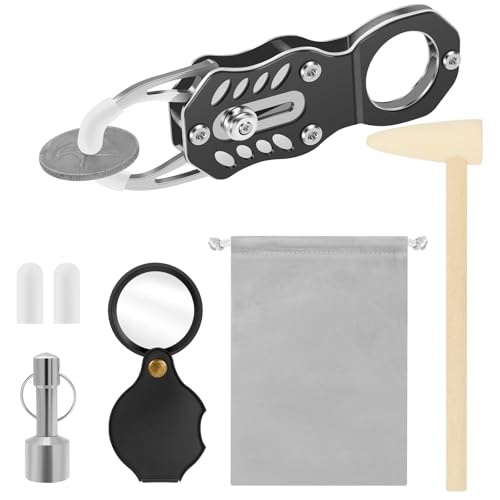
MABCIRY Pocket Changes Pinger Tester Kit, Portable Gold and Silver Changes Resonance Testing Tool with Hammer and Magnifying Glass, Pratical Verification Tool for Coin Collectors
- Precise Resonance Verification: Authenticates from 1/10 to 10 troy ounces
- All-in-One Testing Kit: Includes resonance and magnetic detection tools
- Universal Compatibility: Works with various analysis apps and systems
As an affiliate, we earn on qualifying purchases.
As an affiliate, we earn on qualifying purchases.
Unanswered Questions About Implementation and Effectiveness
It remains unclear how widely adopted the framework will become and how it performs across different organizational sizes and sectors. Long-term impacts on decision calibration and overall business success are still being studied, and some critics question whether the strict refusal rules might hinder innovation in uncertain markets.

The Project Management Scorecard: Measuring the Success of Project Management Solutions (Improving Human Performance Series)
- Condition: Used Book in Good Condition
As an affiliate, we earn on qualifying purchases.
As an affiliate, we earn on qualifying purchases.
Next Steps for Adoption and Validation
Further pilot programs and case studies are expected to evaluate the framework’s effectiveness at scale. Developers plan to refine industry overlays, improve integration with existing tools, and gather feedback from early adopters. Monitoring how organizations implement crisis mode and adapt to urgent decisions will be key to understanding its full potential.

Spreadsheet Modeling & Decision Analysis: A Practical Introduction to Business Analytics
As an affiliate, we earn on qualifying purchases.
As an affiliate, we earn on qualifying purchases.
Key Questions
How does Outcome-First Decisions differ from traditional planning tools?
It emphasizes immediate testing, evidence gathering, and clear verdicts before scaling, avoiding lengthy plans based on assumptions or opinions.
Can this framework be applied in all industries?
While designed to be adaptable, its effectiveness depends on industry-specific overlays and organizational discipline. It is currently tested mainly in SaaS, healthcare, and e-commerce sectors.
What are the main benefits of using this decision approach?
Reduced wasted effort, faster decision cycles, improved decision calibration over time, and better handling of urgent situations.
Are there any risks or downsides to this approach?
Potentially, it might hinder innovation if organizations become overly cautious or rigid, especially in highly uncertain or experimental environments.
Source: ThorstenMeyerAI.com