
📊 Full opportunity report: Sovereignty Market Goes Live: The AI Sector’s Unexpected Major Sale on ThorstenMeyerAI.com — validation score, market gap, and execution plan.

Prime made for students and young adults
- Fast, free delivery for dorm and study essentials
- Prime Video and Amazon Music included
- Member-only deals
TL;DR
Germany has officially launched its industrial AI cloud infrastructure, backed by private investment and government funding. A major AI company merger highlights regional efforts, but questions about true sovereignty remain.
Germany’s industrial AI cloud infrastructure officially went live on February 4, 2026, marking a major milestone in the country’s efforts to develop AI sovereignty. The infrastructure, backed by nearly 10,000 NVIDIA GPUs, aims to boost domestic AI capabilities amid rising regional investment and policy support, making it a key development for European AI independence.
The German Telekom and NVIDIA partnership launched the Industrial AI Cloud in Munich, featuring approximately 0.5 ExaFLOPS of computing power. This infrastructure represents a 50% increase in German AI processing capacity, fully financed by private funds. Major companies such as SAP, Siemens, Mercedes-Benz, BMW, and Perplexity are among the initial clients, demonstrating strong market demand.
Simultaneously, the Schwarz Group is expanding its StackIT platform, with reported investments of around 11 billion euros and plans for up to 100,000 GPUs in the future. The German government announced a €805 million fund to support a European AI-Gigafactory, with a consortium including SAP, Telekom, Siemens, IONOS, and Schwarz Group preparing a joint EU bid. Additionally, the SPRIND agency launched the Next Frontier AI initiative with €125 million for AI labs, while Brussels’ Cloud and AI Development Act emphasizes reducing dependency on non-European cloud providers.
Market analysts estimate the global AI services market at over $1 trillion annually, with European sovereign cloud spending projected to reach $12.6 billion in 2026, up 83% from the previous year. Public procurement reflects this demand, evidenced by the Federal Office for the Protection of the Constitution choosing French firm ChapsVision over Palantir, and the Bundeswehr excluding Palantir from cloud projects.
Der Souveränitäts-Markt ist real geworden —
und hat im selben Quartal seinen Champion verkauft
Tagesaktuell verifizierter Marktpuls · Geld, GPUs und eine Ironie
Das Geld ist da — drei Belege
Telekom + NVIDIA in München: ~0,5 ExaFLOPS, +50 % deutsche KI-Rechenleistung, privat finanziert. Schwarz-Gruppe: 11 Mrd. €, perspektivisch 100.000 GPUs.
805 Mio. € Gigafactory-Förderung; Konsortium SAP, Telekom, Siemens, IONOS, Schwarz. SPRIND: 125 Mio. € für eigene KI-Labore.
BfV wählt ChapsVision statt Palantir; Bundeswehr schließt Palantir aus der Cloud aus. Gartner: EU-Sovereign-Cloud +83 % auf 12,6 Mrd. $.
DIE IRONIE · 24. APRIL 2026
Mitten im Souveränitäts-Frühling schließt sich Aleph Alpha mit Kanadas Cohere zusammen — die Schwarz-Gruppe finanziert als Lead-Investor mit 600 Mio. $.
Freundliche Lesart: Konsolidierung unter Gleichgesinnten; 20 Mrd. $ Verbund schlägt unterfinanziertes Startup. Unbequeme Lesart: Deutschlands Modellschicht wird künftig in Toronto mitentschieden — und deutsches Kapital finanziert lieber fremde Champions als eigene.
Souveränität ist eine Schichtenfrage
Das Signal: Die souveräne Betriebsschicht ist jetzt kaufbar und bezahlbar — die Modellschicht bleibt Import. Wer Souveränitätsstrategien baut, sollte sie auf die Schichten bauen, die Europa tatsächlich kontrolliert.
Implications of Germany’s AI Infrastructure and Market Moves
This development signifies a major step toward European AI sovereignty, with Germany establishing domestic infrastructure and attracting significant private and public investments. However, the continued reliance on American-made chips raises questions about the true level of sovereignty, as critical components like silicon remain outside European control. The merger of Aleph Alpha and Cohere illustrates regional consolidation but also highlights the ongoing challenge of developing independent model providers.
For industry players and policymakers, the key takeaway is that control over infrastructure and operations is now feasible and affordable, but the model layer remains dependent on foreign technology. This underscores the importance of focusing sovereignty efforts on the layers that Europe can truly influence.
As an affiliate, we earn on qualifying purchases.
Background on Germany’s AI Sovereignty Efforts
For years, Germany and Europe have discussed digital sovereignty in AI, but tangible progress was limited until 2026. The launch of the Industrial AI Cloud and the allocation of government funds mark a shift from rhetoric to action. Major companies like Deutsche Telekom and NVIDIA have invested heavily, with infrastructure now operational in Munich, featuring a significant increase in processing capacity.
The merger of Aleph Alpha with Cohere reflects regional efforts to build competitive, sovereign AI models, though it also raises concerns about dependence on North American and Canadian technology hubs. The ongoing development of EU regulations and funding programs further underscores Europe’s strategic push to establish a resilient AI ecosystem.
“Germany’s AI infrastructure launch marks a decisive move toward sovereignty, but reliance on American silicon persists.”
— an anonymous researcher
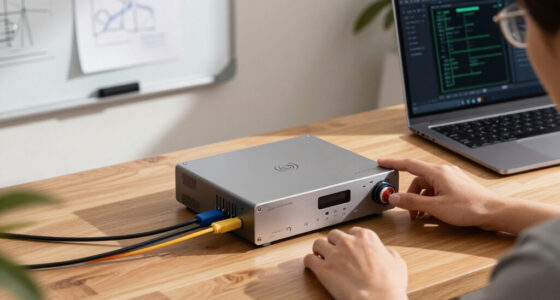
Industrial AI cloud computing hardware
As an affiliate, we earn on qualifying purchases.
As an affiliate, we earn on qualifying purchases.
Remaining Questions About True AI Sovereignty
It is still unclear how much control Europe will have over the entire AI stack, especially the model layer. While infrastructure and operations are now domestically available, the silicon supply chain and model development remain heavily dependent on non-European sources. The long-term sustainability of this sovereignty effort depends on whether Europe can develop its own chips and models at scale.
Additionally, the impact of recent mergers and investments on regional independence and competitive strength is still unfolding, with some experts questioning whether these moves truly reduce reliance on foreign technology.
European AI infrastructure servers
As an affiliate, we earn on qualifying purchases.
As an affiliate, we earn on qualifying purchases.
Upcoming Milestones in Europe’s AI Sovereignty Roadmap
In the coming months, focus will be on finalizing the European Gigafactory bid, with the consortium’s application expected to be submitted to the EU. The deployment of the AI-Gigafactory and its operational readiness will be key indicators of progress. Meanwhile, regulatory developments, including the implementation of the EU AI Act, will shape compliance and operational standards.
Market dynamics will also be influenced by ongoing private investments and mergers, which aim to bolster regional capabilities. The success of these initiatives will determine whether Europe can achieve meaningful sovereignty in AI, or remain reliant on external technology for critical components.
High-performance GPUs for AI research
As an affiliate, we earn on qualifying purchases.
As an affiliate, we earn on qualifying purchases.
Key Questions
What does Germany’s AI infrastructure launch mean for European AI sovereignty?
The launch signifies a major step in establishing domestic AI infrastructure, but questions remain about control over the entire AI stack, especially hardware components like chips and models.
Are European companies developing their own AI models?
While regional mergers like Aleph Alpha and Cohere aim to build independent models, much of the model development still depends on North American and Canadian technology hubs.
How dependent is Germany on foreign technology for its AI sovereignty?
Germany’s infrastructure is built with American GPUs, and critical silicon remains outside European control, making sovereignty a layered and ongoing challenge.
What are the next steps for Europe’s AI sovereignty efforts?
Key milestones include finalizing the Gigafactory bid, deploying operational infrastructure, and implementing regulatory frameworks to ensure compliance and independence.
Source: ThorstenMeyerAI.com
Fall Picks
fall essentials
As an affiliate, we earn on qualifying purchases.