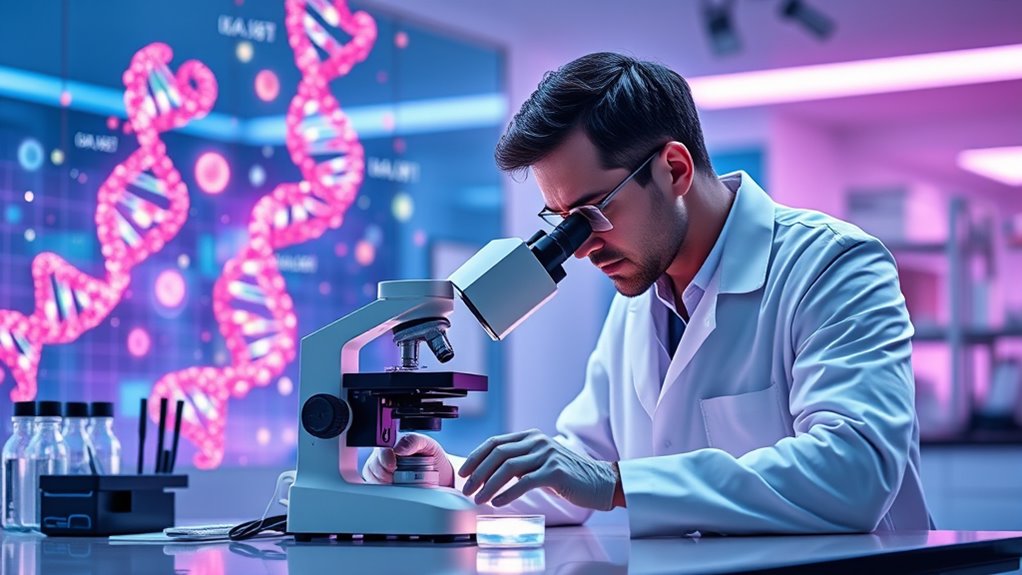

By 2025, CRISPR gene editing has become highly precise and more accessible, transforming medicine, agriculture, and biological research. You can now explore treatments for genetic disorders, improve crop resilience, and even target infectious diseases more effectively. Yet, ethical debates surrounding human germline editing and ecological impacts continue to fuel discussions. If you’re curious about how these developments shape our future, there’s much more to discover in this evolving field.

Prime made for students and young adults
- Fast, free delivery for dorm and study essentials
- Prime Video and Amazon Music included
- Member-only deals
Key Takeaways
- CRISPR technology has become highly precise, efficient, and accessible, enabling advanced gene editing in medicine and agriculture.
- Groundbreaking treatments for genetic disorders and infectious diseases are increasingly feasible using CRISPR-based therapies.
- Ethical debates continue over germline editing, eugenics, and regulation, influencing policy development worldwide.
- Technological improvements, such as enhanced delivery methods and AI integration, have significantly improved safety and reliability.
- Society faces ongoing challenges balancing innovation with ethical responsibility, ecological risks, and long-term implications.
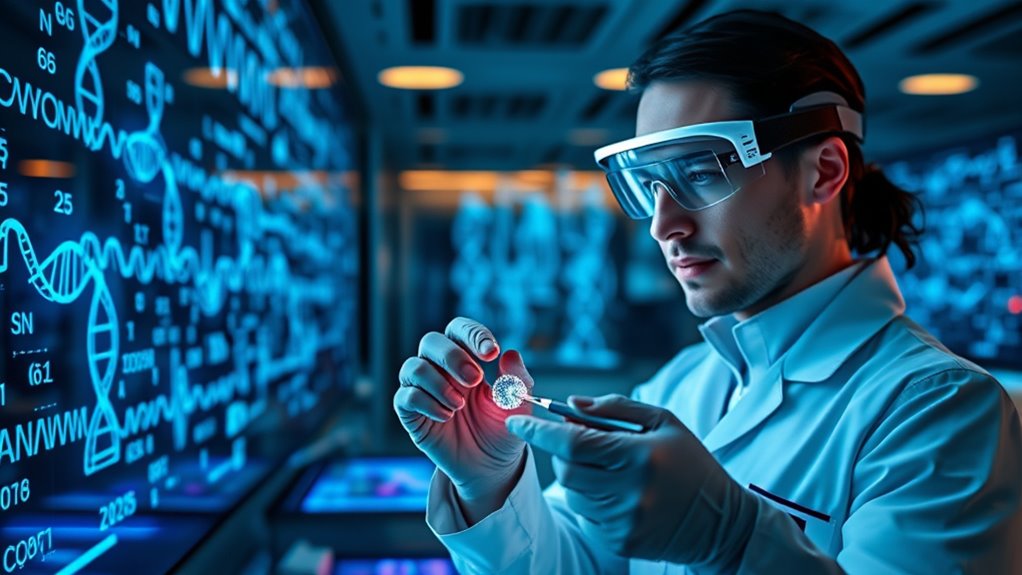
Have you ever wondered how scientists can precisely alter DNA? It’s a fascinating process made possible by CRISPR gene editing, a technology that has revolutionized genetics over the past decade. In 2025, we’re witnessing unprecedented advancements, but these come with important ethical concerns that society continues to grapple with. The core of CRISPR’s power lies in its ability to target specific genetic sequences and make precise cuts, enabling researchers to edit genes with remarkable accuracy. This precision is a result of continuous technological advancements, which have made CRISPR more efficient, affordable, and accessible. Scientists now can edit genes in ways that weren’t possible before, paving the way for groundbreaking treatments for genetic disorders, improved crop resilience, and even potential solutions to infectious diseases. These innovations, however, raise questions about the boundaries of human intervention and what it means to alter life at its most fundamental level.
The rapid progress in CRISPR technology has led to ethical debates that are as intense as the scientific breakthroughs. For example, editing human embryos, germline modifications, and the potential for “designer babies” spark fears about eugenics and inequality. Many worry that this technology could be misused or lead to unintended consequences, such as off-target effects that introduce new health risks. As a result, scientists, policymakers, and ethicists are working together to establish guidelines and regulations that balance innovation with responsibility. Efforts are underway to ensure that CRISPR applications in humans are safe, ethical, and equitable, but consensus remains elusive. The debate also extends to ecological concerns, such as releasing gene-edited organisms into the environment, which could disrupt ecosystems in unpredictable ways.
Meanwhile, technological advancements continue to push the boundaries of what’s possible. Improvements in delivery methods, like viral vectors and nanoparticles, enhance the ability to target specific tissues or cells. Developments in understanding DNA repair mechanisms help reduce off-target effects, making gene edits safer and more reliable. Additionally, the integration of AI and machine learning speeds up the design of guide RNAs, further refining the precision of CRISPR edits. The combination of these technological strides helps to address some of the ethical issues by making gene editing safer and more controlled. Furthermore, ongoing research into DNA repair mechanisms and delivery techniques continues to improve the safety and effectiveness of gene editing. Nonetheless, as we stand in 2025, it’s clear that CRISPR gene editing remains a powerful tool with enormous potential—and equally significant responsibilities. How society chooses to harness this technology will shape the future of medicine, agriculture, and possibly even human evolution itself.
As an affiliate, we earn on qualifying purchases.
Frequently Asked Questions
What Are the Latest Breakthroughs in CRISPR Technology Since 2023?
Since 2023, groundbreaking advances have transformed CRISPR technology. You see more precise gene therapy techniques targeting genetic disorders with fewer off-target effects, making treatments safer and more effective. In crop enhancement, new CRISPR methods boost resistance and yield, helping farmers adapt to climate change. These breakthroughs drive innovation, bringing promising therapies and sustainable agriculture closer to reality, shaping the future of medicine and food security.
How Is CRISPR Being Used to Treat Rare Genetic Diseases?
Imagine CRISPR as a master craftsman, tailoring personalized therapies to mend rare disease targets. You see it slicing through faulty genes like a laser, correcting mutations with precision. Researchers harness CRISPR to release potential cures, transforming complex genetic puzzles into clearer solutions. This innovative tool brings hope, as it enables treatments specifically designed for individual needs, opening new horizons in tackling rare genetic diseases and improving lives worldwide.
What Are the Ethical Debates Surrounding Human Germline Editing?
You’re likely aware that ethical debates around human germline editing focus on designer babies and genetic inequality. Critics argue that editing genes for non-therapeutic reasons risks creating social divides and unfair advantages. You might worry that it could lead to a future where only the wealthy can afford genetically enhanced children, deepening existing inequalities. Balancing scientific progress with moral responsibility remains a central challenge in this ongoing ethical conversation.
Are There New CRISPR Variants With Fewer Off-Target Effects?
Imagine a world where CRISPR is so precise, it’s practically a laser pointer, not a blunderbuss. Today, new CRISPR variants focus on off-target minimization and precision enhancement, reducing unintended edits. Researchers roll out these refined tools to make gene editing safer, ensuring you don’t accidentally turn your pet goldfish into a Nobel laureate. While not perfect, these advances promise a future of smarter, more accurate gene therapy.
How Is CRISPR Regulation Evolving Worldwide in 2025?
You see that worldwide, CRISPR regulation is becoming more coordinated as countries adopt stricter international policies and biosafety protocols. Governments now prioritize safety, ethical considerations, and transparency, leading to tighter oversight of gene editing research and applications. You’re encouraged to stay informed on evolving regulations, as global collaboration increases to make certain of responsible use of CRISPR technology, balancing innovation with public health and ethical standards in 2025.
As an affiliate, we earn on qualifying purchases.
Conclusion
As you look ahead, it’s clear that CRISPR’s journey is still unfolding, quietly shaping the future in subtle ways. While the path may have its gentle bends and soft turns, each step brings new possibilities that could gently redefine what’s possible. Remember, even the most delicate changes can ripple outward, reminding us that progress often happens in quiet moments. Embrace the journey, knowing that tomorrow’s breakthroughs might just be waiting in the wings.
As an affiliate, we earn on qualifying purchases.
As an affiliate, we earn on qualifying purchases.
Fall Picks
fall essentials
As an affiliate, we earn on qualifying purchases.