Interactive science experiment kits turn kitchen tables into working labs, but the right choice depends heavily on your child’s age, attention span, and how much supervision you’re willing to give. After comparing 13 popular options, the National Geographic Amazing Chemistry Set with 100+ Experiments stands out as the best overall pick for its polished instruction quality and genuinely dramatic reactions that keep kids coming back. For preschoolers, the Doctor Jupiter My First Science Kit (Ages 4+) is the easiest entry point, while the UNGlinga 300+ Experiments kit delivers the most raw value per dollar for families who want months of activities. The main tradeoff in this category: kits with the most experiments often rely on household ingredients, while premium sets offer fewer but more impressive, guided demonstrations. Read on for the full breakdown and which kit fits your family best.

Prime made for students and young adults
- Fast, free delivery for dorm and study essentials
- Prime Video and Amazon Music included
- Member-only deals
Key Takeaways
- National Geographic sets won on instruction quality — their manuals and video guides make independent play realistic for 8-12 year olds, which cheaper high-count kits rarely achieve.
- Experiment count is misleading: the UNGlinga 300+ kit counts variations as separate experiments, so its real advantage is variety, not depth — a key reason it ranks as best value rather than best overall.
- Every kit aimed at ages 4+ (both Doctor Jupiter My First kits and the Girls’ First edition) uses kitchen-safe chemistry, meaning zero hazard but also less visual ‘wow’ than the 8+ chemistry sets.
- The Vatos Space Circuit Kit is the only electronics-focused option in the lineup — families wanting circuits rather than chemistry should choose it and skip the chemistry sets entirely.
- Magic-themed kits (National Geographic Magic Chemistry and Science Magic) trade scientific depth for performance appeal, making them ideal for kids who resist traditional learning but a weak pick for serious STEM interest.
| National Geographic Magic Chemistry Set with 10 Tricks for Kids Ages 8-12 |  | Best for Reluctant Scientists | Ages: 8-12 | Number of Experiments: 10 magic tricks | Includes: Tools, magic wand, gloves, experiment guide | VIEW LATEST PRICE | See Our Full Breakdown |
| Doctor Jupiter My First Science Experiments Kit for Kids Ages 4+ |  | Best for Preschoolers | Number of Experiments: 50+ | Recommended Age: 4+ | Safety Standards: ASTM F963-17 compliant | VIEW LATEST PRICE | See Our Full Breakdown |
| National Geographic Chemistry Set with 45 Experiments for Kids 8-12 |  | Best Overall | Brand: National Geographic | Age Range: 8 years and up | Number of Experiments: 45 | VIEW LATEST PRICE | See Our Full Breakdown |
| Doctor Jupiter Ultimate Science Experiments Kit for Kids Ages 8+ |  | Best Value | Brand: Doctor Jupiter | Age Range: 8+ | Number of Experiments: 50+ | VIEW LATEST PRICE | See Our Full Breakdown |
| UNGILINGA 40+ Experiments Science Kit for Kids Chemistry Set STEM Toy |  | Best for Craft-Oriented Kids | Number of Experiments: Over 40 | Suitable For: Kids (recommended with adult supervision for younger children) | Includes: All necessary materials except common household items | VIEW LATEST PRICE | See Our Full Breakdown |
| Doctor Jupiter My First Science Experiments Kit for Kids Ages 4+ |  | Best for Preschool Scientists | Number of Experiments: 100+ | Recommended Age: 4 years and up | Safety Standards: ASTM F963-17 | VIEW LATEST PRICE | See Our Full Breakdown |
| UNGlinga 150 Experiments Science Kit for Kids – Chemistry and STEM Toys |  | Best Value for Experiment Count | Number of Experiments: 150 | Age Range: 8 to 60 years (96-720 months) | Disciplines Covered: Chemistry, physics, earth science | VIEW LATEST PRICE | See Our Full Breakdown |
| Vatos Space Science Circuit Kits for Kids – 31PCS STEM Electronics Exploration Kit |  | Best for Electronics and Circuits | Number of Projects: 100+ | Components: 31 pieces | Material: Child-safe ABS | VIEW LATEST PRICE | See Our Full Breakdown |
| UNGILINGA 300+ Experiments Science Kit for Kids – STEM Chemistry Set with Lab Manual |  | Best Long-Term Deep-Dive Set | Number of Experiments: 300+ | Recommended Age: 8 years and up | Included Components: Experiments kit with lab tools and manual | VIEW LATEST PRICE | See Our Full Breakdown |
| Doctor Jupiter Girls’ First Science Experiments Kit for Kids Ages 4+ | 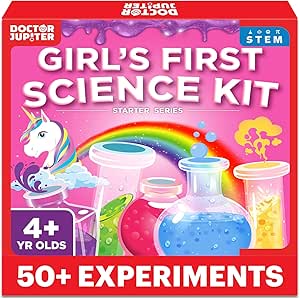 | Best Themed Starter Kit | Number of Experiments: 50+ | Recommended Age: 48 months and up | Safety Standards: ASTM F963-17 | VIEW LATEST PRICE | See Our Full Breakdown |
| National Geographic Science Magic Kit for Kids with 100+ Experiments and Tricks |  | Best for Showmanship | Experiments and Tricks: 100+ | Brand: National Geographic | Focus: Chemistry and STEM through magic tricks | VIEW LATEST PRICE | See Our Full Breakdown |
| Science Kit for Kids – 80 Science Lab Experiments with Scientist Role Play |  | Best Value Starter Lab | Number of Experiments: 80 | Age Range: 6+ years | Focus: Hands-on chemistry and STEM role play | VIEW LATEST PRICE | See Our Full Breakdown |
| National Geographic Amazing Chemistry Set with 100+ Experiments for Ages 8-12 |  | Best Overall | Brand: Blue Marble (National Geographic) | Age Range: 8 years and up | Number of Experiments: 100+ plus 85 bonus household-item experiments | VIEW LATEST PRICE | See Our Full Breakdown |
| interactive science experiment kit | Number of Experiments | Brand | Supervision |
|---|---|---|---|
| National Geographic Magic Chem | 10 magic tricks | National Geographic | Adult supervision recommended |
| Doctor Jupiter My First Scienc | 50+ | Doctor Jupiter | Adult participation expected |
| National Geographic Chemistry | 45 | National Geographic | — |
| Doctor Jupiter Ultimate Scienc | 50+ | Doctor Jupiter | — |
| UNGILINGA 40+ Experiments Scie | Over 40 | UNGILINGA | — |
| Doctor Jupiter My First Scienc | 100+ | — | Adult supervision required for younger children |
| UNGlinga 150 Experiments Scien | 150 | — | Required for younger children |
| Vatos Space Science Circuit Ki | — | — | — |
| UNGILINGA 300+ Experiments Sci | 300+ | — | Adult supervision for younger children |
| Doctor Jupiter Girls’ First Sc | 50+ | — | Adult supervision required for some experiments |
| National Geographic Science Ma | — | National Geographic | — |
| Science Kit for Kids | 80 | — | Adult supervision required |
| National Geographic Amazing Ch | 100+ plus 85 bonus household-item experiments | Blue Marble (National Geographic) | — |
More Details on Our Top Picks
National Geographic Magic Chemistry Set with 10 Tricks for Kids Ages 8-12
Not every kid greets the word “chemistry” with enthusiasm, and this kit is built for exactly that child. Instead of leading with equations, it leads with magic tricks — a floating coin, color-changing water — and reveals the science behind the spectacle afterward. It works as a gateway: a kid who resists the Doctor Jupiter My First Science Kit because it feels like homework will happily pick up a wand. The tradeoff is depth. With only 10 experiments, it runs out of road quickly compared to the National Geographic 45-experiment set, and the emphasis on performance over process means the science content is lighter. An adult needs to be on hand for most tricks, too, since the “reveal” depends on getting the chemistry right.
Pros:- Magic framing genuinely hooks science-averse kids
- Comes with all tools plus wand and gloves for the performance
- Illustrated guide explains the real chemistry behind each trick
- Backed by National Geographic’s educational reputation
Cons:- Only 10 experiments — the smallest count in this lineup
- Science education is secondary to the trick presentation
Best for: Parents of kids aged 8-12 who show little interest in science and need a fun-first entry point
Not ideal for: Families wanting long-term value — 10 tricks will be exhausted in a weekend, unlike 40-50 experiment kits
- Ages:8-12
- Number of Experiments:10 magic tricks
- Includes:Tools, magic wand, gloves, experiment guide
- Brand:National Geographic
- Format:Magic performance with science explanations
- Supervision:Adult supervision recommended
Our verdict“Buy this as a confidence-builder for a science skeptic, not as a long-term STEM curriculum.”
Doctor Jupiter My First Science Experiments Kit for Kids Ages 4+
Most kits in this category start at age 8, which leaves preschool parents scrambling. This one is designed specifically for the 4-and-up crowd, with 50+ experiments simplified enough for small hands and short attention spans. Where the Doctor Jupiter Ultimate Science Kit (8+) leans into chemical reactions like volcanoes and crystals, this version keeps activities mess-tolerant and concept-basic, which is the right call for the age group. Its ASTM F963-17 compliance also matters more here than with older-kid kits, since toddlers put things near their mouths. The honest tradeoff: a 10-year-old will find these experiments babyish within minutes, so don’t buy it as a family-wide kit. Parents should also expect to run most activities themselves — this is guided play, not independent exploration.
Pros:- One of the few genuinely preschool-friendly science kits available
- 50+ experiments with illustrated, low-reading instructions
- Meets ASTM F963-17 toy safety standards
- Encourages screen-free, parent-child bonding time
Cons:- Requires near-constant adult involvement
- Content is too simple for kids above early elementary age
Best for: Parents of 4-7 year olds who want an age-appropriate first science kit, not a hand-me-down from an older sibling
Not ideal for: Kids 8 and up — the simplified experiments won’t hold their interest compared to chemistry-focused sets
- Number of Experiments:50+
- Recommended Age:4+
- Safety Standards:ASTM F963-17 compliant
- Brand:Doctor Jupiter
- Instruction Style:Illustrated, low-reading-level guide
- Supervision:Adult participation expected
Our verdict“The right pick if your scientist still has baby teeth; skip it once they can read a chapter book.”
National Geographic Chemistry Set with 45 Experiments for Kids 8-12
This is the kit I’d point most families toward first. It hits the sweet spot between experiment count (45), brand credibility, and age-appropriate depth: volcano eruptions, geysers, and real chemical reactions that feel like actual chemistry rather than glorified crafts. Compared to the Doctor Jupiter Ultimate Kit, it offers fewer total experiments but stronger educational framing and the backing of an award-winning brand with real customer support — which matters when a kit arrives missing a component. Compared to the Magic Chemistry Set from the same brand, it trades flashy tricks for a broader, more repeatable science foundation. The compromises are familiar ones for this category: some activities need vinegar, baking soda, or other household items you may not have stocked, and younger 8-year-olds will need a parent managing the messier reactions.
Pros:- 45 diverse experiments spanning multiple chemistry concepts
- Award-winning product from a trusted educational brand
- Illustrated, kid-friendly instructions that build toward independent play
- Strong customer support and quality standards
Cons:- Some experiments require additional household ingredients
- Genuinely suited only to the 8-12 range
Best for: Families with kids 8-12 who want a well-rounded, reputable chemistry set as their main science kit
Not ideal for: Parents wanting a zero-prep kit — several experiments require scavenging household items first
- Brand:National Geographic
- Age Range:8 years and up
- Number of Experiments:45
- Educational Focus:STEM / Chemistry
- Model Number:NGMEGACHEMX
- Manufacturer:JMW Sales, Inc.
- Warranty:Backed by quality standards and customer support
Our verdict“The safest all-around choice for a school-age kid’s first serious chemistry set.”
Doctor Jupiter Ultimate Science Experiments Kit for Kids Ages 8+
Ranked #4 in Educational Science Kits with a 4.6/5 rating, this is the volume play of the lineup: 50+ experiments with real chemical reagents — baking soda, citric acid, Epsom salt, crystal powder, glow powder — at a price that undercuts the National Geographic 45-experiment set while offering more activities. The glow powder and crystal-growing components give it a distinct flavor, skewing toward visually dramatic results that keep kids coming back. The tradeoff for the value is polish: the instruction manuals, while clear, don’t match National Geographic’s editorial quality, and the brand’s customer support track record is thinner. Like most budget-leaning kits, some experiments quietly assume you have vinegar or dish soap on hand. It’s also strictly an 8+ product — the My First Science Kit (4+) from the same brand is the better pick for younger siblings.
Pros:- 50+ experiments at a lower cost per activity than name-brand rivals
- Includes genuine reagents like crystal and glow powder
- Clear illustrated manuals accessible to a range of reading levels
- Highly rated (4.6/5) with strong category ranking
Cons:- Some experiments require supplemental household ingredients
- Less polished instructions and support than National Geographic
Best for: Budget-conscious buyers who want maximum experiments per dollar for a kid 8 or older
Not ideal for: Buyers who prioritize brand pedigree and premium printed materials over sheer experiment count
- Brand:Doctor Jupiter
- Age Range:8+
- Number of Experiments:50+
- Included Components:Baking soda, citric acid, Epsom salt, crystal powder, glow powder
- Model Number:USK Starter
- Customer Rating:4.6/5
- Best Sellers Rank:#656 in Toys & Games, #4 in Educational Science Kits
Our verdict“The most experiments for the money in this batch — pick it when budget matters more than brand cachet.”
UNGILINGA 40+ Experiments Science Kit for Kids Chemistry Set STEM Toy
Where the National Geographic 45-experiment set emphasizes reactions, this kit leans toward build-and-keep projects — bouncy balls, lava lamps — that produce a tangible object at the end. That makes it the right fit for kids who like making things more than watching fizzing reactions, and it sits at a lower price point than both the National Geographic and Doctor Jupiter flagship kits. The catch is depth: a lava lamp is a wonderful demonstration, but there’s less chemistry vocabulary and structured learning here than in the Doctor Jupiter Ultimate Kit, which includes actual reagents and more explicit STEM framing. Also be aware the “all materials included” claim has an asterisk — household items are needed for certain experiments, so check the list before promising a rainy afternoon activity. Brand recognition is thin compared to the bigger names, so support options are limited.
Pros:- Over 40 experiments with a creative, project-based focus
- Most materials included in the box
- Child-friendly instruction format
- Typically priced below name-brand competitors
Cons:- Certain experiments still require household items
- Less robust science education and brand support than established rivals
Best for: Kids who prefer hands-on craft projects with a keepsake result over pure chemistry demonstrations
Not ideal for: Parents focused on rigorous STEM education — the science explanations are thinner than National Geographic’s
- Number of Experiments:Over 40
- Suitable For:Kids (recommended with adult supervision for younger children)
- Includes:All necessary materials except common household items
- Educational Focus:STEM, Chemistry, Hands-On Learning
- Project Types:Bouncy balls, lava lamps, and similar build-based activities
- Brand:UNGILINGA
Our verdict“Choose this for a kid who wants to make things, not one prepping for the science fair.”
Doctor Jupiter My First Science Experiments Kit for Kids Ages 4+
While most kits in this roundup start at age 6 or 8, this one earns its spot by starting at age 4, making it the easiest entry point for genuinely hands-on science. Compared with the Doctor Jupiter Girls’ First Science Kit, it doubles the experiment count (100+ versus 50+), which matters for repeat play value across a long preschool stretch. The illustrated step-by-step instructions are written for pre-readers and their parents, so a four-year-old can follow along by picture rather than text. The tradeoff is depth: these are simple demonstrations of basic science concepts, so an eight-year-old will outgrow it quickly — the UNGILINGA 300+ kit is the better pick at that age. Parents should also expect to source a few household items.
Pros:- 100+ experiments gives strong repeat play value for the price
- Instructions are illustrated and readable by pre-readers with a parent
- Materials meet ASTM F963-17 safety standards
- Builds observation and problem-solving habits at the youngest age in this lineup
Cons:- Almost every experiment needs an adult nearby
- Some activities require household items not in the box
Best for: Parents of 4-to-6-year-olds who want safe, supervised, screen-free science before kids can read independently
Not ideal for: Kids 8 and up — the concepts stay basic and the experiment design targets early learners
- Number of Experiments:100+
- Recommended Age:4 years and up
- Safety Standards:ASTM F963-17
- Instruction Style:Illustrated step-by-step manual
- Supervision:Adult supervision required for younger children
- Additional Items:Some household items needed
Our verdict“The best first science kit for preschoolers who are too young for the 8+ chemistry sets elsewhere in this guide.”
UNGlinga 150 Experiments Science Kit for Kids – Chemistry and STEM Toys
This kit wins on cost per experiment: 150 activities spanning chemistry, physics, and earth science for a mid-range price, where the National Geographic 45-experiment set offers far fewer at a similar tier. Compared with its bigger sibling, the UNGILINGA 300+ kit, it trades sheer volume for a tighter, more classroom-friendly scope — a realistic choice for families who won’t realistically finish 300 experiments. The kid-friendly tools and clearly illustrated manual make it workable at home or in group settings. The honest tradeoff: it sits in an awkward middle on age. At eight and up it overlaps with more sophisticated chemistry sets, while six-year-olds will need consistent adult help, so buyers should match it to a child who can largely self-direct.
Pros:- 150 experiments across three science disciplines, not just chemistry
- Strong value versus smaller-count kits at similar prices
- Well-illustrated manual supports independent use by older kids
- Works equally well for classroom or home use
Cons:- Some experiments require household items not included
- Age guidance is inconsistent — younger kids need help, older kids may find the science basic
Best for: Budget-conscious families and teachers who want maximum experiment variety per dollar for kids around 8-10
Not ideal for: Parents of six-year-olds expecting independent play — many experiments demand hands-on adult assistance
- Number of Experiments:150
- Age Range:8 to 60 years (96-720 months)
- Disciplines Covered:Chemistry, physics, earth science
- Included Components:Science experiment tools and materials
- Manufacturer:UNGlinga
- Supervision:Required for younger children
Our verdict“The smart pick when you want breadth and volume without paying for the 300-experiment flagship.”
Vatos Space Science Circuit Kits for Kids – 31PCS STEM Electronics Exploration Kit
Every other kit here is chemistry-based, and that’s exactly why this one earns a slot: it teaches electrical circuits, a completely different skill set. Instead of mixing solutions, kids snap together safe ABS components to launch rockets and light up astronauts — an outcome-driven hook that chemistry kits can’t match. Compared with the UNGlinga 150-experiment kit, the projects here are more focused: over 100 circuit builds from just 31 pieces, which means more engineering thinking and less ingredient prep. The tradeoffs are real, though. It’s limited to basic electrical concepts, so kids wanting chemistry variety should look elsewhere, and a few projects can frustrate true beginners despite the snap-together design. Younger six-year-olds will need a parent to troubleshoot wiring mistakes.
Pros:- Teaches hands-on electrical science, a rarity among chemistry-heavy kits
- 100+ projects from 31 snap-together, child-safe components
- Space theme with rockets and light-up figures adds strong motivation
- No messy ingredients or household item scavenging required
Cons:- Narrowly focused on basic electrical concepts only
- Some projects are challenging for first-time builders
Best for: Kids 6-10 fascinated by how things work, especially space-loving builders who prefer circuits over chemistry
Not ideal for: Families wanting broad science variety — this kit goes deep on electricity but covers nothing else
- Number of Projects:100+
- Components:31 pieces
- Material:Child-safe ABS
- Recommended Age:6 years and up
- Includes:Astronaut, rocket, radar, LED lights, wires, switches, base plates
- Assembly:Snap-together, no tools required
Our verdict“The clear choice for young engineers who’d rather wire a rocket than grow a crystal.”
UNGILINGA 300+ Experiments Science Kit for Kids – STEM Chemistry Set with Lab Manual
With over 300 experiments — double the UNGlinga 150 kit and triple most Doctor Jupiter options — this is the marathon runner of the roundup. The inclusion of real lab tools rather than toy-grade props is the key differentiator: kids get closer to actual lab practice, which matters if you’re nurturing a serious STEM interest over years rather than weeks. Volcanoes, crystal growing, and physics activities give it genuine variety too. But volume has a cost. Younger siblings can’t participate the way they can with the age-4 Doctor Jupiter kit, some experiments still send you hunting for household items, and the durability of the included tools isn’t well documented — treat fragile pieces carefully. This is a commitment purchase, not a weekend distraction.
Pros:- 300+ experiments deliver unmatched long-term value
- Includes real lab tools, not just toy accessories
- Covers diverse topics: volcanoes, crystals, physics, and more
- Step-by-step lab manual supports increasingly independent learning
Cons:- Adult supervision needed throughout the younger end of the age range
- Durability of included tools is not well documented
- Some experiments require additional household items
Best for: Families with kids 8+ who want a kit that lasts months or a school year of weekend experiments
Not ideal for: Households with younger siblings or short attention spans — the age floor and sheer scale will overwhelm both
- Number of Experiments:300+
- Recommended Age:8 years and up
- Included Components:Experiments kit with lab tools and manual
- Activity Types:Volcanoes, crystal growing, physics, chemistry
- Instruction Format:Step-by-step lab manual
- Supervision:Adult supervision for younger children
Our verdict“Buy this only if your child will actually work through hundreds of experiments — otherwise the 150-experiment kit is the smarter spend.”
Doctor Jupiter Girls’ First Science Experiments Kit for Kids Ages 4+
This kit takes the formula of the Doctor Jupiter My First Science Kit and adds a themed, sensory-forward twist: unicorn and heart molds, food essences in mango and rose, and colorful reactions that feel like craft time and science at once. That framing works — kids who might not choose a beaker will happily choose a unicorn volcano. The tradeoff against the standard Doctor Jupiter kit is volume: 50+ experiments versus 100+, so you’re trading quantity for appeal and focus. Compared with the National Geographic chemistry sets aimed at 8-12, everything here is gentler, ASTM F963-17 compliant, and pitched at ages 4 and up, with no harsh reactions. Supervision is still part of the deal, and kids past first grade will likely find the experiments too simple.
Pros:- Themed molds, colors, and scents make science inviting for hesitant beginners
- Gentle, safe experiments appropriate from age 4 with supervision
- Includes a real beaker, test tube, and tools for authentic lab feel
- Meets ASTM F963-17 safety standards
Cons:- Only 50+ experiments, half the count of the standard Doctor Jupiter kit
- Concepts stay very basic and will be outgrown by early elementary age
Best for: Parents of 4-to-6-year-olds who want an inviting, craft-adjacent introduction to science for a child drawn to themed play
Not ideal for: Kids 7 and up or families wanting maximum experiment count — the standard Doctor Jupiter kit doubles the activities
- Number of Experiments:50+
- Recommended Age:48 months and up
- Safety Standards:ASTM F963-17
- Key Components:Beaker, test tube, mini volcano, dropper, unicorn & heart molds, food colors, food essences (mango & rose)
- Instruction Format:Comprehensive illustrated manual
- Supervision:Adult supervision required for some experiments
Our verdict“A charming, low-stakes first kit best bought for a young child who responds to theme and color more than lab equipment.”
National Geographic Science Magic Kit for Kids with 100+ Experiments and Tricks
Most kits in this roundup teach science quietly at a table — this one puts the child center stage. By framing 100+ activities as magic tricks first and chemistry second, it flips the usual motivation: kids want to learn the secret so they can perform it. Compared with the National Geographic Amazing Chemistry Set, which leans on lab tools like beakers and structured experiments, this option trades some scientific depth for pure engagement, and that is a fair trade for kids who resist conventional STEM toys. The award-winning pedigree adds credibility. The real tradeoff is transparency: vague content listings mean parents are buying into a brand promise rather than a known experiment list, and there is no stated age guidance to anchor expectations.
Pros:- Over 100 experiments framed as magic tricks, which hooks reluctant learners
- Combines chemistry and STEM concepts with performance-based play
- Award-winning National Geographic product with strong brand reliability
- Dual entertainment and education value extends replay beyond a single session
Cons:- Limited published detail on specific experiments and included components
- No stated age range, making it hard to judge fit before buying
- Magic-first framing sacrifices some of the structured scientific method other kits offer
Best for: Parents of kids aged 6-10 who show more interest in performing and entertaining than in formal lab work
Not ideal for: Buyers who want a documented experiment list and clear age range before purchasing — the sparse product detail makes comparison shopping difficult
- Experiments and Tricks:100+
- Brand:National Geographic
- Focus:Chemistry and STEM through magic tricks
- Recognition:Award-winning product
- Age Range:Not specified by manufacturer
- Contents Detail:Not fully itemized
Our verdict“This is the pick for kids who learn best when science feels like a secret they get to show off.”
Science Kit for Kids – 80 Science Lab Experiments with Scientist Role Play
Where the UNGlinga 150 Experiments Science Kit wins on sheer quantity, this kit wins on bang for the buck in the accessories department. For a budget-tier price, it bundles goggles, gloves, test tubes, measuring cups, droppers, and petri dishes — gear that turns playtime into a believable lab experience, which matters enormously for kids aged 6 and up who learn through role play. The visual experiments (rainbow rain, erupting volcanoes, rainbow fountains) skew younger and louder than the National Geographic Amazing Chemistry Set, favoring spectacle over rigorous chemistry. The tradeoffs are real: adult supervision is non-negotiable, a few experiments require household additions, and chemical materials degrade once opened, so this is not a kit that sits on a shelf for a year.
Pros:- 80 colorful, visual experiments well matched to younger children’s attention spans
- Includes full safety gear — goggles, gloves — plus real lab tools like test tubes and droppers
- Scientist role-play costume element deepens engagement for early learners
- Clear instructions and safe materials appropriate for the 6+ age range
Cons:- Requires constant adult supervision, limiting independent use
- Some experiments need extra household items not included
- Chemical materials lose potency after opening, reducing long-term value
Best for: Budget-conscious parents of 6-8 year olds getting their first science kit who want safety gear included at a low price
Not ideal for: Families wanting a kit that stays usable indefinitely — opened chemical supplies have limited shelf life, and independent play is not an option
- Number of Experiments:80
- Age Range:6+ years
- Focus:Hands-on chemistry and STEM role play
- Safety Gear:Goggles and gloves included
- Key Tools Included:Test tubes, petri dishes, measuring cups, droppers, measuring spoons
- Consumables:Chemical materials, pigments, effervescent tablets
- Supervision:Adult supervision required
Our verdict“The smartest low-cost entry point in this lineup for young first-timers, provided a parent is ready to supervise every session.”
National Geographic Amazing Chemistry Set with 100+ Experiments for Ages 8-12
This is the kit I would point most families toward first, and the reason is depth plus room to grow. Beyond the 100+ included experiments, a bonus guide adds 85 more using household items, effectively making it the longest-lived option here short of the unwieldy UNGilinga 300+ kit. Unlike the Science Kit for Kids with 80 Experiments, it includes real scientific tools — test tubes and beakers — that teach proper lab technique rather than just visual spectacle, and its 8-12 age band targets kids old enough to grasp actual reactions like crystal growing and color-changing solutions. The tight age range cuts both ways: it is too advanced for the 4+ Doctor Jupiter crowd and too basic for teenagers. Adult supervision is still needed for younger users, and some experiments require pantry supplies.
Pros:- 100+ experiments plus a bonus guide with 85 additional household-item experiments
- Includes real lab tools like test tubes and beakers for authentic technique-building
- Signature experiments — crystal growing, glowing test tubes — have strong repeat appeal
- Award-winning with a manufacturer service guarantee behind it
Cons:- Strictly suited to ages 8-12; too complex for younger kids, too simple for teens
- Some experiments require additional household materials
- Adult supervision needed for children at the younger end of the range
Best for: Families with kids aged 8-12 who want a kit with genuine lab equipment and months of experiments, not a weekend’s worth
Not ideal for: Parents of preschoolers or teens — the difficulty curve is calibrated to middle childhood and misfits outside that band
- Brand:Blue Marble (National Geographic)
- Age Range:8 years and up
- Number of Experiments:100+ plus 85 bonus household-item experiments
- Included Components:Chemistry kit with test tubes, beakers, crystal growing materials
- Educational Objective:STEM / Chemistry
- Model Number:NGMEGACHEMAR
- Warranty:Backed by exceptional manufacturer service
Our verdict“The most complete and durable choice for the core 8-12 audience — buy it if your child is in that window and skip the smaller kits.”

How We Picked
I evaluated each kit across five buyer-relevant criteria: age-appropriate independence (can an 8-year-old follow along without constant adult help?), true experiment count versus padding (many kits count color variations as separate experiments), safety and mess factor (what protective gear is included, how much cleanup is required), replay value (whether consumables run out after one use), and instruction clarity (written manuals, illustrations, and video support). I also weighed how well each kit balances spectacle with actual scientific explanation, because a fizzing volcano that teaches nothing gets old fast.
The ranking logic favors kits that deliver guided, repeatable discovery over raw experiment totals. That’s why the National Geographic chemistry sets sit near the top despite having fewer experiments than the UNGlinga 300+ kit — a well-explained experiment a child can redo and understand beats ten one-off reactions. Budget and beginner kits rank lower on spectacle but win on accessibility, and I flagged every kit whose age rating I found optimistic relative to its difficulty.
| interactive science experiment kit | Brand |
|---|---|
| National Geographic Magic Chem | National Geographic |
| Doctor Jupiter My First Scienc | Doctor Jupiter |
| National Geographic Chemistry | National Geographic |
| Doctor Jupiter Ultimate Scienc | Doctor Jupiter |
| UNGILINGA 40+ Experiments Scie | UNGILINGA |
| Doctor Jupiter My First Scienc | — |
| UNGlinga 150 Experiments Scien | — |
| Vatos Space Science Circuit Ki | — |
| UNGILINGA 300+ Experiments Sci | — |
| Doctor Jupiter Girls’ First Sc | — |
| National Geographic Science Ma | National Geographic |
| Science Kit for Kids | — |
| National Geographic Amazing Ch | Blue Marble (National Geographic) |
Factors to Consider When Choosing Interactive Science Experiment Kits
Beyond the specific kits in this roundup, a few category-wide realities will shape whether your purchase becomes a beloved lab or a closet casualty. These are the factors I’d weigh before clicking buy.Age Ratings Are Suggestions, Not Guarantees
Manufacturers tend to label optimistically, and the gap between a ‘4+’ kit and an ‘8+’ kit is bigger than most parents expect. Kits rated for preschoolers rely on baking soda, color mixing, and water absorption — safe, but a 7-year-old may find them boring within a week. Conversely, chemistry sets rated 8+ often assume reading comprehension and fine motor control that some 8-year-olds haven’t developed yet. A common mistake is buying up to ‘grow into’ a kit: dry chemical reagents degrade and interest fades. Match the kit to the child’s current skills, and plan to supervise anything rated above their age.
Understand What ‘Experiments’ Actually Means
Experiment counts are the biggest marketing gimmick in this category. A ‘300 experiments’ kit might contain 40 core activities plus 260 variations (change the color, change the ratio). That’s not necessarily bad — variation is how real science works — but a family expecting 300 distinct experiences will feel misled. Read product descriptions for phrases like ‘variations’ or ‘combinations’ and check whether the kit includes a proper lab manual explaining the science behind each activity. Kits that explain why a reaction happens deliver far more long-term value than kits that only show that it happens.
Consumables and Refill Reality
Most chemistry kits deplete: reagents, indicator solutions, and color tablets get used up, sometimes within a handful of sessions. Before buying, check whether the kit’s experiments depend on included chemicals or common household items (vinegar, baking soda, dish soap). Household-dependent kits effectively never run out, which is why some high-count kits offer better longevity than premium boxed sets. If you choose a consumable-heavy kit, look for refill availability or factor replacement cost into the price. A $30 kit that’s dead after two weekends is worse value than a $40 kit that runs on pantry staples indefinitely.
Supervision Time Is Part of the Cost
Be honest about how much time you’ll spend at the table. Kits for ages 4-6 are collaborative by design — expect to run nearly every experiment yourself while your child watches and pours. Kits for 8+ with strong manuals and video tutorials can genuinely occupy a child solo for an hour, which for many families is worth paying extra for. The magic-themed kits sit in between: the tricks are impressive but require rehearsal and adult framing to land. If independent engagement is your goal, prioritize instruction quality over experiment quantity every time.
Chemistry Versus Electronics Versus Role Play
This category quietly contains three different products: chemistry sets, circuit-building kits, and role-play science kits. They develop different skills and suit different kids. Circuit kits like the Vatos space set teach electrical logic and build toward real engineering concepts, with almost no mess and high replay value. Chemistry sets deliver sensory drama and immediate feedback. Role-play kits (lab coats, named experiments, story-driven activities) work best for kids who engage through imagination rather than raw demonstration. A child who loves one type may be indifferent to another, so match the format to how your kid actually plays.
Mess, Safety Gear, and Your Kitchen
Even ‘safe’ chemistry can stain countertops, and several popular kits use dyes that don’t come out of clothing or grout. Check what the kit includes in the way of safety glasses, trays, or splash protection — the better National Geographic sets include goggles, while budget kits often assume you’ll supply your own. Establish a rule early: experiments happen on a tray, outside, or in a sink-adjacent zone. Also verify any kit with batteries or launch mechanisms (the Vatos rocket launcher, for example) has a sensible supervision expectation, since projectile toys and unsupervised siblings are a bad mix.
Frequently Asked Questions
Is a bigger experiment count always the better buy?
No, and this roundup made that pattern very clear. The UNGlinga 300+ kit offers enormous variety, but a meaningful share of those experiments are variations on a handful of core activities, often requiring you to supply pantry ingredients yourself. The National Geographic sets with 100+ experiments deliver fewer distinct activities, yet each one is more fully explained, better illustrated, and more likely to be repeated. For a child with a long attention span who loves novelty, high count wins; for a child who digs into one thing deeply, instruction quality matters far more than the number on the box.
Can a 5-year-old use a kit rated for ages 8+?
With close supervision, sometimes — but I’d generally advise against it. The 8+ chemistry sets assume independent reading, precise measuring, and the patience to follow multi-step procedures, and a 5-year-old will likely watch rather than do, which defeats the purpose of an interactive kit. You’re also managing real (if mild) chemicals and reactions that can startle young kids. A better path is starting with a 4+ kit like the Doctor Jupiter My First set, building confidence and fine motor skills, then upgrading within a year. The preschool kits are cheap enough that treating them as a stepping stone isn’t wasteful.
What’s the difference between the magic science kits and the regular chemistry sets?
The magic versions (like the National Geographic Science Magic Kit) frame experiments as tricks to perform — color-changing liquids, disappearing water — with an audience in mind, and they include some showmanship props and patter scripts. The regular chemistry sets frame the same underlying reactions as science to investigate, with more explanation of the chemistry involved. Magic kits are brilliant for kids who resist ‘educational’ products or love performing for family. The tradeoff is that the scientific depth is thinner, and once the trick is revealed, replay interest can drop faster than with a genuine discovery-focused set.
Do these kits work for classroom or homeschool group use?
Some do, but scale matters. Single-box kits are usually designed for one or two children — the included chemical quantities and single set of tools run out quickly across a group of five or six. For homeschool families, the household-ingredient kits (the UNGlinga line especially) scale better because you can restock vinegar and baking soda cheaply and run the same experiment for multiple kids. The Vatos circuit kit also works well in small groups since kids can take turns building different projects without consumables. For a full classroom, look for education-specific bulk kits rather than retail toy sets.
What happens when the included chemicals run out — is the kit useless?
It depends on the kit’s design, and this is worth checking before buying. Kits built around household staples (baking soda, vinegar, cornstarch, oil) remain usable indefinitely with a quick pantry restock, which covers most of the Doctor Jupiter and UNGlinga offerings. Kits relying on proprietary tablets, indicator solutions, or specialty reagents — more common in the National Geographic line — will eventually deplete, though several offer refill packs. A practical middle ground: keep the manual and tools even after consumables are gone, because many experiment guides include substitutions, and the lab equipment itself supports improvised experiments for years.
Conclusion
For most families, the National Geographic Amazing Chemistry Set (100+ Experiments) is the best overall choice — it balances spectacle, safety, and instruction quality better than anything else in this lineup. If budget is the deciding factor, the UNGlinga 300+ Experiments kit is the clear value pick, offering months of activities at the lowest cost per experiment, provided you don’t mind supplying pantry ingredients. For the premium route, the National Geographic Science Magic Kit justifies its higher price with production value and repeat-performance appeal that cheaper sets can’t match.
Beginners and preschoolers are best served by the Doctor Jupiter My First Science Kit (Ages 4+) — safe, simple, and confidence-building — or the Girls’ First edition, which uses the same format with role-model framing. For specific needs: choose the Vatos Space Circuit Kit if your child is drawn to electronics and space rather than chemistry, and pick the National Geographic 45-Experiment set if you want a mid-sized, lower-commitment option before investing in the 100+ tier. Whatever you choose, match the kit to your child’s current age and your available supervision time — those two factors predict satisfaction better than any spec on the box.
Fall Picks
fall essentials
As an affiliate, we earn on qualifying purchases.