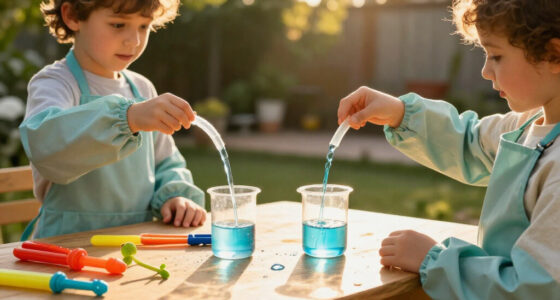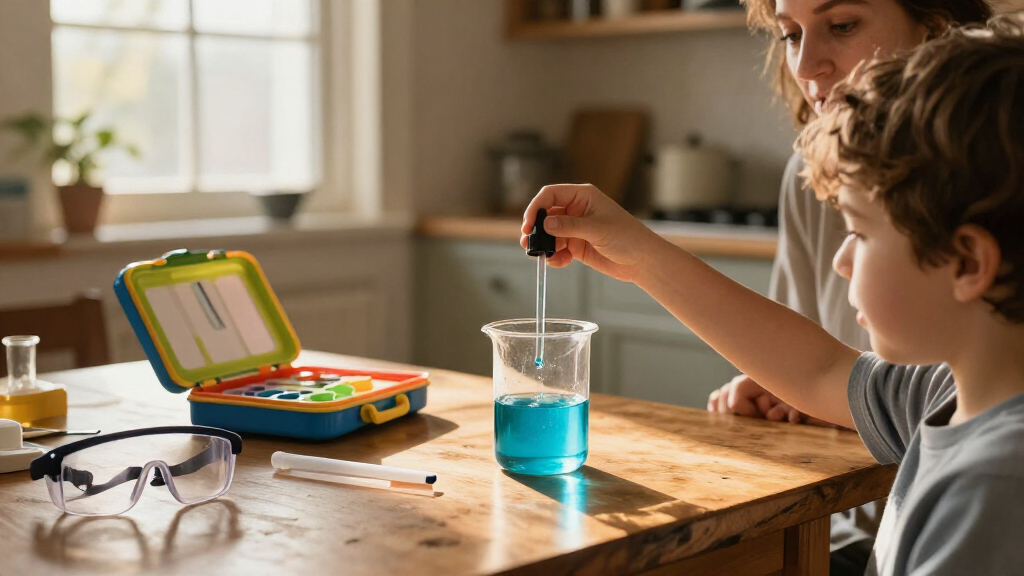
Use this guide to choose a science experiment kit for a child, prepare a workspace, and complete one activity together. It is for caregivers and educators with no specialist science background. Plan for 30-60 minutes for a first experiment, including setup and cleanup; choosing a kit may take another 15-30 minutes.

Prime made for students and young adults
- Fast, free delivery for dorm and study essentials
- Prime Video and Amazon Music included
- Member-only deals
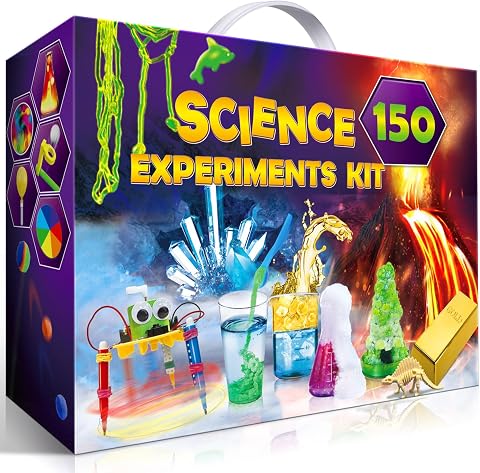
UNGLINGA 150-Experiment Science Kit for Kids
- ✔ Brand: UNGLINGA
- ✔ Experiment count: 150
- ✔ Recommended age: 8 years and up
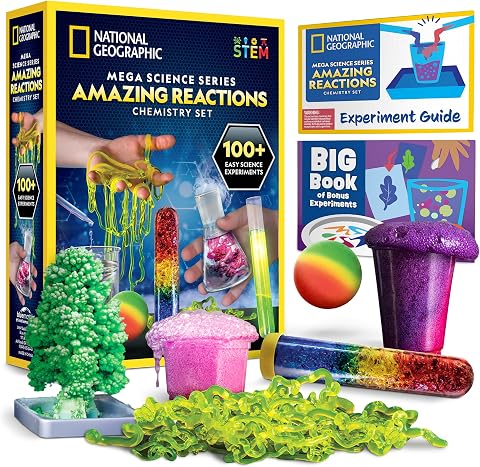
National Geographic Amazing Chemistry Set with 100+ Experiments for Ages 8–12
- ✔ Brand: Blue Marble
- ✔ Set name: Amazing Chemistry Set
- ✔ Age range: 8 years and up

National Geographic Science Magic Kit for Kids Ages 8+
- ✔ Brand: Blue Marble
- ✔ Age range: 8 years and up
- ✔ Included experiments: 20 magic experiments
Difficulty: Beginner | Time: 30-60 minutes for setup and one experiment; kit selection may take 15-30 minutes
What You’ll Need
Tools & Materials:
- A science kit labeled for the child’s age group
- The kit’s instruction booklet and listed materials
- A clear, washable work surface
- Paper towels and a small rubbish bag
- Safety glasses if the kit instructions call for them
- A notebook, pencil, and timer if the activity involves observations or waiting
Knowledge:
- Read and follow written instructions
- Provide direct adult supervision for activities involving tools, heat, liquids, or small parts
- Help the child make simple observations and record what happens
Check the kit label and each activity before buying or opening it. Confirm the recommended age, supervision level, and whether household supplies are required. Ask about allergies or sensitivities before using materials such as seeds, food items, powders, or scented substances. Set aside enough uninterrupted time to finish and clean up the activity.
UNGLINGA 150-Experiment Science Kit for Kids
For families who want a science set to cover more than one subject, UNGLINGA is the strongest starting point in this group. Its 150 listed experiments span chemistry, physics, Earth science and surface tension, so children can sample different kinds of questions instead of staying within a single theme. That breadth is why we place it ahead of the two National Geographic kits: the Amazing Chemistry Set goes deeper into chemistry, and the Science Magic Kit prioritizes presentation, but neither is described as covering as many science areas.The illustrated, step-by-step manual and included tools and materials give the set a practical structure for moving from instructions to activity. Some experiments use household items, however, so the full list should not be read as 150 activities with every required supply already in the box. The age guidance also starts at 8 years and up, which makes this a better match for school-age children than preschoolers. Choose it for variety; skip it if the child already wants a narrowly chemistry-focused experience or expects every experiment to be fully supplied.
Pros:
- Lists 150 hands-on experiments.
- Covers chemistry, physics, Earth science and surface tension.
- Includes an illustrated, step-by-step manual.
- Comes with lab tools and materials; some activities also use household items.
Cons:
- Some experiments require household supplies that are not listed as included.
- The recommended age is 8 years and up.
Best for: Families seeking a broad set of hands-on activities across several science topics for a child aged 8 or older.
Not ideal for: Children younger than 8, or buyers who want a chemistry-only kit with all supplies for every listed activity included.
Bottom line: We rank UNGLINGA first for its cross-topic variety, provided families are comfortable sourcing household items for some activities.
“We rank UNGLINGA first for its cross-topic variety, provided families are comfortable sourcing household items for some activities.”
National Geographic Amazing Chemistry Set with 100+ Experiments for Ages 8–12
When a child is specifically drawn to mixtures, color changes or crystals, the Amazing Chemistry Set is more targeted than our broad top pick. It supplies materials for 15 chemistry experiments, including a crystal tree and color-changing solutions, and includes recognizable lab tools such as test tubes, beakers and pipettes. That makes the central chemistry theme easy to grasp, while UNGLINGA is the better choice for a child who would rather switch among several science subjects.The set’s “100+” framing combines the 15 kit-material activities with a guide to 85 additional experiments using common household items. That gives curious families more ideas, but the extra activities are not all ready to run from the box alone. Compared with the Science Magic Kit, this set offers a more direct chemistry experience and less emphasis on showmanship. It is a sensible focused option for ages 8 and up, but families wanting a large assortment of included reagents or broad science coverage should look elsewhere.
Pros:
- Includes materials for 15 chemistry experiments.
- Features crystal-growing and color-changing activities.
- Includes test tubes, beakers and pipettes.
- Provides a guide to 85 additional household-item experiments.
Cons:
- The 85 additional experiments rely on common household items not included in the kit.
- Its focus is chemistry rather than a broad mix of science topics.
Best for: Ages 8 and up who are most interested in chemistry and benefit from familiar lab-style tools.
Not ideal for: Families seeking many fully supplied activities, or children whose interests span several branches of science.
Bottom line: We recommend this set for chemistry-minded beginners who value included lab tools and understand that most bonus activities need household supplies.
“We recommend this set for chemistry-minded beginners who value included lab tools and understand that most bonus activities need household supplies.”
National Geographic Science Magic Kit for Kids Ages 8+
The Science Magic Kit is the most performance-oriented choice here. Its 20 included experiments are framed as magic tricks, with examples such as a floating coin and a vanishing test tube. Illustrated instructions explain the science behind the effects, and the included wand and white gloves help a child present them. If a young learner likes showing a result to family or friends, this approach may hold attention in a way the more conventional UNGLINGA activities do not.That presentation comes with a narrower included activity set. The bonus booklet adds more than 85 experiments, but those rely on common household items; the number of kit-supplied activities is 20. Compared with the Amazing Chemistry Set, this option trades a more explicit chemistry focus and lab-tool list for theatrical demonstrations. Compared with UNGLINGA, it offers less topic breadth. Choose it when the performance hook is the point, and pass if the child wants a large, varied set of supplied science materials. Like the other picks, it is intended for ages 8 and up.
Pros:
- Presents 20 experiments as magic tricks.
- Illustrated instructions explain the science behind the activities.
- Includes a bonus booklet with more than 85 household-item experiments.
- Comes with a magic wand and white gloves for performances.
Cons:
- Only 20 experiments are described as included with kit materials.
- The additional experiments use common household items.
- The magic-performance format may not suit children who prefer conventional lab activities.
Best for: Children aged 8 and up who enjoy performing demonstrations and learning the explanation behind an effect.
Not ideal for: Buyers prioritizing broad science-topic coverage or a high number of experiments with materials included.
Bottom line: We’d choose this kit for a child motivated by performing science, while families seeking breadth should choose UNGLINGA instead.
“We’d choose this kit for a child motivated by performing science, while families seeking breadth should choose UNGLINGA instead.”
As an Amazon Associate we earn from qualifying purchases.
Before You Start
Read the full instructions for the experiment before inviting the child to begin. Check for warnings, disposal directions, and any steps that require adult handling. Keep food and drinks away from the work area, tie back long hair, and move pets away from the table. Do not taste, sniff closely, mix, or heat kit materials unless the instructions explicitly direct the action under adult supervision.
Step-by-Step Instructions
Step 1: Choose a kit that fits the child
Compare the age guidance, activity length, and supervision notes on several kits. Pick one with an activity the child is interested in, such as plants, magnets, rocks, or simple chemistry. Check that the kit contains the parts needed for the first experiment and note any household materials you must supply. If the child is near the lower end of the recommended age range, choose a kit with shorter activities and fewer small parts.
Tip:Age labels are a starting point, not a substitute for adult judgment. Consider whether the child can follow several steps in order and handle the materials safely with supervision.
Check: You have a kit whose age guidance, subject, supervision needs, and material list fit the child and your available time.
Step 2: Inspect the kit and select one experiment
Open the kit with the child and compare its contents with the inventory list. Put parts for the chosen activity on the table and leave unrelated materials in the box. Read the experiment from beginning to end, including diagrams, wait times, and cleanup directions. Gather any listed household items before starting.
Tip:Do not begin if a required part is missing or a container is damaged or leaking. Contact the kit maker or choose another complete activity.
Check: All required materials for one activity are present, and both of you know the sequence and expected waiting time.
Step 3: Prepare a safe work area
Clear a washable table near a sink or other suitable cleanup area. Lay out only the materials for the experiment, place paper towels within reach, and set out protective gear named in the instructions. Make space for the child to work without reaching across containers or knocking items over. Keep kit pieces away from younger children and pets.
Tip:If the activity involves splashes, powders, or soil, use a tray or a washable covering to contain the mess.
Check: The work surface is clear, the necessary supplies are within reach, and hazards or distractions have been moved away.
Step 4: Explain the question and make a prediction
Read the experiment’s question aloud and ask the child what they think will happen. Help them state a simple prediction, such as “The paper towel with more water will feel wetter.” Write the prediction in a notebook before the activity begins. Explain any safety rule that applies, such as keeping hands away from the face or asking an adult before pouring.
Tip:Treat a prediction as a guess to test, not as a right-or-wrong answer. This helps the child focus on what the experiment shows.
Check: The child can describe what the activity is testing and remembers the safety rule before handling materials.
Step 5: Follow the instructions in order
Guide the child through one instruction at a time. Let them do age-appropriate actions, such as placing objects, pouring a premeasured amount, or turning a dial. Have an adult handle any task marked for adult supervision. Use the stated quantities and avoid adding extra materials, skipping steps, or substituting ingredients unless the kit maker permits it.
Tip:Pause and reread the relevant instruction if either of you is unsure. Some experiments depend on exact amounts or order.
Check: The materials are assembled in the way shown in the instructions, with no skipped or improvised steps.
Step 6: Observe and record what happens
Watch the experiment together and note changes such as color, shape, movement, temperature, or time. Ask the child to describe what they see before explaining it. Record observations in words or drawings, and use a timer if the instructions specify a wait. Keep the experiment undisturbed during that time.
Tip:Write down what actually happens, even if it differs from the prediction. Unexpected results can still answer the experiment’s question.
Check: The child has at least one observation recorded, and any required waiting period has finished.
Step 7: Compare the result with the prediction
Ask the child whether the result matched their prediction and what evidence supports their answer. Point to the recorded observations rather than supplying an explanation immediately. Read the kit’s explanation or background note together, then connect it to what you observed in plain language.
Tip:If the result is unclear, describe it honestly. Do not change the record to make it match the kit’s expected outcome.
Check: The child can state what happened and name an observation that supports their conclusion.
Step 8: Clean up and store the materials
Follow the kit’s disposal instructions before throwing anything away or pouring liquids down a drain. Have the child put reusable parts back in their labeled bags or compartments while an adult handles cleanup that requires extra care. Wipe the work surface, wash hands with soap and water, and close the kit box once all parts are dry.
Tip:Do not pour leftover mixtures into a sink or outdoor area unless the instructions say that disposal is suitable.
Check: The activity area is clean, hands are washed, and reusable kit parts are dry and stored safely.
Common Mistakes to Avoid
- Choosing a kit based only on its pictures or title. — Read the age guidance, supervision notes, activity length, and supply list before buying.
- Starting before checking the instructions and materials. — Read the full activity and confirm every required item is available before setting up.
- Changing amounts or skipping a step to make the activity faster. — Follow the stated order and quantities; pause to reread if a step is unclear.
- Treating an unexpected result as a failure. — Record what happened accurately, then check whether a setup step or measurement differed from the instructions.
Troubleshooting
Problem: A listed material is missing.
Solution: Check the kit inventory and packaging once more. Do not substitute an unlisted chemical or tool; contact the maker or choose another activity with complete supplies.
Problem: The activity shows no visible change.
Solution: Check the amounts, order, temperature, and waiting time against the instructions. If those match, record the result and consult the kit’s troubleshooting notes or maker.
Problem: The child loses interest while waiting.
Solution: Use the waiting period to draw the setup, review the prediction, or note changes at set intervals. Keep the experiment in the specified conditions.
Problem: A spill or skin contact occurs.
Solution: Stop the activity and follow the kit’s safety and first-aid instructions. Rinse skin with water if directed, keep the material away from eyes and mouth, and contact a qualified medical professional or local poison service if symptoms occur or the label advises it.
What Success Looks Like
The experiment was completed in the instructed order, the child recorded at least one observation, and they can describe whether it matched their prediction. The workspace is clean, hands are washed, and reusable kit materials are stored safely. A result that differs from the example can still count as a successful activity if you followed the method and recorded what happened.
Next Steps
Keep the notebook with the kit and add the date, activity name, and one question the child wants to investigate next. Let reusable materials dry fully before storage and check the inventory before the next activity. Choose a follow-up experiment that tests one related question, such as changing one variable while keeping the other steps the same. Contact the kit maker for missing parts or unclear safety directions.
Frequently Asked Questions
What age should a child be to use a science experiment kit?
Use the age range printed on the kit as a guide, then consider the child’s ability to follow steps and handle parts safely. Younger children need close adult supervision, especially around small pieces, liquids, or tools.
Can I replace a missing ingredient with something from home?
Only replace a material when the instructions or kit maker approve that specific substitute. Similar-looking materials can behave differently and may affect safety or results.
What should I do if our result is different from the kit’s example?
Record the result as it occurred. Compare your quantities, order, and timing with the instructions, then repeat the activity only if the directions allow it and you can reset it safely.
Do I need to help throughout the whole experiment?
Follow the kit’s supervision label and your judgment of the child’s skills. Stay present for any step involving tools, heat, liquids, small parts, or materials marked for adult handling.
How should I store an opened kit?
Follow the package directions, seal materials in their labeled containers, and keep the kit dry and out of reach of younger children. Do not store leftover mixtures unless the instructions explicitly allow it.