
📊 Full opportunity report: Why Benefit Check Bots Are Essential For Modern Social-Care Tech on IdeaNavigator AI — validation score, market gap, and execution plan.

Prime made for students and young adults
- Fast, free delivery for dorm and study essentials
- Prime Video and Amazon Music included
- Member-only deals
TL;DR
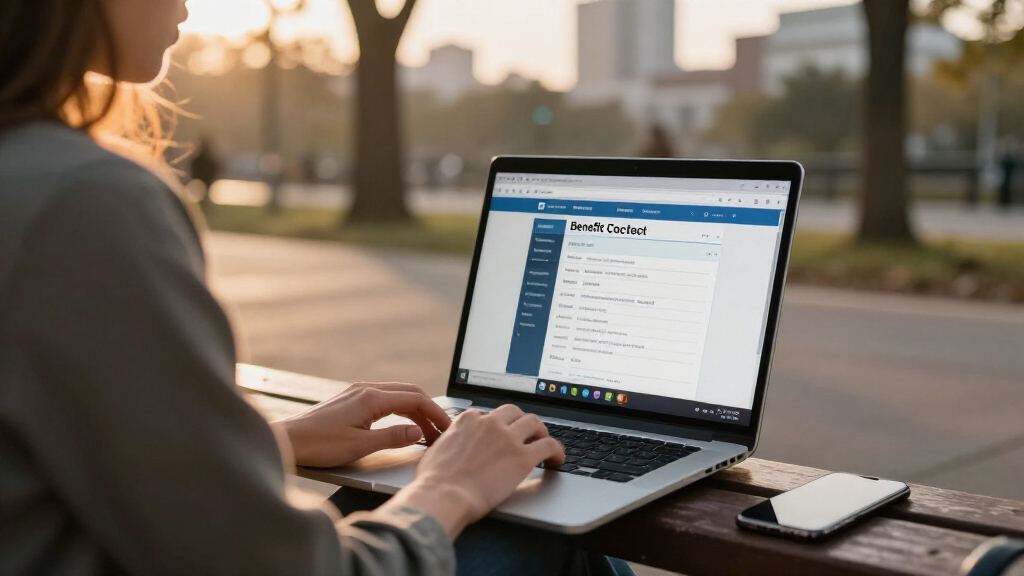
Benefit check bots are being tested as a key component of social-care technology, helping clinics and nonprofits efficiently identify benefits for low-income clients. This development addresses a large gap left by traditional manual screening methods and recent nonprofit closures.
Benefit check bots are emerging as a crucial tool for healthcare systems, clinics, and nonprofits to quickly identify benefits eligibility for low-income clients. This development comes after the closure of Benefits Data Trust, a major nonprofit that provided similar services, leaving a significant gap in benefits access capacity. The new technology leverages conversational AI to deliver fast, accurate, multilingual screening at near-zero marginal cost, potentially transforming social-care workflows and reducing unclaimed benefits.
Traditional benefits screening relies heavily on manual processes, with caseworkers and navigators screening clients one program at a time. This approach is time-consuming, prone to errors, and often leaves over $100 billion in benefits unclaimed annually due to fragmented eligibility rules across federal, state, and local programs. The recent shutdown of Benefits Data Trust in 2024 has intensified this challenge, removing a key outsourced capacity relied upon by health systems and state agencies.
In response, developers are testing a white-label conversational screening bot that can be embedded on clinic websites or used via SMS. The bot asks a series of yes/no and multiple-choice questions, then provides an estimated list of programs clients likely qualify for, including benefit amounts for SNAP, Medicaid, EITC/CTC, WIC, and LIHEAP. It also offers next-step application links and document checklists, streamlining the entire process. The initial focus is on 2-3 states, with plans to expand coverage and logging anonymized screening outcomes for organizational dashboards.
This technology aims to reduce screening time, improve accuracy, and increase benefits uptake among low-income populations. Pilot programs involving 5-10 benefits navigators across community clinics and nonprofits are planned to assess effectiveness over 4-6 weeks, measuring screening speed, eligibility detection, and navigator-rated accuracy. Revenue models include tiered SaaS subscriptions, white-label API licensing, and outcome-based contracts with health plans and Medicaid managed care organizations.
The adoption of benefit check bots could significantly improve access to public benefits for millions of low-income individuals by enabling faster, more accurate screening. This addresses a critical bottleneck in current manual processes, which often result in benefits remaining unclaimed due to complexity and resource constraints. By automating eligibility checks, clinics and nonprofits can increase enrollment rates, reduce administrative burdens, and better serve their communities. Moreover, the shift toward conversational AI at near-zero marginal cost makes scalable benefits screening feasible for a broader range of organizations, including smaller clinics and community-based nonprofits.
Additionally, this technology aligns with broader efforts to modernize social-care infrastructure and improve social determinants of health (SDOH) interventions. As benefits eligibility becomes easier to determine and act upon, health systems can better address social needs that impact health outcomes, potentially reducing long-term healthcare costs and improving quality of life for vulnerable populations.
Popular right now

Vitamix 5200 Professional-Grade Blender, 64 oz. Container, Black

Bose QuietComfort True Wireless Earbuds with Active Noise Cancellation, Black

De'Longhi Magnifica Evo Automatic Espresso Machine with Milk Frother – Silver
As an affiliate, we earn on qualifying purchases.
Recent Developments in Benefits Access and Technology
The closure of Benefits Data Trust in 2024 left a notable gap in outsourced benefits screening capacity, which many health systems and state agencies relied on to help low-income clients access benefits. Meanwhile, the post-pandemic Medicaid unwinding redeterminations have increased the demand for efficient eligibility verification, exposing the limitations of manual screening processes. Advances in conversational AI and SaaS models now make it feasible to automate complex benefits screening at scale, with multilingual support and minimal marginal costs.
Early pilots of benefit check bots are testing their effectiveness in real-world settings, focusing on reducing screening times and increasing benefits enrollment. The technology’s potential to handle multiple programs simultaneously and provide dollar estimates marks a significant evolution in social-care tech, promising to make benefits access more equitable and efficient.
Uncertainties and Challenges in Deployment
While pilot programs show promise, it remains unclear how widely benefit check bots will be adopted outside initial test sites. Questions remain about long-term accuracy, especially across diverse populations and complex eligibility rules. Additionally, data privacy, consent, and integration with existing health and social service systems pose potential hurdles that are still being addressed.
It is also uncertain how payers and organizations will value and pay for these services at scale, and whether the technology can adapt quickly to changing regulations and program rules across states.
Next Steps for Validation and Scaling
The immediate focus is on completing pilot tests with 5-10 benefits navigators over the next 4-6 weeks, collecting data on screening times, accuracy, and benefits identified. Success metrics will determine whether organizations are willing to adopt paid plans and expand deployment. Developers plan to refine the technology, expand state coverage, and explore outcome-based contracts with payers. Broader adoption will depend on demonstrated effectiveness, ease of integration, and regulatory compliance.
Key Questions
How do benefit check bots improve current screening processes?
They automate eligibility assessments using conversational AI, reducing screening time, increasing accuracy, and enabling multi-program screening with benefit estimates.
What programs can benefit check bots screen for?
Initially, they target programs like SNAP, Medicaid, EITC/CTC, WIC, and LIHEAP, with plans to expand coverage based on state rules.
Are benefit check bots secure and privacy-compliant?
Developers are prioritizing data privacy and security, but full compliance details are still being finalized as deployment scales.
When will benefit check bots be available for widespread use?
Pilot results over the next 4-6 weeks will determine readiness for broader rollout, with scaling expected in the following months if successful.
What are the main barriers to adoption?
Challenges include ensuring accuracy across diverse populations, integrating with existing systems, and addressing privacy concerns.
Source: IdeaNavigator AI