📊 Full opportunity report: How Industrial Facilities Benefit From Phone-Photo Gauge Reading Systems on IdeaNavigator AI — validation score, market gap, and execution plan.

Prime made for students and young adults
- Fast, free delivery for dorm and study essentials
- Prime Video and Amazon Music included
- Member-only deals
TL;DR
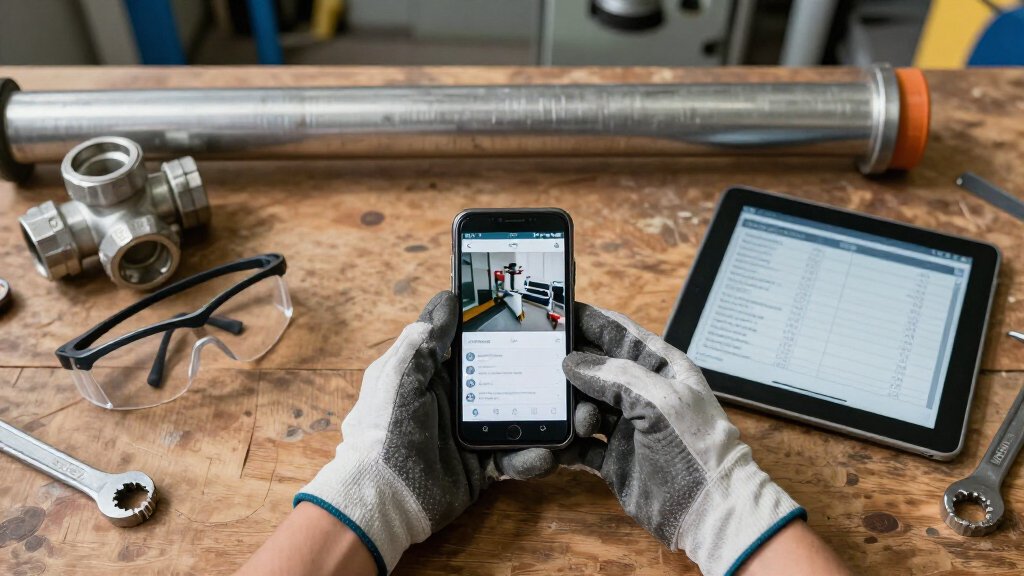
Factories are trialing a new system where technicians use smartphones to photograph gauges, allowing automated reading and trend analysis. This approach aims to enhance accuracy and reduce costs associated with legacy equipment.
Industrial facilities are testing phone-photo gauge reading systems as a way to replace manual clipboard rounds, with early results indicating improved accuracy and efficiency. This new approach allows technicians to photograph analog gauges with smartphones, enabling automated reading and anomaly detection without the need for costly sensor retrofits. The development could significantly impact how legacy equipment is monitored and maintained across the industry.
The concept involves technicians capturing images of analog gauges during routine rounds using a dedicated app. The app employs sight recognition models to accurately read the gauge values directly from photos, then logs the data with timestamps and location information. This process aims to replace the traditional manual transcription of gauge readings onto paper, which often introduces errors and lacks trend tracking.
Initial testing has been conducted at three facilities over a one-month period, with parallel photo-and-clipboard rounds. Early data suggests that the photo-based system reduces transcription errors and enables early detection of anomalies, potentially preventing equipment failures. The system also creates a continuous trend history, which was previously difficult with paper logs.
Manufacturers and facility managers see this as a cost-effective solution, especially for legacy equipment where retrofitting IoT sensors is prohibitively expensive. The approach leverages advances in vision models that reliably interpret analog dials, sight glasses, and counters from ordinary phone photos, making it accessible without hardware upgrades.
Potential Cost Savings and Improved Reliability
This development offers a practical, low-cost method for enhancing equipment monitoring in industrial plants. By automating gauge readings, facilities can reduce human transcription errors, catch developing failures earlier, and build more accurate maintenance histories. These improvements can lead to decreased downtime, lower maintenance costs, and increased operational reliability, making this a significant step forward in industrial asset management.
industrial gauge photo reading app
As an affiliate, we earn on qualifying purchases.
As an affiliate, we earn on qualifying purchases.
Legacy Equipment Monitoring Challenges in Industry
Many industrial facilities rely on analog gauges for critical process monitoring. Traditionally, technicians perform manual rounds, recording readings on paper or clipboard, which are then filed and rarely analyzed systematically. This process is labor-intensive, error-prone, and often results in missed early warnings of equipment issues. Retrofitting legacy systems with IoT sensors is expensive and disruptive, creating a barrier to digital transformation. Recent advances in sight recognition models now enable accurate reading of analog gauges from simple photographs, opening new avenues for cost-effective digital monitoring solutions.
“Using phone photos with sight recognition models can reliably read analog gauges, making legacy equipment a data source without sensor installation.”
— an anonymous researcher
analog gauge recognition smartphone
As an affiliate, we earn on qualifying purchases.
As an affiliate, we earn on qualifying purchases.
Uncertainties Surrounding Long-Term Adoption
While initial tests are promising, it remains unclear how well the system will scale across diverse industrial environments and gauge types. Long-term reliability, integration with existing maintenance systems, and user acceptance are still being evaluated. Further data from extended trials are needed to confirm the system’s effectiveness and cost savings over time.
As an affiliate, we earn on qualifying purchases.
Next Steps for Broader Validation and Deployment
Manufacturers plan to expand pilot programs to additional facilities and gather data over several months. They aim to compare error rates, anomaly detection accuracy, and overall operational impact against traditional methods. If successful, the system could be offered as a subscription service, enabling wider adoption across industries with legacy equipment. Further development will focus on refining sight recognition models and integrating with existing maintenance platforms.
As an affiliate, we earn on qualifying purchases.
Key Questions
How accurate are phone-photo gauge readings compared to manual transcription?
Initial pilot data suggests that the photo-based system reduces transcription errors significantly, with accuracy comparable or superior to manual readings, especially in high-volume environments.
Can this system work with all types of gauges?
The system currently performs well with common analog dials, sight glasses, and counters, but its effectiveness with specialized or older gauges is still being tested.
What are the costs involved in implementing this system?
The primary costs are related to the app subscription, which is tiered by gauge count. There are no hardware costs beyond standard smartphones for technicians.
Will this replace traditional maintenance workflows?
It aims to complement existing workflows initially, providing more accurate data and early warnings, which can lead to more targeted maintenance rather than replacing all manual processes immediately.
When might this system become widely available?
If pilot programs continue to show positive results, commercial availability could occur within the next year, with broader industry adoption following in subsequent years.
Source: IdeaNavigator AI
Fall Picks
fall essentials
As an affiliate, we earn on qualifying purchases.