📊 Full opportunity report: How To Find Wholesale Suppliers That Welcome Small Orders on IdeaNavigator AI — validation score, market gap, and execution plan.

Get school and study supplies delivered free — and shop member deals
- Fast, free delivery on millions of items
- Access to Prime Big Deal Days deals on October 6–7
- Prime Video, Amazon Music and more included
TL;DR
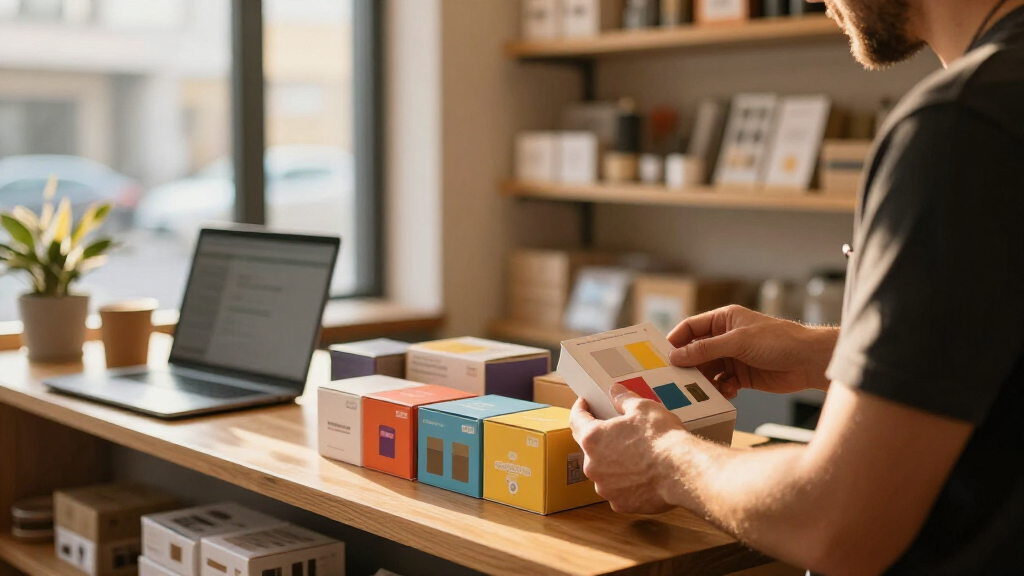
IdeaNavigator AI proposes testing a small-order wholesale marketplace for independent shops that cannot meet distributors’ minimums. The concept would broker trial orders between 20 brands and 50 shops, then track whether small tests lead to standard reorders; no results or operating platform are reported yet.
IdeaNavigator AI has proposed a test of a wholesale sourcing marketplace that would let independent retailers order small product trials, including five-unit assortments, instead of meeting larger distributor minimums. The proposal outlines a manual pilot with 20 brands and 50 shops, but reports no completed trial, customer demand results or evidence that the model is commercially viable.
According to IdeaNavigator AI’s proposal, the service would target independent shop owners who want to test new products but cannot or do not want to commit to distributor case minimums or opening orders designed for larger retailers. The proposal suggests these order requirements can discourage experimentation and leave smaller shops with fewer opportunities to assess unfamiliar products in-store.
IdeaNavigator AI’s proposed minimum viable product would create a dedicated marketplace lane for trial-size orders. Participating brands would set micro-minimums, while consolidated fulfillment would combine shipments to make small orders more practical. Retailers could try five-unit assortments, track sell-through and, if a product performs well, move to a standard wholesale relationship.
The proposal suggests a business model combining a take rate on orders with subscriptions for brand analytics on trial performance. To test the idea, IdeaNavigator AI recommends manually brokering orders between 20 brands and 50 shops, then measuring conversion from trial purchases to standard reorders over a quarter. This is a proposed experiment, not a reported result.
Testing Demand Beyond Distributor Minimums
If the problem is widespread and the economics work, smaller trial orders could give independent retailers a lower-commitment way to test products and give brands a route to shops that cannot place conventional opening orders. A tracked trial-to-reorder path could also help brands distinguish products that attract initial curiosity from those that lead to repeat purchasing.
The proposal’s central practical question is not just whether shops want smaller orders, but whether shipping, picking and handling can be organized without making each low-value transaction too costly. IdeaNavigator AI presents consolidated fulfillment as a possible answer, but provides no cost figures, delivery terms, marketplace take rate or subscription prices. The proposed pilot’s reorder measure could show whether trial orders lead to larger purchases, though it would not by itself establish long-term profitability or broad retailer demand.
As an affiliate, we earn on qualifying purchases.
From Wholesale Marketplaces to Micro-Orders
IdeaNavigator AI’s proposal says Faire has demonstrated the wholesale-marketplace model and frames very small trial orders as a possible underserved part of independent retail sourcing. That characterization is part of the proposal’s rationale; it supplies no comparative marketplace data or evidence about the size of unmet demand.
In the workflow IdeaNavigator AI proposes, small orders would serve as a first step rather than a replacement for conventional wholesale. Retailers would trial a product, observe sell-through and reorder at standard wholesale terms if it succeeds. The suggested pilot is deliberately narrow: it focuses on one buyer type, a limited group of brands and shops, and a quarter-long conversion measure. The proposal announces no dates, participating businesses or trial locations.
As an affiliate, we earn on qualifying purchases.
Pilot Results and Unit Costs
No pilot has been reported as completed in IdeaNavigator AI’s proposal, which identifies no committed brands or retailers. The document also does not clarify what qualifies as a micro-minimum beyond the example of five-unit assortments, how products from different brands would be consolidated, or who would handle storage, packing, returns and delivery.
The proposal provides no estimates for shipping costs, order values, platform fees, subscription pricing or the share of trial purchases expected to become reorders. It also does not specify how sell-through would be measured or how long retailers would have to evaluate products. Until those details and pilot findings are available, the demand, operational feasibility and financial case remain unverified.
As an affiliate, we earn on qualifying purchases.
A Quarter-Long Reorder Test
As outlined by IdeaNavigator AI, the next proposed step is to broker trial orders manually between 20 brands and 50 independent shops. The operator would track whether trial purchases convert into standard wholesale reorders within a quarter. The proposal supplies no start date, enrollment process or named operator.
For the test to clarify the opportunity, its results would need to distinguish interest from repeat purchasing and account for fulfillment costs alongside reorder rates. IdeaNavigator AI provides no criteria for a successful pilot or details on whether a marketplace would be built afterward. Any decision to develop the platform would depend on results that have not yet been reported.
Source: IdeaNavigator AI
independent retail product testing kits
As an affiliate, we earn on qualifying purchases.
As an affiliate, we earn on qualifying purchases.
Key Questions
Has a small-order wholesale marketplace launched?
No launch is reported. IdeaNavigator AI describes a proposed marketplace lane and a manual validation plan, not an operating service.
Who is the proposal designed for?
It focuses on independent retailers that want to test products but cannot meet, or prefer not to commit to, larger distributor minimums.
What would the proposed pilot measure?
The plan calls for brokering trial orders between 20 brands and 50 shops and measuring conversion from trial orders to standard wholesale reorders within a quarter.
How would the marketplace make money?
The proposed revenue model combines a take rate on orders with subscription analytics for brands. Pricing and expected revenue are not provided.
Is there evidence that five-unit orders can be profitable?
No cost or profitability results are reported. Consolidated fulfillment is proposed to make small orders more practical, but shipping and handling economics remain untested in the information available.
Source: IdeaNavigator AI
Halloween Picks
halloween
As an affiliate, we earn on qualifying purchases.