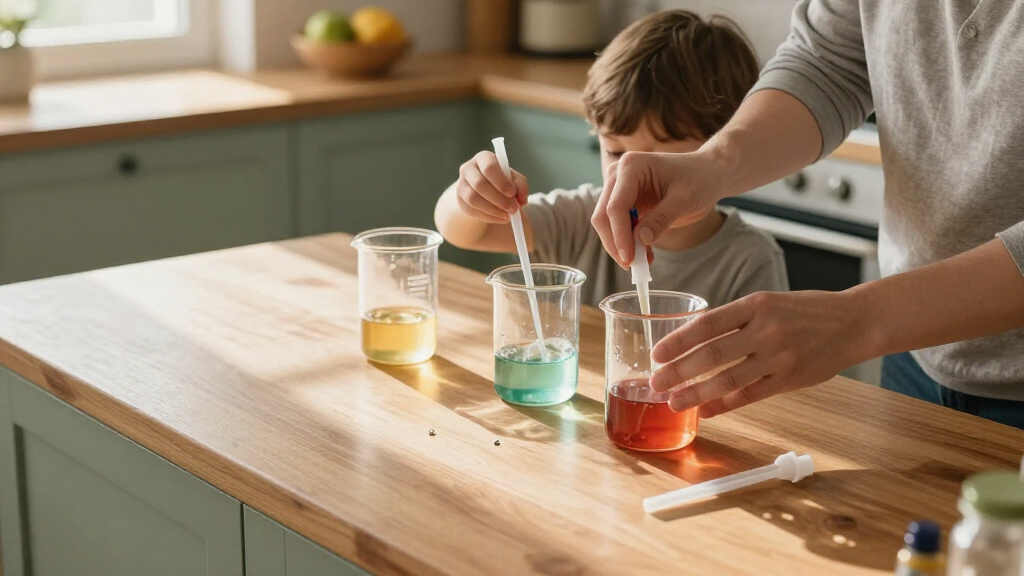

Kids’ science experiment kits range from simple first activities to large collections of chemistry, physics, and science-magic projects. I’d choose the National Geographic Mega Science Lab as the best overall pick for its broad set of 75 experiments, while the Doctor Jupiter My First Amazing Science Experiments Kit suits younger beginners and the National Geographic Amazing Chemistry Set is a stronger fit for kids ready for more chemistry. The main tradeoff is experiment variety versus age-appropriate guidance: a high activity count may appeal to families seeking replay value, but can be less useful if projects need substantial adult help. Specialty kits narrow the focus to magic tricks or chemistry rather than offering a broad sampler. Read on for the full comparison, buying advice, and picks for different ages and interests.

Prime made for students and young adults
- Fast, free delivery for dorm and study essentials
- Prime Video and Amazon Music included
- Member-only deals
Key Takeaways
- The 75-experiment Mega Science Lab is the clearest all-around choice in this lineup, pairing a substantial activity count with an age range aimed at school-age children.
- Activity count alone does not determine the best fit: the 220+ and 150-experiment kits promise breadth, but families should weigh project instructions, materials, and age fit alongside the number.
- Age range meaningfully separates the options. Doctor Jupiter’s My First kit is labeled for ages 4+, while many National Geographic chemistry and magic sets target ages 8–12.
- Focused kits can be a better match than broad labs. The Magic Chemistry Set centers on 10 tricks, while the 100+ experiment chemistry sets put more emphasis on chemistry activities.
- There are several mid-sized choices between small and very large collections: the 50-, 70-, and 80-experiment kits offer alternatives for families who do not need the largest activity count.
| UNGLINGA 70-Experiment Science Kit for Kids |  | Best for Varied First Projects | Brand: UNGLINGA | Experiments: 70 | Recommended age: 8 years and up | VIEW LATEST PRICE | See Our Full Breakdown |
| Doctor Jupiter Girls’ Super Science Experiments Kit for Ages 8+ |  | Best for Creative, Cosmetic Chemistry | Brand: Doctor Jupiter | Age range: 8 years and up | Experiments: 100+ included, plus 60+ bonus experiments using household items | VIEW LATEST PRICE | See Our Full Breakdown |
| National Geographic Mega Science Lab: 75 Experiments for Kids Ages 8–12 |  | Best for Mixing Science Subjects | Brand: Blue Marble | Age range: 8 years and up | Experiments: 75 | VIEW LATEST PRICE | See Our Full Breakdown |
| UNGLINGA 150-Experiment Science Kit for Kids | 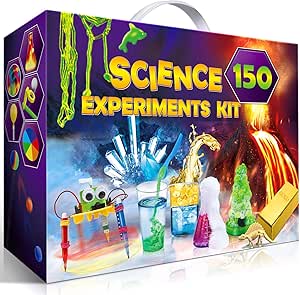 | Best for Maximum Activity Variety | Brand: UNGLINGA | Experiments: 150 | Recommended age: 8 years and up | VIEW LATEST PRICE | See Our Full Breakdown |
| National Geographic Magic Chemistry Set with 10 Tricks for Kids Ages 8–12 |  | Best for Science Demonstrations | Brand: National Geographic | Number of experiments: 10 | Recommended age: 8–12 years | VIEW LATEST PRICE | See Our Full Breakdown |
| Doctor Jupiter My First Amazing Science Experiments Kit for Ages 4+ |  | Best for Younger Beginners | Brand: Doctor Jupiter | Recommended age: 4 years and up | Experiments: Over 100 | VIEW LATEST PRICE | See Our Full Breakdown |
| ZDRKWSM Science Kit with 220+ Experiments |  | Best for Experiment Variety | Brand: ZDRKWSM | Age range: 36 months–12 years | Experiments: 220+ | VIEW LATEST PRICE | See Our Full Breakdown |
| Kuovei Science Kit for Kids with 80 Experiments |  | Best for Ages 6+ | Brand: Kuovei | Recommended age: 6 years and up | Experiments: 80 | VIEW LATEST PRICE | See Our Full Breakdown |
| National Geographic Amazing Chemistry Set with 100+ Experiments Ages 8-12 |  | Best for Older Chemistry Enthusiasts | Brand: Blue Marble | Sub-brand: National Geographic | Set name: Amazing Chemistry Set | VIEW LATEST PRICE | See Our Full Breakdown |
| National Geographic Junior Chemistry Set with 50 Experiments for Kids |  | Best for First Chemistry Activities | Brand: Blue Marble | Age range: 4 years and up | Experiments: 50 | VIEW LATEST PRICE | See Our Full Breakdown |
| National Geographic Science Magic Kit with 100+ Experiments for Kids Ages 8–12 |  | Best for Science-and-Magic Fans | Experiments: 100+ | Recommended age: 8–12 years | Brand: National Geographic | VIEW LATEST PRICE | See Our Full Breakdown |
| kids science experiment kit | Brand | Experiments | Recommended age |
|---|---|---|---|
| UNGLINGA 70-Experiment Science | UNGLINGA | 70 | 8 years and up |
| Doctor Jupiter Girls’ Super Sc | Doctor Jupiter | 100+ included, plus 60+ bonus experiments using household items | — |
| National Geographic Mega Scien | Blue Marble | 75 | — |
| UNGLINGA 150-Experiment Scienc | UNGLINGA | 150 | 8 years and up |
| National Geographic Magic Chem | National Geographic | — | 8–12 years |
| Doctor Jupiter My First Amazin | Doctor Jupiter | Over 100 | 4 years and up |
| ZDRKWSM Science Kit with 220+ | ZDRKWSM | 220+ | — |
| Kuovei Science Kit for Kids wi | Kuovei | 80 | 6 years and up |
| National Geographic Amazing Ch | Blue Marble | 100+ | — |
| National Geographic Junior Che | Blue Marble | 50 | — |
| National Geographic Science Ma | National Geographic | 100+ | 8–12 years |
More Details on Our Top Picks
UNGLINGA 70-Experiment Science Kit for Kids
The UNGLINGA 70-Experiment Science Kit offers a broad introduction to hands-on science without centering on one theme. Projects range from crystal growing and volcano eruptions to a balloon rocket and fruit circuits, giving kids several ways to explore chemistry, physics, and basic engineering. Its illustrated guide also explains the science behind activities, so the kit supports learning beyond following steps. Compared with the UNGLINGA 150-Experiment Science Kit, this set has fewer listed activities, but its smaller scope may suit families who want variety without committing to the larger experiment count. The main tradeoff is uncertainty about the exact included components: the listing describes ingredients generally, so some activities may need household supplies or adult help. It suits curious children ages 8 and up, though not every project is necessarily independent.
Pros:- Offers 70 activities across several types of hands-on science.
- Includes projects such as crystal growing, volcanoes, balloon rockets, and fruit circuits.
- Illustrated guide explains the science behind the activities.
- Ingredients are described as safe and child-friendly.
Cons:- The individual included components are not specified in the listing.
- Some activities may require adult supervision.
- Its 70 experiments provide less listed activity volume than the UNGLINGA 150-Experiment Science Kit.
Best for: Families looking for a varied first science kit for a child age 8 or older, with projects across several STEM topics.
Not ideal for: Buyers who need a fully itemized contents list or want a kit designed for young children to use without adult supervision.
- Brand:UNGLINGA
- Experiments:70
- Recommended age:8 years and up
- Educational focus:STEM and chemistry
- Included materials:Experiment ingredients and illustrated learning guide
- Material:Plastic
- Dimensions:11 x 8.66 x 3.54 inches
- Model number:HZDZKH030
Our verdict“Choose this kit for a child ready to explore several STEM topics through guided projects, rather than for a buyer who needs a detailed parts list.”
Doctor Jupiter Girls’ Super Science Experiments Kit for Ages 8+
The Doctor Jupiter Girls’ Super Science Experiments Kit gives chemistry a creative, personal-care angle, with activities for making soaps, body mist, face masks, and body scrub alongside other experiments. Its 100+ included activities are paired with illustrated, step-by-step instructions, while a bonus booklet adds 60+ ideas using household items. That blend makes it a more specific pick than the broad-topic National Geographic Mega Science Lab, which covers Earth science, chemistry, and science magic rather than focusing on cosmetics. The household-item booklet can extend the play beyond the supplied materials, but those activities may call for extra preparation and parent participation. The kit includes a substantial range of tools and components, yet its themed activities may be less appealing to children who want mostly physics, geology, or general-purpose experiments.
Pros:- Includes materials and illustrated instructions for more than 100 experiments.
- Personal-care projects offer a distinctive, creative chemistry theme.
- Bonus booklet adds more than 60 activities using household items.
- Includes a range of tools such as a measuring cylinder, funnel, spray bottle, and molds.
Cons:- Some experiments may require an adult to participate.
- The personal-care focus may not suit children who prefer geology, physics, or broader STEM topics.
- Bonus activities rely on household items, which can require extra preparation.
Best for: Families with children age 8 or older who are especially interested in making personal-care products and following guided chemistry activities together.
Not ideal for: Children seeking a balanced mix of earth science, physics, and general experiments, or families wanting projects that need little adult involvement.
- Brand:Doctor Jupiter
- Age range:8 years and up
- Experiments:100+ included, plus 60+ bonus experiments using household items
- Educational objective:STEM
- Included components:Measuring cylinder, spatula, volcano, geyser tube, tray, funnel, spray bottle, dropper, wooden stoppers, stirring sticks, molds, balloons, cups, face mask tablets, food essences, food colors, ingredients, instruction manual, and bonus experiment booklet
- Number of items:1
- Model number:DJ Girls Super Science Kit
- Manufacturer:Metis Learning Solutions Pvt. Ltd.
Our verdict“Pick this for a child who will be motivated by making soaps and other personal-care products, rather than by a broad mix of science subjects.”
National Geographic Mega Science Lab: 75 Experiments for Kids Ages 8–12
The National Geographic Mega Science Lab is the most balanced pick here for children who want more than chemistry. Its three-part format combines Earth science, chemistry, and science magic, with rock, mineral, and crystal specimens adding tangible objects to examine alongside the experiments. Of its 75 activities, 30 use household items, which can keep the kit useful beyond its supplied materials but also means those projects are not fully self-contained. Compared with the National Geographic Magic Chemistry Set, this lab offers much broader subject coverage; the smaller set is a better match for kids who mainly want performance-style tricks. The Mega Lab’s spread is its strength, though it may feel less focused to a child keen on one subject. The listing also does not detail every component or spell out specific supervision needs.
Pros:- Combines Earth science, chemistry, and science magic in one kit.
- Includes 75 experiments, with 30 using household items.
- Provides rock, mineral, and crystal specimens for hands-on observation.
- Activities support critical thinking and observation skills.
Cons:- Some activities depend on household items rather than supplied materials.
- Its broad subject mix may be less satisfying for a child focused on one science area.
- The description does not provide a detailed list of all included components.
Best for: Families with children ages 8–12 who want one kit to cover geology, chemistry, and science-based magic, including activities that use household supplies.
Not ideal for: Children who want a dedicated chemistry or magic kit, or buyers who need a detailed inventory of every included item.
- Brand:Blue Marble
- Age range:8 years and up
- Experiments:75
- Subjects:Earth science, chemistry, and science magic
- Educational objectives:Critical thinking and observation skills
- Included components:Earth science kit, chemistry kit, science magic kit, and experiment guide
- Number of kits:3
Our verdict“Choose this lab for a child who wants to sample several science subjects, not for one who prefers a tightly focused set of magic tricks or chemistry projects.”
UNGLINGA 150-Experiment Science Kit for Kids
With 150 hands-on experiments, this UNGLINGA kit is the pick for families who want a large menu of projects spanning chemistry, physics, Earth science, and more. An illustrated, step-by-step manual gives children a structure for working through that breadth, while included tools and materials support hands-on learning. Compared with the UNGLINGA 70-Experiment Science Kit, it offers a much larger listed activity count and a wider stated subject range, making it better suited to repeat use across different interests. That volume comes with a practical caveat: some projects use common household items, so the box may not supply everything needed for every activity. The description also does not inventory the tools or materials individually. This is a strong fit for curious kids who like variety, but less so for families seeking a fully self-contained kit.
Pros:- Offers 150 hands-on experiments across several science topics.
- Includes an illustrated, step-by-step manual.
- Provides science tools and materials for projects.
- Some activities use common household items, adding options beyond the included materials.
Cons:- Some experiments require household items that are not included.
- The listing does not specify the individual tools and materials.
- Its larger activity selection may require more adult help with setup and project selection.
Best for: Families with children age 8 or older who want a large selection of projects across chemistry, physics, Earth science, and related topics.
Not ideal for: Buyers who want every experiment to rely only on boxed materials or need an itemized list of the included tools and ingredients.
- Brand:UNGLINGA
- Experiments:150
- Recommended age:8 years and up
- Included components:Science experiment tools and materials
- Set name:150 Experiments
- Dimensions:11.42 x 8.67 x 3.94 inches
- Educational objective:Creative skills
Our verdict“Choose this over the UNGLINGA 70-Experiment kit if activity volume and topic breadth matter more than a fully itemized, self-contained project supply list.”
National Geographic Magic Chemistry Set with 10 Tricks for Kids Ages 8–12
The National Geographic Magic Chemistry Set trades a long activity list for a focused set of 10 experiments designed as magic tricks. Activities such as making a coin float or changing water color give kids a clear performance hook, while the illustrated guide explains the science behind each effect. Tools for all 10 experiments are included, and the magic wand and white gloves help frame the projects as demonstrations rather than routine lab work. Compared with the National Geographic Mega Science Lab, this set is much narrower in subject and activity count, but it may be a better fit for a child who enjoys showing experiments to an audience. Its limited scope also means less variety for repeat exploration, and the listing does not identify the specific experiment materials in detail.
Pros:- Turns 10 chemistry experiments into performance-style magic tricks.
- Includes tools for all 10 listed experiments.
- Illustrated guide explains the science behind each trick.
- Magic wand and white gloves add a presentation element.
Cons:- Ten experiments offer less activity variety than the National Geographic Mega Science Lab.
- The description does not detail the specific materials included for each experiment.
- The recommended age range is limited to 8–12 years.
Best for: Children ages 8–12 who enjoy performing short science demonstrations and want an illustrated explanation of how each trick works.
Not ideal for: Families seeking a large, varied collection of experiments or children outside the stated age range who need a different level of instruction.
- Brand:National Geographic
- Number of experiments:10
- Recommended age:8–12 years
- Included accessories:Magic wand and white gloves
- Experiment guide:Illustrated instructions with science explanations
Our verdict“Pick this for a child who values show-and-tell science tricks over a large collection of experiments to work through.”
Doctor Jupiter My First Amazing Science Experiments Kit for Ages 4+
For a first science kit, I’d favor Doctor Jupiter My First Amazing Science Experiments for its broad mix of activities and illustrated guidance. The 100-plus experiments range from volcanoes and rockets to squishies, giving young children different ways to explore STEM rather than focusing on one branch of science. Safety goggles and experiment materials are included, and the bonus paper-plane kit with launcher adds a different kind of hands-on play. Compared with the National Geographic Junior Chemistry Set, this kit offers a wider activity mix, while the Junior set’s 50 experiments and chemistry focus may feel more contained for a first-timer. The tradeoff is that a large experiment count doesn’t mean every activity is ready to do independently: some require adult help, so plan to participate with younger children.
Pros:- Offers more than 100 experiments across a range of STEM activities.
- Illustrated instructions can help young children follow activity steps.
- Experiment materials and safety goggles are included.
- Bonus paper-plane kit with launcher adds a distinct activity.
Cons:- Some experiments require adult assistance, limiting independent use.
- The wide range of activities may be less focused than a dedicated chemistry set.
Best for: Families introducing children aged four and up to varied, hands-on science activities with an adult nearby.
Not ideal for: Parents seeking a kit children can use entirely on their own; some experiments may require adult assistance.
- Brand:Doctor Jupiter
- Recommended age:4 years and up
- Experiments:Over 100
- Included materials:Experiment materials
- Instructions:Illustrated instruction manual and additional experiment booklet
- Safety equipment:Safety goggles
- Bonus:Paper-plane kit with launcher
- Safety standard:ASTM F963-17
Our verdict“Choose this kit for a young beginner who will enjoy varied experiments with an adult helping when needed.”
ZDRKWSM Science Kit with 220+ Experiments
The standout here is the 220-plus activity count, paired with 47 pieces of lab-style equipment such as beakers, test tubes, flasks and funnels. I’d pick the ZDRKWSM kit for families who want a long menu of demonstrations, from rainbow rain to a simulated volcanic eruption, and a manual that explains both the steps and the scientific ideas behind them. Compared with Doctor Jupiter My First Amazing Science Experiments, it advertises more activities and lists a broader set of lab tools, while Doctor Jupiter includes a paper-plane bonus and is framed for younger beginners. The age range spans 36 months to 12 years, but that doesn’t make every experiment suitable for every child in that range. Oil and water are not included, so some activities require household supplies before they’re ready to start.
Pros:- Lists more than 220 hands-on experiments.
- Includes 47 pieces, including beakers, test tubes, flasks and funnels.
- Illustrated manual covers procedures and scientific principles.
- Compact listed dimensions of 11 x 9 x 3 inches.
Cons:- Oil and water needed for some activities are not included.
- The wide stated age range may require adults to select suitable experiments for younger children.
- Plastic tools may not provide the feel of more durable lab equipment.
Best for: Families with children across a broad age range who want many guided experiments and a selection of lab-style tools.
Not ideal for: Buyers who want every experiment’s materials in the box or a kit aimed at a narrow developmental level; oil and water must be supplied separately.
- Brand:ZDRKWSM
- Age range:36 months–12 years
- Experiments:220+
- Pieces:47
- Included tools:Goggles, beakers, test tubes, flasks, funnels and other science tools
- Not included:Oil and water
- Material:Plastic
- Dimensions:11 x 9 x 3 inches
- Manufacturer:JUYUE
Our verdict“Pick this for a household seeking a large supply of guided activities, provided you’re willing to supply some common materials.”
Kuovei Science Kit for Kids with 80 Experiments
Kuovei’s 80 experiments make this a middle-ground choice for children old enough to follow activities aimed at ages six and up, without the very large activity count of the ZDRKWSM kit. The included goggles, gloves, droppers, measuring cups, test tubes and other supplies support varied experiments, while illustrated guidance introduces basic scientific principles. I’d choose it for a child ready for more than a simple first introduction but not necessarily interested in a chemistry-only set like the National Geographic Amazing Chemistry Set, which targets ages eight and up and offers more than 100 experiments. The main caution is handling: some activities use chemical materials, so adult oversight matters. The listed dimensions are 1 x 1 x 1 inches, which may be inaccurate and aren’t a reliable guide to storage space.
Pros:- Provides instructions and scientific explanations for 80 experiments.
- Includes a broad selection of supplies, including goggles, gloves, droppers and test tubes.
- Designed for children aged six and up.
- Offers a less extensive activity list than the ZDRKWSM kit for buyers who don’t need 220-plus experiments.
Cons:- Some experiments use chemical materials that require careful handling.
- Listed dimensions of 1 x 1 x 1 inches may be inaccurate.
- The product details do not specify exactly which chemical materials are included.
Best for: Families with children aged six and up who want a varied experiment set and can supervise activities involving chemical materials.
Not ideal for: Parents seeking a clearly documented kit size or a set for unsupervised use; the listed dimensions may be inaccurate and some materials need careful handling.
- Brand:Kuovei
- Recommended age:6 years and up
- Experiments:80
- Included supplies:Goggles, chemical materials, petri dishes, measuring cups, test tubes, gloves, droppers, balloons and other experiment supplies
- Item weight:0.75 kg
- Listed dimensions:1 x 1 x 1 inches
- Educational objective:Science
Our verdict“Choose Kuovei for a supervised, varied introduction to experiments for a child aged six or older, but don’t rely on the listed dimensions for storage planning.”
National Geographic Amazing Chemistry Set with 100+ Experiments Ages 8-12
For children ready to focus on chemistry, this set offers a more specific path than broad activity kits such as Doctor Jupiter My First Amazing Science Experiments. Its 100-plus projects include crystal growing, color-changing reactions and glowing test tubes, with test tubes, beakers and pipettes that give activities a lab-style feel. The bonus guide adds 85 experiments using common household items, extending the ideas beyond the supplied kit materials. I’d place it ahead of the National Geographic Junior Chemistry Set for older children seeking more projects and chemistry detail; the Junior set is designed for younger beginners and offers 50 activities. This is not the better pick for every family, though: the larger collection of components can be harder to organize, and some projects call for household supplies that aren’t included.
Pros:- Includes more than 100 hands-on chemistry experiments.
- Bonus guide provides 85 additional activities using common household items.
- Test tubes, beakers and pipettes support lab-style activities.
- Activities include crystal growing, color-changing reactions and glowing test tubes.
Cons:- The number of components can make organization more demanding.
- Some experiments require household items that are not included.
- Its age guidance makes it less suitable than the Junior Chemistry Set for younger beginners.
Best for: Families with children aged eight and up who want an extensive, chemistry-focused kit with lab-style tools and follow-on household experiments.
Not ideal for: Families buying for preschool-age children or anyone seeking a small, simple kit with every activity’s materials included.
- Brand:Blue Marble
- Sub-brand:National Geographic
- Set name:Amazing Chemistry Set
- Age range:8 years and up
- Experiments:100+
- Bonus guide:85 additional experiments using common household items
- Included tools:Test tubes, beakers and pipettes
- Dimensions:8.78 x 3.19 x 11.93 inches
- Item weight:1.8 pounds
Our verdict“Choose this for an older child who wants a substantial chemistry-focused kit and is ready to manage extra components and household supplies.”
National Geographic Junior Chemistry Set with 50 Experiments for Kids
The National Geographic Junior Chemistry Set takes a more focused, manageable approach than kits built around 100 or more experiments. It offers 50 activities, over 20 child-safe lab tools and illustrated step-by-step instructions, with age guidance starting at four. That combination suits a first introduction to chemistry better than the older-child National Geographic Amazing Chemistry Set, whose larger experiment list and chemistry projects target ages eight and up. The smaller activity count is a real tradeoff: children ready for complex, long-running experiments may outgrow this set sooner, and its subject range is basic chemistry rather than the broad STEM mix found in Doctor Jupiter’s kit. Some activities may also need adult supervision, so the age label shouldn’t be read as a promise of fully independent use.
Pros:- Offers 50 hands-on chemistry experiments for a defined first step.
- Includes over 20 child-safe lab tools.
- Illustrated step-by-step instructions support guided activities.
- Its focused scope is less extensive than the National Geographic Amazing Chemistry Set for younger beginners.
Cons:- The activities focus on basic chemistry and may not hold older children’s interest as long.
- Some experiments may require adult supervision due to chemicals.
- Its 50 experiments are fewer than the 100-plus offered by the National Geographic Amazing Chemistry Set.
Best for: Families introducing children aged four and up to basic chemistry with illustrated instructions and child-safe tools.
Not ideal for: Older children seeking a broad range of advanced chemistry projects, or caregivers expecting every activity to be suitable without supervision.
- Brand:Blue Marble
- Age range:4 years and up
- Experiments:50
- Included components:Chemistry kit with test tubes, goggles and other lab tools
- Lab tools:Over 20 child-safe tools
- Model number:NGJRCHEMT
- Dimensions:11 x 4.22 x 9.64 inches
- Weight:0.72 kg
Our verdict“Choose this for a young child’s first guided chemistry activities, rather than for an older child seeking a large or advanced project collection.”
National Geographic Science Magic Kit with 100+ Experiments for Kids Ages 8–12
I’d choose this kit for a child who is more drawn to surprising demonstrations than a traditional chemistry-set format. Its 100+ experiments pair science with magic, giving kids ages 8–12 a playful reason to explore how effects work. Compared with the National Geographic Magic Chemistry Set, which focuses on 10 tricks, this kit promises a much broader experiment count; the tradeoff is that the provided details don’t identify specific activities or explain how much of the content centers on chemistry. The Blue Marble development background and U.S.-based support add reassurance, but they don’t replace activity-level information when you’re choosing for a child’s particular interests. I’d rank it ahead of narrowly themed options for variety, while families seeking a clearly described chemistry focus may prefer the National Geographic Amazing Chemistry Set.
Pros:- More than 100 experiments offer a wide activity count.
- Science-and-magic framing can engage children who might be less interested in standard lab-style activities.
- Designed for the stated 8–12 age range.
- Developed by Blue Marble, with U.S.-based customer support.
Cons:- The supplied product details do not identify individual experiments or explain the kit’s subject balance.
- The activity count alone does not clarify how much consumable material or adult help activities may require.
Best for: Families with children ages 8–12 who enjoy magic-style demonstrations and want a large number of science activities in one kit.
Not ideal for: Buyers seeking a clearly specified chemistry curriculum, named experiments, or detailed information about included materials and setup.
- Experiments:100+
- Recommended age:8–12 years
- Brand:National Geographic
- Developer:Blue Marble
- Kit theme:Science and magic
- Customer support:U.S.-based team
Our verdict“Choose this for an 8–12-year-old who likes science presented as magic, but pick a more specifically described chemistry kit if subject focus matters most.”
How We Picked
I compared the kits on the factors that shape a family’s experience: age fit, range of activities, clarity of the kit’s focus, and likely adult involvement. I also looked at whether a kit is presented as a broad science collection, a chemistry set, or a science-magic activity set, since those serve different interests even when their activity counts overlap. A larger number of experiments can add choice, but it does not automatically mean better value if the child is too young for the instructions or the family wants a particular kind of project.
The ranking gives priority to versatility and a clear match for its intended audience, then distinguishes specialty kits by the interest they serve. That puts the Mega Science Lab first as a broad school-age option, with beginner and chemistry-focused picks close behind for families with narrower needs. Kits with higher counts are not ranked above more focused alternatives on count alone; age suitability, breadth, and whether the kit’s emphasis matches the child matter just as much.
| kids science experiment kit | Brand |
|---|---|
| UNGLINGA 70-Experiment Science | UNGLINGA |
| Doctor Jupiter Girls’ Super Sc | Doctor Jupiter |
| National Geographic Mega Scien | Blue Marble |
| UNGLINGA 150-Experiment Scienc | UNGLINGA |
| National Geographic Magic Chem | National Geographic |
| Doctor Jupiter My First Amazin | Doctor Jupiter |
| ZDRKWSM Science Kit with 220+ | ZDRKWSM |
| Kuovei Science Kit for Kids wi | Kuovei |
| National Geographic Amazing Ch | Blue Marble |
| National Geographic Junior Che | Blue Marble |
| National Geographic Science Ma | National Geographic |
Factors to Consider When Choosing Kids Science Experiment Kits
Before choosing among kids’ science experiment kits, I’d start with the child’s age and the kind of activity they will actually want to repeat. The biggest advertised experiment count is only one clue; supervision, setup, and subject focus can matter more once the box is open.
Match the Kit to the Child’s Reading and Attention Level
Age labels are a useful starting point, but they do not tell the whole story about how independently a child can follow instructions. A preschool-age child may enjoy watching a simple demonstration while an adult handles the steps, whereas an older child may want to read and carry out a project with less help. Check whether the intended age range matches the child’s reading confidence, patience, and interest in repeating steps. A common mistake is buying an advanced-looking kit for a young child because the experiment count sounds exciting. That can turn a shared activity into an adult-led demonstration. If siblings will share one kit, plan for the younger child to need a more active role from an adult.
Choose Breadth or a Focused Subject
Broad science collections make sense for children who are still figuring out what they like, while chemistry-specific kits suit kids who already gravitate toward mixing and reactions. Science-magic kits offer another route: the performance angle can hold a child’s interest, but it is not the same experience as an open-ended science sampler. Think about whether the child wants to explore several kinds of activities or master a particular style of experiment. Buying a narrow kit for a child who wants variety may lead to fewer appealing projects; choosing a broad one for a committed chemistry fan may feel unfocused. A gift buyer can ask about current interests rather than assuming that every child wants the largest range.
Read Beyond the Experiment Count
Counts such as 50, 75, or 220+ suggest how many activities a kit advertises, but they do not reveal how long each activity takes or how much setup it needs. Some collections may include quick demonstrations alongside projects that call for more preparation, so a large total does not necessarily translate to many independent afternoons. Look for details about included tools, consumable materials, and household supplies needed for each activity. A kit that relies on items you already have may stretch farther, but it also asks you to prepare ahead. Compare the likely variety of experiences, not just the headline number.
Plan for Adult Supervision and Cleanup
Science activities can be a good shared project, but families differ in how much time they can spend supervising. Consider whether the child can follow the directions, handle the materials, and tidy up with the level of help your household can offer. Younger children and experiments involving liquids, small parts, or more involved steps generally call for closer adult attention. Do not assume that a kit labeled for children is fully independent play. A useful routine is to read the instructions together before starting and set out only the materials for that activity. That small step can make a promising kit easier to use on a busy day.
Check Refill Needs Before Committing
Experiment kits often combine reusable tools with materials that get used up, so the box’s long-term usefulness depends partly on what can be replenished. Before buying, check whether the instructions specify ordinary household supplies or special components that may not be included in the box. A kit with reusable equipment may support repeat activities, while a collection built around consumables can require more planning after the first round. This does not make either style a poor choice; it changes how convenient it is to keep experimenting. Families who want occasional projects may be satisfied with a finite set of activities, while frequent experimenters should look for clear information about repeatability.
Decide How Much Guidance Makes a Good Gift
A kit can be exciting on opening day but frustrating if the instructions do not suit the child’s confidence or the adult’s available time. For a younger recipient, prioritize age fit and activities that invite an adult to join in. For an older child who likes working alone, clear step-by-step directions and a subject they already enjoy may matter more than a theatrical presentation. If you are unsure of the child’s interests, a broad kit can reduce the risk of choosing the wrong specialty. If you know they love chemistry or performance tricks, a focused set may feel more personal. The best gift is the one that fits how the child likes to learn, not simply the one with the most activities.
Frequently Asked Questions
Which kit is the better choice for a child just starting science activities?
I’d begin with the Doctor Jupiter My First Amazing Science Experiments Kit if the child is within its stated age range, since it is specifically labeled for ages 4+. That age positioning makes it a more natural starting point than the school-age chemistry kits in this roundup. An adult should still expect to take part, especially with setup and explaining what is happening. If the child is older and can follow more involved directions, the Mega Science Lab offers a broader school-age option. Choose by the child’s readiness rather than trying to maximize the number of activities.
Should I pick the kit with the most experiments?
Not automatically. A high count can offer more choice, but it does not tell you how different the activities are, how long they take, or whether the child can do them with the help available at home. In this lineup, the 220+ and 150-experiment kits stand out by advertised quantity, while the Mega Science Lab and focused National Geographic sets may make more sense for families prioritizing a defined age range or subject. Read the activity descriptions and materials list before treating the count as a measure of value. The best choice is the one whose projects the child will want to do.
Are chemistry kits a good choice if my child is new to experiments?
They can be, if the kit’s age range and instructions fit the child’s experience and an adult can help as needed. A chemistry focus may appeal to a child fascinated by mixing and reactions, but it gives less subject variety than a broad science lab. For a new experimenter who has not shown a strong preference, a wider collection can help reveal which activities capture their interest. For an older child already asking about chemistry, a focused set may feel more rewarding. Check the stated age range and plan to review instructions together before the first activity.
What should I check if I want my child to do experiments independently?
Look beyond the age label and check whether the directions are clear for the child’s reading level, how much setup each activity requires, and whether the materials are easy to handle. The kit names and activity counts alone do not establish that a child can work without adult help. Younger children will generally need an adult nearby, even when the kit is designed for their age group. Older children may manage more steps on their own, but household supplies and cleanup can still require support. If independence is your main goal, review a sample instruction page or detailed activity list before buying.
When is a science-magic kit a better gift than a general experiment kit?
A science-magic kit is a stronger fit when the child enjoys performing, surprising an audience, or learning activities that have a reveal. The National Geographic Magic Chemistry Set centers on 10 tricks, while the National Geographic Science Magic Kit offers a larger collection of magic-themed activities. A broad lab is a safer pick for a child who wants to explore different kinds of science rather than practice a performance. Think about whether the recipient likes repeating a trick for family or prefers discovering unrelated projects. That preference matters more than choosing the kit with the larger advertised activity count.
Conclusion
For most school-age children, I’d start with the National Geographic Mega Science Lab as the best overall choice because it combines a broad activity collection with a clear ages 8–12 audience. For best value by advertised activity count, compare the ZDRKWSM 220+ Experiment Kit and UNGLINGA 150-Experiment Kit, but check activity details and materials rather than choosing by count alone. The National Geographic Amazing Chemistry Set is my best premium-style pick for a child who wants a focused chemistry collection, while the Doctor Jupiter My First Kit is the clearest beginner choice for younger kids. For children who prefer performances, choose a science-magic set; for a smaller collection, consider the 50-, 70-, or 80-experiment options. Match the kit to the child’s age, interests, and the adult help available at home.
Fall Picks
fall essentials
As an affiliate, we earn on qualifying purchases.