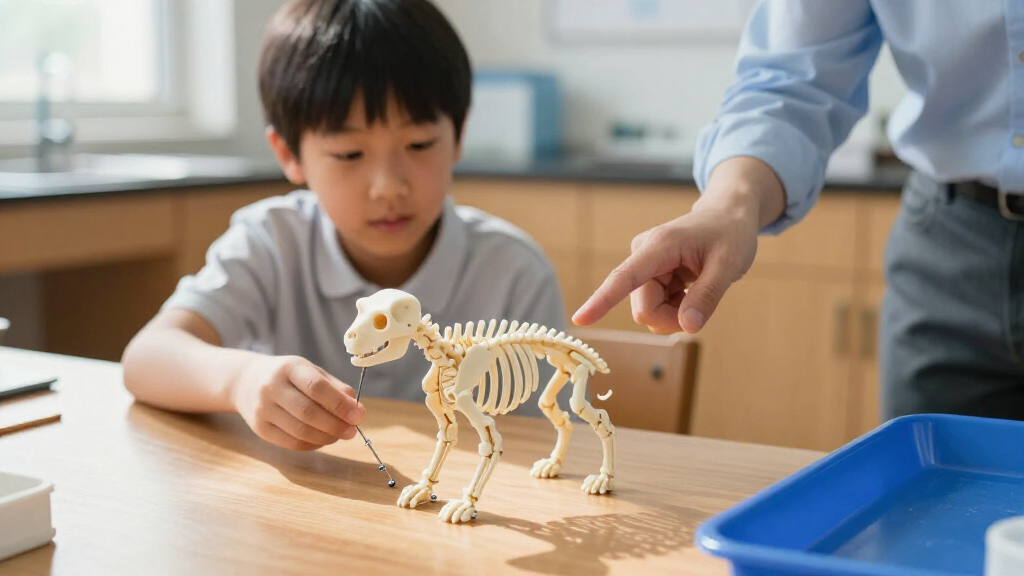
Educational animal skeleton models help learners explore structure, but this lineup ranges from bone-focused displays to models that open up to show organs. I rank the Life-Size Canine Skeleton Model as the best overall choice for clear, direct skeletal study, while the 4D Horse Anatomy Model with 26 Detachable Parts stands out for broader anatomy lessons and the Feline Anatomy Study Cube for compact introductory learning. The main tradeoff is between a model that keeps attention on bones and one that adds detachable parts for a wider but busier lesson. Scale, assembly demands, and the learner’s age also affect which format makes sense. Read on for the full comparison and help choosing by learning goal.

Prime made for students and young adults
- Fast, free delivery for dorm and study essentials
- Prime Video and Amazon Music included
- Member-only deals
Key Takeaways
- The canine skeleton is the clearest bone-study pick: its life-size format gives skeletal learning priority, unlike the 4D anatomy kits, which also focus on organs and body parts.
- The 4D horse model offers the broadest hands-on anatomy approach: its 26 detachable parts suit learners who want to explore more than the skeleton, while the 1:10 horse model keeps the emphasis on a smaller-scale skeletal display.
- Cat models cover distinct learning styles: the Study Cube favors a compact introduction, while the 28-piece Calico and 35-part Cat kits offer more removable components for detailed assembly and exploration.
- The pig model fills a different niche: its 19 detachable organs and body parts make it a comparative anatomy option rather than a straightforward skeleton model.
- The T. rex kit is the outlier: it brings dinosaur-themed assembly into the lineup, but buyers seeking accurate study of a living animal’s anatomy should choose one of the mammal models.
| Horse Skeleton Anatomical Model, 1:10 Scale |  | Best for Guided Equine Study | Scale: 1:10 | Material: PVC | Package dimensions: 16.54 × 11.42 × 5.51 inches | VIEW LATEST PRICE | See Our Full Breakdown |
| 4D Pig Anatomy Model with 19 Detachable Organs and Body Parts |  | Best for Hands-On Organ Lessons | Product size: 6.15 × 3.46 × 3 inches (15.6 × 8.8 × 7.7 cm) | Packing size: 14.76 × 11 × 3.34 inches (37.5 × 28 × 8.5 cm) | Weight: 0.6 kg | VIEW LATEST PRICE | See Our Full Breakdown |
| 4D Horse Anatomy Model with 26 Detachable Parts |  | Best for Equine Hands-On Learning | Number of parts: 26 | Package dimensions: 14.96 × 11.02 × 3.54 inches | Item weight: 2.2 pounds | VIEW LATEST PRICE | See Our Full Breakdown |
| Feline Anatomy Study Cube: 3D Cat Learning Model |  | Best Compact Study Aid | Anatomical systems: 10 | Dimensions: 3.15 × 3.15 × 3.15 inches (8 × 8 × 8 cm) | Weight: 4.6 ounces | VIEW LATEST PRICE | See Our Full Breakdown |
| Life-Size Canine Skeleton Model |  | Best for Veterinary Display | Material: PVC | Listed standard size: 19.3 × 7.9 × 13.8 inches | Product dimensions: 11.42 × 5.51 × 16.54 inches | VIEW LATEST PRICE | See Our Full Breakdown |
| 4D Vision Calico Cat Anatomy Model Kit, 28 Pieces |  | Best for Layered Cat Anatomy | Brand: Famemaster | Model: Calico Cat Anatomy Model Kit | Pieces: 28 | VIEW LATEST PRICE | See Our Full Breakdown |
| 4D Vision Cat Anatomy Model, 35 Detachable Parts, Plastic Educational Model |  | Best for Repeated Hands-On Practice | Brand: Yuatedllay | Model: CAM001 | Material: Plastic | VIEW LATEST PRICE | See Our Full Breakdown |
| Thames & Kosmos Giant Dinosaur T. Rex Skeleton Model |  | Best Dinosaur Skeleton Building Kit | Material: Plastic | Model size: 26 inches | Item dimensions: 16 x 3 x 11 inches | VIEW LATEST PRICE | See Our Full Breakdown |
| educational animal skeleton model | Material | Manufacturer | Weight |
|---|---|---|---|
| Horse Skeleton Anatomical Mode | PVC | MediTrainer | — |
| 4D Pig Anatomy Model with 19 D | PVC | XFIXWSASV | 0.6 kg |
| 4D Horse Anatomy Model with 26 | — | SORECI | — |
| Feline Anatomy Study Cube: 3D | — | Kits of Medicine | 4.6 ounces |
| Life-Size Canine Skeleton Mode | PVC | HADWYN | 3.3 pounds |
| 4D Vision Calico Cat Anatomy M | PVC | — | — |
| 4D Vision Cat Anatomy Model | Plastic | — | 8 ounces |
| Thames & Kosmos Giant Dinosaur | Plastic | — | — |
More Details on Our Top Picks
Horse Skeleton Anatomical Model, 1:10 Scale
The 1:10 horse skeleton is a focused teaching aid for equine anatomy, with a labeled poster that helps learners connect the displayed bones with their names. Its weighted base gives it a steadier display setup than the hands-on 4D Horse Anatomy Model with 26 Detachable Parts, which puts more emphasis on taking components apart. That difference makes this model better suited to a clinic desk or a small-group lesson where reference material matters more than assembly practice. The tradeoff is scale: at 1:10, bone features may be difficult to see from across a classroom, and it offers no detachable parts. I’d choose it for structured equine lessons, but not as the main model for large-group viewing or tactile anatomy exercises.
Pros:- Labeled anatomy poster supports bone identification and guided lessons.
- Weighted display base helps keep the model steady.
- PVC construction suits classroom or clinic display.
- Equine-specific skeleton offers a focused alternative to the multi-organ pig model.
Cons:- The 1:10 scale can limit visibility of smaller bone details.
- No detachable parts for hands-on assembly or component study.
- The poster supports identification, but the description does not specify interactive teaching materials.
Best for: Veterinary instructors, equine students, and clinic staff who want a stable horse skeleton display paired with a labeled study poster.
Not ideal for: Teachers leading large-group demonstrations or learners who need detachable parts and close-up bone detail.
- Scale:1:10
- Material:PVC
- Package dimensions:16.54 × 11.42 × 5.51 inches
- Item weight:1.3 pounds
- Included accessories:Weighted display base and labeled horse anatomy poster
- Manufacturer:MediTrainer
Our verdict“Choose this for stable, poster-supported equine study in a small teaching or clinic setting, not for large-room visibility or hands-on assembly.”
4D Pig Anatomy Model with 19 Detachable Organs and Body Parts
The 19 removable organs and body parts make this pig model the clearest pick here for lessons that move beyond the skeleton to internal anatomy. Compared with the Horse Skeleton Anatomical Model, 1:10 Scale, it trades a dedicated bone display and labeled poster for a more interactive, take-apart format. That can help learners understand how body systems fit together, while its compact assembled size is easier to store than a life-size canine skeleton. The same small footprint, however, may make parts hard to see during a group demonstration. The product information also leaves the age range and care instructions unspecified, so I’d want an instructor to manage use rather than assume it is suited to younger children. Choose it for close-up classroom or veterinary study, not broad room viewing.
Pros:- Nineteen detachable organs and body parts support hands-on study.
- Includes a skeleton alongside internal anatomy components.
- Compact assembled size is easier to store than a life-size display model.
- PVC construction is specified.
Cons:- Small assembled dimensions can limit visibility for groups.
- Age range and care instructions are not provided.
- The description does not specify a display base or labeled reference guide.
Best for: Veterinary educators and biology teachers leading small-group lessons on how organs and body parts fit within an animal.
Not ideal for: Instructors who need a large, visible skeleton for a whole-class demonstration or buyers seeking stated age guidance and care instructions.
- Product size:6.15 × 3.46 × 3 inches (15.6 × 8.8 × 7.7 cm)
- Packing size:14.76 × 11 × 3.34 inches (37.5 × 28 × 8.5 cm)
- Weight:0.6 kg
- Number of parts:19
- Material:PVC
- Manufacturer:XFIXWSASV
Our verdict“Pick this for close-range lessons on organs and body parts; choose a larger skeleton model when group visibility is the priority.”
4D Horse Anatomy Model with 26 Detachable Parts
For learners who want to handle and identify components, the 26 detachable parts give this horse model a more active teaching role than the Horse Skeleton Anatomical Model, 1:10 Scale. Its labeled parts support identification as students take the model apart, making it a stronger match for practical classroom exercises than a static skeleton-and-poster display. It also suits veterinary training and clinic demonstrations, though the listed package dimensions do not reveal how large the assembled model is. That missing scale information makes it harder to judge visibility before buying. The material is not specified, another gap for buyers weighing durability or cleaning needs. I’d favor it over the smaller pig model for equine-focused work, while accepting less certainty about size and construction.
Pros:- Twenty-six detachable parts support hands-on anatomy study.
- Labeled parts help learners identify components during assembly.
- Designed for veterinary, classroom, and clinic demonstrations.
- Horse-specific subject matter complements a static equine skeleton display.
Cons:- Material is not specified, limiting assessment of durability and cleaning needs.
- Scale and assembled dimensions are not provided, so display visibility is uncertain.
- No anatomy poster or display base is listed.
Best for: Equine instructors and veterinary students who want labeled, detachable components for active anatomy lessons.
Not ideal for: Buyers who need confirmed material, assembled dimensions, or a straightforward fixed skeleton display with a supplied poster.
- Number of parts:26
- Package dimensions:14.96 × 11.02 × 3.54 inches
- Item weight:2.2 pounds
- Manufacturer:SORECI
- Model type:Labeled, detachable horse anatomy model
- ASIN:B0CP21MNSL
Our verdict“Choose this for interactive equine anatomy lessons if detachable parts matter more than confirmed scale and material details.”
Feline Anatomy Study Cube: 3D Cat Learning Model
The 3.15-inch foldable cube is the most portable option in this group, presenting illustrations of 10 feline anatomical systems in a format that can sit on a desk or travel in a study bag. Unlike the 4D Pig Anatomy Model with 19 Detachable Organs and Body Parts, it is not a three-dimensional, take-apart specimen; its value is quick visual reference across several systems, including the skeleton, muscles, and organs. That makes it a useful companion for individual revision, but a weaker choice for demonstrating bone structure or letting students handle anatomical parts. The description names only some of the systems, so buyers cannot confirm the full coverage before purchase. I’d select it for compact feline review, not as a substitute for a detailed skeleton model.
Pros:- Illustrates 10 feline anatomical systems, including skeleton, muscles, and organs.
- Foldable design supports hands-on browsing and compact storage.
- Lightweight format is easy to carry.
- Printed materials are described as sturdy for repeated handling.
Cons:- Small dimensions limit detail visibility and group use.
- Illustrated systems do not provide a physical, three-dimensional skeleton.
- The full list of anatomical systems is not specified.
Best for: Cat owners, veterinary students, and learners who want a lightweight feline anatomy reference for individual study or desk display.
Not ideal for: Teachers seeking a life-size or detailed physical skeleton, detachable components, or clearly listed coverage of every anatomical system.
- Anatomical systems:10
- Dimensions:3.15 × 3.15 × 3.15 inches (8 × 8 × 8 cm)
- Weight:4.6 ounces
- Format:Foldable illustrated study cube
- Manufacturer:Kits of Medicine
- Model number:7625938069580
- Date first available:September 24, 2025
Our verdict“Choose this as a portable feline anatomy refresher, not as a physical skeleton model for detailed or group instruction.”
Life-Size Canine Skeleton Model
The life-size canine skeleton is the strongest choice in this group for making bone structure visible as a permanent teaching or clinic display. Compared with the 1:10 Horse Skeleton Anatomical Model, it offers a larger stated format and clearly visible bones, so it is better suited to observation without relying on a poster. Its flexible mounted base supports display, while washable, moisture-resistant PVC gives it practical advantages for shared teaching spaces. The tradeoff is that the listed standard size differs from the separate product dimensions, leaving buyers without one clearly consistent measurement. It also lacks detachable parts, unlike the 4D horse and pig models. I’d choose it for canine skeleton observation and display, but not for lessons that depend on disassembly or precisely confirmed fit in a space.
Pros:- Life-size format is suited to canine anatomy display and observation.
- Clearly visible bones support teaching without a separate reference poster.
- Washable, moisture-resistant PVC suits shared educational settings.
- Flexible base provides a mounted display setup.
Cons:- The stated standard size differs from the separate product dimensions.
- No detachable parts are listed for hands-on assembly lessons.
- At 3.3 pounds, it is less convenient to move than the compact study cube.
Best for: Veterinary clinics, animal science classrooms, and canine anatomy instructors who need a prominent fixed skeleton display.
Not ideal for: Buyers seeking a take-apart model, a portable study aid, or a single unambiguous set of dimensions for planning display space.
- Material:PVC
- Listed standard size:19.3 × 7.9 × 13.8 inches
- Product dimensions:11.42 × 5.51 × 16.54 inches
- Weight:3.3 pounds
- Model number:A051
- Manufacturer:HADWYN
- Mounting:Flexible base
Our verdict“Choose this for a fixed canine teaching display with visible bones, but verify the dimensions and skip it if students need detachable parts.”
4D Vision Calico Cat Anatomy Model Kit, 28 Pieces
This 28-piece calico model makes the most sense for learners who want to connect a cat’s skeleton with its muscles and digestive organs, rather than study bones alone. Its transparent case lets the assembled layers remain visible, giving it a stronger display-and-explanation role than the more hands-on Yuatedllay 35-part cat model, which emphasizes repeated disassembly. At 11.57 inches long, it offers a substantial subject for a home STEM lesson without reaching the footprint of the 26-inch T. Rex skeleton. The tradeoff is that this kit requires assembly, and its 28 pieces provide fewer individual components than the Yuatedllay cat. I’d choose it for guided anatomy lessons; buyers seeking a bone-only skeleton or the simplest setup should look elsewhere.
Pros:- Shows skeletal, muscular, and digestive structures in one model
- Transparent case keeps internal layers visible for lessons and display
- Hand-painted parts help distinguish anatomy components
- Includes assembly instructions and is intended for STEM learning
Cons:- Requires assembly before it can be used as a model
- Has fewer pieces than the 35-part Yuatedllay cat anatomy model
- Focuses on broader internal anatomy rather than a standalone skeletal study
Best for: Families and educators teaching children aged 8 and up how feline bones relate to muscles and digestive organs
Not ideal for: Learners seeking a quick, ready-to-display bone-only model or frequent take-apart practice with more individual parts
- Brand:Famemaster
- Model:Calico Cat Anatomy Model Kit
- Pieces:28
- Assembled length:11.57 inches
- Material:PVC
- Recommended age:8 years and up
- Included components:Anatomy kit and assembly instructions
- Model number:622040
Our verdict“Choose this kit for a layered cat anatomy lesson that combines bones with muscles and digestive organs, not for a bone-only display.”
4D Vision Cat Anatomy Model, 35 Detachable Parts, Plastic Educational Model
For learners who benefit from taking anatomy apart and rebuilding it, the 35 detachable parts give this orange cat model a clear advantage over the 28-piece Famemaster calico kit. Its molded plastic construction is described as durable for repeated assembly, and the compact 8.66-inch length makes it easier to handle during individual or small-group lessons than the 26-inch T. Rex skeleton. The emphasis is on seeing where feline organs and body structures fit, so it works better as an interactive anatomy activity than as a bone-focused display. The tradeoffs are its single orange color and the lack of supplied age guidance or detailed manual information in the provided product data. I’d pick it for practice sessions, but not for learners wanting a varied, realistic color palette.
Pros:- 35 detachable parts support repeated hands-on anatomy practice
- Compact dimensions are manageable for desks and small-group activities
- Molded plastic is described as durable for frequent assembly and disassembly
- Shaped components are described as easy to assemble
Cons:- Only available in orange, limiting color variation between structures
- Product data does not specify an age recommendation or include a detailed manual
- Covers feline anatomy rather than focusing specifically on a skeleton
Best for: Teachers, homeschoolers, and students who want to repeatedly assemble and disassemble a compact feline anatomy model
Not ideal for: Buyers seeking a transparent display case, hand-painted color distinctions, or a dedicated animal skeleton model
- Brand:Yuatedllay
- Model:CAM001
- Material:Plastic
- Color:Orange
- Weight:8 ounces
- Pieces:35
- Dimensions:8.66 x 2.56 x 7.09 inches
Our verdict“Pick this model for repeated, hands-on cat anatomy practice in a compact format, while choosing the Famemaster kit for a more display-oriented layered presentation.”
Thames & Kosmos Giant Dinosaur T. Rex Skeleton Model
This kit is the roundup’s clearest choice for a learner focused on skeletal structure and paleontology rather than the organs of a living animal. Its assembled T. Rex stretches 26 inches, making the finished skeleton more prominent than either cat anatomy model, while the snap-together pieces and illustrated manual give children a guided building activity. Compared with the horse and canine skeleton models elsewhere in this roundup, it offers a dinosaur subject and a construction-led lesson, not a life-size modern-animal reference. That distinction is also its main limitation: the kit covers only a T. Rex, and the manual may not satisfy older learners seeking advanced detail. Younger builders may need adult supervision. I’d choose it for an introductory dinosaur anatomy project, not for broad comparative anatomy study.
Pros:- 26-inch finished skeleton creates a large, visible display
- Snap-together plastic parts support an accessible building activity
- Full-color manual provides step-by-step instructions and educational context
- Connects skeleton assembly with dinosaur anatomy and paleontology
Cons:- Limited to a single T. Rex skeleton
- Younger children may need adult supervision during assembly
- Manual may be too basic for advanced learners
Best for: Children aged 6 and up who want to build and display a large dinosaur skeleton while learning introductory paleontology
Not ideal for: Older students seeking advanced anatomical material or buyers who need models covering multiple animal species
- Material:Plastic
- Model size:26 inches
- Item dimensions:16 x 3 x 11 inches
- Item weight:16 ounces
- Recommended age:6 years and up
- Includes:Plastic skeleton pieces and full-color experiment manual
- Warranty:1 year
Our verdict“Choose this kit for a large, guided T. Rex skeleton-building project; pick a horse or canine model for studying a modern animal’s bones.”
How We Picked
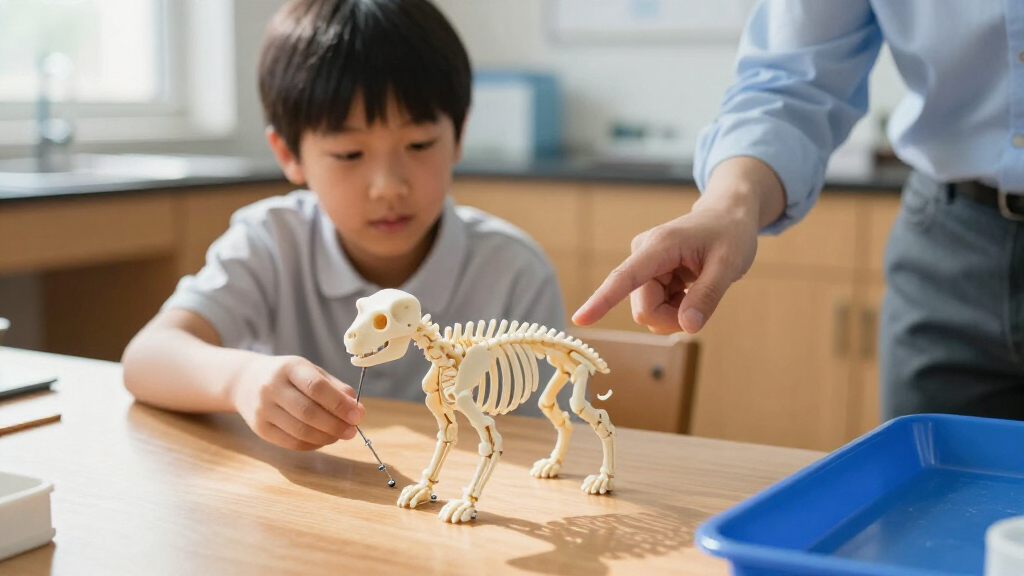
I ranked these models by how well their format supports a clear learning goal: studying bones, exploring multiple body systems, or introducing anatomy through hands-on assembly. I weighed the stated scale, number and type of detachable components, likely handling demands, and how easily a buyer can match the model to a classroom, home lesson, or display. A higher component count can add exploration, but it does not automatically make a model better for learning the skeleton.
The life-size canine skeleton leads because it has the most direct fit for skeletal study. The 26-part horse follows for learners who want a wider anatomy lesson, while the compact cube and smaller-scale horse serve narrower space or display needs. Cat and pig kits are ranked by the scope suggested by their removable parts, and the dinosaur kit is included as a distinct, themed choice rather than a close substitute for mammal anatomy. Product details provided do not specify material durability, assembly time, or included teaching materials, so I avoid treating those as confirmed advantages.
| educational animal skeleton model | Material | Manufacturer |
|---|---|---|
| Horse Skeleton Anatomical Mode | PVC | MediTrainer |
| 4D Pig Anatomy Model with 19 D | PVC | XFIXWSASV |
| 4D Horse Anatomy Model with 26 | — | SORECI |
| Feline Anatomy Study Cube: 3D | — | Kits of Medicine |
| Life-Size Canine Skeleton Mode | PVC | HADWYN |
| 4D Vision Calico Cat Anatomy M | PVC | — |
| 4D Vision Cat Anatomy Model | Plastic | — |
| Thames & Kosmos Giant Dinosaur | Plastic | — |
Factors to Consider When Choosing Educational Animal Skeleton Models
Choose the model around the lesson you want to teach, not just the animal or the number of pieces. A skeleton-focused model, a removable-organ kit, and a themed dinosaur build can all be educational, but they support different activities. These factors can help prevent a mismatch between the model and the learner.
Decide Whether the Lesson Is About Bones or Whole-Body Anatomy
Start by naming the learning objective in plain terms: identify bones, compare animal structure, or explore organs and body parts. A dedicated skeleton model keeps attention on the framework, while a 4D kit spreads attention across multiple structures. That broader scope can help when lessons connect body systems, but it may be distracting when the assignment is bone identification. A common mistake is treating every anatomy model as a skeleton model simply because it represents an animal. For a unit focused on bones, prioritize visible skeletal structure over a large detachable-part count. If the goal is general anatomy, removable components may justify the added complexity.
Match Scale to the Learning Space and Viewing Distance
Scale affects both visibility and where the model can be used. A life-size format can make proportions easier to discuss, but it needs room for storage, setup, and viewing from different angles. A 1:10 model is easier to place on a desk or shelf, though small structures may be harder to inspect as a group. Compact formats suit individual study and limited workspaces, while larger models can support a shared demonstration. Before buying, check the listed dimensions and whether the model can be displayed assembled. Do not assume that a larger model is automatically clearer; the details and intended viewing distance matter too.
Think About Who Will Assemble and Handle the Parts
Detachable components can turn a model into an active lesson, but they also create setup and storage work. Younger learners may benefit from adult guidance, especially when parts must be placed in a particular order or kept together between sessions. A single-piece or less elaborate model can be a better classroom choice when several learners need quick access. For a kit with many parts, plan a labeled container or a parts check before and after lessons. Piece count alone says little about difficulty, so look for assembly guidance and age recommendations in the product details. If those details are missing, favor a simpler format for independent use.
Choose Real-Animal Study or Themed Engagement Deliberately
A model of a familiar animal can support lessons about domestic species and comparative anatomy, while a dinosaur skeleton can draw learners into assembly and prehistoric topics. Those uses are related but not interchangeable. The T. rex kit may suit a themed activity or display, yet it should not stand in for studying the anatomy of a living mammal. Likewise, a cat or horse model is a stronger match when the lesson compares familiar animal bodies. Decide whether the model needs to teach a specific biological structure or mainly spark interest. That distinction helps prevent a fun theme from being mistaken for a precise teaching match.
Check What the Product Listing Says About Learning Support
Models vary in how much context they provide beyond the physical pieces. Diagrams, labels, assembly instructions, and lesson materials can make a complex kit easier to use, but these items are not confirmed for every product in this lineup. Check the listing for what is actually included rather than assuming a model arrives with a teaching guide. If the model has removable parts, clear identification and placement instructions matter more than they do for a simple display skeleton. Teachers may also want to check whether the model can be reset easily between learners. A modest model with clear support can be more useful than a more elaborate kit that requires extra explanation.
Pay for Complexity Only When You Will Use It
More components can support more activities, but each added part also brings more sorting, storage, and opportunities for pieces to go missing. A high-part-count kit makes sense when learners will repeatedly take it apart and reconstruct it. For a display or a focused bone lesson, a simpler model may keep the activity clearer and require less upkeep. Compare the learning tasks you expect to run with the features the model actually offers. If only one or two components will be used, the rest may add little practical value. Choose added complexity for a planned purpose, not as a proxy for educational quality.
Frequently Asked Questions
Which model should I choose if the lesson is specifically about bones?
I would start with the Life-Size Canine Skeleton Model because its stated format centers on the skeleton rather than a mix of organs and body parts. The 1:10 horse skeleton is another bone-focused option if a smaller display footprint matters. The 4D horse, pig, and cat kits can broaden a lesson into other anatomical structures, but that broader scope may pull focus from bones. Check the product details for labels or a bone guide before buying if learners need to identify individual structures. Match the animal to the lesson rather than choosing by scale alone.
Are detachable anatomy models a good choice for younger children?
They can be engaging, but suitability depends on age guidance, part size, assembly demands, and whether an adult can supervise. The models with 19, 26, 28, or 35 detachable parts offer more handling opportunities, along with more pieces to track. I would check the manufacturer’s recommended age and any small-parts warnings before choosing a kit for a young child. For independent early learning, a compact or simpler format may be easier to manage. If the child is ready for assembly, set aside a place to sort and store the pieces.
Is a 4D anatomy kit a substitute for a skeleton model?
Not always: a 4D kit generally supports a broader anatomy activity, while a dedicated skeleton model keeps bones at the center. The horse and cat kits in this lineup are described by their detachable parts, and the pig model specifically includes organs and body parts. That makes them useful for lessons spanning more than one body structure, but not necessarily the clearest choice for focused bone identification. Review the product images and component list to see how prominently the skeleton is represented. If skeletal structure is the sole objective, choose a model whose stated purpose is skeletal study.
Should I choose the 28-piece or 35-part cat model?
The listed part count suggests the 35-part model may offer more components to handle, while the 28-piece Calico kit provides a slightly smaller set. That number alone does not establish which model is easier, more accurate, or better labeled. Compare the included parts, assembly instructions, age guidance, and the kind of lesson you plan to teach. For a first cat anatomy activity, simpler instructions may matter more than having additional pieces. Choose the larger set only if its extra components support a specific learning goal.
Can the T. rex skeleton kit teach the same material as the animal models?
It can support a hands-on lesson about a dinosaur skeleton and may be a strong fit for learners drawn to prehistoric animals. It is not a direct replacement for the horse, cat, pig, or dog models when the goal is studying familiar living-animal anatomy. The models differ in subject as well as format, so select based on the curriculum or activity rather than assuming they cover identical content. Check the kit’s scale, assembly details, and included learning information before using it as a teaching aid. For a general animal-biology lesson, a mammal model is the closer match.
Conclusion
For most buyers focused on bones, I recommend the Life-Size Canine Skeleton Model as the best overall pick; its direct skeletal focus gives it the clearest fit for that goal. The 1:10 Horse Skeleton is the best value-style choice for buyers who want a smaller bone-study display, while the 4D Horse Anatomy Model with 26 Detachable Parts is my premium-style pick for broader hands-on anatomy. Beginners with limited space may prefer the Feline Anatomy Study Cube, while learners who want to explore multiple structures can look at the pig or cat 4D kits. For dinosaur-themed assembly, choose the Thames & Kosmos T. rex; for a familiar animal skeleton, stay with the canine or horse models. Match the format to the lesson, and the choice becomes much clearer.
Halloween Picks
halloween
As an affiliate, we earn on qualifying purchases.