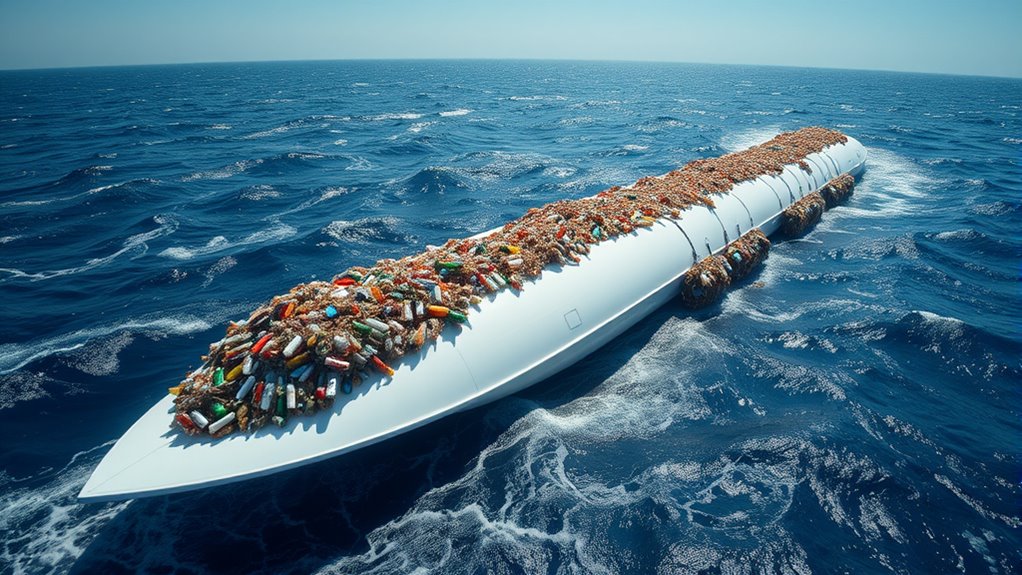

The Ocean Cleanup device has successfully removed around 100 tons of plastic from the Great Pacific Garbage Patch, showcasing a major step in tackling ocean pollution. It works by harnessing natural ocean currents to guide floating debris into a barrier, preventing plastics from harming marine life and entering the food chain. This innovative solution makes cleanup more efficient and scalable, offering hope for larger regional impacts. If you stay tuned, you’ll learn more about how technology fights pollution effectively.

Prime made for students and young adults
- Fast, free delivery for dorm and study essentials
- Prime Video and Amazon Music included
- Member-only deals
Key Takeaways
- The device harnesses ocean currents to efficiently collect plastics without harming marine life.
- It has successfully removed approximately 100 tons of plastic from the Great Pacific Garbage Patch.
- Designed for scalability, the system can target larger areas and collect more debris over time.
- The device reduces debris dispersal, preventing plastics from sinking or entering the food chain.
- This innovative solution demonstrates the effectiveness of technology in combating ocean pollution.
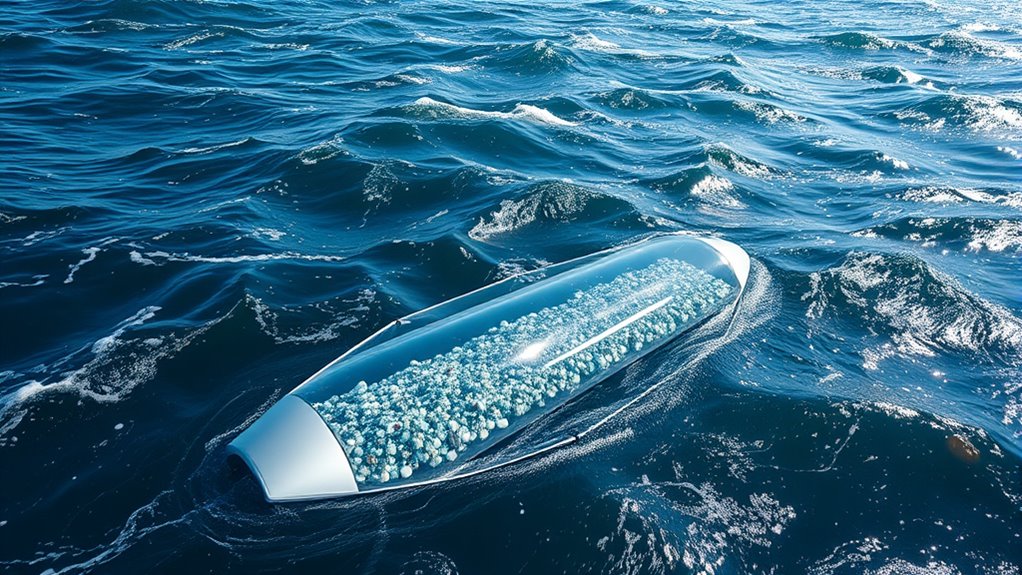
The device acts as a barrier, capturing plastics without harming marine animals, and its purpose is to reduce the amount of debris that fuels ongoing pollution. You might not realize it, but every piece of plastic you see floating in the ocean contributes to a cycle of pollution that threatens marine life and human health. The device operates by harnessing natural ocean currents, which guide floating plastics toward its collection system. As plastics gather, it minimizes the chance of these pollutants sinking or dispersing into more remote areas, making cleanup more manageable and efficient. This approach exemplifies pollution prevention, stopping plastics from breaking down further into microplastics or entering the food chain. You can see it as a proactive step, not just a cleanup measure, aimed at stopping debris before it causes irreversible damage. Additionally, the device’s design emphasizes scalability and durability, allowing for broader deployment across affected regions to maximize impact. This device is designed for durability and scalability. You’re encouraged to think about how its deployment can be expanded, covering more affected regions and reducing the overall volume of marine debris. Its capacity to collect hundreds of tons of plastic demonstrates how technology can be a powerful tool in combating pollution. When you support or learn about these efforts, you’re helping to raise awareness about the importance of pollution prevention techniques. These efforts make a tangible difference by decreasing the amount of plastic that reaches delicate marine habitats, such as coral reefs and breeding grounds for sea life. Furthermore, the success of this device shows that solutions to marine debris are possible when technology and environmental responsibility align. It’s not just about cleaning up; it’s about preventing future accumulation. When you understand how the device works, you grasp that reducing marine debris isn’t solely the responsibility of cleanup crews but also involves innovative design, policy changes, and community engagement. By preventing plastics from entering the oceans in the first place, we can lessen the burden on cleanup efforts like this device, making the entire process more sustainable. Your awareness and support contribute considerably to global pollution prevention initiatives, helping to preserve ocean health for generations to come.
As an affiliate, we earn on qualifying purchases.
Frequently Asked Questions
How Long Will the Cleanup Device Remain Operational?
You can expect the cleanup device to remain operational for several years, depending on regular device maintenance and environmental conditions. As you monitor its performance, you’ll help guarantee it continues to protect marine biodiversity by removing plastic debris effectively. Proper maintenance is essential, so schedule routine checks and repairs to prolong its lifespan. Your ongoing efforts will help sustain the device’s ability to clean up the ocean and preserve marine ecosystems.
What Happens to the Collected Plastic Debris Afterwards?
Imagine the plastic debris, once collected, being carefully sorted and processed into new materials. You help support plastic recycling efforts that turn waste into useful products, reducing environmental harm. The cleaned debris is then repurposed, aiding ecosystem restoration by removing pollutants that threaten marine life. Your involvement guarantees this plastic doesn’t just vanish but transforms into items that benefit communities, fostering a healthier, cleaner ocean for future generations.
Can the Device Target Microplastics Effectively?
You might wonder if the device can target microplastics effectively. While it’s designed for larger debris, microplastic filtration remains a challenge due to their tiny size. Improving device durability and incorporating advanced filtration methods could help. Currently, the device isn’t fully optimized for microplastics, but ongoing innovations aim to enhance its ability to capture these smaller particles, making cleanup efforts more thorough in the future.
How Does the Device Withstand Ocean Weather Conditions?
You’ll be glad to know that the device is built with corrosion resistance and weather durability in mind. It withstands harsh ocean conditions by using specialized materials that resist corrosion from saltwater and endure strong winds and waves. This robust design guarantees the device remains operational over time, effectively collecting plastic without succumbing to the ocean’s challenging weather, making it a reliable solution for cleaning up our seas.
What Are the Long-Term Environmental Impacts of the Device?
You might worry about long-term environmental impacts, but the device aims to protect marine biodiversity by reducing plastic pollution. It’s designed to minimize chemical pollution and avoid harming marine life. Over time, it can help restore healthier ocean ecosystems, supporting diverse species. While ongoing monitoring is essential, the device’s careful design endeavors to balance cleanup efforts with preserving the ocean’s natural balance and biodiversity.
As an affiliate, we earn on qualifying purchases.
Conclusion
You’ve seen how this device acts like a vigilant guardian, tirelessly sweeping away the mountain of plastic threatening our oceans. Its victory over 100 tons of debris is just the beginning, a spark of hope shining through the murky waters. Imagine the ocean as a vast, delicate tapestry—you’re helping mend its frayed edges. With each effort, you’re turning the tide, proving that even the smallest ripple can create waves of change in our beautiful, fragile blue planet.
As an affiliate, we earn on qualifying purchases.
microplastics filtration technology
As an affiliate, we earn on qualifying purchases.
As an affiliate, we earn on qualifying purchases.
Halloween Picks
halloween
As an affiliate, we earn on qualifying purchases.