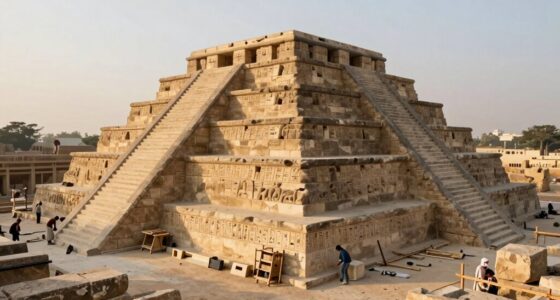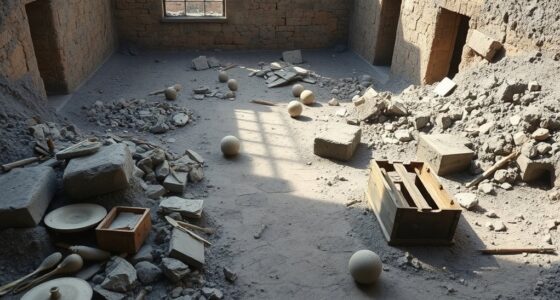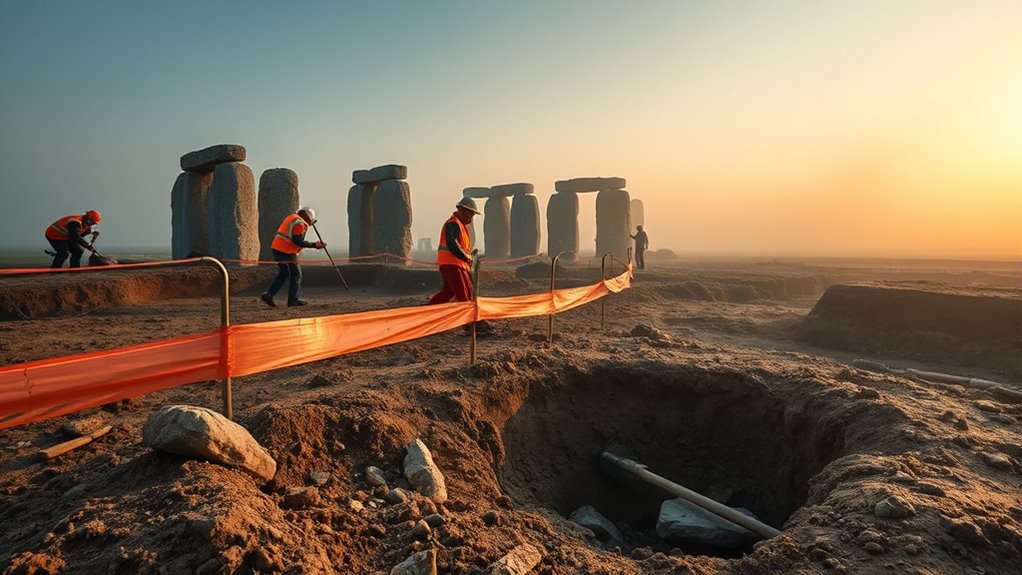

Recent excavations near Stonehenge uncover new clues that reveal its true purpose. Evidence suggests the site was more than a stone circle; it was a ceremonial hub tied to ancient rituals and celestial events. Artifacts like ritual pits and symbolic objects show it was a sacred space for community gatherings, honoring both the sky and ancestors. As you explore further, you’ll uncover how these findings deepen our understanding of its spiritual and astronomical significance.
Key Takeaways
- Recent excavations uncovered ritual artifacts indicating the surrounding area was a ceremonial landscape linked to Stonehenge’s spiritual functions.
- Discovery of ritual pits and symbolic objects suggests the site served as a complex network of sacred activities beyond the stone circle.
- Artifacts related to fire and offerings reinforce the idea of the site as a focal point for community rituals and celestial worship.
- Findings support the view that nearby sites complemented Stonehenge’s role as an astronomical calendar and spiritual center.
- New clues highlight the importance of the surrounding landscape in understanding Stonehenge’s function as a ceremonial and cosmic hub.
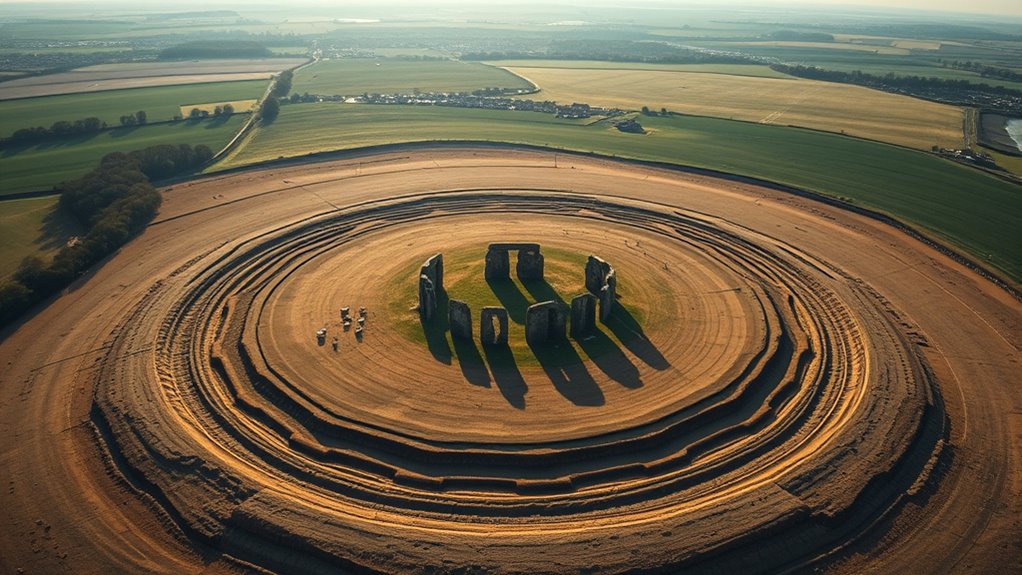
Have you ever wondered why Stonehenge was built? Many believe it served as more than just a massive stone circle; it was likely a site of ancient rituals and cosmic significance. Recent excavations at nearby sites are shedding new light on these possibilities, revealing clues that could explain how our ancestors connected with the heavens. Stonehenge’s precise construction and alignment suggest it was intentionally designed to interact with astronomical phenomena, perhaps marking seasonal changes or celestial events. These astronomical alignments, such as the solstices, support the idea that the monument was a calendar in stone, helping ancient peoples track time and plan agricultural activities. But beyond its role in astronomy, scholars now think it might have also been a sacred space where rituals honoring the sky and ancestors took place.
When you consider the alignments of the stones, it becomes clear that the site wasn’t randomly placed. The sun rising over the heel stone during the summer solstice, for example, indicates that the builders understood and valued celestial movements. It’s as if they were blending their spiritual beliefs with their observations of the universe. This connection to the sky likely played a central role in their rituals, making Stonehenge a ceremonial hub where communities gathered to witness these cosmic events. The new excavations nearby have uncovered artifacts and features that point to a complex network of ritual activities, possibly involving processions, offerings, and communal ceremonies. These findings suggest that ancient rituals weren’t just performed inside the stones but also extended to surrounding landscapes, emphasizing the site’s importance as a sacred space.
In addition, recent discoveries of ritual artifacts at surrounding sites reinforce the idea that the entire area was a focal point for ceremonial activities dedicated to celestial deities and ancestral spirits. You might imagine ancient people gathering at Stonehenge during solstices or equinoxes, performing rituals that reinforced their understanding of the cosmos and their place within it. Their knowledge of astronomical alignments wasn’t accidental but deliberate, integrating celestial observations into their spiritual and social lives. The recent discoveries at surrounding sites include evidence of fires, ritual pits, and symbolic objects, indicating that the entire area was dedicated to ceremonies that connected heaven and earth. These rituals could have been aimed at ensuring favorable weather, bountiful harvests, or honoring gods and ancestors. As new excavations continue, they strengthen the idea that Stonehenge was a multifaceted temple—part astronomical observatory, part spiritual center—designed to facilitate ancient rituals that reinforced their worldview and cosmic understanding.
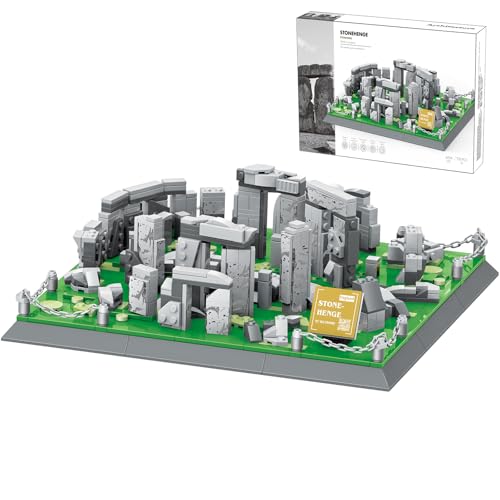
GHQYTPR Stonehenge Building Block Set 753 Pcs World Famous Architecture Model Kit for Adults & Teens Historical England Landmark Construction Project Home Office Desk Decor Display Gift
- Number of Pieces: 753-piece building set
- Authentic Design: Recreates Stonehenge accurately
- Educational & Brain-Boosting: Enhances focus and spatial skills
As an affiliate, we earn on qualifying purchases.
As an affiliate, we earn on qualifying purchases.
Frequently Asked Questions
How Old Are the Newly Discovered Nearby Site Artifacts?
You find that the newly discovered nearby site artifacts are approximately 4,500 years old. Through age determination and artifact dating techniques, archaeologists have pinpointed their age, helping you understand their significance. These ancient relics provide valuable insights into the prehistoric period. By analyzing their materials and context, you realize how vital they are for piecing together the history surrounding Stonehenge and its nearby surroundings.
Were There Any Signs of Everyday Human Activity at the Site?
You’ll find ancient domestic signs and daily routines at the site, showing clear evidence of human activity. You see tools, pottery, and food residues indicating daily life, work, and social interactions. These signs reveal that people lived, cooked, crafted, and gathered there regularly. Such evidence helps you understand that the site wasn’t just ceremonial but also a vibrant hub of everyday human activity, providing a fuller picture of ancient life.
What Tools or Materials Were Found During the Excavations?
During the excavations, you find prehistoric tools like flint blades and scrapers, which reveal daily activities. You also discover construction materials such as quarried stones and wooden posts, indicating building efforts. These artifacts help you understand how ancient people gathered resources and constructed the site. The tools and materials shed light on their skills and intentions, giving you a clearer picture of the region’s prehistoric life and the purpose behind structures like Stonehenge.
Do the Findings Suggest a Specific Cultural Influence?
You see, the findings act like a bridge revealing cultural connections and regional influences that shaped Stonehenge. They suggest that nearby communities shared ideas, tools, and beliefs, weaving a tapestry of interconnected cultures. These clues hint at a broader network, showing that Stonehenge wasn’t isolated but part of a larger cultural web. Your discoveries demonstrate how regional influences helped craft the iconic monument, linking ancient peoples across the landscape.
How Do These Clues Change Previous Theories About Stonehenge?
These clues challenge previous theories by highlighting Stonehenge’s ceremonial significance beyond just its construction techniques. You see evidence suggesting it was a site for ritual gatherings, not merely a monument. The new findings imply that its construction involved complex techniques aimed at spiritual or cultural purposes. This broadens your understanding, showing that Stonehenge served as a focal point for ceremonial activities, shaping its historical and cultural importance.

Stanley London Kala Universal Pocket Nocturnal | Works in Both Northern & Southern Hemispheres | The First Time Instrument of Its Kind
- Universal Nighttime Timekeeping: Tells time in both hemispheres at night
- Hemispheric Collaboration: Designed with Tony Sprent using Polaris and Southern stars
- Compact Size: Measures 60mm, fits easily in pocket
As an affiliate, we earn on qualifying purchases.
As an affiliate, we earn on qualifying purchases.
Conclusion
So, with these new discoveries near Stonehenge, are we finally getting closer to understanding its true purpose? As you piece together the clues from nearby sites, it’s clear that the monument wasn’t just a standalone wonder but part of a larger story. Will future excavations reveal even more secrets about its role in ancient life? One thing’s certain: the mystery of Stonehenge keeps inviting us to explore deeper and ask more questions.

Lord of Battles Roman Bronze Metal Dodecahedron | Lost-Wax Cast Ancient Artifact Replica | Mysterious Relic for Collectors & History Lovers – 82 Grams (Solid Bronze (Antique))
- Historical Roman Dodecahedron: Inspired by 2nd–3rd century CE artifacts
- Solid Bronze Construction: Made with traditional lost-wax casting
- Compact Display Size: Measures 5.4 × 6.5 × 6.5 cm
As an affiliate, we earn on qualifying purchases.
As an affiliate, we earn on qualifying purchases.

The Stones of Time: Calendars, Sundials, and Stone Chambers of Ancient Ireland
As an affiliate, we earn on qualifying purchases.
As an affiliate, we earn on qualifying purchases.