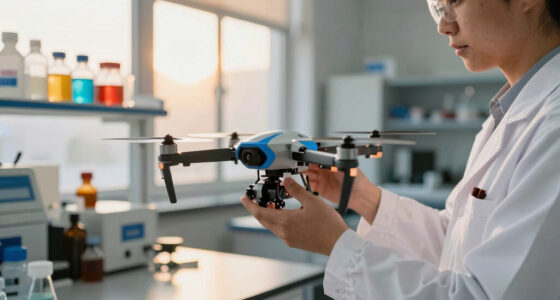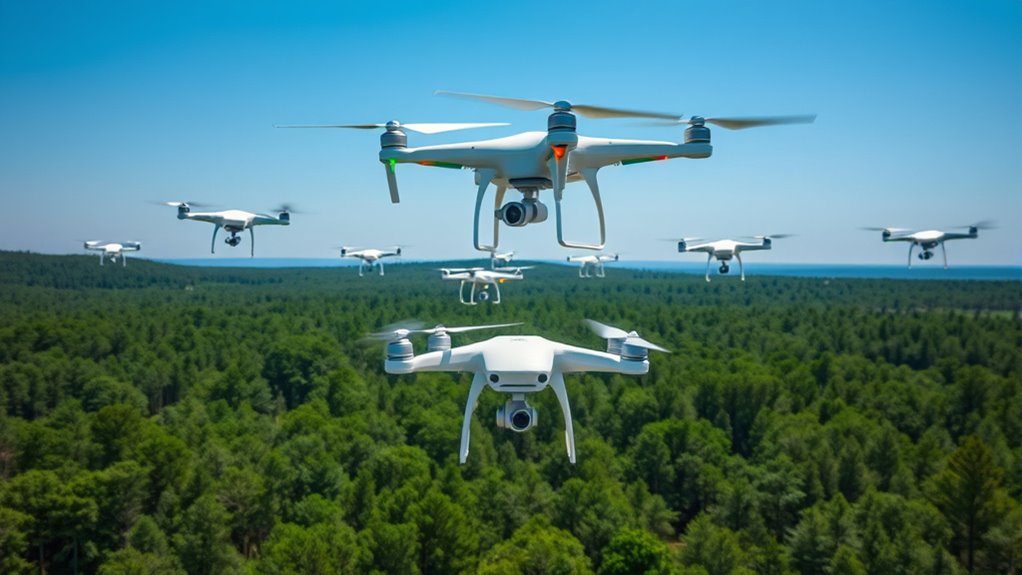

Drones teaming up with AI are transforming reforestation by planting trees more efficiently and precisely. They quickly cover large areas, avoid obstacles, and deliver seeds to hard-to-reach spots, reducing costs and boosting success rates. AI analyzes environmental data to optimize planting patterns and monitors progress over time. This innovative approach makes forest restoration faster and more effective. Keep exploring to discover how this technology is shaping the future of reforestation efforts.

Prime made for students and young adults
- Fast, free delivery for dorm and study essentials
- Prime Video and Amazon Music included
- Member-only deals
Key Takeaways
- Drones equipped with AI efficiently plant seeds in difficult-to-access reforestation areas.
- AI algorithms optimize drone routes and planting patterns based on environmental data.
- Drones collect environmental data and monitor seed growth, pests, and site conditions.
- Autonomous drones navigate complex terrains with obstacle avoidance for precise planting.
- Continuous AI-driven monitoring enables adaptive management to improve reforestation success.

Reforestation efforts have gained new momentum thanks to the innovative use of drones and artificial intelligence. As you get involved in these projects, you’ll see how technology transforms the way forests are restored. Drones are now capable of covering vast areas quickly and efficiently, making reforestation more scalable than ever before. They handle tasks like planting seeds, mapping terrain, and monitoring growth, all while reducing costs and increasing precision.
One of the key advantages is the ability to achieve cost effective logistics. Traditional reforestation methods often involve heavy machinery, manual labor, and significant time investment. Drones cut through these barriers by delivering seeds directly to hard-to-reach areas without the need for extensive infrastructure. This means fewer resources are needed for transportation and labor, making large-scale reforestation projects more financially feasible. When you deploy drones equipped with AI algorithms, they can optimize routes and planting patterns based on terrain data, soil health, and other environmental factors. This targeted approach maximizes seed success rates and minimizes waste, further reducing costs.
Drones enable cost-effective reforestation by delivering seeds efficiently without extensive infrastructure.
Drone navigation plays a crucial role in elevating these efforts. You’ll find that autonomous drones can navigate complex landscapes with precision, avoiding obstacles like trees, power lines, or rugged terrain. AI-powered navigation systems process real-time sensor data to adapt flight paths instantly, ensuring that every seed lands in the optimal spot. This level of accuracy means you’re planting more effectively, with fewer missed opportunities or wasted seeds. Plus, drones can operate continuously over large areas without fatigue, enabling rapid deployment across regions that would otherwise take weeks or months to cover manually. Additionally, advancements in sensor technology allow drones to gather more detailed environmental data, further improving planting strategies and site assessments.
Monitoring is another vital aspect where drones and AI team up to enhance reforestation. Once seeds are planted, drones can revisit sites to assess growth, detect pests, or identify areas that need additional intervention. Using AI-driven image analysis, you can quickly interpret data collected from aerial surveys, gaining insights that improve future planting strategies. This ongoing monitoring helps you respond swiftly to environmental changes or unforeseen issues, increasing the chances of successful forest restoration.
Frequently Asked Questions
How Do Drones Identify Suitable Planting Sites Automatically?
You use satellite imagery and soil analysis data to identify suitable planting sites automatically. The drones process satellite images to assess land conditions, such as vegetation cover and terrain type, while soil analysis helps determine soil health and moisture levels. Combining this information, the AI guides drones to pinpoint ideal locations for planting, ensuring high success rates and efficient reforestation efforts with minimal human intervention.
What Are the Environmental Impacts of Drone-Assisted Reforestation?
You’ll see drone-assisted reforestation dramatically transform ecosystems, preventing soil erosion and boosting biodiversity like never before. These advanced techniques help restore vast areas quickly, fostering healthier soil and diverse habitats. By planting trees more accurately and efficiently, you minimize environmental disruption, ensuring long-term sustainability. This innovation enhances ecological resilience, creating lush, vibrant forests that support countless species and protect the planet’s health for generations to come.
How Do AI Algorithms Optimize Tree Species Selection?
AI algorithms optimize tree species selection by analyzing genetic diversity and climate adaptation data. You can input environmental conditions and genetic information to identify species best suited for resilience and biodiversity. This approach guarantees planting trees that thrive, adapt to future climate changes, and maintain ecosystem health. By leveraging AI, you enhance reforestation success, promoting long-term forest sustainability and ecological balance.
What Are the Costs Compared to Traditional Reforestation Methods?
Imagine you’re in the year 1923, where reforestation costs are high and funding sources are limited. Today, using drones and AI reduces costs considerably compared to traditional methods. You’ll find a better cost comparison, as automation cuts labor and material expenses. Funding sources now include government grants, environmental organizations, and private investors, making reforestation more feasible and scalable than ever before.
How Is Drone Data Secured During the Planting Process?
You secure drone data during planting by using data encryption, which keeps your information safe from unauthorized access. Additionally, you address privacy concerns by following strict protocols, such as limiting data collection to necessary details and anonymizing sensitive information. Regular security audits and secure storage practices guarantee that your data remains protected throughout the process, giving you confidence that your reforestation efforts are both effective and secure.
Conclusion
By teaming up, drones and AI are revolutionizing reforestation, making it faster and more efficient. Did you know that this technology can plant up to 100,000 trees in just a single day? Imagine the impact you could have by supporting these innovations—restoring ecosystems and combating climate change. As you see these advancements grow, you’ll realize how technology can truly help heal our planet, one forest at a time.
Fall Picks
fall essentials
As an affiliate, we earn on qualifying purchases.