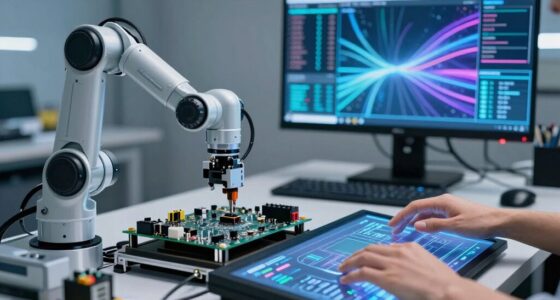
Quantum computers won’t break all encryption overnight. They’re still in early development, with current hardware struggling with stability and error rates. While they can someday crack widely used encryption like RSA and ECC, this isn’t imminent. Experts predict significant threats might emerge within the next decade, but a lot depends on ongoing research and new quantum-resistant algorithms. To understand how to stay protected and what’s being done, keep exploring the latest in quantum security.

Prime made for students and young adults
- Fast, free delivery for dorm and study essentials
- Prime Video and Amazon Music included
- Member-only deals
Key Takeaways
- Quantum computers are not yet capable of universally cracking encryption; they currently excel only at specific, limited tasks.
- Most widely used encryption algorithms, like RSA and ECC, remain secure against existing quantum hardware.
- The development of quantum-resistant cryptography is underway to protect data before practical quantum threats emerge.
- Experts estimate significant quantum threats may appear within the next decade, not immediately.
- Transitioning to post-quantum encryption standards is essential for future data security but is a gradual process.
quantum-resistant encryption hardware
As an affiliate, we earn on qualifying purchases.
As an affiliate, we earn on qualifying purchases.
What Is Quantum Computing and How Is It Different From Classical Computers?
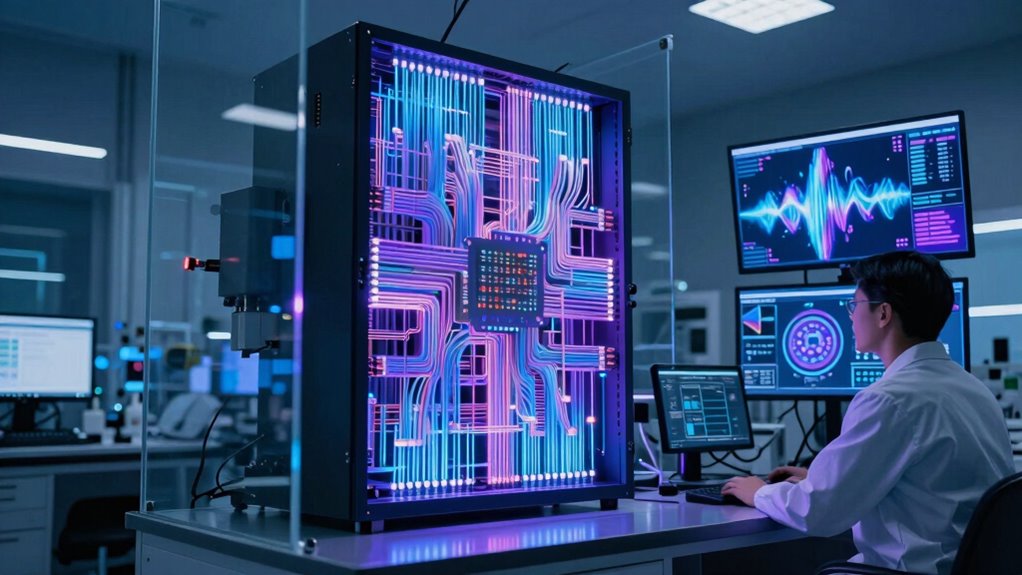
Quantum computing is a revolutionary technology that differs fundamentally from classical computers by using quantum bits, or qubits, instead of traditional bits. Unlike classical bits, which are either 0 or 1, qubits can exist in multiple states simultaneously thanks to superposition. This allows quantum computers to process complex problems more efficiently. Quantum algorithms leverage these properties to solve specific tasks faster than classical algorithms. When comparing classical vs. quantum computers, the key difference is their ability to handle certain calculations exponentially quicker. Classical computers excel at everyday tasks, but quantum machines have the potential to revolutionize fields like cryptography, optimization, and simulation. Additionally, the development of European cloud servers aims to enhance the security and sustainability of such advanced computing technologies. Understanding these distinctions helps you grasp how quantum computing could impact future encryption and security systems.
As an affiliate, we earn on qualifying purchases.
Can Quantum Computers Break Today’s Encryption?
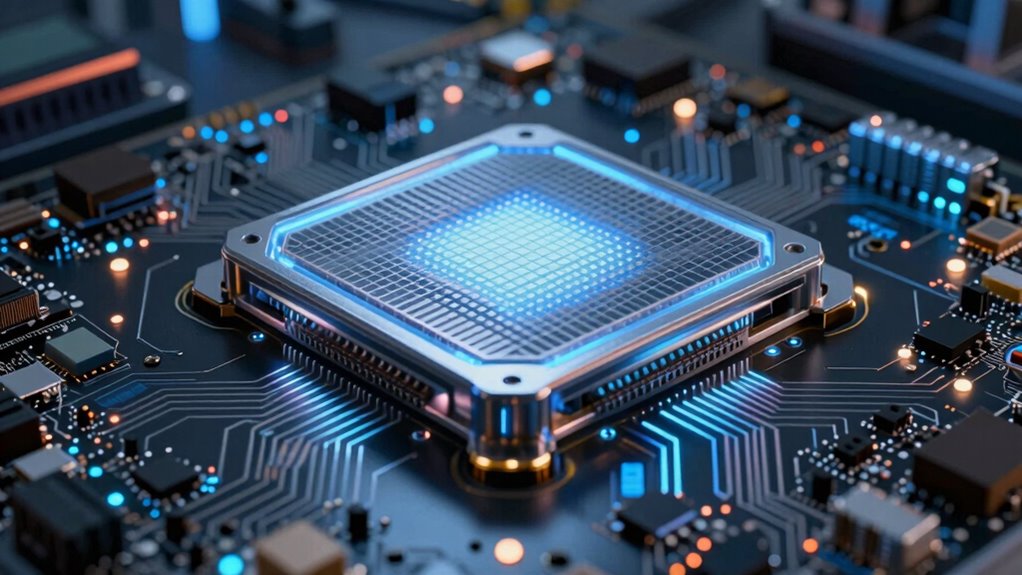
While quantum computers have the potential to outperform classical machines in many areas, their ability to break current encryption methods is a topic of active concern. Today’s encryption, like RSA and ECC, relies on complex math that classical computers struggle to solve quickly. Quantum encryption promises increased security, but quantum algorithms like Shor’s threaten to crack widely used systems. Additionally, ongoing research into projector technology highlights the rapid pace of technological advancements that could influence security measures in the future. The development of post-quantum cryptography aims to prepare for such breakthroughs by creating encryption methods resistant to quantum attacks. As cryptography standards evolve, it is essential to stay ahead of these emerging threats to ensure data protection. Emerging smart home security solutions are also exploring quantum-resistant encryption to safeguard connected devices.
quantum computing security devices
As an affiliate, we earn on qualifying purchases.
As an affiliate, we earn on qualifying purchases.
What Are Quantum Computers Capable of Now, and What Are Their Limits?
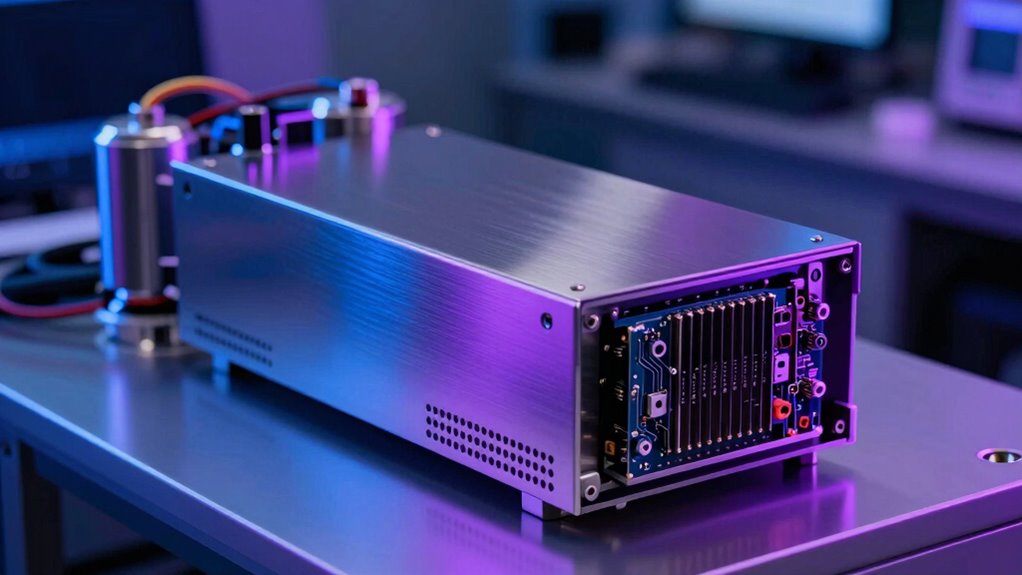
Although quantum computers have made significant progress in recent years, they are still in the early stages of development and cannot perform all tasks equally well. Today, they excel at specific problems, like simulating quantum systems or optimizing complex processes. Their power hinges on qubits, but qubit stability remains a challenge, causing errors and limiting performance. Quantum entanglement enables qubits to connect in ways classical bits cannot, boosting computational potential, but maintaining this entanglement over time is difficult. Currently, quantum computers are not advanced enough to break encryption on a broad scale. Instead, they operate within precise limits, primarily useful for research and specialized tasks. Their capabilities are promising but still constrained by hardware stability and error rates, preventing widespread, practical applications just yet. Additionally, ongoing Fact-Checking & media literacy efforts are essential to accurately assess quantum technology developments and their implications. As research continues, improvements in qubit stability and error correction are expected to expand their practical uses in the future. Moreover, understanding the hardware limitations of quantum systems is crucial for setting realistic expectations about their capabilities. With ongoing advances, the potential for error correction techniques to significantly enhance performance remains a key area of focus. Furthermore, research into scalability of quantum hardware is vital to overcome current limitations and unlock broader applications.
As an affiliate, we earn on qualifying purchases.
When Will Quantum Computers Start Threatening Data Security?

Predicting exactly when quantum computers will threaten data security remains difficult, but experts agree it’s a matter of when, not if, they surpass classical encryption methods. While it’s hard to pinpoint a timeline, most believe it could happen within the next decade. In the meantime, quantum ethics guide responsible research, balancing innovation with security. To understand the risk, consider:
Quantum computers will eventually surpass classical encryption, making proactive security measures essential within the next decade.
- Quantum breakthroughs could render current encryption standards obsolete, prompting a shift to quantum-resistant algorithms.
- Governments and industries are actively updating encryption standards to prepare for this transition.
- The timeline depends on technological advancements and global cooperation, making precise predictions challenging.
- The development of quantum-resistant algorithms is crucial to maintaining data security in a post-quantum era. Additionally, fostering public awareness about quantum risks is essential for broad support of necessary security measures.
Ultimately, staying ahead requires awareness of emerging risks and proactive adaptation to ensure data remains secure in a post-quantum world.
How Are Researchers Preparing for a Post-Quantum World?

Have you wondered how researchers are preparing for a world where quantum computers could break current encryption? They’re actively working on the cryptography evolution, developing new algorithms resilient to quantum attacks. This process involves extensive research collaborations between academia, industry, and government agencies, pooling expertise to stay ahead of potential threats. Vetted These collaborations accelerate the creation and standardization of post-quantum cryptography, ensuring our data remains secure. Researchers are also testing and vetting algorithms through rigorous competition and peer review. By investing in these efforts now, they aim to replace vulnerable encryption methods well before quantum computers become a practical threat. Additionally, understanding the history of pinball machines helps contextualize technological evolution and innovation. Engaging with sustainable travel initiatives can foster global support for environmentally responsible technological development. In short, ongoing research collaborations are key to building a secure digital future in the face of emerging quantum capabilities, especially through the development of quantum-resistant encryption algorithms.
How Can You Stay Informed and Protect Your Data in a Quantum Future?
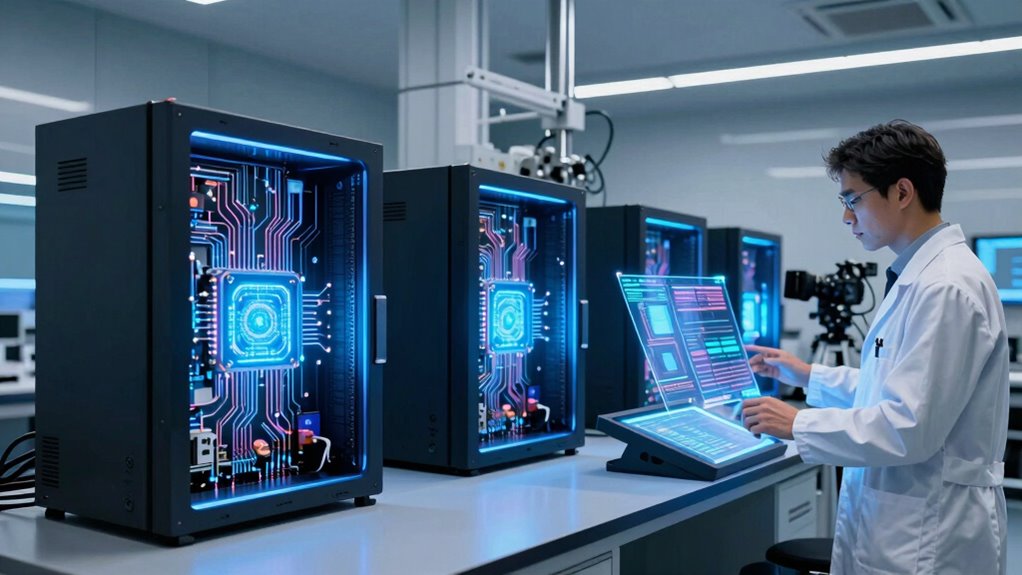
To stay ahead of quantum threats, you need to keep up with the latest developments in quantum computing and encryption. Implementing quantum-resistant security measures now can help safeguard your data for the future. Staying informed and proactive is your best strategy to protect your information in a changing digital landscape.
Staying Informed on Advances
Staying informed about advances in quantum computing and encryption is essential to safeguard your data in the rapidly evolving landscape. To keep pace, consider these steps:
- Follow reputable sources like cybersecurity journals and industry news to stay updated on quantum ethics debates and emerging encryption standards.
- Participate in webinars, conferences, or online courses focused on quantum security to deepen your understanding.
- Engage with professional communities that discuss the ethical implications of quantum tech and how they influence future encryption policies.
Implementing Quantum-Resistant Security
As quantum computing advances, implementing quantum-resistant security becomes increasingly urgent to protect sensitive data from future vulnerabilities. You should explore cryptographic protocols designed to withstand quantum attacks, such as lattice-based or hash-based schemes. These protocols replace traditional encryption methods that quantum computers could break, ensuring your data remains secure. Using quantum key distribution can also offer a way to generate and share secure keys that are theoretically tamper-proof. Stay informed about emerging standards and updates from organizations like NIST, which are actively developing post-quantum cryptography. By adopting quantum-resistant cryptographic protocols and staying current on technological developments, you can better safeguard your data against the evolving threat landscape posed by quantum computing.
Frequently Asked Questions
How Soon Could Quantum Computers Realistically Break Current Encryption?
You might wonder how soon quantum computers could break current encryption. Realistically, it could take a decade or more to reach quantum supremacy, where they can tackle cryptographic challenges effectively. While progress is rapid, practical, large-scale quantum computers capable of cracking widely used encryption like RSA and ECC are still in development. So, you have time to adapt, but staying aware of quantum advancements is wise for future security.
Are There Encryption Methods Resistant to Quantum Attacks?
While no encryption is entirely invulnerable, you can rely on quantum-resilient methods that offer a promising layer of security. These encryption innovations focus on quantum resilience, making it harder for even powerful quantum computers to crack your data. As technology advances, staying updated with the latest quantum-safe algorithms becomes essential for maintaining your security. Embracing these new methods guarantees your information remains protected against future quantum threats.
Will Quantum Computing Replace Classical Computers Entirely?
No, quantum computing won’t replace classical computers entirely. You’ll still rely on classical machines because of their limitations in certain tasks. Quantum advantages shine in specific areas like complex calculations and cryptography, but classical limitations mean they remain essential for everyday use. Quantum computers complement rather than replace classical ones, enabling breakthroughs while classical systems continue to handle routine tasks efficiently.
How Much Will Quantum Technology Cost to Implement Widely?
You’ll find that the cost estimates for widespread quantum technology vary widely, mainly due to infrastructure challenges. Implementing quantum systems requires significant investment in specialized hardware, cooling systems, and secure environments. While prices are expected to decrease over time, right now, scaling up quantum tech remains expensive and complex. Expect initial costs to be high as industries work through the infrastructure challenges before achieving broader, more affordable adoption.
What Industries Are Most at Risk From Quantum Computing Threats?
You should be aware that financial services, healthcare, and government sectors face the greatest cryptography challenges and industry vulnerabilities from quantum computing. These industries rely heavily on encryption for sensitive data, making them prime targets. Quantum threats could compromise secure communications if unprepared. Staying ahead requires adopting quantum-resistant cryptography now, rather than waiting for the technology to fully develop, to protect your critical information from future vulnerabilities.
Conclusion
While quantum computers aren’t breaking all encryption overnight, the future remains uncertain. As researchers race to develop new protections, you might wonder when your data could be at risk. Will the advances come sooner than expected? Staying informed and prepared is essential. The coming years could bring surprises—don’t get caught off guard. The quantum revolution is on the horizon, and only you can decide how to stay ahead in this rapidly evolving landscape.
Fall Picks
fall essentials
As an affiliate, we earn on qualifying purchases.