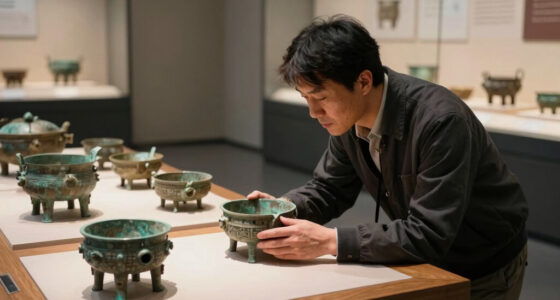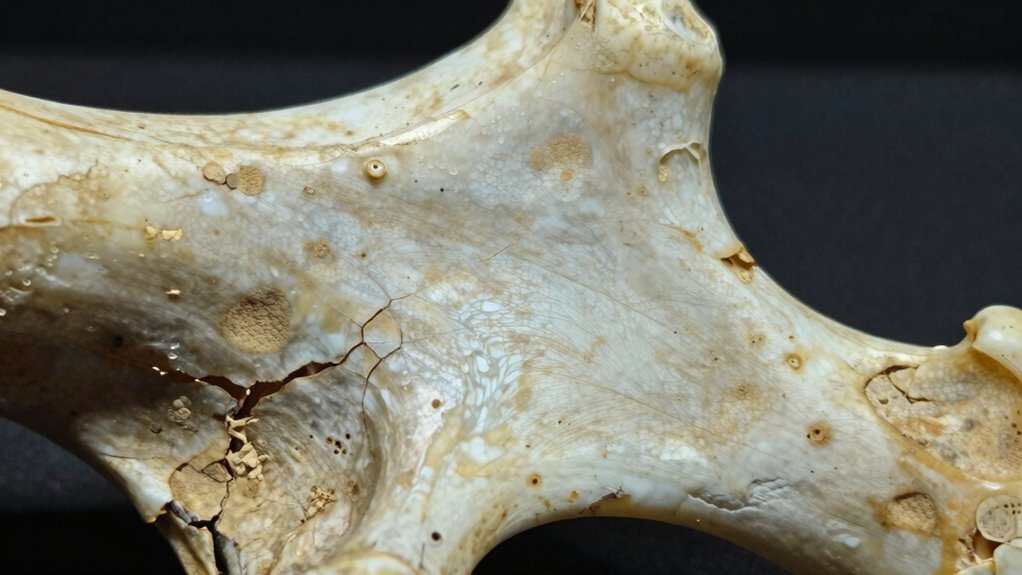

Scientists detect ancient diseases in bones by examining skeletal markers and using advanced DNA analysis techniques. They carefully extract preserved DNA fragments from well-preserved bones, often using chemical methods to guarantee contamination is minimized. Imaging technologies like 3D scans and microscopy help identify disease signs. By comparing pathogen genomes across samples, researchers trace how plagues spread centuries ago. Continue exploring to learn how these techniques uncover the hidden stories of past epidemics.
Key Takeaways
- Scientists extract and analyze ancient DNA from bones to identify pathogen genetic material linked to historic plagues.
- Advanced molecular techniques, like genomic sequencing, detect and confirm specific disease-causing microbes in old bones.
- Imaging methods such as 3D scans and fluorescence microscopy reveal skeletal signs and molecular evidence of ancient illnesses.
- Contamination control and careful sample preparation ensure authentic detection of disease markers from centuries-old remains.
- Comparing genetic data across regions and periods helps trace the origins, evolution, and spread of ancient plagues.
As an affiliate, we earn on qualifying purchases.
Why Studying Ancient Bones Reveals Hidden Diseases
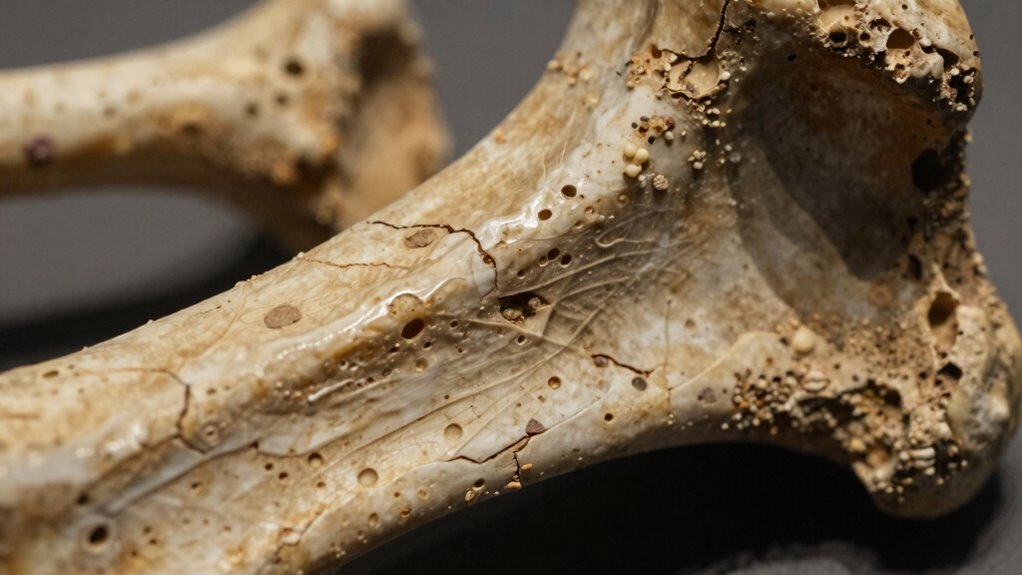
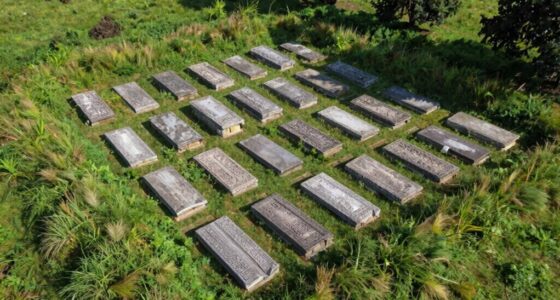
Studying ancient bones allows you to uncover diseases that have long been hidden from history. When you examine remains from ancient burial sites, you gain valuable insights into past health conditions. These sites often reflect cultural burial practices that reveal how societies cared for their dead and what illnesses they faced. By analyzing bones, you can detect signs of diseases like tuberculosis or syphilis, which left marks on the skeleton. These clues help you piece together how diseases spread and affected populations centuries ago. Without this direct evidence, many illnesses would remain unknown or misunderstood. Your work in studying these bones bridges the gap between history and medicine, providing a clearer picture of ancient health challenges and their impact on human societies.
forensic skeletal analysis tools
As an affiliate, we earn on qualifying purchases.
As an affiliate, we earn on qualifying purchases.
How Scientists Detect Old Pathogens in Bones
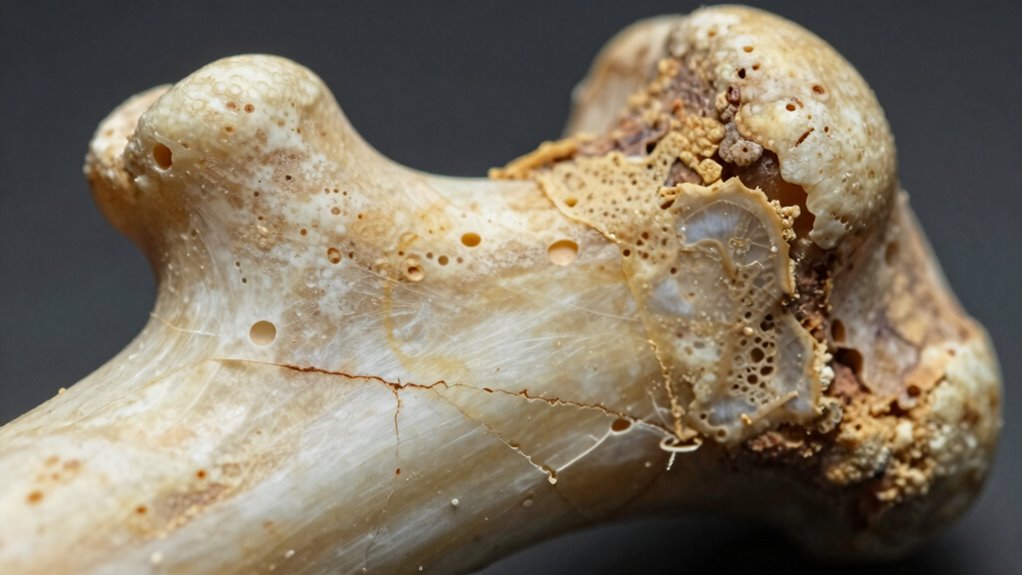
To find ancient pathogens in bones, scientists search for preserved DNA fragments that reveal past infections. They analyze these samples to identify specific genetic sequences linked to diseases. By detecting pathogen markers, researchers can confirm the presence of ancient diseases with high accuracy. Understanding the role of DNA analysis is essential for deciphering the history of ancient epidemics. Additionally, advances in molecular techniques have enhanced the ability to detect even minute traces of pathogen DNA in archaeological samples. Recent innovations in genomic sequencing have further improved the sensitivity and reliability of these detection methods. The use of contamination prevention protocols is also critical to ensure the authenticity of ancient DNA findings. Employing advanced extraction methods helps maximize the recovery of degraded genetic material from ancient remains.
Detecting Ancient DNA
How do scientists uncover ancient pathogens hidden within bones? They rely on DNA sequencing techniques combined with bone analysis. First, they carefully extract tiny samples from the bone, avoiding contamination. Then, they isolate the preserved genetic material, which can be thousands of years old. Advanced DNA sequencing methods allow scientists to read these fragments of ancient DNA, identifying genetic signatures of past pathogens. Because ancient DNA is often fragmented and degraded, specialists use specialized tools and protocols to enhance the retrieval process. This approach helps uncover traces of bacteria, viruses, or other microorganisms that once caused disease. By analyzing the genetic sequences, researchers can determine which pathogens infected ancient populations, providing insights into historical plagues and the evolution of diseases over time. These methods rely on understanding the challenges of working with degraded and fragmented DNA, which is crucial for accurate identification. Additionally, ongoing advancements in DNA technology continue to improve our ability to detect even the most elusive ancient pathogens. To enhance detection, scientists often incorporate metagenomic analysis, which allows for the comprehensive study of all genetic material in a sample, increasing the chances of identifying rare or unexpected pathogens. Moreover, developing new sample preservation techniques helps maintain DNA integrity for more accurate analysis.
Identifying Pathogen Markers
When scientists search for old pathogens in bones, they look for specific molecular markers that indicate the presence of ancient microorganisms. These pathogen markers are unique pieces of DNA or proteins that reveal an infection’s past. By analyzing ancient DNA, you can identify fragments of pathogen genomes preserved within the bone tissue. Techniques like PCR and sequencing help detect these markers even when the DNA is degraded. The presence of pathogen markers confirms that ancient microbes once inhabited the individual. Accurate identification depends on distinguishing these markers from environmental contaminants. Focusing on specific sequences associated with known pathogens allows you to reconstruct ancient outbreaks. Overall, detecting pathogen markers in ancient DNA provides a powerful window into historical diseases and helps trace their evolution over centuries. Vetted – Berkley Vallone
As an affiliate, we earn on qualifying purchases.
Techniques for Extracting DNA From Ancient Remains
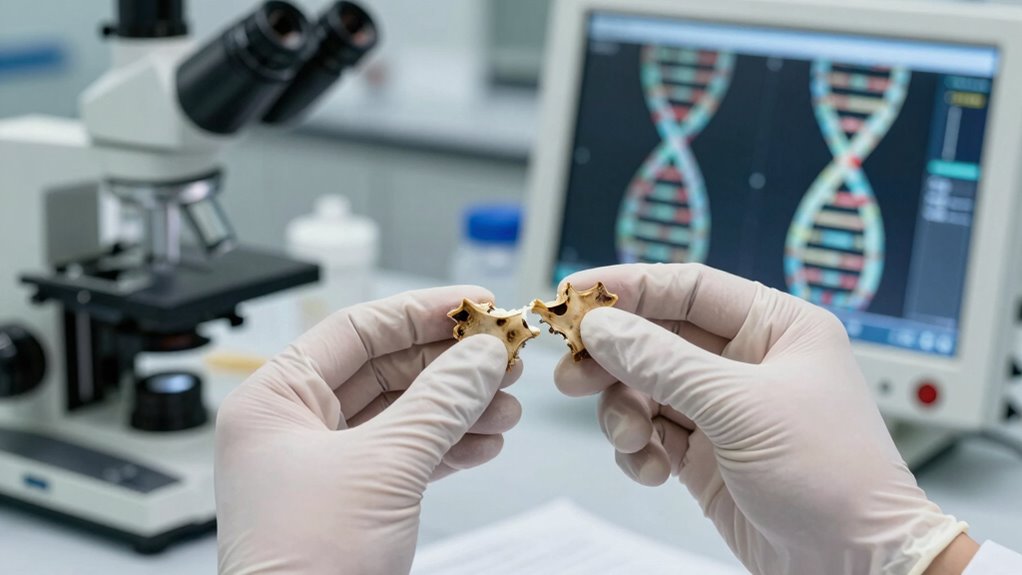
Extracting DNA from ancient remains requires carefully developed techniques to overcome the challenges posed by degradation and contamination. Because ancient DNA is often fragmented and scarce, you need specialized methods to isolate it effectively. Bone preservation plays a pivotal role; well-preserved bones contain higher-quality ancient DNA, increasing your chances of successful extraction. You typically start by cleaning the bone surface thoroughly to remove surface contaminants, then grind it into powder under sterile conditions. Using chemicals like silica-based columns or magnetic beads, you bind and isolate the tiny fragments of DNA. These methods help maximize yield while minimizing contamination. By carefully controlling each step, you can retrieve authentic ancient DNA, providing valuable genetic insights into past diseases and populations. Free Floating Additionally, implementing contamination control measures during the process is essential to ensure the authenticity of the DNA obtained.
microscopy for archaeological samples
As an affiliate, we earn on qualifying purchases.
As an affiliate, we earn on qualifying purchases.
Imaging Technologies Used to Spot Disease Markers
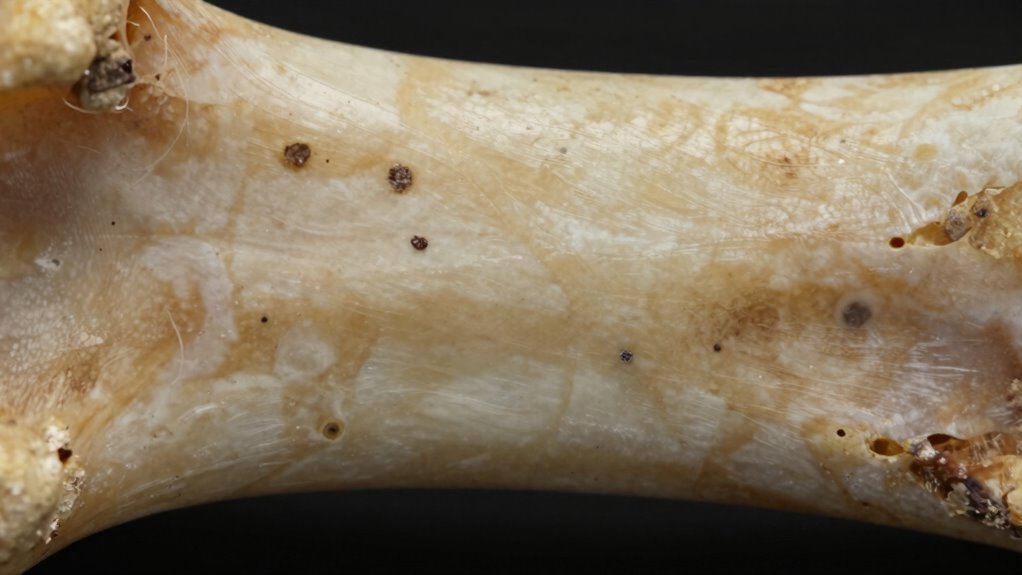
Advanced imaging technologies have revolutionized the way you identify disease markers in ancient remains. 3D imaging allows you to visualize bones in detailed three-dimensional detail, revealing subtle changes linked to past illnesses. This technique helps you examine internal structures without damaging the specimen. Fluorescence microscopy enables you to detect specific molecules associated with disease, such as bacterial proteins or chemical residues, by causing them to glow under specialized lighting. Using this method, you can pinpoint areas where disease markers are present with high precision. These imaging tools provide critical insights into ancient diseases, allowing you to analyze bones non-invasively and in remarkable detail. Additionally, non-invasive techniques ensure that valuable specimens remain intact during analysis. Moreover, disease marker detection methods allow for the identification of specific pathogens or chemical signatures that indicate past infections. By combining 3D imaging and fluorescence microscopy, you gain a clearer understanding of how these diseases affected ancient populations. Fact-checking & media literacy techniques ensure the accuracy of interpretations derived from these imaging methods. Incorporating advanced imaging workflows enhances diagnostic accuracy and confidence in your findings. Furthermore, integrating multimodal imaging approaches can provide comprehensive insights by combining different visualization methods for more robust analysis.
Tracing the Origins and Spread of Ancient Plagues
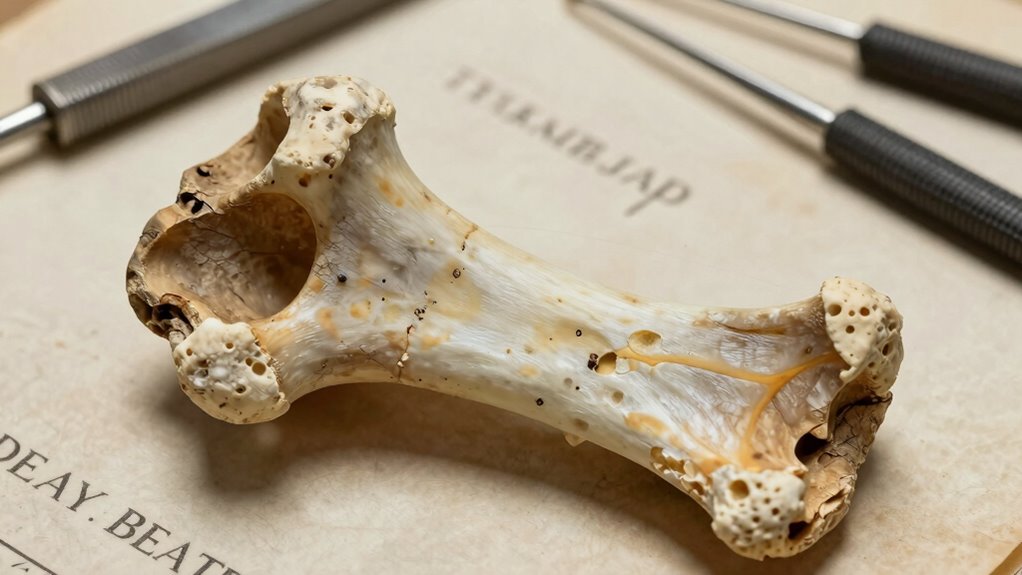
Tracing the origins and spread of ancient plagues relies on analyzing a combination of genetic, archaeological, and environmental data. By examining the archaeological context, you can identify where outbreaks first emerged and how they moved geographically. To understand ancient pathogen evolution, consider these key factors:
- Genetic sequencing of ancient DNA to track mutations over time. This process often involves advanced sequencing techniques that enable detailed analysis of degraded samples. These techniques have been refined through ongoing research in molecular archaeology, allowing for more precise reconstructions of pathogen histories.
- Comparing pathogen genomes from different regions and periods.
- Analyzing environmental data for clues about migration routes or trade networks.
- Integrating archaeological evidence, such as burial sites, to map disease transmission patterns.
- Employing filtration techniques to isolate and preserve ancient pathogen DNA from archaeological samples. Additionally, advances in ancient DNA recovery methods have significantly improved the accuracy of detecting these pathogens.
This multidisciplinary approach helps reconstruct how diseases originated, evolved, and spread through populations, offering insights into their impact on human history. It’s a complex puzzle that reveals the dynamic relationship between humans and ancient pathogens.
Case Studies: Discovering Famous Diseases in Bones
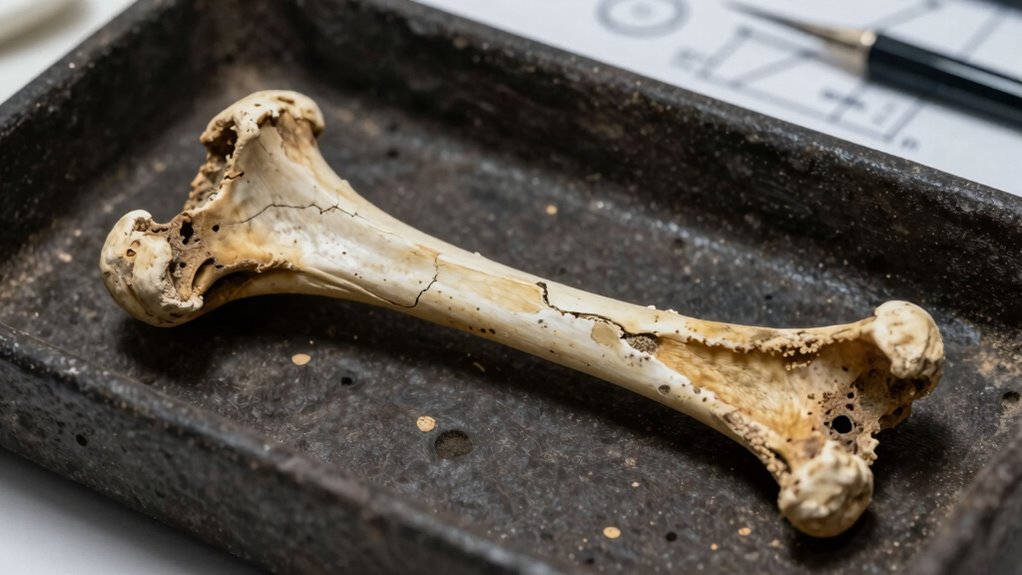
When scientists examine ancient bones, they can identify signs of famous diseases that once affected human populations. Through molecular archaeology, you can uncover genetic traces of pathogens like tuberculosis or leprosy. These findings reveal how pathogens evolved over centuries, adapting to new hosts and environments. To visualize this, imagine the following table:
| Ancient Bone Sample | Disease Detected | Key Evidence | Significance |
|---|---|---|---|
| Medieval Skeleton | Tuberculosis | DNA fragments | Tracks pathogen evolution |
| Neolithic Remains | Leprosy | Skin lesion markers | Shows disease spread |
Additionally, advances in genetic analysis techniques have greatly enhanced our ability to detect and study these ancient diseases, providing deeper insights into their history and impact on human populations. The development of ancient DNA extraction methods has been pivotal in recovering genetic material from degraded samples, allowing for more accurate identification of diseases. These technological breakthroughs have opened new avenues for understanding how infectious diseases affected past societies and contributed to human evolution. This progress allows us to piece together the story of epidemics that shaped our ancestors’ lives.
Challenges and Ethics of Studying Ancient Diseases
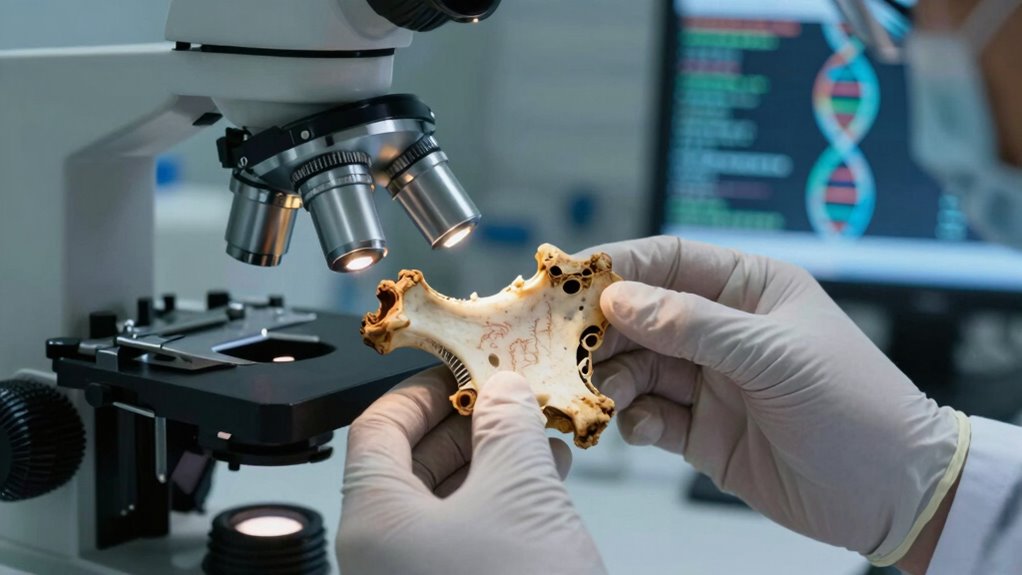
When studying ancient diseases, you must consider ethical questions about how you handle human remains. Preserving these remains is crucial, but it also raises concerns about respecting the individuals and cultures involved. Balancing scientific discovery with ethical responsibility is essential in this field.
Ethical Considerations in Research
Studying ancient diseases through old bones presents unique ethical challenges that researchers must carefully navigate. First, obtaining informed consent is impossible with ancient remains, so you need to consider legal and ethical guidelines for handling human remains. Second, respecting cultural sensitivities is essential, especially when remains are linked to living communities or ancestors. Third, you must balance scientific inquiry with the potential distress caused to descendant groups. Fourth, transparency about research goals and findings helps maintain trust and honors the dignity of the deceased. Addressing these issues requires sensitivity, respect, and adherence to ethical standards, ensuring that your work advances knowledge without compromising moral responsibilities.
Preservation of Human Remains
Preserving ancient human remains for study presents significant challenges, both technical and ethical. Proper bone preservation is vital to guarantee that delicate samples remain intact for analysis. In archaeological contexts, exposure to environmental factors like humidity, temperature fluctuations, and microbial activity can accelerate deterioration, making it harder to extract meaningful data. You must handle remains carefully, balancing scientific inquiry with respect for cultural and ancestral sensitivities. Techniques such as careful excavation, controlled storage, and minimal handling help maintain sample integrity. Ethical considerations also come into play, as damaging or destroying bones can offend descendant communities. Ultimately, successful preservation requires a combination of advanced scientific methods and respectful stewardship, ensuring that these ancient remains can continue to reveal their stories for generations to come.
What Ancient Disease Research Teaches Us Today
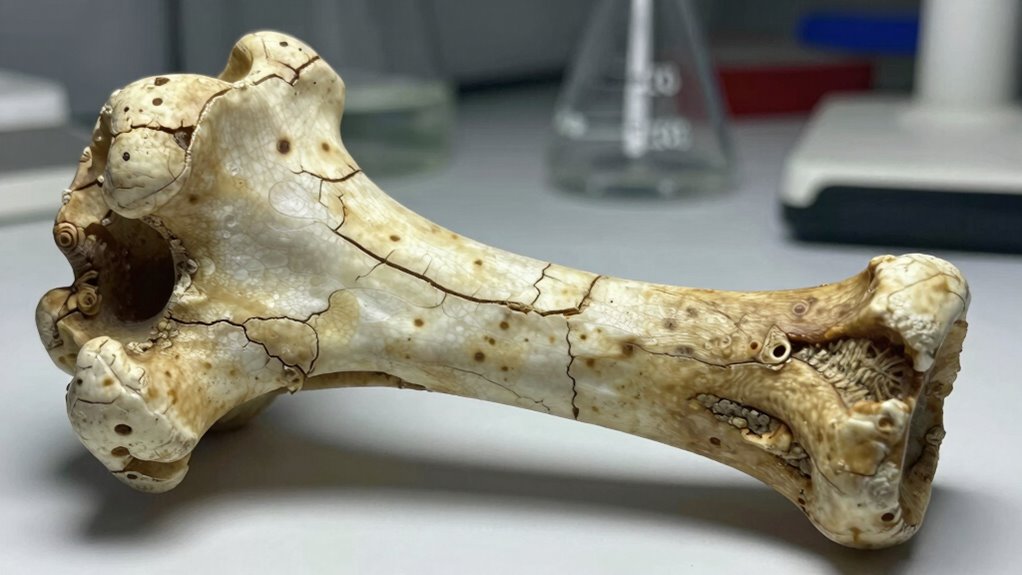
Research on ancient diseases offers valuable lessons that still impact modern medicine. By understanding historical context, scientists can identify patterns and causes of past plagues, informing current responses. Here are four key insights:
Studying ancient diseases provides essential lessons to improve modern health responses and prevent future pandemics.
- Tracing disease evolution helps predict future outbreaks.
- Recognizing social factors aids in managing modern epidemics.
- Analyzing ancient pathogen genomes guides vaccine development.
- Learning from past failures improves public health strategies.
These lessons have clear modern implications, from improving disease surveillance to shaping preventative measures. You can see how studying old bones isn’t just about the past—it’s a vital tool for tackling today’s health challenges. This research provides a foundation for more effective responses, ensuring we’re better prepared for future pandemics.
Frequently Asked Questions
Can Ancient Diseases Re-Emerge in Modern Populations?
Yes, ancient diseases can re-emerge in modern populations. Historical context shows that pathogens like the plague have resurfaced despite advances in medicine. Modern implications include the potential for outbreaks if these diseases mutate or spread due to global travel and climate change. Staying vigilant, updating vaccines, and monitoring disease patterns are vital to prevent ancient diseases from re-emerging and causing widespread health issues today.
How Accurate Are DNA Tests on Ancient Bones?
Your quest to uncover ancient secrets is like decoding a fragile message in a bottle. DNA tests on old bones are quite accurate, but preservation varies, making results like a puzzle’s missing pieces. Contamination challenges can distort findings, so scientists rigorously clean samples and use advanced techniques. While not perfect, these tests often provide reliable clues, helping you piece together history’s hidden stories with impressive precision.
What Are the Risks of Contamination in Ancient Pathogen Analysis?
Contamination risks in ancient pathogen analysis pose significant challenges, as modern DNA can easily contaminate samples during excavation or lab work. Preservation challenges also affect the integrity of ancient DNA, making it harder to identify genuine pathogen signals. To minimize these risks, you need strict contamination controls, such as sterilized equipment and clean lab environments, ensuring that your results accurately reflect ancient infections rather than modern contamination.
How Do Scientists Date the Bones With Diseases?
When you want to date bones with diseases, scientists rely on radiocarbon dating to estimate their age accurately. They also use DNA sequencing techniques to analyze ancient pathogen DNA embedded in the bones. By combining these methods, you can pinpoint the bones’ age and understand the disease’s timeline, even after a thousand years. This coincidence of techniques helps reveal the history of ancient plagues with remarkable precision.
Are There Limitations in Identifying Diseases From Skeletal Remains?
You should know that identifying diseases from skeletal remains has diagnostic limitations due to skeletal preservation issues. Poor preservation can obscure signs of illness, making detection difficult. Additionally, some diseases don’t leave clear skeletal markers, so you might miss or misidentify certain conditions. These limitations mean that while bones provide valuable clues, you can’t always conclusively diagnose diseases, and extra testing or context is often needed.
Conclusion
By studying ancient bones, you uncover secrets about past diseases that shaped history. While some believe plagues like the Black Death originated solely from Europe, recent evidence suggests they may have spread from Asia earlier than thought. As you explore these discoveries, remember that understanding ancient diseases helps us prepare for modern outbreaks. So, questioning these origins isn’t just curiosity—it’s essential for protecting our future.