
Personalized learning apps adapt to students with ADHD by offering engaging, flexible experiences tailored to individual needs. They incorporate rewards like badges and levels, use sensory integration features, and support movement to keep interest high. These apps adjust difficulty and pace, provide visual cues and reminders, and include visual progress tools. By catering to sensory sensitivities and organizational needs, they create a motivating environment. Keep exploring to discover how these tools can make learning more effective for you.
Key Takeaways
- They tailor content and difficulty levels to match individual student needs, preventing overwhelm and promoting engagement.
- They incorporate sensory features like customizable visuals and tactile feedback to accommodate sensory sensitivities.
- They include movement and task-switching options to reduce boredom and support attention shifts.
- They utilize gamification elements such as rewards and instant feedback to boost motivation and sustained effort.
- They offer organizational tools like reminders, progress tracking, and goal setting to enhance executive functioning skills.

For students with ADHD, traditional learning methods often fall short in maintaining focus and engagement. You might find it challenging to stay attentive during lengthy lessons or rigid classroom routines. That’s where personalized learning apps come in, offering tailored experiences that adapt to your unique needs. These apps utilize motivational strategies to keep you engaged, such as rewarding progress, gamifying lessons, or providing instant feedback. Instead of passive listening, you actively participate through interactive activities designed to hold your interest. By incorporating elements like badges, levels, or points, these apps tap into your natural desire for achievement, making learning feel more like a game than a chore.
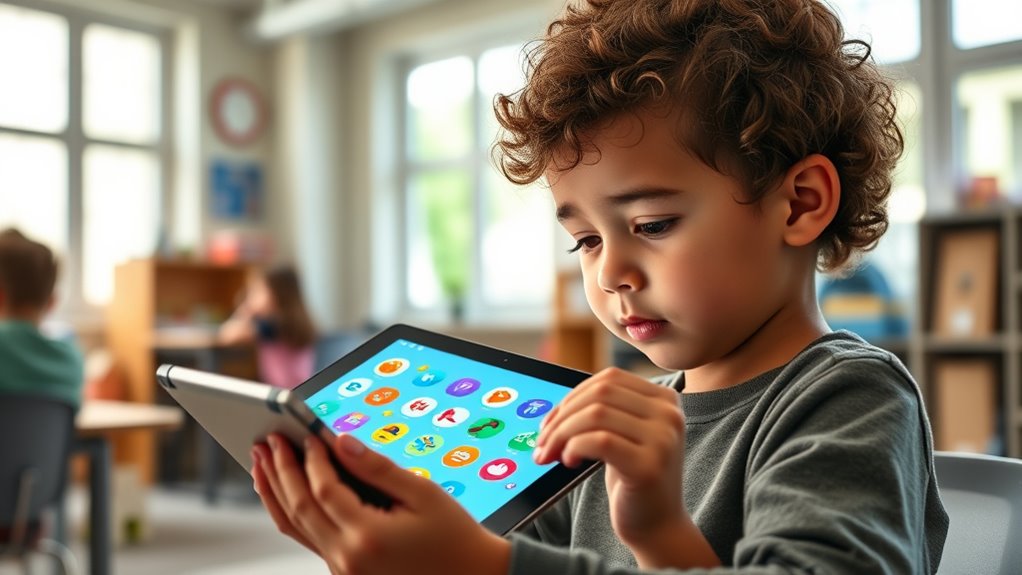
Sensorial input also plays a *vital* role in helping you stay focused. Many personalized learning apps are designed with sensory integration in mind, offering options to customize visual and auditory stimuli. For example, you might choose brighter colors, animations, or background sounds that help you concentrate better. Some apps include tactile feedback, like vibrations or interactive touchscreens, which can reinforce learning and keep your hands busy, reducing restlessness. These sensory-friendly features create an environment that caters to your sensory sensitivities and helps you process information more effectively. Incorporating sensory input into the learning experience can significantly enhance your ability to stay engaged and absorb material more efficiently.
The beauty of these apps is that they recognize your need for movement and variety. Instead of forcing you to sit still through monotonous lessons, they allow for short bursts of activity, movement, or switching between tasks. This flexible approach prevents boredom and helps you reset your focus. As you progress, the apps often adjust difficulty levels and learning pace based on your performance, ensuring that you aren’t overwhelmed or under-challenged. This adaptive nature means you’re always working at a comfortable, motivating level, which encourages continuous effort and reduces frustration.
Moreover, personalized learning apps often include features that help you develop organizational skills, such as reminders, scheduling tools, or progress charts. These tools support your executive functioning by providing clear goals and visual cues, making it easier to stay on track. You’re empowered to take control of your learning process, making it more manageable and less overwhelming. Overall, by combining motivational strategies with sensory integration, personalized learning apps create a supportive environment where your attention, sensory needs, and motivation are all addressed. This tailored approach doesn’t just make learning easier; it transforms it into an engaging, sensory-friendly experience that adapts to you, helping you reach your full potential.
Frequently Asked Questions
How Do Apps Tailor to Different ADHD Types?
You’ll find that apps tailor to different ADHD types by incorporating neurodiverse strategies, like breaking tasks into smaller, manageable steps, and using gamification techniques to boost engagement. These apps adapt to your specific needs, whether you struggle with impulsivity or inattention, by offering customized prompts and rewards. This targeted approach helps you stay focused, motivated, and organized, making learning more effective and enjoyable for your unique ADHD profile.
Are These Apps Suitable for All Age Groups?
Yes, these apps can suit all age groups if they are age-appropriate and include accessibility features. You’ll want to explore options that cater to different learning levels and needs, ensuring engaging experiences for young children, teens, or adults. By choosing apps with customizable settings and supportive tools, you make learning more manageable and meaningful, making sure everyone benefits regardless of age or ability.
What Features Improve Focus Specifically for ADHD Students?
You can improve focus for ADHD students by incorporating gamification strategies, which make learning more engaging and motivate sustained attention. Sensory integration features, like adjustable background music or tactile feedback, help reduce distractions and keep students immersed. These features support sensory regulation and make learning more enjoyable, allowing students to stay focused longer. By blending gamification and sensory integration, these apps create an environment that actively supports ADHD students’ unique attention needs.
How Do Apps Track and Measure Progress Effectively?
You wonder how apps track progress effectively? They use data analytics to analyze your activity patterns, pinpointing areas of improvement. By monitoring user engagement—like time spent on tasks and response accuracy—they adapt in real-time, ensuring you stay motivated. This continuous feedback loop helps you understand your growth, keeping you engaged and focused. The app’s ability to measure progress precisely makes your learning experience both personalized and impactful.
Are There Any Privacy Concerns With These Apps?
Yes, there are privacy concerns with these apps. You should be aware of data security risks, as sensitive student information might be vulnerable if not properly protected. Make certain the app maintains user anonymity and follows strict privacy policies. Check if it uses encryption and limits data sharing. Being cautious helps safeguard student privacy while benefiting from personalized learning tools tailored for students with ADHD.
Conclusion
Imagine a learning journey tailored just for you, where every tap and swipe adjusts like a gentle breeze guiding your focus. Personalized apps adapt to your energy and attention, transforming distractions into moments of discovery. With these tools, you’re no longer lost in the chaos but sailing smoothly through lessons, your unique rhythm leading the way. Embrace these innovations—your path to understanding becomes clearer, brighter, and more connected to who you truly are.