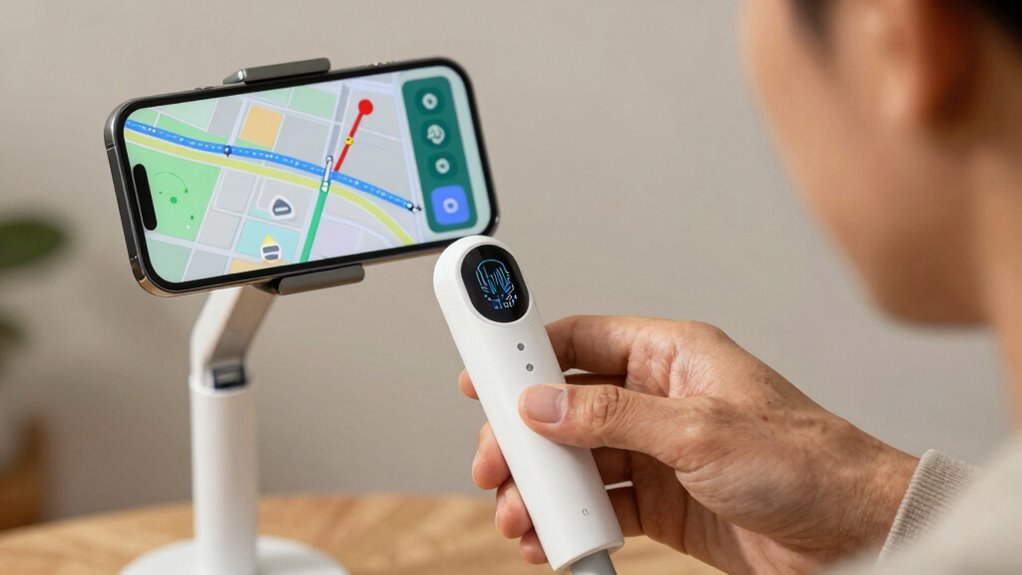

AI is transforming navigation for blind and low-vision users by combining augmented reality, tactile feedback, and personalized guidance to make travel safer and more intuitive. You’ll see digital overlays highlighting obstacles and landmarks right in your view or feel cues through vibrations and textures that help orient you. These advancements create a seamless, empowering experience that boosts your confidence to explore independently. Keep exploring to discover how these innovations could reshape your journeys.

Prime made for students and young adults
- Fast, free delivery for dorm and study essentials
- Prime Video and Amazon Music included
- Member-only deals
Key Takeaways
- AI integrates augmented reality and tactile feedback to provide real-time, multimodal navigation assistance for blind and low-vision users.
- Personalized AI systems adapt guidance based on user routines, improving accuracy and convenience.
- Multimodal approaches combine visual overlays, vibrations, and audio cues to enhance environmental awareness.
- AI-powered tools enable safer, more independent navigation by highlighting obstacles and landmarks dynamically.
- Continuous advancements in AI technology promise smarter, more intuitive navigation solutions that boost confidence and autonomy.
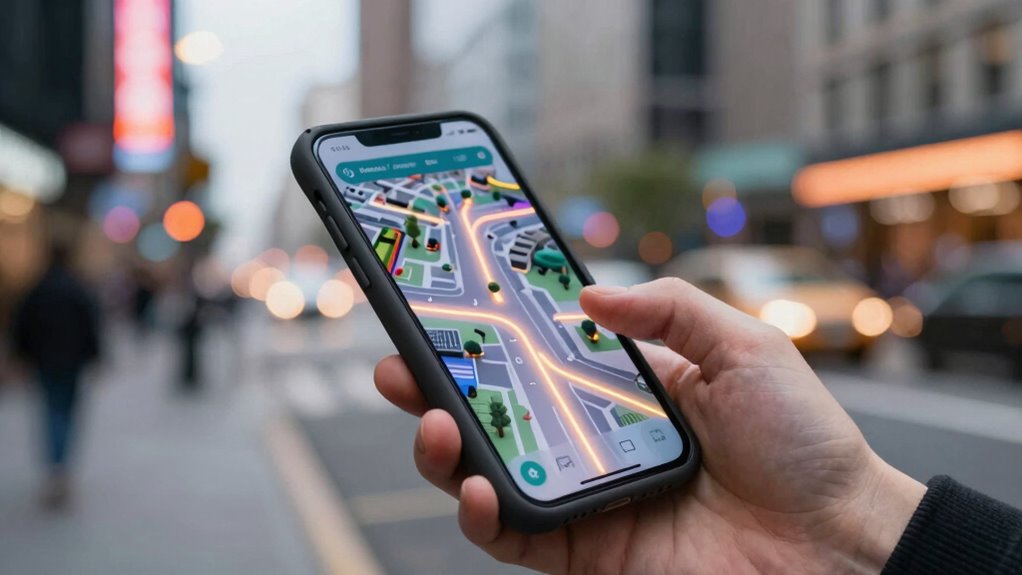
Advancements in artificial intelligence are transforming how visually impaired individuals navigate their surroundings, offering newfound independence and confidence. One of the most exciting developments is the integration of augmented reality (AR) with navigation tools. Unlike traditional GPS, which provides spoken directions, AR combines real-world visuals with digital overlays, helping you better understand your environment. For example, AR-enabled devices can highlight obstacles, pathways, or landmarks directly in your field of view, either through glasses or smartphone screens. This layered information allows you to anticipate and react to obstacles more quickly, reducing the risk of accidents and making your journey smoother. With AR, you’re not just told where to go—you see contextual cues that make navigation more intuitive and engaging.
Tactile feedback plays an essential role in enhancing your spatial awareness, especially when visual cues are limited. Many AI-powered navigation devices now incorporate tactile signals—like vibrations or textured cues—that communicate specific information about your surroundings. For instance, a gentle vibration on your hand might alert you to a nearby obstacle, while a different pattern could indicate a change in terrain or direction. This form of haptic feedback creates a physical connection to your environment, enabling you to interpret complex information without needing to look at a screen. As a result, you gain a more natural sense of spatial orientation, which boosts your confidence as you move through unfamiliar spaces.
AI-driven navigation systems also learn from your routines and preferences, tailoring guidance to your specific needs. Over time, they adapt to your walking speed, preferred routes, and even your habits, making directions more precise and personalized. Coupled with augmented reality, this creates a seamless experience where digital information integrates effortlessly into your daily movements. You no longer have to rely solely on auditory cues; tactile feedback supplements your senses, giving you multiple layers of information to process simultaneously. This multimodal approach guarantees that you’re more aware of your surroundings and can make informed decisions quickly.
Together, augmented reality and tactile feedback are revolutionizing navigation for the visually impaired. They turn what used to be a challenging task into an empowering experience, allowing you to explore your environment with greater autonomy. As AI continues to advance, expect even smarter, more intuitive tools that will further enhance your independence, helping you move through the world confidently and safely. Biodiversity and sustainable living
AI-powered navigation device for blind and low-vision
As an affiliate, we earn on qualifying purchases.
As an affiliate, we earn on qualifying purchases.
Frequently Asked Questions
How Accurate Are AI Navigation Tools in Complex Environments?
AI navigation tools are quite accurate in complex environments, but their precision depends on sensor accuracy and environmental factors. You might experience occasional discrepancies if sensors struggle with obstacles or dynamic changes like crowds or weather. However, advances in sensor technology and real-time data processing continually improve reliability. Overall, these tools are becoming more dependable, helping you navigate intricate spaces with greater confidence, despite some limitations in challenging conditions.
What Are the Privacy Concerns With Ai-Based Navigation Apps?
You should be aware that AI-based navigation apps raise privacy concerns, especially regarding data security and user privacy. These apps often collect location data, movement patterns, and personal information, which could be misused or exposed if not properly protected. Always review privacy policies, use secure connections, and limit data sharing to safeguard your personal information, ensuring that your navigation experience remains private and secure.
Can AI Navigation Assist With Indoor and Outdoor Navigation Equally?
Indoor navigation often faces more accessibility challenges than outdoor routes, yet AI helps both. While outdoor urban landscapes are complex, AI guides you through bustling streets and open parks seamlessly. Inside, AI navigates maze-like buildings and crowded spaces, transforming accessibility challenges into opportunities. You benefit from real-time updates and precise directions, making indoor and outdoor navigation equally effective, empowering you to explore with confidence regardless of environment.
How Affordable Are AI Navigation Solutions for Most Users?
AI navigation solutions are becoming increasingly affordable, improving cost accessibility for most users. As technology advances, prices drop, making these tools more accessible for everyday use. Your adoption depends on factors like device compatibility and ease of use, but overall, more people are embracing AI-powered navigation due to its convenience and affordability. This trend helps guarantee that blind and low-vision users gain greater independence without financial barriers.
What Are the Limitations of Current AI Navigation Technologies?
You might find that current AI navigation tech faces personalization challenges, making it hard to adapt perfectly to your specific needs and environments. Additionally, it heavily depends on data, which can lead to inaccuracies if the data is outdated or incomplete. These limitations can cause moments of uncertainty, especially in complex settings or unfamiliar areas, highlighting that AI isn’t yet foolproof for reliable, fully personalized navigation.
tactile feedback navigation aid for visually impaired
As an affiliate, we earn on qualifying purchases.
As an affiliate, we earn on qualifying purchases.
Conclusion
As AI continues to evolve, it’s like a guiding lighthouse illuminating the path for blind and low-vision users, transforming navigation from a challenge into a journey of independence. With real-time alerts and detailed descriptions, you can navigate your world with confidence and freedom. This technology doesn’t just lead you down the street; it opens doors to new adventures. Embrace these innovations—your future is a horizon full of limitless possibilities.
augmented reality glasses for navigation
As an affiliate, we earn on qualifying purchases.
As an affiliate, we earn on qualifying purchases.
haptic feedback walking aid for visually impaired
As an affiliate, we earn on qualifying purchases.
As an affiliate, we earn on qualifying purchases.
Fall Picks
fall essentials
As an affiliate, we earn on qualifying purchases.