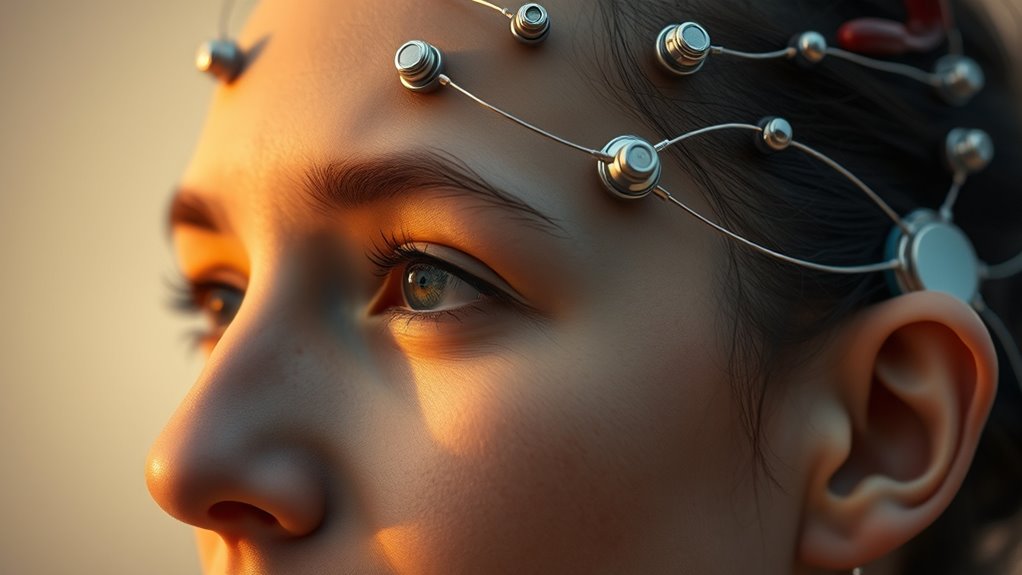

Brain-computer interfaces (BCIs) help paralyzed patients communicate by translating brain signals into speech, bypassing the need for speaking or movement. They capture electrical activity from speech and language areas, then use advanced algorithms to decode these signals in real time. This process allows for quick and natural conversation flow, with speech often generated within seconds. As technology improves, BCIs become more reliable and user-friendly. Keep exploring to discover how these systems are transforming communication possibilities.

Prime made for students and young adults
- Fast, free delivery for dorm and study essentials
- Prime Video and Amazon Music included
- Member-only deals
Key Takeaways
- BCIs translate brain signals into speech, allowing paralyzed patients to communicate without speaking or moving.
- Neural decoding algorithms interpret electrical activity from speech-related brain regions in real-time.
- Signal processing techniques filter noise, ensuring accurate and natural-sounding speech generation.
- These systems produce speech within seconds, enabling near-instantaneous communication for users.
- Advances aim to improve accuracy, usability, and accessibility, restoring independence and social interaction for patients.
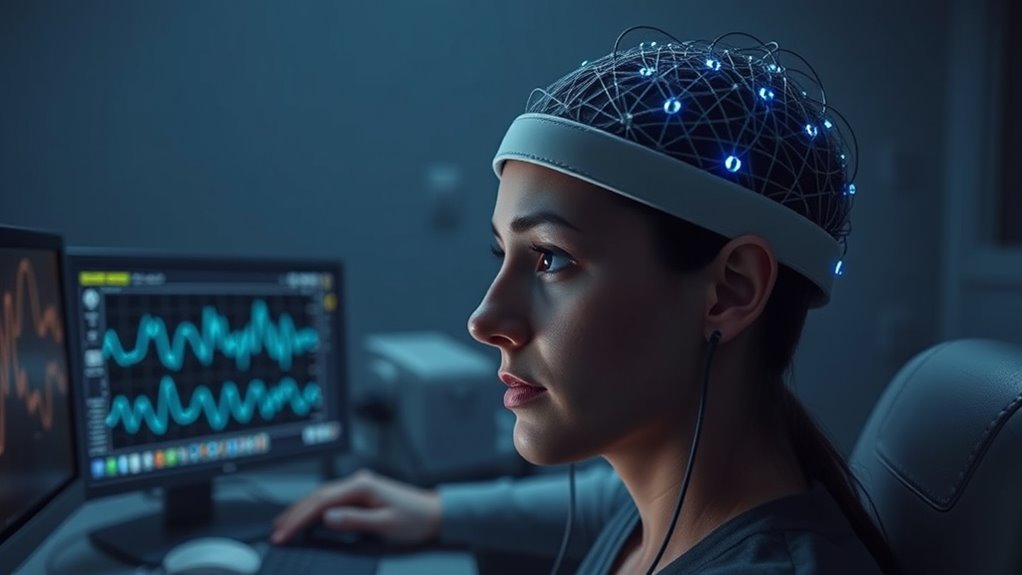
Brain-computer interfaces (BCIs) for speech are transforming how individuals with communication impairments can express themselves. If you’re paralyzed or suffer from conditions like ALS or stroke, these systems offer a new way to connect with the world. At the core of these BCIs is neural decoding, which involves translating brain signals into understandable commands. You don’t need to speak or move; instead, your brain activity becomes the input for the device. This process relies heavily on sophisticated signal processing techniques that filter, analyze, and interpret the neural signals accurately. By capturing electrical signals from your brain, especially from areas associated with speech and language, the BCI can decode your intended words into synthesized speech or text.
Neural decoding is the essential step that turns raw brain data into meaningful output. When you think about speaking, your brain generates complex patterns of electrical activity. The BCI system uses advanced algorithms to decipher these patterns, identifying specific signals that correspond to different sounds or words. It’s like translating a foreign language in real time. Signal processing plays a vital role here; it cleans up the brain signals, removing noise and interference that could distort the decoding process. This guarantees that the system accurately interprets your intentions, even if your neural activity is subtle or variable. The better the signal processing, the more natural and fluid your communication becomes. Additionally, ongoing research in AI security vulnerabilities emphasizes the importance of safeguarding neural data from potential threats, ensuring that brain-computer interfaces remain safe and trustworthy.
You might wonder how quickly this process happens. Thanks to rapid neural decoding and real-time signal processing, BCIs can generate speech within seconds of your thought. This immediacy is indispensable for natural conversations, allowing you to interact smoothly without long pauses. As technology advances, these systems are becoming more reliable and user-friendly, often requiring only minimal training. With continued improvements, you could soon have a device that seamlessly converts your brain activity into speech, restoring your ability to communicate effortlessly.
In essence, neural decoding and signal processing form the backbone of speech BCIs. They enable your brain’s intentions to be understood and expressed without the need for muscular movement. This breakthrough offers hope for many who are unable to speak due to paralysis, opening up new avenues for social interaction and independence. As research progresses, these interfaces will become even more precise and accessible, helping you regain your voice and reconnect with the world around you.
brain-computer interface speech device
As an affiliate, we earn on qualifying purchases.
As an affiliate, we earn on qualifying purchases.
Frequently Asked Questions
How Long Does It Take to Develop a Personalized BCI Speech System?
Developing a personalized BCI speech system typically takes several months, depending on your neural decoding accuracy and training duration. You’ll undergo extensive neural data collection, which can last weeks, and then work with algorithms to decode your brain signals. The process involves iterative training to improve decoding precision, so patience is key. Overall, expect a few months to tailor a system that effectively translates your neural patterns into speech.
What Are the Costs Associated With BCI Speech Technology?
You’d think technology this advanced would be cheap, but a cost analysis shows BCI speech systems come with hefty price tags. Funding challenges often limit access, making it feel like only the lucky few can afford such innovations. The costs include sophisticated equipment, ongoing maintenance, and expert personnel. While the benefits are incredible, you’ll find that financial hurdles remain a significant barrier to widespread adoption and affordability.
Can BCI Systems Improve Over Time With Practice?
Yes, BCI systems can improve with practice. Neural adaptation allows your brain to better connect with the interface, enhancing control over time. As you continue practicing, you’ll develop skill retention, making your communication more natural and efficient. The more you use the system, the more your brain adapts, leading to smoother interactions. With consistent effort, you’ll notice improvements and increased confidence in using the technology.
Are There Any Risks or Side Effects From Using BCI for Speech?
Using a BCI for speech has minimal risks, but device safety remains a priority, and some ethical concerns exist. Less than 1% of users report serious side effects like infections or discomfort, yet long-term effects are still studied. You should be aware of potential risks, including device malfunction or privacy issues. Developers are working to guarantee safety standards and address ethical questions, making BCI technology safer and more reliable for users.
How Accessible Are BCI Speech Devices for Patients Worldwide?
You may find BCI speech devices less accessible worldwide due to global disparities and technological barriers. These advanced tools often require high costs, specialized knowledge, and infrastructure that many regions lack. As a result, patients in low-resource areas might not benefit from this technology. Bridging these gaps involves increasing affordability, improving infrastructure, and fostering global collaborations to make BCI devices more universally available and equitable.
neural decoding BCI for communication
As an affiliate, we earn on qualifying purchases.
As an affiliate, we earn on qualifying purchases.
Conclusion
This breakthrough in brain-computer interfaces is like opening a window to a silent world, giving voice back to those who’ve been unheard. You can now imagine a future where paralysis no longer silences a person’s thoughts, but rather transforms them into spoken words. This technology isn’t just a tool—it’s a bridge reconnecting minds and voices, turning hope into reality. With every advance, you’re witnessing the dawn of a new era where communication knows no bounds.
speech-generating brain-computer interface
As an affiliate, we earn on qualifying purchases.
As an affiliate, we earn on qualifying purchases.
As an affiliate, we earn on qualifying purchases.
Fall Picks
fall essentials
As an affiliate, we earn on qualifying purchases.