🔍 Read the full analysis: APEC In Shenzhen: Three Issues Shaping The Leaders’ Agenda on ThorstenMeyerAI.com

Prime made for students and young adults
- Fast, free delivery for dorm and study essentials
- Prime Video and Amazon Music included
- Member-only deals
TL;DR
Leaders from APEC’s 21 economies met in Shenzhen on Nov. 19 as China put AI, digital trade and regional cooperation on the agenda. Draft proposals were under consideration, but the leaders’ declaration was not available as of 05:45 UTC, and APEC decisions are voluntary rather than binding.
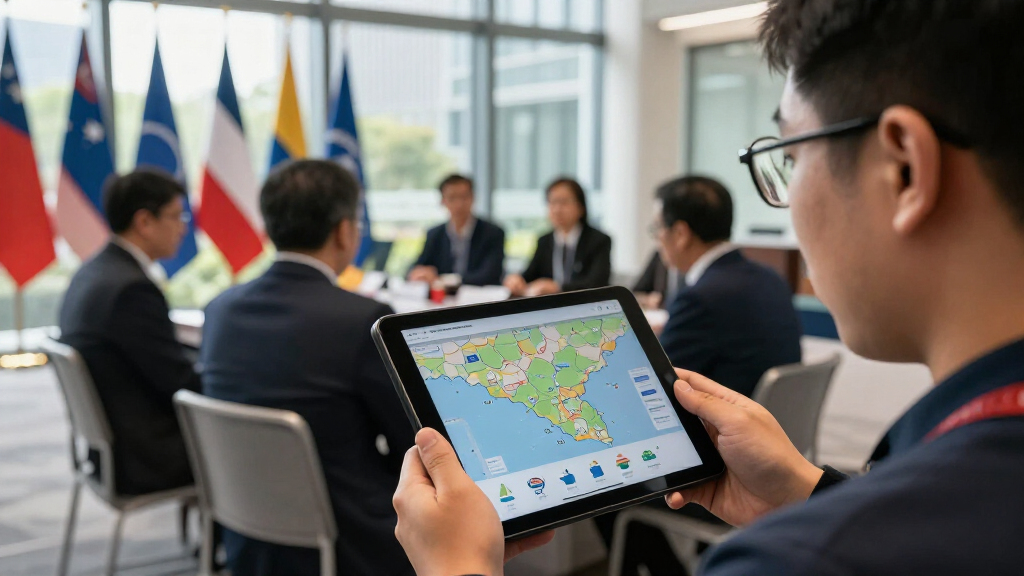
Leaders of the 21 APEC economies met in Shenzhen on Thursday, Nov. 19, with draft proposals on artificial intelligence, digital trade and regional economic integration before them. The leaders’ declaration had not been published as of 05:45 UTC, so it was not yet clear which proposals, if any, they would adopt.
The proposals sent to leaders by senior officials included China’s proposed statement on the digital economy and AI “for people’s well-being,” a Trade Digitalization Cooperation Framework for 2027–2030, and a draft statement on the Free Trade Area of the Asia-Pacific. The AI proposal calls for broader use of AI in health care, education and energy, and seeks to promote safe and trusted development while addressing digital divides, according to the APEC Secretariat’s account of the officials’ meeting.
Some commitments already exist at ministerial level. APEC trade ministers said in a May joint statement that they were committed to harnessing AI’s benefits for trade and encouraged economies to share AI policy information with smaller firms. In September, labor ministers adopted a joint statement addressing jobs, skills and social security. Those steps do not confirm that leaders adopted the new drafts in Shenzhen.
China’s President Xi Jinping said in remarks published by China’s foreign ministry on Thursday that the digital economy and AI were “the engines of innovation-driven growth.” Xi also announced that China would provide US$20 million for APEC cooperation and establish cooperation institutions focused on digital technology, cross-border data flows, clean energy and small businesses. The announcement was China’s; the available source material did not establish the institutions’ specific mandates or operating arrangements.
AI Rules Meet Trade Reality
The agenda touches businesses and workers across a region that APEC says represents 61.6% of world GDP in 2025 and about 46% of global trade in goods and commercial services in 2024. If members coordinate on digital trade practices, paperless processes or AI policy exchange, those efforts could affect how companies manage cross-border commerce. The proposals themselves, however, are not evidence that common rules have been agreed.
The economic outlook gives the discussion added weight. APEC’s Policy Support Unit raised its 2026 regional growth forecast to 3.4% on Nov. 15, from 3.2%, and forecast 3.1% growth in 2027. It attributed support in part to technology-related investment and trade, including strong semiconductor demand. The unit also warned that technology gains could be uneven and forecast inflation of 3.2% in 2026 and 2.8% in 2027.
For workers, the ministers’ earlier focus on skills and social security signals that the effects of technology are part of the regional discussion, not just trade and productivity. APEC’s language can provide a shared direction, but it does not by itself set domestic labor protections, regulate AI systems or guarantee that benefits reach smaller firms and workers.
Popular right now

Roborock Qrevo Edge 3 Pro Robot Vacuum and Mop, 36,000 Pa

Vitamix 5200 Professional-Grade Blender with 64 oz Container, Black

DREAME D20 Air Plus Robot Vacuum and Mop with 20,000 Pa Suction
As an affiliate, we earn on qualifying purchases.
From Ministerial Talks to Leaders
APEC, founded in 1989, is a forum of 21 member economies. It describes its decisions as non-binding and works by consensus. That structure makes leaders’ statements a means of setting shared priorities and encouraging cooperation, rather than a direct way to change national laws, tariffs or export controls.
China’s 2026 host-year theme is “Building an Asia-Pacific Community to Prosper Together,” with stated priorities of openness, innovation and cooperation. China said it held more than 300 APEC meetings and events in 16 cities before the leaders’ gathering. Foreign and trade ministers met by video on Nov. 3, while senior officials met in Shenzhen on Nov. 14–15 to prepare proposals for leaders.
APEC’s regional forecast points to a technology-driven trade backdrop. The Policy Support Unit reported that export values rose 22.5% year on year in the first half of 2026, while export volumes rose 10.8%, citing strong semiconductor demand. These are regional figures and do not show that every economy or industry experienced the same growth.
““We are committed to harnessing AI’s benefits for trade.””
— APEC trade ministers, joint statement from their May meeting
Declaration Status Remains Open
The central unknown at the time of reporting was whether leaders would adopt, revise or set aside the AI statement, digital trade framework and FTAAP draft. The leaders’ declaration had not been published by 05:45 UTC on Nov. 19, and the source material did not provide a later text or outcome.
Even if leaders endorse proposals, the details would matter: the available information does not establish implementation schedules, monitoring arrangements, funding beyond China’s announced contribution, or how participating economies would handle differences in AI governance and cross-border data policy. APEC’s voluntary, consensus-based process also means a declaration would not itself alter national regulations or trade restrictions.
Separately, Xi welcomed U.S. President Donald Trump in Shenzhen on Nov. 18, and the source material said Xi was due to hold a China-Russia-U.S. summit with Trump and Russia’s Vladimir Putin on Nov. 19. It did not establish the outcome of those meetings or whether they produced agreements related to APEC’s agenda. The source also mentioned recent U.S. restrictions on remote access to advanced AI chips but did not supply details sufficient to assess their scope or effect.
Watch for the Leaders’ Text
The next concrete marker is publication of the leaders’ declaration and any accompanying statements. Their wording will show whether the draft proposals became shared political commitments, were changed, or remained unadopted. Any later work plans or national measures would be needed to clarify how the broad goals might be put into practice.
Businesses and policy observers will also be watching for follow-up on the proposed 2027–2030 digital trade framework, including work on paperless trade, electronic bills of lading and AI in customs. APEC officials’ future meetings may clarify whether those subjects move from proposals into agreed cooperation. Until documents or implementation details are released, the Shenzhen agenda should be read as a set of issues under discussion rather than proof of new region-wide rules.
Key Questions
What were APEC leaders discussing in Shenzhen?
The agenda included draft proposals on AI and the digital economy, a digital trade cooperation framework for 2027–2030, regional economic integration through the FTAAP process, and connectivity.
Did APEC leaders adopt the AI proposals?
The leaders’ declaration had not been published as of 05:45 UTC on Nov. 19, 2026. The available information therefore does not confirm whether leaders adopted or revised the drafts.
Are APEC decisions legally binding?
No. APEC says its decisions and commitments are voluntary and non-binding. A leaders’ declaration can express a shared direction, but does not itself change domestic law, tariffs or trade controls.
What had APEC ministers already agreed about AI?
In May, trade ministers said they were committed to harnessing AI’s benefits for trade and encouraged economies to share AI policy information with smaller firms. Labor ministers adopted a separate statement in September on jobs, skills and social security.
Source: ThorstenMeyerAI.com