
📊 Full opportunity report: How SMBs Can Assess Workflows Before Automating on IdeaNavigator AI — validation score, market gap, and execution plan.

Prime made for students and young adults
- Fast, free delivery for dorm and study essentials
- Prime Video and Amazon Music included
- Member-only deals
TL;DR
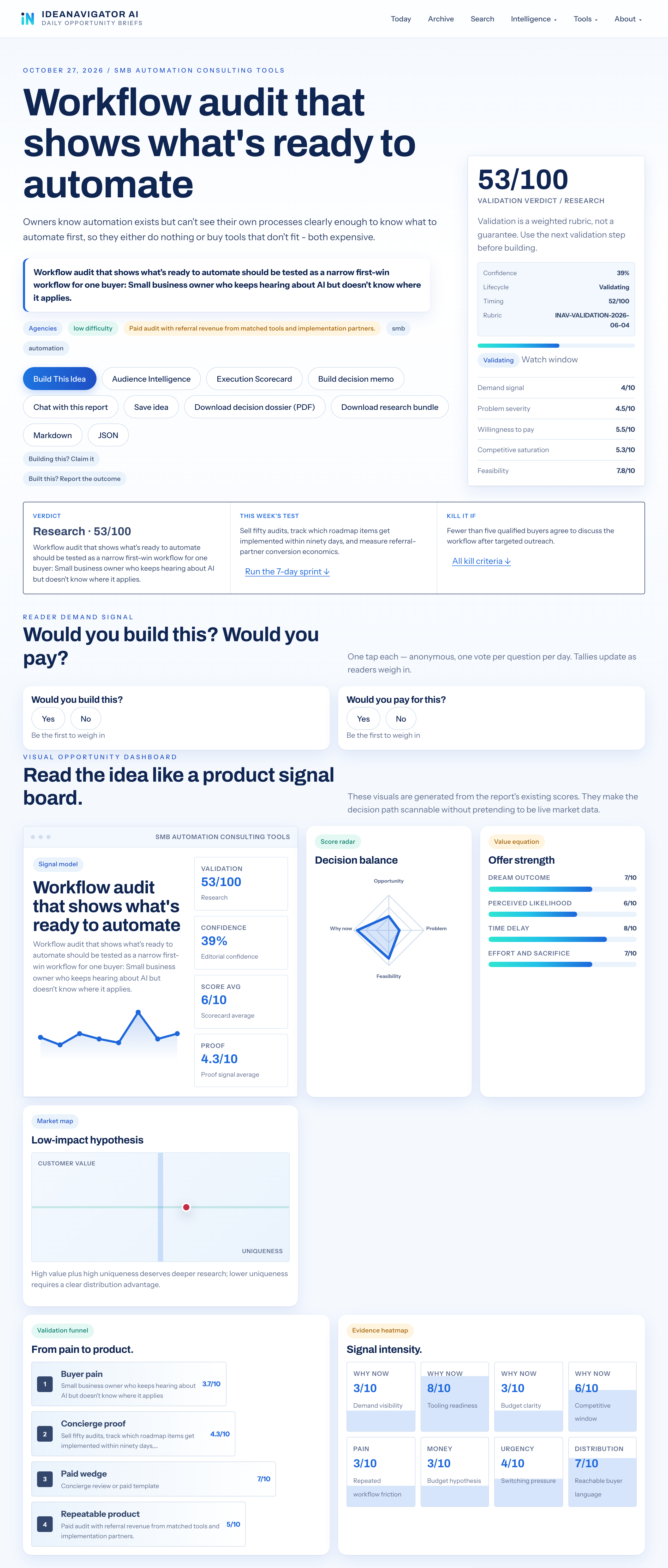
IdeaNavigator AI describes a proposed workflow-audit product for small businesses that are unsure what to automate. The concept would interview owners, score processes by readiness, potential return and difficulty, then offer a sequenced 90-day plan; the proposal has not been validated with sales or implementation results in the material provided.
IdeaNavigator AI has proposed a paid workflow audit to help small-business owners identify which processes may be suitable for automation, addressing a common decision problem: owners may know automation tools are available but lack a clear view of their own operations. The concept would turn an interview about day-to-day work into a process map, prioritized recommendations and a 90-day roadmap; no evidence of completed customer testing or measured results is provided.
The proposed service would guide an owner through an interview about the business’s operations, then map the processes discussed. Each process would receive scores for automation readiness, potential return on investment and difficulty. The audit would sequence recommendations into a 90-day plan and suggest tools for individual steps. These are proposed product features, not confirmed capabilities of a launched service.
The business model would charge customers for the audit and potentially earn referral revenue from software vendors or implementation partners matched to the recommendations. That combination could make the service useful to owners seeking both diagnosis and next steps, but it also means recommendations and commercial incentives would need to be presented transparently. The proposal does not specify pricing, referral terms or how tool matches would be selected.
To test demand, the proposal calls for selling 50 audits and tracking which recommended roadmap items customers implement within 90 days. It also suggests measuring conversion economics for referral partners. Those are proposed validation targets, not reported outcomes: the available information does not say that the audits have been sold or that any implementation rate has been measured.
SMALL BUSINESS • AUTOMATION READINESS
How SMBs Can Assess Workflows Before Automating
A proposed paid audit would turn an owner interview into a process map, ranked opportunities and a 90-day roadmap. Its demand and outcomes remain unvalidated in the information available.
From daily work to a ranked plan
The idea starts with how work actually happens, then organizes candidate changes into an actionable sequence. These are proposed features, not confirmed capabilities of a launched service.
Interview the owner
Discuss routine work, handoffs, bottlenecks and recurring tasks.
Map processes
Turn the conversation into a view of steps and connections.
Score opportunities
Compare readiness, potential return and implementation difficulty.
Sequence next steps
Suggest tools and arrange recommendations across 90 days.
Three lenses for each process
Scores can help compare options, but their value depends on the quality of interview information, the scoring method and the assumptions behind each estimate.
Can this be automated now?
Check whether the process is understood, repeatable and supported by usable inputs.
Could the benefit justify effort?
Estimate likely value, such as time saved or fewer errors. No calculation method is specified.
What would implementation take?
Consider tool fit, business constraints and the work needed to change the process.
Map first. Automate with a reason.
Choosing the wrong workflow can waste money and staff time. A tool may not fit the way work is done, or automation may add complexity to a process that needs clarification first.
Trust depends on the details
The proposal describes a customer problem and a service concept. It does not provide independent market research, customer testimonials or comparative results.
- PricingNo audit price or evidence of repeat demand is given.
- Tool matchingSelection criteria and implementation partners are not named.
- DisclosureReferral revenue may create incentives customers should understand.
- SafeguardsPrivacy practices and the role of human review are not described.
Test whether owners act on the roadmap
Sell the first 50 audits, then follow customers for 90 days. Track which recommendations they implement and assess referral-partner conversion economics. The proposal reports no sales, implementation rates or business gains yet.
Key questions
What the proposal says—and what the available information does not establish.
What is the proposed workflow audit?
A paid interview and process-mapping service with readiness, return and difficulty scores plus a sequenced 90-day roadmap.
Has it been tested with customers?
No completed customer testing is reported. Selling 50 audits is a proposed validation step.
How might it make money?
The proposed model combines an audit fee with possible referral revenue. Pricing and referral terms are unspecified.
What would show whether it works?
Track roadmap items implemented within 90 days and partner conversions, then report customer outcomes and measured benefits.
Source: IdeaNavigator AI · Proposal details as provided
Why Workflow Prioritization Matters
For a small business, choosing the wrong process to automate can waste money and staff time. A tool may not fit the way work is actually done, or automation may add complexity to a process that needs to be clarified first. A structured audit could help owners compare candidate tasks before buying software, rather than treating the availability of AI as a reason to automate immediately.
The proposal also points to a practical distinction: identifying a candidate process is not the same as proving a business benefit. Readiness, estimated return and implementation difficulty can help organize decisions, but the usefulness of those scores depends on the information gathered and the assumptions behind them. Tracking actual implementation over 90 days would offer a more concrete test of whether recommendations are actionable than simply counting audits sold.
The commercial model adds another consideration. If a provider earns referral fees from tools or implementation partners, customers may want to know whether recommendations are based on operational fit, referral arrangements or both. Clear disclosure and evidence that matched products address the stated workflow would matter to trust, particularly for owners relying on an outside service to make technical choices.
Popular right now

Shark Rocket Pet Plus Corded Stick Vacuum, Bordeaux, HV322

De’Longhi Classic Matte Black Espresso Machine with Milk Frother

Samsung 42-Inch Class OLED S90F 4K Smart TV (2025)
As an affiliate, we earn on qualifying purchases.
From AI Interest to Process Mapping
The proposal is aimed at owners who hear about AI and automation but do not know where those technologies fit in their businesses. It frames the problem as a lack of visibility into routine processes: without a map of how work is done, owners may delay decisions or purchase tools that do not match their needs. These are the proposal’s description of the customer problem, not quantified findings about the wider small-business market.
IdeaNavigator AI argues that the growth of AI tools has increased decision pressure, while guided interviews and language models could make structured process-mapping easier to deliver. The proposed product would combine that interview with scoring and tool suggestions. The material does not provide independent research, market-size estimates, customer testimonials or comparative results showing that this approach performs better than existing consultants or software.
Demand, Scores and Referral Terms
Whether small businesses will pay for the audit remains unknown. The proposal sets out a target of 50 sales but provides no completed sales, price point, customer feedback or evidence of repeat demand. It also does not report how many recommended workflow changes businesses might implement, or whether those changes would produce savings or other measurable gains.
The scoring method is not described in detail. It is unclear how the service would estimate return on investment, judge readiness, account for business-specific constraints or verify information collected in an interview. Tool-matching criteria, referral-partner arrangements, privacy practices for operational information and the role of human review are also unspecified. No product launch date or named implementation partners are given.
Testing the First Fifty Audits
The next proposed step is to sell 50 audits, then follow customers for 90 days to see which roadmap recommendations they implement. The operator would also assess referral-partner conversion economics, which could show whether suggested tools generate revenue as well as whether customers take action. No timetable for this test is supplied.
For the concept to demonstrate value, later reporting would need to distinguish recommendations made from changes actually completed and clarify what outcomes were measured. Pricing, implementation rates, customer feedback and referral disclosures would help owners judge whether the service is a practical way to choose automation projects. Until those results are available, the audit remains a proposed business offering rather than a validated solution.
Source: IdeaNavigator AI
Key Questions
What is the proposed workflow audit?
It is a proposed paid service that would interview a small-business owner, map operational processes, score them for automation readiness, potential return and difficulty, and provide a sequenced 90-day roadmap.
Has the audit been tested with customers?
The information provided does not report completed customer testing. Selling 50 audits is described as a proposed validation step, not as an achieved result.
How would the service make money?
The proposed model combines a fee for the audit with possible referral revenue from matched tools and implementation partners. Pricing and referral terms have not been specified.
What would show whether the recommendations work?
The suggested test is to track which roadmap items customers implement within 90 days and measure referral-partner conversions. The proposal does not report implementation outcomes or resulting business benefits.
Source: IdeaNavigator AI