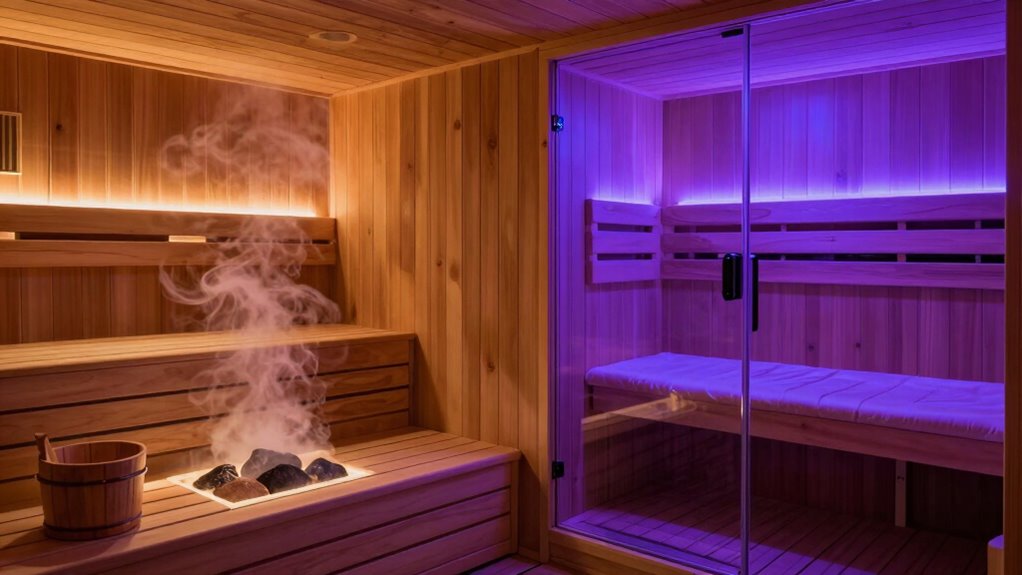

Choosing between an infrared and traditional sauna changes your home wellness routine in several ways. Infrared saunas are more energy-efficient, easier to install, and gentler on your body, making them ideal for frequent use and smaller spaces. Traditional saunas offer a more intense sweat and authentic experience but require more room and investment. Understanding these differences helps you pick the best fit for your lifestyle, and if you keep exploring, you’ll discover even more helpful details.

Prime made for students and young adults
- Fast, free delivery for dorm and study essentials
- Prime Video and Amazon Music included
- Member-only deals
Key Takeaways
- Infrared saunas operate at lower temperatures and provide a gentler, more comfortable experience for home users.
- They are easier to install, more space-efficient, and typically more affordable upfront than traditional saunas.
- Infrared models consume less energy, making them more cost-effective and environmentally friendly for home use.
- Traditional saunas offer intense sweating and a social, immersive experience that may require more space and higher initial investment.
- Home users should consider health goals, budget, and available space when choosing between infrared and traditional sauna options.

When choosing between an infrared sauna and a traditional sauna, understanding their differences can help you make an informed decision. Both offer unique experiences and benefits, but knowing how they impact your health and energy use can guide your choice. Infrared saunas use infrared heaters to directly warm your body, penetrating deeper into your tissues, while traditional saunas heat the air around you, creating a moist or dry heat environment. This fundamental difference influences your health benefits and energy efficiency, which are essential considerations for home users.
Infrared and traditional saunas differ in heat delivery, affecting health benefits, energy use, and overall experience.
In terms of health benefits, infrared saunas tend to operate at lower temperatures but still provide deep tissue warmth, which can promote better circulation, relieve muscle tension, and support detoxification. Many users find infrared saunas gentler and easier to tolerate, especially if they’re sensitive to high heat. Traditional saunas, on the other hand, often reach higher temperatures, creating a more intense sweating experience that can also aid in detoxification and improve cardiovascular health. The choice depends on your personal health goals and comfort level. If your focus is on relaxation and muscle recovery, infrared might be more appealing. But if you’re seeking a more vigorous sweat and social sauna experience, traditional options could be preferable.
Energy efficiency is another key factor that distinguishes these two types for home use. Infrared saunas generally consume less power because they heat only your body rather than the entire space, making them more energy-efficient and cost-effective over time. They heat up more quickly, reducing the amount of electricity needed to reach ideal conditions. Conversely, traditional saunas require more energy to heat the entire enclosed space to high temperatures, which can result in higher utility costs. If you’re concerned about energy consumption or want a more environmentally friendly option, infrared models are typically the better choice. Additionally, because infrared saunas operate at lower temperatures, they tend to be more energy-efficient and environmentally friendly overall. Understanding the technological differences between these sauna types can help you make a more informed decision. Moreover, advancements in infrared heating technology continue to improve their efficiency and user experience.
Additionally, infrared saunas tend to be easier to install and maintain, often coming in smaller, more space-efficient designs. They also tend to be more affordable upfront, making them accessible for home users looking for a straightforward wellness solution. Traditional saunas, with their larger size and more complex heating systems, might demand more space and investment, but some users appreciate the classic sauna experience and the social aspect it offers. Moreover, infrared sauna panels often require less maintenance because of fewer moving parts and simpler heating elements. As the technology advances, infrared saunas are becoming even more accessible for various home environments.
Ultimately, your decision hinges on your health goals, budget, and space considerations. Infrared saunas provide a gentle, energy-efficient way to enjoy health benefits like improved circulation and detoxification, all within a more manageable and cost-effective package. Traditional saunas deliver a more intense heat that many find more authentic, though at a higher energy and maintenance cost. Knowing these differences helps you choose the option that best fits your lifestyle and wellness priorities.
As an affiliate, we earn on qualifying purchases.
Frequently Asked Questions
Are Infrared Saunas Safer Than Traditional Saunas?
Infrared saunas are generally considered safer than traditional saunas because they have fewer traditional risks like burns from hot surfaces or steam burns. Infrared safety is improved since they operate at lower temperatures, reducing the chance of overheating. However, you should still use caution and follow guidelines, as prolonged exposure or pre-existing health issues can pose risks in either type. Always consult a healthcare professional if unsure.
How Energy-Efficient Is an Infrared Sauna Compared to a Traditional One?
Infrared saunas are more energy-efficient than traditional saunas because they use less energy for heating. Their heating efficiency is higher since infrared panels directly warm your body without needing to heat the air around you. This means you typically run an infrared sauna for shorter periods, consuming less electricity overall. So, if you’re concerned about energy consumption, choosing an infrared sauna can save you money and reduce your environmental impact.
Can Infrared Saunas Help With Specific Health Conditions?
Sure, infrared saunas can seem like magic healing machines, but their real magic lies in detoxification benefits and skin health. They might help with muscle pain, joint issues, or even skin conditions, though results vary. While they aren’t miracle cures, you’ll likely notice improved circulation and a clearer glow. Just remember, they’re a complement, not a replacement for medical treatment—so don’t rely solely on them for health conditions.
What Are the Maintenance Differences Between the Two Sauna Types?
You’ll find that maintenance differs mainly in cleaning frequency and humidity control. Infrared saunas require less frequent cleaning since they produce less moisture, so wiping down surfaces weekly often suffices. Traditional saunas need more regular cleaning to manage sweat and humidity buildup, usually after each use. Controlling humidity is essential in traditional models to prevent mold, while infrared saunas operate with lower humidity, making upkeep simpler for you.
Which Sauna Type Is More Suitable for Small Home Spaces?
If you’re limited on space, an infrared sauna is more suitable for your small home. It has minimal space requirements and is easier to install, fitting into tighter areas without extensive modifications. Traditional saunas typically need more room, ventilation, and dedicated installation space, making them less ideal for small homes. Infrared saunas also usually come in compact, portable designs, helping you enjoy sauna benefits without sacrificing valuable space.
As an affiliate, we earn on qualifying purchases.
Conclusion
Choosing between an infrared and a traditional sauna depends on your preferences, but did you know that infrared saunas can operate at lower temperatures while still providing deep tissue benefits? This means you can enjoy a relaxing, effective session without feeling overwhelmed by heat. Whether you prefer the classic steam or the gentle warmth of infrared, both options offer unique health perks. Ultimately, selecting the right sauna enhances your wellness routine—making your home a personal retreat.
As an affiliate, we earn on qualifying purchases.
As an affiliate, we earn on qualifying purchases.
Halloween Picks
halloween
As an affiliate, we earn on qualifying purchases.