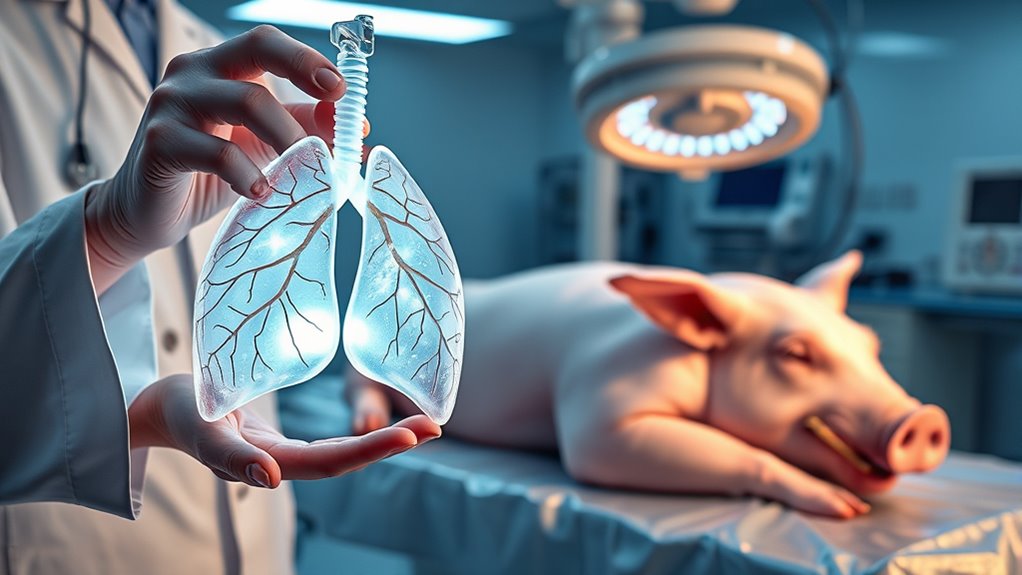

Scientists have successfully transplanted lab-grown lungs into pigs, showing a major advance in regenerative medicine. This breakthrough brings us closer to growing and transplanting lungs into humans, potentially saving many lives. However, challenges remain, such as replicating complex lung structures and ensuring safety. Ethical concerns and manufacturing hurdles must also be addressed. If you want to learn more about how this exciting development could impact the future of organ transplants, keep exploring the details.
Key Takeaways
- Successful lab-grown lung transplants in pigs demonstrate progress toward human applications.
- Advances in organ engineering are bringing us closer to growing functional lungs for human transplants.
- Technical challenges, such as replicating complex lung structures, remain to be addressed for human use.
- Ethical debates continue over lab-grown organ production and animal testing practices.
- Ongoing research and manufacturing innovations are essential to make lab-grown lung transplants safe and accessible for humans.
Scientists have successfully transplanted lab-grown lungs into pigs, marking a significant step forward in regenerative medicine. This breakthrough brings us closer to the possibility of growing and transplanting lungs into humans, potentially saving countless lives. However, as promising as this development sounds, it also raises important ethical concerns and reveals substantial manufacturing challenges that you need to understand.
One of the first issues you should consider involves ethical concerns. Growing organs in laboratories and transplanting them into animals or humans sparks debate about the moral implications. Critics worry about the welfare of animals used in the research, especially if they undergo multiple procedures or suffer side effects. There are also questions about the moral boundaries of creating lab-grown organs—whether it’s right to manipulate life in this way. As you follow this research, you’ll notice that public opinion varies, with some seeing it as a necessary step to cure fatal diseases, while others feel uncomfortable with the concept of “manufacturing” organs. Balancing scientific progress with societal values is vital, and ongoing discussions about regulation and oversight aim to address these concerns.
Ethical concerns surround lab-grown organs, sparking debate over animal welfare and moral boundaries of manipulating life.
Manufacturing challenges are just as significant. Producing functional lungs in a lab isn’t simple. You need to create a complex structure that mimics the intricate network of blood vessels, airways, and tissue found in natural lungs. Current techniques involve growing cells on scaffolds, but ensuring that these organs develop proper function and durability remains difficult. Scaling up production from small, experimental samples to full-sized organs suitable for transplantation is another hurdle. Consistency and safety are critical; even minor variations in manufacturing can lead to organ failure or immune rejection once transplanted. Additionally, cost is a major factor. Developing reliable, high-quality lab-grown lungs involves sophisticated technology and materials, which could make these organs expensive and less accessible initially. Improving tissue engineering techniques and bioreactors, as well as establishing strict quality controls, are essential steps to overcome these manufacturing challenges.
As you consider the future of lab-grown lungs, it’s clear that while scientific breakthroughs are promising, there’s still a long road ahead. Addressing ethical concerns involves ongoing dialogue and responsible research, ensuring that advances respect societal values. Tackling manufacturing challenges demands innovation, investment, and rigorous testing to produce safe, effective organs at scale. If these obstacles can be managed, the day when humans receive lab-grown lungs might not be far off. In the meantime, understanding both the ethical and technical hurdles helps you appreciate the complexity behind this groundbreaking work and the careful steps scientists are taking to make it a reality.
Top picks for "grown lung successfully"
Open Amazon search results for this keyword.
As an affiliate, we earn on qualifying purchases.
Frequently Asked Questions
How Long Do Lab-Grown Lungs Typically Last After Transplantation?
Lab-grown lungs typically last around 5 to 10 years after transplantation, depending on factors like lung durability and how well you care for them. Transplant longevity varies for each person, influenced by immune response and lifestyle choices. Regular check-ups and avoiding infections help extend their lifespan. While researchers aim to improve lung durability, current transplants generally offer a decade of functional use before needing replacement or additional treatment.
What Are the Potential Risks of Transplanting Lab-Grown Lungs Into Humans?
You should be aware that transplanting lab-grown lungs into humans carries risks like immune rejection, where your body might attack the new organs, and infection risk, since the lungs are vulnerable during recovery. Even with advancements, these issues could lead to complications or the need for lifelong immunosuppressants. It is crucial to carefully weigh these risks with your medical team before proceeding, as they’re critical factors in transplant success.
How Do Lab-Grown Lungs Compare to Natural Lungs in Function?
Lab-grown lungs are designed to mimic natural lungs, aiming to match their respiratory efficiency. You’ll find that cellular integration is key, as lab-grown lungs integrate cells to function properly. While they still have some way to go, ongoing advances help improve their ability to perform like natural lungs. As a result, these bioengineered organs could soon offer better respiratory efficiency and more seamless cellular integration for transplant recipients.
What Are the Costs Associated With Developing and Transplanting Lab-Grown Lungs?
You’ll find that developing and transplanting lab-grown lungs involves significant costs, mainly due to advanced research, specialized equipment, and skilled labor. A thorough cost analysis reveals high expenses, while funding challenges often hinder progress. You may need substantial investment from government grants, private donors, or biotech companies to cover these costs. Overcoming financial hurdles is essential to make lab-grown lungs a viable, widespread solution for human transplants.
When Might Lab-Grown Lung Transplants Become Widely Available for Patients?
Think of lab-grown lung transplants as a new dawn on the horizon. You might see them become widely available within the next decade, but it depends on steering regulatory approval and ethical considerations. As scientists demonstrate safety and effectiveness, and regulators give the green light, you’ll see these transplants becoming more accessible. Patience and ongoing research are key—soon, you could be breathing easier with lab-grown lungs, revolutionizing medicine.
Conclusion
Imagine a future where these lab-grown lungs become bridges of hope, connecting life and possibility. Just as a seed grows into a mighty tree, your faith in science can nurture new beginnings. These transplanted lungs symbolize more than medical progress—they represent a beacon of hope for those waiting in silence. As you witness this breakthrough, remember that every innovation is a step toward turning the impossible into reality, giving lungs—and lives—fresh air to breathe.