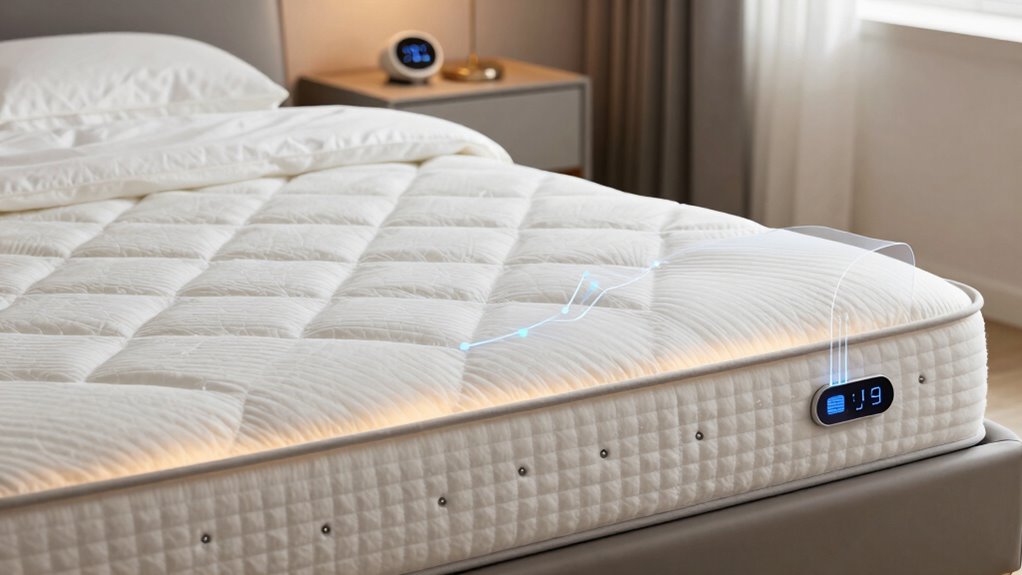

Smart mattresses measure your sleep movements, such as tossing, turning, and position changes, using sensors. They track heart rate and breathing patterns to identify disruptions or potential sleep issues. Temperature sensors help regulate your body’s comfort, while analysis of sleep stages determines your overall sleep efficiency. They also gather data on physiological signals like heart rate variability and stress levels. Want to discover how this data can improve your sleep and health? Keep exploring to learn more.

Prime made for students and young adults
- Fast, free delivery for dorm and study essentials
- Prime Video and Amazon Music included
- Member-only deals
Key Takeaways
- Movement and sleep position changes to assess sleep quality and detect disruptions.
- Heart rate and breathing patterns to monitor physiological health and identify sleep disorders.
- Body temperature regulation to ensure optimal comfort and prevent overheating or cold sensations.
- Sleep duration and efficiency, including time to fall asleep and stages of sleep cycles.
- Physiological signals like heart rate variability and respiratory irregularities for overall health insights.
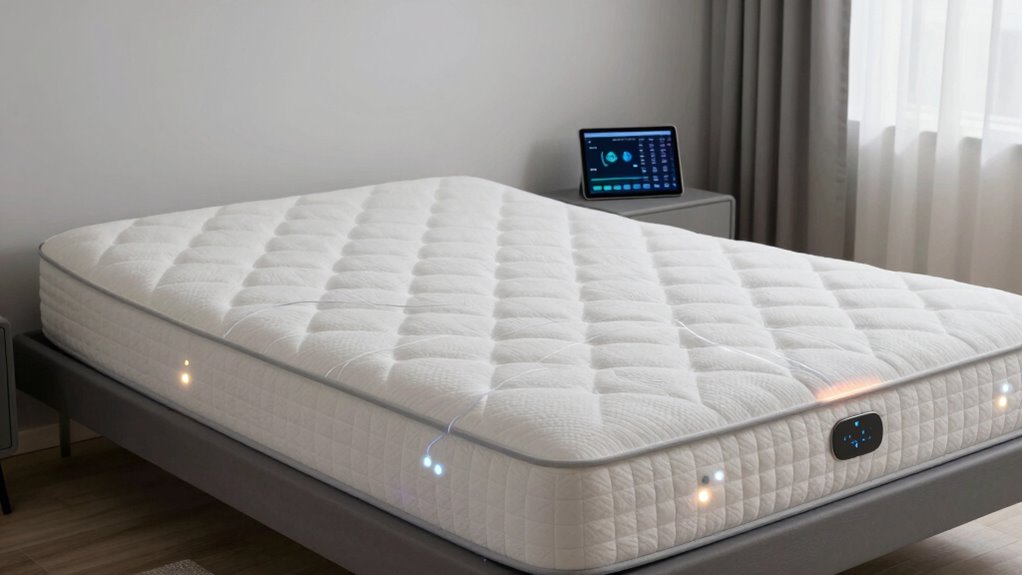
Smart mattresses are revolutionizing sleep by offering detailed measurements that help you understand and improve your rest. With advanced mattress technology, these beds don’t just provide comfort—they actively monitor and analyze your sleep patterns, giving you insights into your sleep quality. When you lie down, sensors embedded in the mattress track various metrics, providing a thorough picture of how well you sleep each night.
One of the primary things smart mattresses measure is your movement during the night. Using accelerometers and pressure sensors, they detect tossing, turning, and even subtle shifts in your position. This data helps identify how often you wake up or change positions, which directly correlates with sleep quality. If you find yourself restless, the mattress can help you understand whether it’s due to discomfort, stress, or other factors, allowing you to make adjustments for better rest.
Another vital aspect these mattresses monitor is heart rate and breathing patterns. By using embedded sensors, they track your heartbeats and respiratory cycles throughout the night. Variations in these metrics can indicate disruptions in your sleep or signs of sleep disorders like sleep apnea. Recognizing these anomalies early can be essential for addressing potential health issues and improving overall sleep health. sleep health is a comprehensive term that encompasses many of the factors these mattresses assess to promote better rest.
Temperature regulation is also a feature of many smart mattresses. They measure your body temperature and adjust the bed’s climate accordingly, ensuring you stay comfortable. Fluctuations in temperature can disturb your sleep, so this technology helps maintain an ideal environment for restful sleep. This continuous regulation not only enhances sleep quality but also prevents overheating or feeling too cold during the night. Additionally, some smart mattresses use thermal sensors to optimize comfort through precise temperature control. Incorporating sensor technology can further enhance the accuracy of these measurements and improve your overall sleep experience.
Furthermore, smart mattresses often track sleep duration and efficiency. They analyze how long it takes you to fall asleep, how much time you spend in different sleep stages—light, deep, and REM—and how often you wake up. This detailed data allows you to see patterns over time, helping you develop better sleep routines and habits. Some systems even provide personalized suggestions to improve your sleep based on the data collected.
In addition, these mattresses are capable of monitoring physiological signals, such as heart rate variability and respiratory irregularities, which can offer deeper insights into your overall health during sleep. These signals can reveal important information about your autonomic nervous system activity and stress levels, further enriching the understanding of your sleep quality. This comprehensive approach to measurement enables a more complete picture of your health and sleep patterns. In essence, smart mattresses measure a combination of physiological and behavioral factors that influence your sleep quality. By harnessing sophisticated mattress technology, they turn your bed into a powerful sleep monitoring device. With this information at your fingertips, you gain a clearer understanding of your sleep health, enabling you to make informed adjustments for more restorative nights.
smart mattress with sleep tracking
As an affiliate, we earn on qualifying purchases.
As an affiliate, we earn on qualifying purchases.
Frequently Asked Questions
How Accurate Are Smart Mattress Sleep Tracking Features?
Smart mattress sleep tracking features are generally quite accurate, especially when it comes to evaluating sleep quality. They use sensors that monitor movement, heart rate, and breathing patterns, giving you a clear picture of your sleep patterns. However, accuracy can depend on mattress compatibility—some models work better with certain bed types or users. For the best results, make sure your mattress is compatible and keep in mind that these devices offer helpful, though not perfect, insights.
Do Smart Mattresses Require Regular Software Updates?
Did you know that over 80% of smart mattress users find their sleep improves with regular updates? Yes, smart mattresses do require regular software updates to guarantee peak sleep comfort and maintain mattress durability. These updates fix bugs, enhance features, and improve tracking accuracy. By keeping your mattress’s software current, you ensure it continues to perform well, providing you with the best possible sleep experience and extending its lifespan.
Can Smart Mattresses Detect Sleep Disorders?
Yes, smart mattresses can detect sleep disorders by analyzing your sleep environment, such as temperature and humidity, and monitoring mattress materials that influence comfort. They track metrics like heart rate, breathing patterns, and movement, helping identify issues like sleep apnea or restless leg syndrome. By providing detailed data, smart mattresses assist you and healthcare providers in understanding sleep quality and addressing potential disorders effectively.
Are Smart Mattress Measurements Affected by Different Bed Types?
You might worry that different bed types or mattress materials could skew smart mattress measurements, but most modern devices are designed for bed compatibility. They adjust for variations in firmness or surface texture, ensuring accurate data collection. Whether you have a memory foam or innerspring mattress, smart mattresses can still effectively monitor your sleep, thanks to their adaptive sensors that account for different bed types and materials.
How Secure Is My Sleep Data With Smart Mattresses?
Your sleep data with smart mattresses is generally secure, but it depends on the brand and their data privacy policies. Manufacturers use encryption to protect your information, yet it’s essential to review user consent agreements carefully. Always stay informed about how your data is stored, shared, or used. Taking these steps helps guarantee your sleep data remains private and under your control, offering peace of mind.
As an affiliate, we earn on qualifying purchases.
Conclusion
Think of a smart mattress as a vigilant lighthouse, guiding you through the fog of restless nights. It measures your sleep patterns, heart rate, and movements, illuminating the path to better rest. Just as a lighthouse warns ships of danger, your mattress warns you when your sleep needs attention. Embrace this beacon of insight, and let it lead you to calmer, more restorative nights—because understanding your sleep is the first step toward brighter mornings.
temperature regulating smart mattress
As an affiliate, we earn on qualifying purchases.
As an affiliate, we earn on qualifying purchases.
As an affiliate, we earn on qualifying purchases.
Halloween Picks
halloween
As an affiliate, we earn on qualifying purchases.