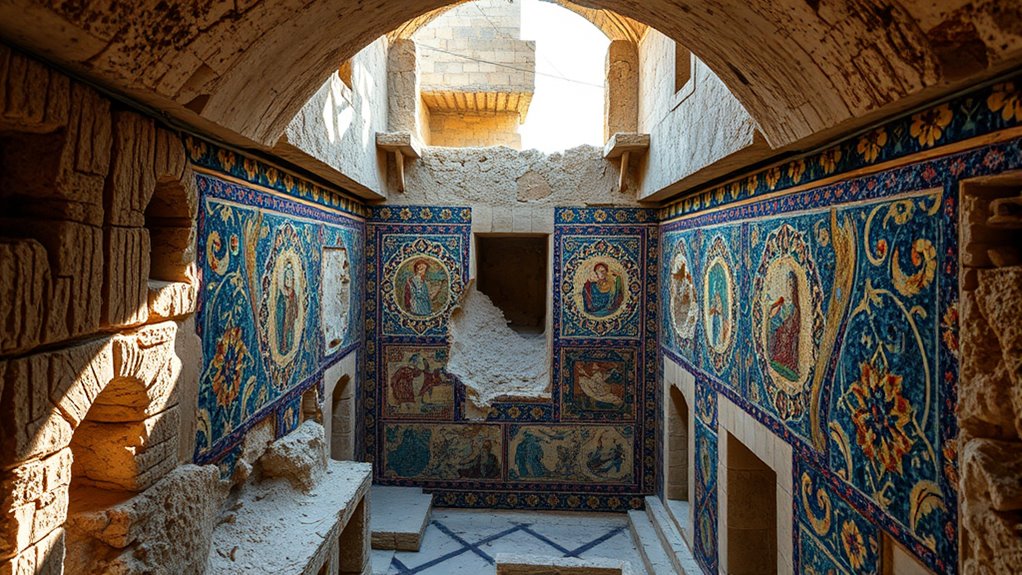

During recent excavations in Israel, spectacular Byzantine mosaics have been uncovered in ancient church sites, revealing intricate artworks filled with vibrant tesserae and symbolic imagery. These mosaics serve as “visual sermons” that depict biblical stories and spiritual themes, showcasing the high craftsmanship of Byzantine artisans. Using advanced archaeological techniques, researchers are uncovering layers of history, culture, and religious devotion. Continue exploring these remarkable findings to see how they illuminate the artistic and spiritual world of the Byzantine era.
Key Takeaways
- Recent excavations in Israel revealed stunning Byzantine mosaics depicting biblical scenes and symbolic motifs.
- Advanced archaeological techniques, such as laser scanning, documented the mosaics’ intricate designs and original layout.
- The mosaics showcase vibrant tesserae, reflecting the artistic mastery and spiritual devotion of Byzantine craftsmen.
- Discoveries provide insight into Byzantine religious practices and cultural emphasis on aesthetic and spiritual symbolism.
- These findings contribute significantly to understanding Byzantine art, history, and religious life in ancient Israel.
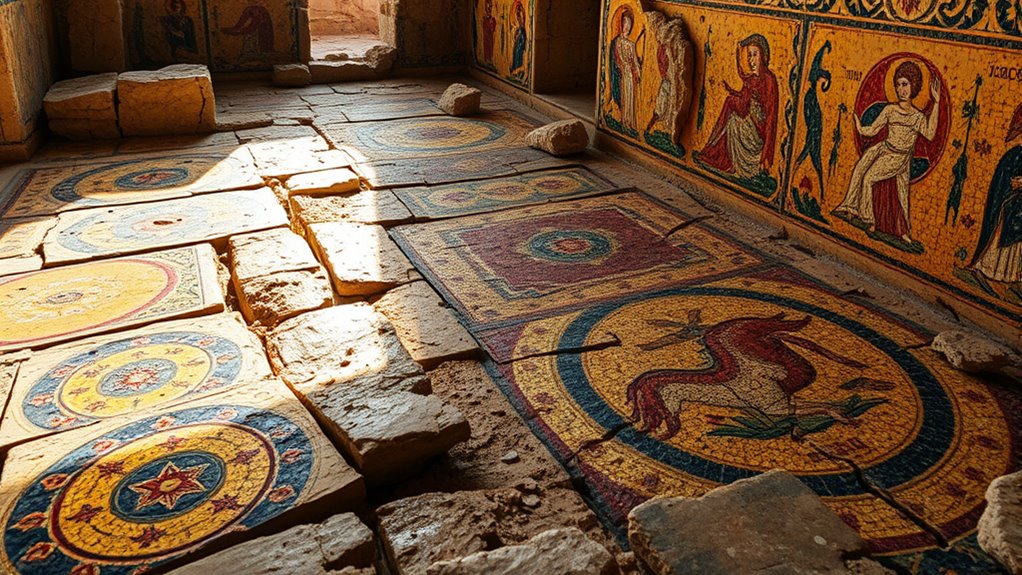
When archaeologists excavate Byzantine churches, they often uncover stunning mosaics that reveal much about the era’s artistry and religious practices. These intricate artworks are more than just decorative; they serve as visual sermons, conveying spiritual messages and biblical stories through vibrant tesserae. As you explore these mosaics, you’ll notice the remarkable display of ancient craftsmanship that went into their creation. Each piece of glass or stone was carefully placed by skilled artisans, reflecting both artistic mastery and religious devotion. The meticulous arrangement of tiny tiles demonstrates a deep understanding of color, symbolism, and composition, highlighting the sophistication of Byzantine artisans.
Using advanced archaeological techniques, researchers carefully remove layers of earth and debris to expose these mosaics without damaging their delicate surfaces. Techniques like laser scanning, photogrammetry, and detailed mapping allow archaeologists to document the mosaics’ original layout and artistry with incredible precision. These methods help preserve the mosaics digitally, ensuring that even as excavation continues and the site faces natural or human threats, their beauty remains accessible for study and appreciation. You’ll see how these techniques reveal not only the imagery but also the craftsmanship involved in their construction, including the layering of mortar, the selection of tesserae, and the alignment of patterns. Moreover, these innovative methods facilitate accurate preservation of fragile artifacts for future generations.
The sites in Israel have yielded some of the most spectacular Byzantine mosaics, offering a window into ancient religious life. As you observe these mosaics, you become part of a story that spans centuries. The scenes depicted—ranging from sacred figures to symbolic motifs—were created to inspire faith and convey theological messages to congregations. The vibrant colors and intricate details demonstrate the high level of skill and artistry possessed by Byzantine craftsmen. Their ability to transform simple materials into enduring works of art reflects a cultural emphasis on both aesthetic beauty and spiritual significance.
In your exploration, you’ll also appreciate how archaeological techniques help piece together the history behind these mosaics. Layers of dirt, repairs, and centuries of exposure tell a story of preservation and change. Each discovery adds to our understanding of Byzantine religious practices and artistic innovation. The combination of ancient craftsmanship and state-of-the-art archaeological methods allows you to witness firsthand the grandeur of Byzantine art, making these mosaics more than just remnants of the past—they’re windows into a vibrant, spiritual world preserved in stone and glass.
Frequently Asked Questions
What Techniques Were Used to Preserve the Mosaics?
You can see that conservation methods like controlled moisture and temperature help preserve the mosaics, preventing further deterioration. Restorers use specialized techniques such as cleaning with gentle agents and reinforcing fragile sections with compatible materials. These approaches guarantee the mosaics stay intact and vibrant for future generations. By carefully applying these conservation methods and restoration techniques, experts protect the intricate mosaics from environmental damage and time’s effects.
Are There Any Inscriptions or Texts in the Mosaics?
Yes, there are inscriptions in the mosaics. During the excavation, experts deciphered these inscriptions using detailed textual analysis, revealing religious texts and names. You can see how these inscriptions offer valuable insights into the cultural and spiritual life of the Byzantine community. By studying these texts, you gain a deeper understanding of their beliefs, practices, and artistic expression, making the mosaics even more significant historically.
How Do the Mosaics Compare to Other Byzantine Sites?
You’ll find that these mosaics excel in mosaic craftsmanship, exhibiting intricate detail and vibrant colors, much like other renowned Byzantine sites. Their artistic symbolism reveals deep spiritual meanings, comparable to those in famous locations like Ravenna or Hagia Sophia. While each site has its unique features, these mosaics stand out for their meticulous artistry and symbolic richness, reflecting the cultural and religious significance of Byzantine art across regions.
What Is the Estimated Date of the Mosaics?
The mosaics are estimated to date back to the 6th or 7th century. You can determine this using dating methods like thermoluminescence and stylistic analysis, which compare the artwork’s style and materials to other known Byzantine mosaics. These techniques help pinpoint the period, confirming the mosaics’ age within the Byzantine era, and provide insight into the art and culture of that time.
Were Any Artifacts Found Alongside the Mosaics?
Imagine unearthing a treasure chest where every artifact whispers stories. Alongside the mosaics, archaeologists discover pottery shards, glassware, and ancient coins, each adding depth to the site’s history. These artifacts discovery enriches the mosaic symbolism, revealing the spiritual and cultural significance of the Byzantine church. You see, every piece complements the vivid imagery, offering a fuller picture of life and faith during that era.
Conclusion
As you marvel at these magnificent mosaics, remember this remarkable discovery reveals the rich, radiant history of Byzantine brilliance. The breathtaking beauty beckons you to believe in the boundless brilliance of bygone eras. With wonder and curiosity, you witness the wealth of artistry woven within these ancient walls. Such stunning sites serve as silent stories, sparking your sense of history and harmony, and inspiring your admiration for the enduring excellence of timeless masterpieces.