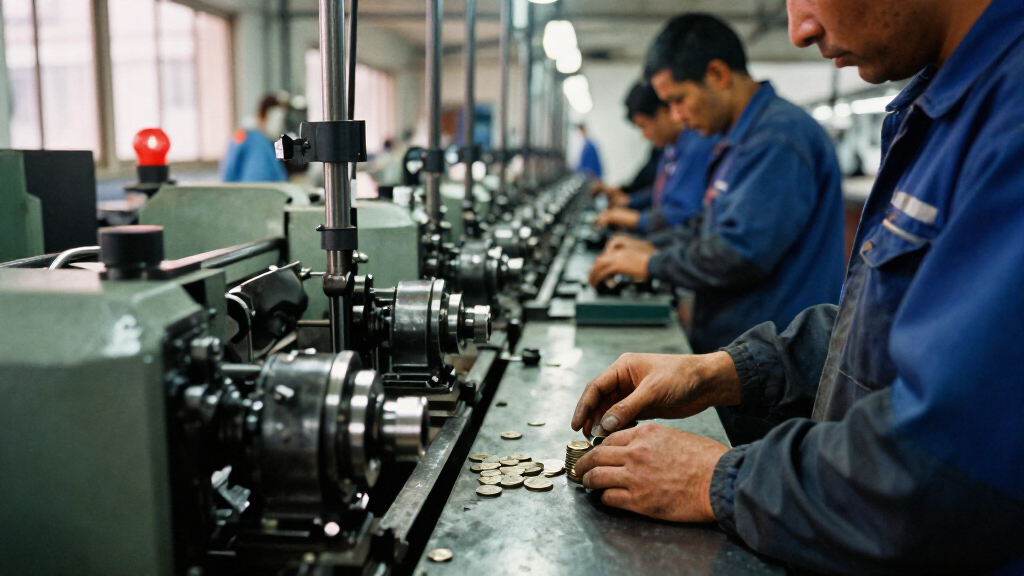
🔍 Read the full analysis: Could A Five-Dollar Day Change Life On The Assembly Line? on ThorstenMeyerAI.com

Prime made for students and young adults
- Fast, free delivery for dorm and study essentials
- Prime Video and Amazon Music included
- Member-only deals
TL;DR
Ford raised the minimum daily wage to $5 and shortened the workday from nine hours to eight on Jan. 5, 1914, amid severe worker turnover as the moving assembly line sped up production. The figures and explanations come from historical accounts and research; the claim that Ford acted so workers could buy his cars is not supported by the account’s evidence.
Ford Motor Co. raised its minimum daily pay to $5 and cut the workday from nine hours to eight on Jan. 5, 1914, as workers left jobs made faster and more repetitive by the moving assembly line. The historical account published Nov. 6 by ThorstenMeyerAI.com presents the change as a response to extreme turnover at Ford, rather than evidence that Henry Ford simply wanted workers to buy his cars.
Ford’s production figures show how sharply the new system changed the pace of work. In the company’s account, assembling a Model T chassis took 12 hours and 28 minutes of labor when the vehicle stood still. By early 1914, a moving line and more specialized tasks had reduced that figure to 1 hour and 33 minutes. The source describes this as an approximately 88% reduction in labor time per chassis.
The faster process did not keep workers in place. Research by economists Daniel Raff and Lawrence Summers, published in the Journal of Labor Economics in 1987, gives Ford’s 1913 turnover as 370%: the company hired 50,448 people to maintain an average workforce of 13,623. A historical account cited in the source says around one in ten workers was absent on an average day. Ford later described hiring at a rate of about 53,000 a year to keep a workforce of roughly 14,000.
The $5 rate was offered as profit sharing, with conditions, not as an unconditional wage available to every worker regardless of circumstances. The source says turnover fell to 54% in 1914. That decline followed the pay and hours change, though the figures alone do not establish that the policy was its only cause.
Pay, Pace and Worker Retention
The episode shows that a productivity breakthrough can create a staffing problem as well as increase output. Ford’s line reduced the labor needed to assemble a chassis, but the more repetitive division of tasks and the pace of work coincided with workers leaving in large numbers. The company’s challenge was not simply how to build cars faster; it was how to keep enough people on the factory floor to run the system.
Ford’s move joined higher pay with a shorter shift, tying compensation to the cost of operating a modern production line. The source account says Henry Ford later called the policy “one of the finest cost-cutting moves we ever made.” That description frames the wage increase as a business decision as well as a change in workers’ earnings. For readers considering automation and factory work today, the history offers a relevant distinction: higher productivity does not by itself settle who benefits, or whether jobs become more sustainable for the people doing them.
Popular right now

Hisense 43-Inch E6SR Series Hi-QLED 4K UHD Smart Roku TV (2026 Model)

iRobot Roomba 105 Combo Robot Vacuum and Mop

KitchenAid Artisan 5-Qt Tilt-Head Stand Mixer – Dried Rose (KSM150PS)
As an affiliate, we earn on qualifying purchases.
How Ford Rebuilt the Factory Floor
Before the moving line, workers assembled a car around a stationary chassis, bringing parts to it. Ford’s first assembly-line experiment in 1913 involved a small ignition component, the flywheel magneto. In his 1922 book My Life and Work, written with journalist Samuel Crowther, Ford said the company divided that task into 29 operations and moved the part past workers. The source account notes that these production details come from Ford’s own retrospective and should be read as the company’s version of events.
Ford also credited, in general terms, the overhead rails used in Chicago meatpacking plants, where carcasses moved past workers. The company then adapted the principle to the chassis: an early line pulled the frame along with a rope and windlass, before later changes raised the line and split work into smaller tasks. Ford’s account says labor time per chassis fell first to 5 hours and 50 minutes, then to 1 hour and 33 minutes by early 1914.
The five-dollar policy arrived within that rapid reorganization. The source says Ford had about 14,000 workers and produced roughly 250,000 cars a year around 1914. It argues that the company’s immediate difficulty was retaining workers, not a shortage of customers. Its wider historical framing also says U.S. factory employment grew by about a third from 1910 to 1920, while noting that assembly lines have since become increasingly automated.
What the Historical Figures Cannot Prove
The account links the wage and hours change to the turnover crisis, but it does not establish that pay alone caused turnover to fall from 370% to 54%. The change in work hours, hiring practices, and other conditions may also have mattered. The source material does not provide a detailed breakdown of how the profit-sharing conditions worked or how many workers qualified for the full daily amount.
Turnover estimates also vary by source: the account cites 370% from the 1987 Raff and Summers study and notes that The Henry Ford museum gives a figure of about 380%. These are historical estimates, not a single uncontested count. The available material does not specify how the 1914 turnover figure was calculated or whether it uses precisely the same method as the 1913 measure.
The popular claim that Ford raised pay so employees could afford to buy his cars is not established by the figures presented. The source points instead to high departures and absences as the company’s pressing operational problem. The evidence cited does not show that this was Ford’s sole motive, and the account’s production figures rely substantially on Ford’s own later recollections.
How the Wage Policy Was Remembered
The Nov. 6 account is a historical report, not notice of a new Ford wage policy or an ongoing labor dispute. Its next step is to continue the “Work After Work” series, with this episode placing the assembly line and the five-dollar day within a longer history of how production systems shape employment.
For readers weighing the episode’s conclusions, the key evidence to track is the underlying historical record: how turnover was defined, which workers received profit sharing, and how pay, hours, and factory conditions changed together in 1914. The source account does not announce further documents or a new research milestone, so no additional finding should be treated as forthcoming.
Key Questions
What changed at Ford on Jan. 5, 1914?
Ford cut the workday from nine hours to eight and raised minimum daily pay to $5, offered as profit sharing with conditions, according to the historical account.
Why did Ford raise pay?
The account describes severe worker turnover as the immediate business problem. It reports that Ford hired 50,448 people in 1913 to maintain an average workforce of 13,623. The figures support the turnover explanation but do not prove it was the company’s only motive.
How much faster did the assembly line make chassis assembly?
Ford’s account put labor time at 12 hours and 28 minutes per chassis before the moving line and 1 hour and 33 minutes by early 1914, an approximately 88% reduction.
Did Ford pay workers more so they could buy its cars?
The source account says that explanation is a legend and points to worker turnover as the documented operational problem. The material presented does not establish that enabling employees to buy cars was Ford’s reason for the policy.
Did turnover fall after the policy?
The account reports that turnover fell from 370% in 1913 to 54% in 1914. That sequence is consistent with the policy helping retention, but the figures alone cannot show that the wage and hours changes caused the entire decline.
Source: ThorstenMeyerAI.com