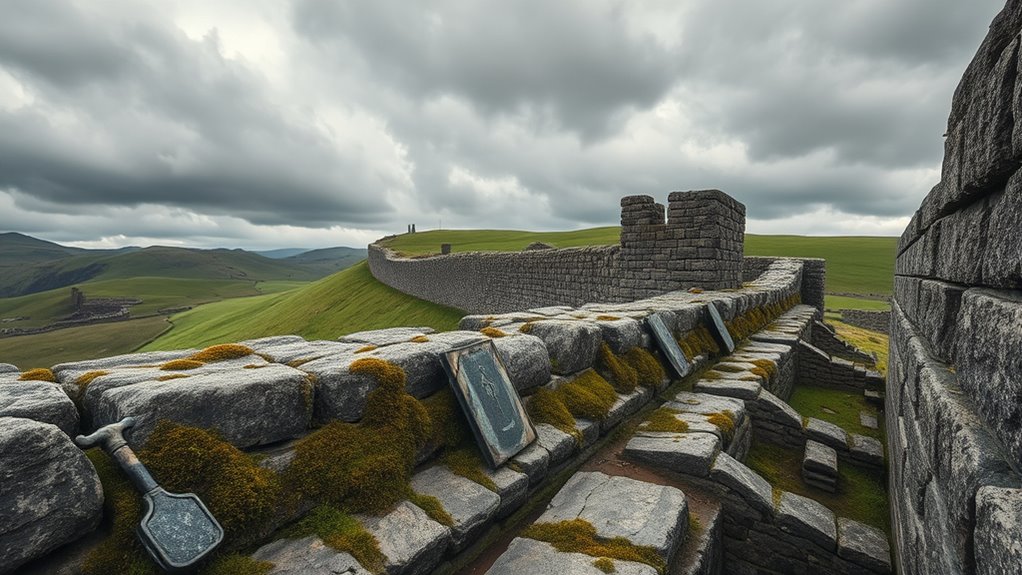

Recent discoveries along Hadrian’s Wall shed light on what life was like at Rome’s northern edge. You’ll see how the Romans built strong defenses using local materials like stone and turf, with forts, milecastles, and watchtowers forming a complex network. Their strategic placement along natural features helped monitor movement and keep northern tribes out. If you continue exploring, you’ll uncover even more about the ingenious engineering and daily routines of those ancient soldiers and settlers.
Key Takeaways
- Recent excavations uncover artifacts revealing daily life and activities of soldiers stationed along Hadrian’s Wall.
- Discoveries include tools, pottery, and personal items that illustrate the lifestyle of Roman frontier inhabitants.
- New digs highlight the strategic placement of outposts and their role in maintaining border control.
- Findings demonstrate the use of local materials and innovative construction techniques in building the wall.
- The excavation results deepen understanding of Roman military life, engineering, and adaptation at the edge of the empire.
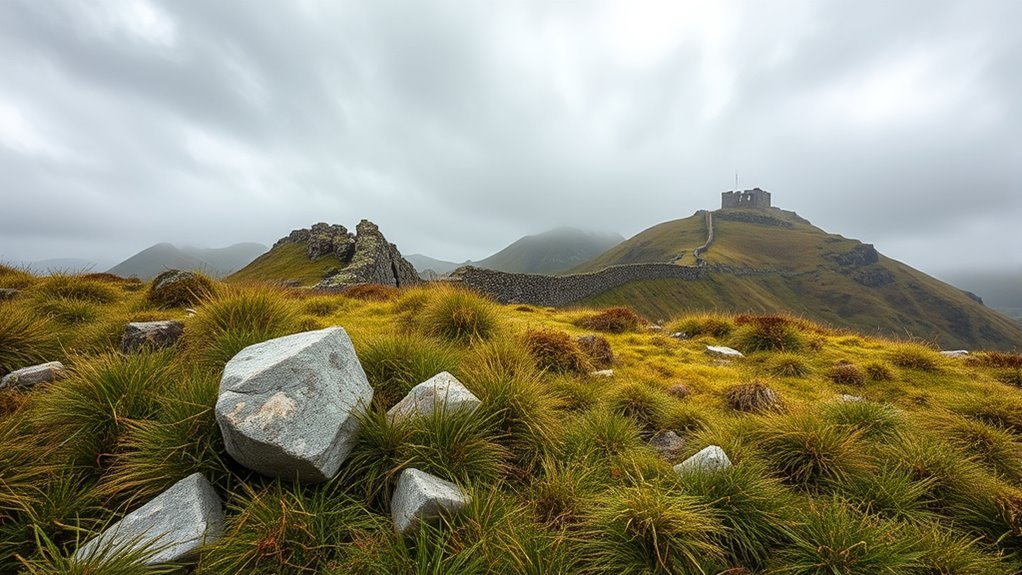
Have you ever wondered how the Romans managed to defend their northern frontier? It’s a question that highlights the ingenuity behind one of the most impressive military defenses in history: Hadrian’s Wall. As you explore this ancient monument, you’ll see that its construction wasn’t just about building a barrier—it was a testament to Roman military strategy and ancient engineering prowess. The wall stretched nearly 80 miles across northern Britain, serving as both a defensive line and a symbol of Roman power. But beyond the stone and turf, it reveals a sophisticated approach to border control designed to keep out northern tribes and monitor movement.
Discover how Hadrian’s Wall exemplifies Roman military strategy and engineering brilliance in defending the northern frontier.
The Roman military strategy behind Hadrian’s Wall was carefully planned. It wasn’t simply a wall for stopping invaders; it was a multi-layered system that included forts, milecastles, and watchtowers. You can imagine how these structures worked together to form an interconnected network of surveillance and defense. Soldiers stationed at these points could monitor enemy movements and respond quickly when needed. The placement of the wall was strategic, following natural features like rivers and ridges to maximize its effectiveness. This approach allowed the Romans to control a vast frontier with relatively fewer troops, demonstrating a mastery of logistical planning and strategic positioning. Additionally, the use of local materials like stone and turf exemplifies the ancient engineering techniques that made such large-scale construction possible.
What’s truly remarkable is how ancient engineering made all this possible. When you walk along Hadrian’s Wall, you’re witnessing the work of skilled engineers who used local materials, like stone and turf, to create a durable, functional barrier. They built sturdy forts and smaller outposts that served as bases for soldiers, and the wall itself was designed with features like battlements, gaps for gates, and tight mortar joints. These engineering innovations ensured the wall could withstand the test of time and harsh weather conditions. You might notice the precise alignment of stones and the way the wall follows the contours of the landscape, showing that Roman engineers understood how to adapt their designs to the environment.
In essence, Hadrian’s Wall isn’t just a relic of the past; it’s an embodiment of Roman military strategy and ancient engineering genius. It reflects their ability to combine tactical planning with technical skill, creating a formidable frontier. As you stand before it, you’re witnessing a remarkable achievement—proof of how the Romans defended their empire at the edge of the known world. This historic boundary, forged through innovation and strategy, remains a powerful symbol of Roman ingenuity and resilience.
Frequently Asked Questions
What Animals Lived Near Hadrian’S Wall?
You’re curious about the animals near Hadrian’s Wall. The wildlife diversity in the area included wild animals like red deer, foxes, and badgers, which thrived in the surrounding habitats. Domestic animals such as sheep and cattle were also common, often kept by local communities. These animals played an essential role in the daily life of the region, showcasing a mix of wild and domesticated species that coexisted along the Roman frontier.
How Did Soldiers Communicate Along the Wall?
You might wonder how soldiers communicated along the wall. They used Roman signal systems, which included smoke signals by day and torches by night, allowing quick messages across vast distances. These soldier communication methods relied on visual cues that could be seen from afar, making it efficient for coordinating defenses and relaying orders swiftly. This system kept Roman troops connected and responsive, ensuring the wall’s security and maintaining control over the frontier.
Were There Any Hidden Tunnels or Secret Passages?
Think of the wall as a giant puzzle, with hidden tunnels and secret passages like secret pieces waiting to be discovered. While historians haven’t found concrete evidence of extensive secret passages, it’s believed that soldiers may have used hidden tunnels for quick escapes or covert movement. These concealed routes would have been essential for strategic advantages, making the wall not just a barrier but a maze of mystery and potential secrets waiting to be uncovered.
What Was Daily Life Like for Civilians Nearby?
You experience daily life nearby as a civilian, dressed in simple, practical civilian attire. You enjoy Roman cuisine, which includes bread, vegetables, and occasionally fish or meat. Your day revolves around farming, trading, or working in local crafts, while socializing at markets or temples. Life is steady, community-focused, and influenced by Roman customs, offering a glimpse into a routine rooted in tradition and daily chores that keep the settlement thriving.
How Did Weather Affect Construction and Maintenance?
Weather challenges constantly impacted construction and maintenance of the wall. Harsh winters and heavy rains slowed work, making it difficult to lay stones or repair damaged sections. When seasonal repairs were needed, you had to plan carefully around weather patterns, often delaying projects until conditions improved. Extreme temperatures and storms forced crews to pause work, ensuring safety but also extending the time needed to keep the wall in good shape.
Conclusion
As you explore Hadrian’s Wall, remember it stretched nearly 73 miles, serving as Rome’s northern frontier. This impressive boundary once guarded the empire and housed thousands of soldiers and civilians. Today, new digs reveal how life thrived on Rome’s edge, offering a glimpse into ancient frontier life. Did you know that at its peak, over 15,000 people called this remote border home? It’s a demonstration to Rome’s reach and resilience along this historic frontier.