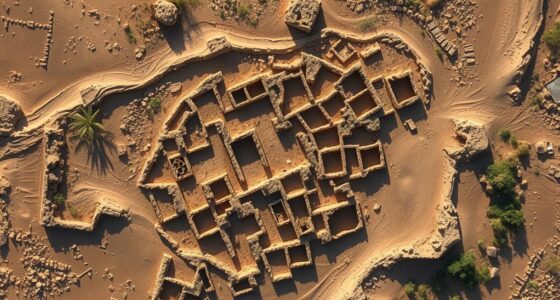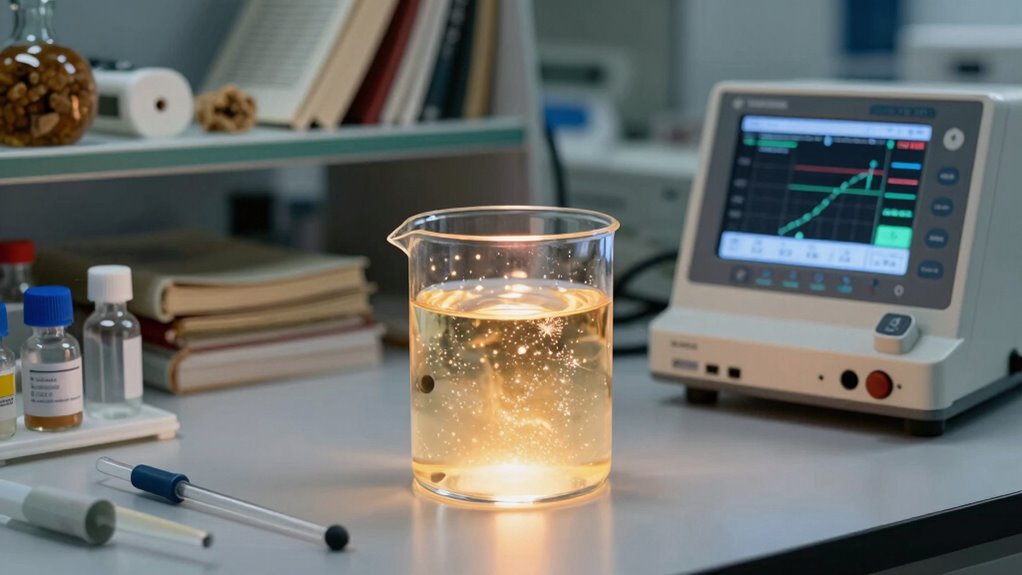

Radiocarbon dating works by measuring the decay of carbon-14, a radioactive isotope found in living organisms. When the organism dies, it stops exchanging carbon, and the remaining carbon-14 gradually decays at a predictable rate. This helps scientists estimate when the organism died. However, the method isn’t reliable for samples over about 50,000 years old or if contamination occurs. To understand the full story, including its limitations, keep exploring further.
Key Takeaways
- Radiocarbon dating measures the decay of carbon-14 in organic materials to estimate their age.
- It works best for samples up to about 50,000 years old; beyond this, the remaining carbon-14 is too minimal.
- Accurate results depend on careful sample collection, contamination prevention, and proper preparation.
- Calibration against known standards corrects for fluctuations in atmospheric carbon levels and improves precision.
- Limitations include contamination, calibration errors, and the method’s declining reliability with older or poorly preserved samples.
Top picks for "radiocarbon explain work"
Open Amazon search results for this keyword.
As an affiliate, we earn on qualifying purchases.
What Is Radiocarbon Dating and How Does It Work?
Ever wonder how scientists determine the age of ancient artifacts and fossils? They use radiocarbon dating, a method based on radioactive decay. When living organisms, like plants and animals, are part of the carbon cycle, they constantly exchange carbon with their environment. This includes a small amount of radioactive carbon-14. When an organism dies, it stops taking in new carbon, but the existing carbon-14 begins to decay at a steady rate. By measuring how much radioactive decay has occurred, scientists can estimate how long ago the organism died. This process relies on understanding the balance within the carbon cycle and how radioactive decay diminishes over time. The accuracy of this method also depends on the stability of the carbon cycle, which can be affected by environmental changes. Additionally, the carbon reservoir can influence the amount of carbon-14 available for dating, impacting the results. Radiocarbon dating is effective for dating organic materials up to about 50,000 years old. Additionally, the accuracy of this method depends on the carbon cycle remaining stable over the period being studied.
How Carbon-14 Decays and Why It Matters for Dating
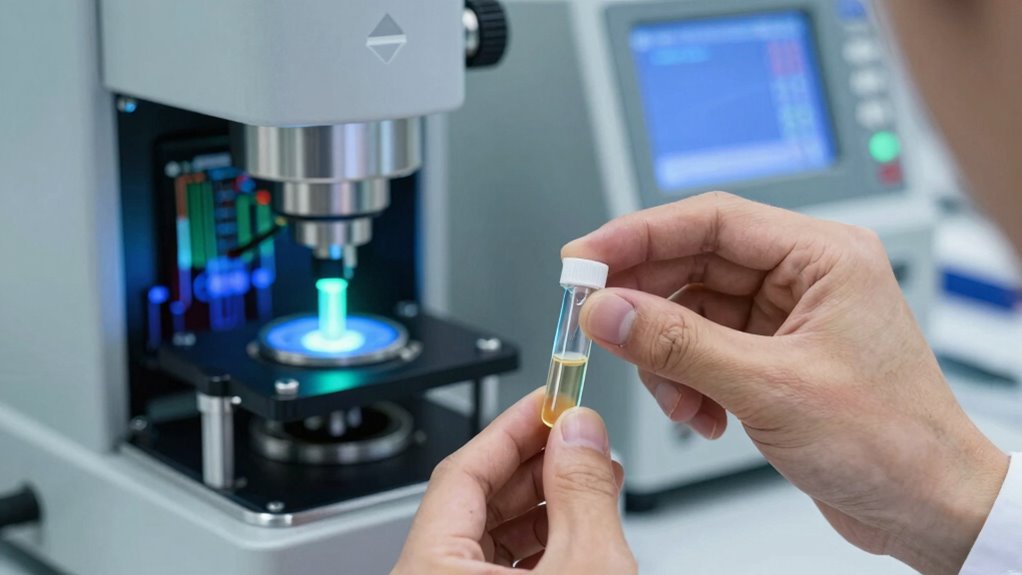
Understanding how carbon-14 decays is essential because it forms the basis for dating ancient objects. Carbon decay occurs when the unstable isotope carbon-14 transforms into nitrogen-14 over time. This process happens at a predictable rate, thanks to isotope stability, which determines how long carbon-14 remains radioactive before stabilizing. When you examine an artifact, you measure the remaining carbon-14 to estimate its age. The key is that the decay rate remains constant, allowing scientists to calculate how much time has passed since the organism’s death. If the isotope stability changes or external factors influence decay, it can affect dating accuracy. That’s why understanding carbon decay is crucial—without it, radiocarbon dating wouldn’t be precise or reliable. isotope stability plays a critical role in ensuring the accuracy of the dating process.
How Do Scientists Collect and Prepare Samples for Dating?
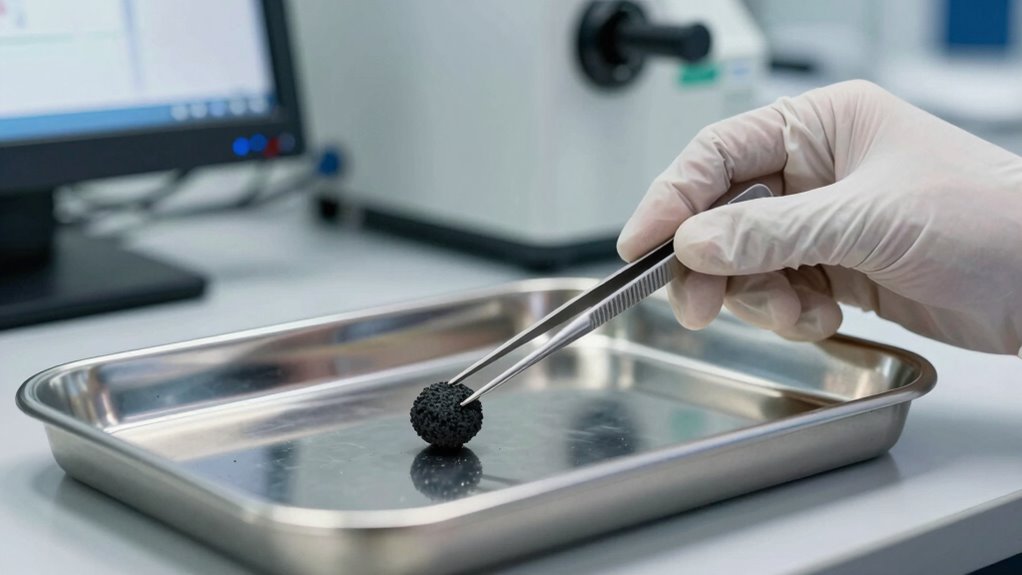
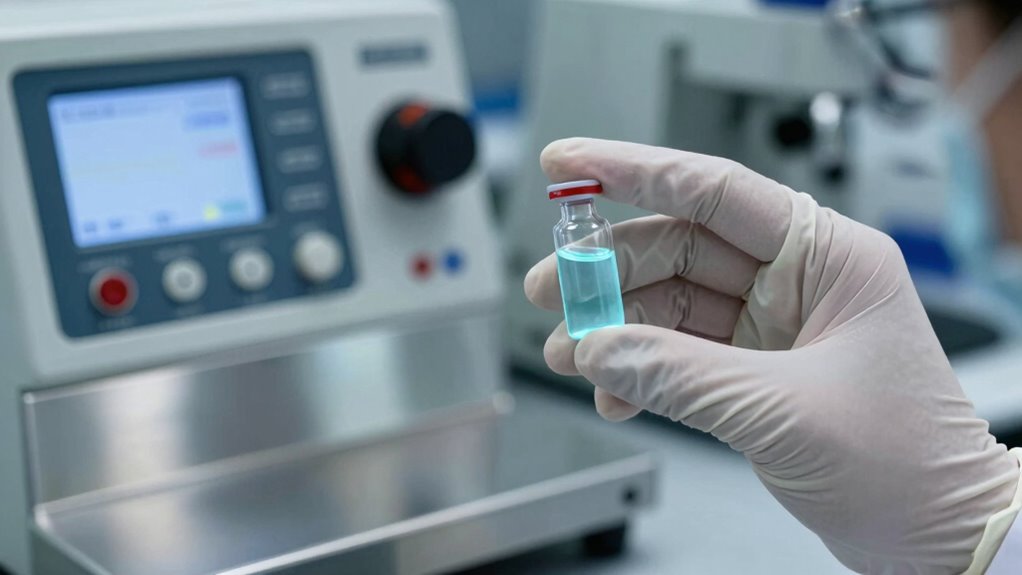
To accurately determine the age of an artifact using radiocarbon dating, scientists must carefully collect and prepare samples to prevent contamination and preserve their original carbon content. During sample collection, you need to handle materials with clean tools and in controlled environments to avoid introducing modern carbon. Proper storage methods are also essential to maintain sample integrity until analysis can be performed. The sampling process involves meticulous techniques to ensure sample purity. Preparation techniques involve removing contaminants like dirt or preservatives and isolating the original organic material. Proper preparation is vital for reliable results. The following table highlights key steps:
| Sample Collection | Preparation Techniques |
|---|---|
| Use clean, sterilized tools | Remove surface contaminants |
| Minimize exposure to air | Isolate original material |
| Store samples in airtight containers | Use chemical treatments if needed |
Additionally, implementing strict contamination prevention measures during handling can significantly improve the integrity of the sample. Maintaining a contamination-free environment helps ensure the accuracy of radiocarbon dating and trustworthy results. Ensuring proper sample preservation throughout the process is crucial for maintaining the integrity of the original material.
When Can You Trust Radiocarbon Dating? Factors That Affect Its Accuracy
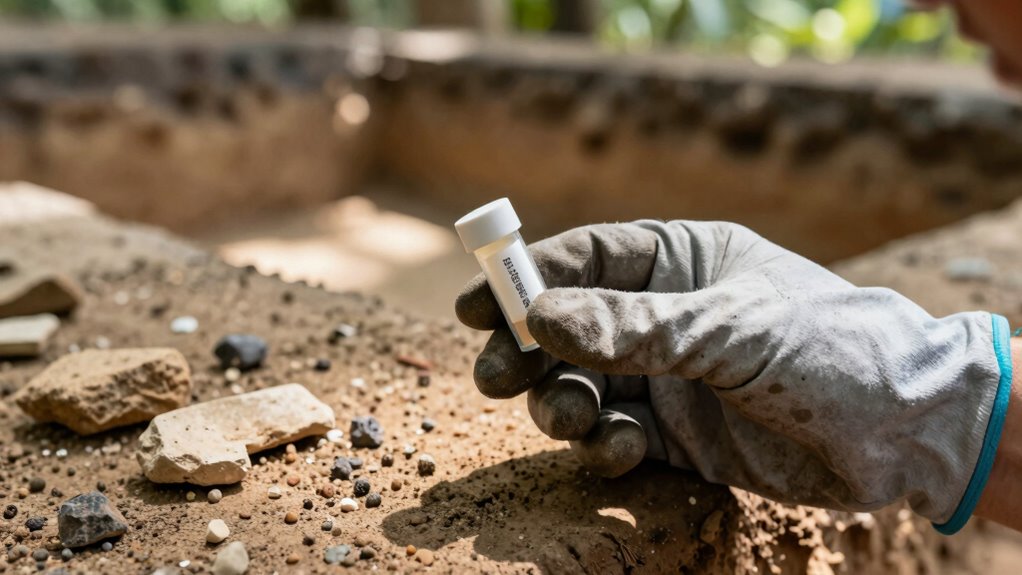
Radiocarbon dating provides reliable estimates of an artifact’s age when certain conditions are met, but several factors can influence its accuracy. Your sample’s preservation is vital—poor preservation can lead to contamination or degradation, skewing results. Environmental factors like soil conditions, humidity, and temperature can also affect the carbon content and integrity of the sample. To trust radiocarbon dating, consider these key factors:
- Proper sample preservation to prevent contamination
- Minimal exposure to environmental elements that can alter carbon levels
- Use of well-preserved, uncontaminated samples
- Awareness of local environmental impacts on sample integrity
- Sample contamination prevention is crucial for accurate results, as even small amounts of foreign material can significantly distort dating estimates.
- Ensuring contamination control during sample collection and handling helps maintain the integrity of the dating process.
- Additionally, understanding the sample’s history can help identify potential sources of error that might affect the dating accuracy.
- Recognizing the importance of sample context can aid in assessing how external factors might influence the results.
- Implementing advanced techniques can further improve the precision and reliability of radiocarbon dating outcomes.
What Are the Limitations of Radiocarbon Dating? Challenges You Need to Know
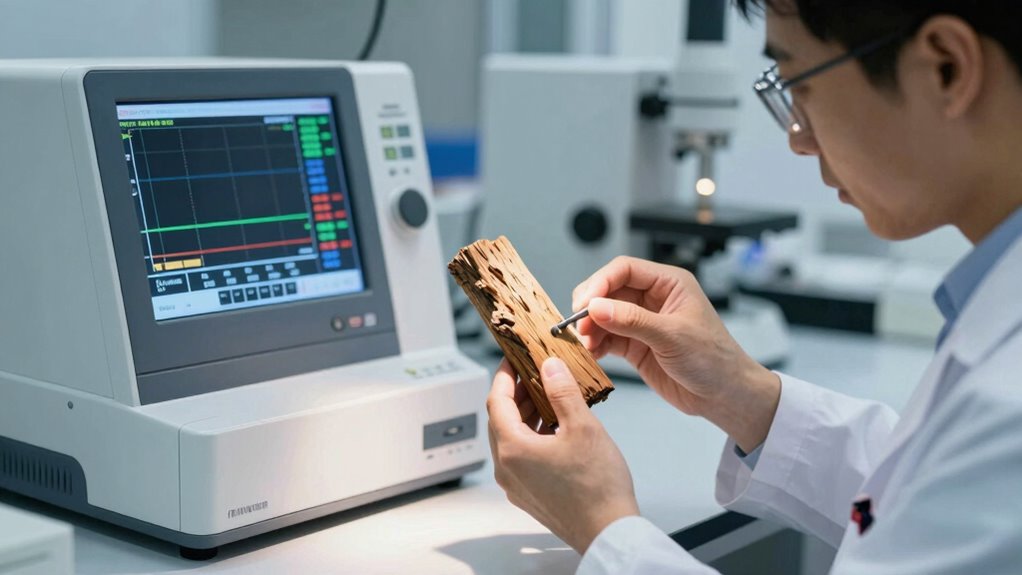
Radiocarbon dating has limitations you should be aware of, such as sample contamination that can skew results. Contamination from environmental factors or handling can introduce extraneous carbon, affecting the accuracy of the measurement. Calibration inaccuracies can also affect the precision of dates, making it tricky to get exact ages. Plus, it’s only effective for samples up to about 50,000 years old, so older artifacts are beyond its reach. Additionally, the intricacies of calibration processes can sometimes lead to discrepancies between measured and actual ages, highlighting the importance of precise methodology. Furthermore, support breakfast options in nearby areas can provide a comforting meal after a day of studying or exploring these ancient methods. Understanding sample preservation techniques is crucial for minimizing contamination and ensuring reliable results in radiocarbon dating.
Sample Contamination Risks
Contamination of samples is one of the most significant challenges in radiocarbon dating because even tiny amounts of modern carbon can skew results. Contamination sources, such as handling, preservation materials, or environmental exposure, threaten your sample integrity. These unwanted carbon inputs can make ancient samples appear younger or older than they truly are. To avoid inaccuracies, it’s essential to control for contamination at every step. Be aware of potential issues like:
- Modern carbon from handling tools or gloves
- Preservation chemicals that contain carbon
- Soil or water contamination during excavation
- Airborne particles settling on the sample surface
Maintaining strict protocols minimizes contamination risks, ensuring your sample’s integrity and the reliability of your dating results.
Calibration Accuracy Issues
While radiocarbon dating is a powerful tool for determining the age of ancient samples, its accuracy depends heavily on calibration processes that can introduce limitations. Instrument calibration is essential to ensure measurements accurately reflect the actual radiocarbon content, but calibration curves are based on known-age samples, which can vary regionally and temporally. Any discrepancies in calibration data lead to errors in age estimates. Data correction methods are applied to adjust for these variations, yet they are not perfect and may introduce uncertainties. Factors like fluctuations in atmospheric carbon levels and assumptions in calibration models can affect results. Expert voice actors can enhance the clarity of explanations when communicating these complex calibration issues. As a result, calibration accuracy issues mean that radiocarbon dates are best interpreted within their known margin of error, especially for samples near the limits of the method’s range. Additionally, the thermal behavior of samples during measurement can influence the results, highlighting the importance of understanding the physical properties involved in radiocarbon analysis. Variations in measurement techniques and sample preservation also contribute to the overall uncertainty in dating outcomes. Moreover, ongoing research aims to refine calibration methods to reduce these uncertainties, but some degree of error remains inherent in the process. Improving calibration data quality and developing new correction algorithms are ongoing efforts to enhance the reliability of radiocarbon dating.
Limited Time Range
Radiocarbon dating faces a fundamental limitation in its ability to measure ages beyond approximately 50,000 years. After this point, the remaining carbon-14 becomes too scarce for accurate detection, reducing dating accuracy. This creates a significant time constraint, making it unsuitable for studying much older artifacts or fossils. You should know that:
- The decay of carbon-14 limits the effective dating window
- Beyond 50,000 years, results become increasingly uncertain
- Very old samples have insufficient C-14 to provide reliable data
- Alternative dating methods are needed for older materials
- The chemistry of carbon isotopes plays a crucial role in understanding these limitations
- AI tools can assist in analyzing complex data and improving the interpretation of dating results, especially near the upper limits of radiocarbon dating.
- The measurement techniques used in radiocarbon analysis are vital for achieving precise results within the dating range.
These challenges mean radiocarbon dating is best suited for recent archaeological finds within its effective range. When working with older samples, you’ll need other techniques to overcome these limitations.
What Other Methods Complement Radiocarbon Dating? Alternatives You Should Consider
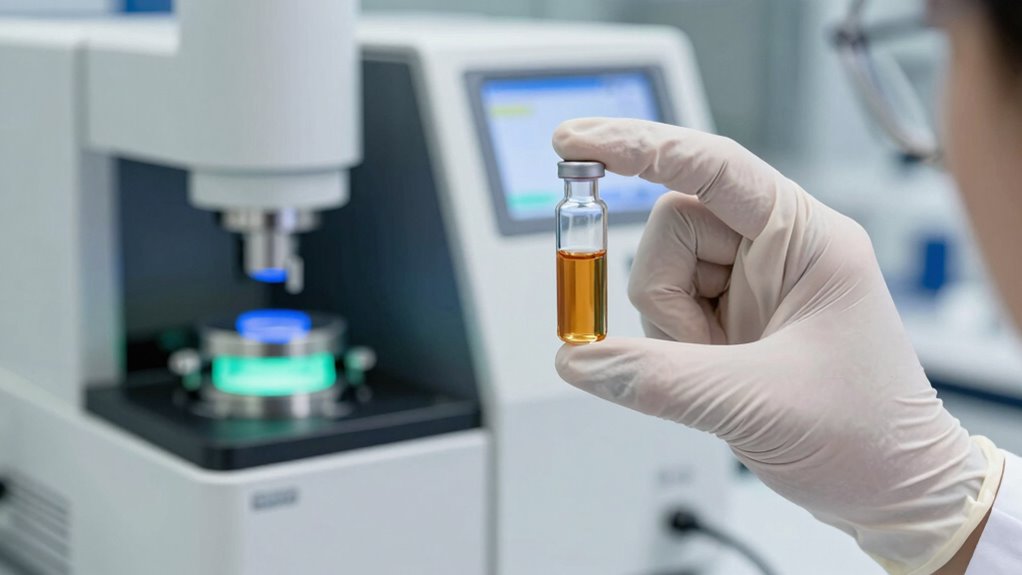
While radiocarbon dating is valuable, other methods can offer more precise or broader age ranges. Dendrochronology provides highly accurate calendar dates through tree-ring analysis, and uranium-lead dating covers much older samples. Combining these techniques can give you a more complete understanding of an artifact’s true age.
Dendrochronology’s Precision Edge
Dendrochronology offers a remarkable advantage in dating wooden artifacts with high precision, often surpassing radiocarbon dating in specific contexts. By analyzing tree rings, you can pinpoint exact years of growth, making it ideal for dating well-preserved wood. This method also aids climate reconstruction by examining variations in ring width and density, revealing past environmental changes. Its accuracy depends on the availability of master chronologies and the preservation of wood samples. Dendrochronology is especially useful for dating archaeological sites in regions with distinct seasonal growth patterns. Keep in mind, it’s limited to wood and requires overlapping ring sequences to extend date ranges. When combined with radiocarbon dating, dendrochronology enhances the accuracy and contextual understanding of ancient chronologies.
- Precise calendar years through tree ring analysis
- Effective for well-preserved wooden artifacts
- Useful in climate reconstruction studies
- Complements radiocarbon dating for improved accuracy
Uranium-Lead Dating Scope
Have you considered how uranium-lead dating broadens the scope of age determination beyond the relatively recent range of radiocarbon? This method is ideal for dating ancient mineral formations, often millions to billions of years old. Uranium lead works by measuring the decay of uranium isotopes within minerals like zircon, which form during mineral formation. Imagine this:
| Fresh mineral formation | Decades later, uranium decays | Billions of years past |
|---|---|---|
| Precise mineral record | Long-term clock | Extensive time span |
This technique complements radiocarbon by covering geological timescales, providing a broader understanding of Earth’s history through the mineral formation process. It’s especially useful when dating rocks far older than the limits of radiocarbon.
How Has Radiocarbon Dating Changed Our Understanding of History? Practical Examples
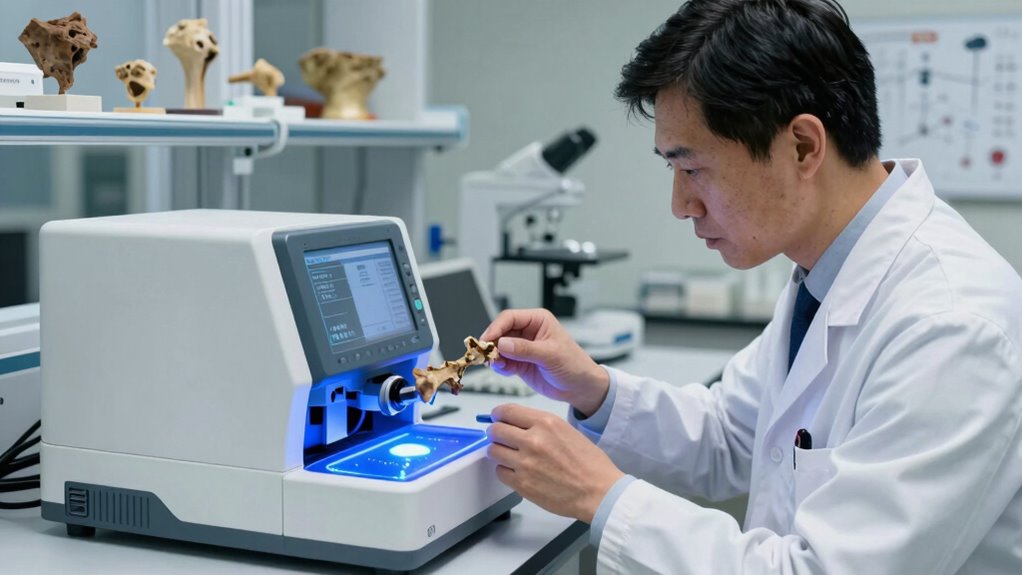
Radiocarbon dating has revolutionized how we interpret ancient history by providing precise age estimates for artifacts and fossils. This breakthrough allows you to better understand timelines and cultural shifts that shape civilizations. For example, dating ancient artifacts reveals when farming communities emerged or when societies adopted new technologies. It has helped clarify the timeline of human migration and the development of early cultures. Practical examples include:
- Dating the earliest known human settlements
- Confirming the age of ancient burial sites
- Reassessing the timeline of cultural transitions
- Clarifying the chronology of archaeological discoveries
These insights enable you to see how societies evolved and interacted over time, refining our understanding of history’s complex narrative. Radiocarbon dating therefore offers a clearer window into our past.
Frequently Asked Questions
How Does Contamination Affect Radiocarbon Dating Results?
Contamination sources can skew your radiocarbon dating results by introducing modern or ancient carbon, making samples seem younger or older than they really are. During sample preparation, if you don’t carefully remove these contaminants, such as humic acids or conservation materials, your date becomes inaccurate. To get reliable results, guarantee thorough cleaning and proper handling, as contamination directly impacts the precision of your radiocarbon age estimate.
Can Radiocarbon Dating Be Used for Very Recent Artifacts?
You can use radiocarbon dating for very recent artifacts, but it’s less precise for modern dating. The method works best within about 50,000 years, so for artifacts just a few decades or centuries old, the results might be less accurate due to background radiation and contamination. For recent artifacts, other dating techniques like dendrochronology or thermoluminescence often provide more reliable and precise modern dating.
What Are the Costs Involved in Radiocarbon Dating?
The costs involved in radiocarbon dating include a detailed cost analysis and equipment expenses. You’ll need to contemplate laboratory fees, which can range from a few hundred to several thousand dollars per sample, depending on the lab’s pricing and the sample size. Equipment expenses are significant, as specialized instruments like accelerator mass spectrometers or liquid scintillation counters are costly to acquire and maintain. Overall, it’s a substantial investment for accurate results.
How Do Calibration Curves Improve Dating Accuracy?
Imagine a map guiding you through a forest; calibration curves are your map for radiocarbon dating. They refine calibration accuracy by comparing measured radiocarbon levels to known calendar ages, correcting for fluctuations over time. This curve refinement guarantees your dates are precise, like following a clear trail instead of wandering aimlessly. Without it, you risk misjudging the age—calibration curves keep your scientific compass steady and reliable.
Is Radiocarbon Dating Applicable to Non-Organic Materials?
Radiocarbon dating isn’t applicable to non-organic materials because fossil limitations and mineral challenges prevent accurate measurements. You can only date organic remains that contain carbon, like bones or wood. Non-organic objects, such as rocks or minerals, lack the necessary carbon isotopes. When dealing with fossils or mineral challenges, alternative dating methods, like uranium-thorium or potassium-argon, are often required for accurate age estimates.
Conclusion
Radiocarbon dating is a powerful tool that unveils the secrets of our past, like a key turning in a lock. While it’s not flawless and has its limits, understanding how it works helps you appreciate the stories it reveals. By knowing when to trust its results and when to seek other methods, you become a detective of history. In the end, radiocarbon dating opens a window into time, allowing the past to speak softly across the ages.