
A significant shipwreck believed to be part of Vasco da Gama’s fleet has been discovered off the African coast, providing a rare glimpse into maritime history from the Age of Discovery. Using advanced underwater technology like sonar and ROVs, researchers uncovered artifacts such as pottery and navigational tools that reveal ancient trade routes and seafaring techniques. This find highlights the importance of underwater archaeology and offers fascinating stories from centuries past—continue to explore for more intriguing details.
Key Takeaways
- A well-preserved shipwreck believed to be part of Vasco da Gama’s fleet was recently discovered off the African coast.
- The site provides rare insights into early maritime trade and navigation during the Age of Discovery.
- Advanced underwater technology, including sonar and ROVs, facilitated detailed mapping without damaging the wreck.
- Artifacts like pottery and navigational tools found at the site shed light on trade routes and cultural exchanges.
- The discovery underscores the importance of maritime archaeology in uncovering Africa’s historical maritime significance.

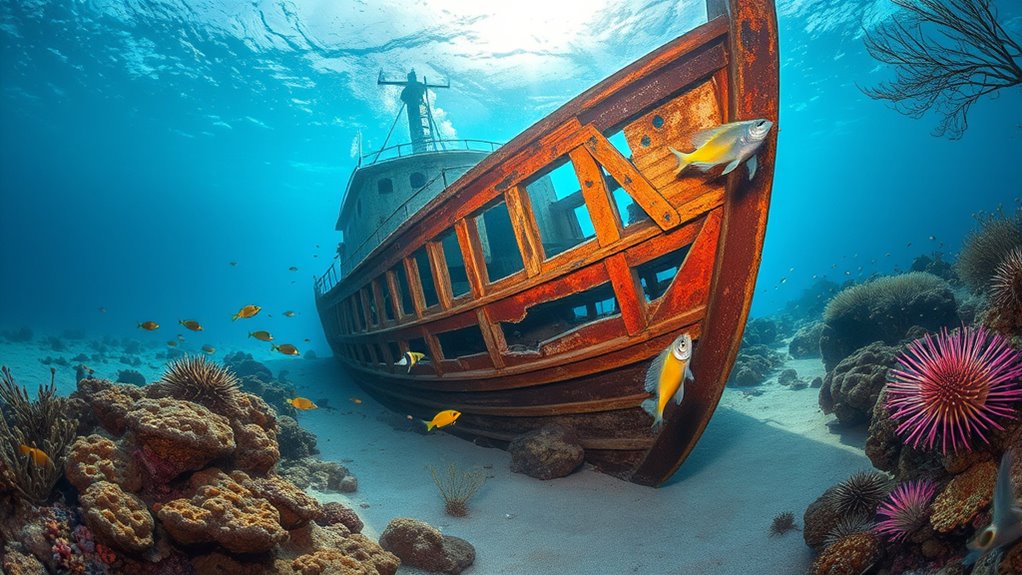
A recent discovery off the African coast has revealed a well-preserved shipwreck lying beneath the waves. This remarkable find offers you a rare glimpse into the maritime history of the region and highlights the significance of maritime archaeology and underwater exploration. As you delve into the details, you realize that this wreck isn’t just a relic; it’s a window into the past, carrying stories from centuries ago.
The shipwreck is believed to be part of Vasco da Gama’s fleet, a significant fleet that played a vital role in opening sea routes between Europe and Asia during the Age of Discovery. Its discovery provides you with valuable physical evidence of seafaring techniques, trade routes, and the materials used in shipbuilding during that era. Thanks to advancements in maritime archaeology, researchers can now analyze such sites with greater precision, uncovering artifacts that shed light on historical navigation, cultural exchanges, and economic exchanges.
Underwater exploration teams carefully surveyed the site, using high-tech equipment like sonar mapping and remotely operated vehicles (ROVs). This technology allows you to see intricate details of the ship’s structure, pinpointing its location and evaluating its preservation state without causing damage. The site’s conservation is essential, and underwater archaeologists are working diligently to document and preserve the wreck’s integrity. Every artifact retrieved adds to your understanding of the maritime history, revealing items like pottery, navigational tools, and remnants of cargo that tell stories of long-lost trade routes and interactions. Additionally, the preservation of the shipwreck’s structural integrity is crucial for ongoing research and future exhibitions.
Your involvement in this discovery emphasizes the importance of maritime archaeology in uncovering hidden histories beneath the ocean’s surface. It’s a discipline that combines scientific inquiry with technological innovation, enabling you to explore shipwrecks that have remained hidden for centuries. The African coast, with its rich maritime history, is becoming a key location for underwater exploration, drawing scientists and enthusiasts alike who want to understand the complexities of early global trade and navigation.
As you follow the ongoing excavation and research, you realize that each new find deepens your appreciation for the skills and resilience of sailors from the past. The shipwreck’s preservation allows you to study its construction and design, offering insights into the maritime technology of the time. This discovery not only enriches your knowledge of history but also underscores the importance of protecting underwater cultural heritage for future generations. Thanks to maritime archaeology and underwater exploration, you’re witnessing history come alive beneath the waves, connecting you to a world long gone but forever preserved beneath the ocean’s surface.
Frequently Asked Questions
What Artifacts Have Been Recovered From the Shipwreck?
You discover that artifacts recovered from the shipwreck include ancient navigation tools, pottery, and navigational charts, shedding light on maritime trade during Vasco da Gama’s era. These items reveal how sailors relied on traditional navigation techniques and traded goods across oceans. The artifacts offer valuable insights into the maritime trade routes, cultural exchanges, and technological advancements of the time, helping you understand the importance of these ancient navigation methods in connecting distant lands.
How Deep Is the Shipwreck Located Beneath the Sea?
You plunge into marine archaeology and use underwater mapping to uncover the shipwreck’s secrets. The wreck lies approximately 600 meters beneath the sea, a depth that challenges even seasoned explorers. As you navigate the dark, mysterious depths, you realize this precise measurement opens new understanding of Vasco da Gama’s fleet. Every meter reveals a story buried in time, fueling your curiosity to explore deeper mysteries hidden beneath the waves.
What Caused the Ship to Sink Centuries Ago?
You might wonder what caused the ship to sink centuries ago. During ancient maritime trade, navigational errors or storms often led to disasters. Poor maritime navigation tools and unpredictable weather could have caused the vessel to run aground or capsize. Such accidents were common in the era, especially as ships like Vasco da Gama’s fleet ventured along treacherous African coasts, risking their lives to expand trade routes and connect distant lands.
Are There Any Ongoing Exploration or Conservation Efforts?
You’re witnessing ongoing marine archaeology and maritime conservation efforts aimed at preserving this historic site. Researchers carefully study the wreck, uncovering its stories while protecting its fragile structure. Conservationists work diligently to stabilize and document the site, ensuring future generations can appreciate its significance. These efforts help balance exploration with preservation, allowing us to learn from the past without harming the delicate environment beneath the waves.
Could the Shipwreck Be Linked to Specific Historical Events?
You might find that the shipwreck is linked to significant historical events, such as Vasco da Gama’s voyages that advanced maritime trade routes and fueled colonial expansion. This wreck could represent a key moment in these developments, illustrating how European explorers expanded their reach and impacted global commerce. Studying this site helps you understand the broader context of maritime trade’s role in shaping colonial histories and international relations.
Conclusion
As you consider this incredible discovery, questions linger beneath the surface. What secrets does this ancient shipwreck hold, and what stories remain submerged in the depths? With each new find, the past becomes more elusive, yet tantalizingly close. You sense there’s more to uncover—hidden truths waiting to surface. The ocean guards its mysteries well, but perhaps, one day, you’ll be the one to unseal its deepest secrets and rewrite history.