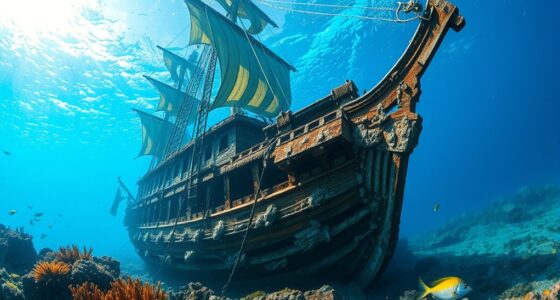

Shipwrecks are like underwater time capsules because they preserve artifacts, cargo, and even personal belongings that reveal details about the era they sank in. They offer a snapshot of life, technology, and culture from a specific period, telling stories of human effort, tragedy, and resilience. Through these preserved sites, you can uncover secrets of the past that connect you to history in a unique way. Keep exploring to understand how these wrecks protect our shared heritage.

Get school and study supplies delivered free — and shop member deals
- Fast, free delivery on millions of items
- Access to Prime Big Deal Days deals on October 6–7
- Prime Video, Amazon Music and more included
Key Takeaways
- Shipwrecks preserve artifacts and environments that offer a snapshot of life, technology, and culture from their sinking era.
- They serve as underwater time capsules, revealing personal belongings, cargo, and documents for historical insights.
- Maritime archaeology meticulously studies wrecks to reconstruct past events and uncover hidden stories.
- Natural and artificial preservation methods protect delicate relics from deterioration, maintaining their historical value.
- Technological advancements enable more detailed, less invasive explorations, ensuring long-term preservation of underwater sites.
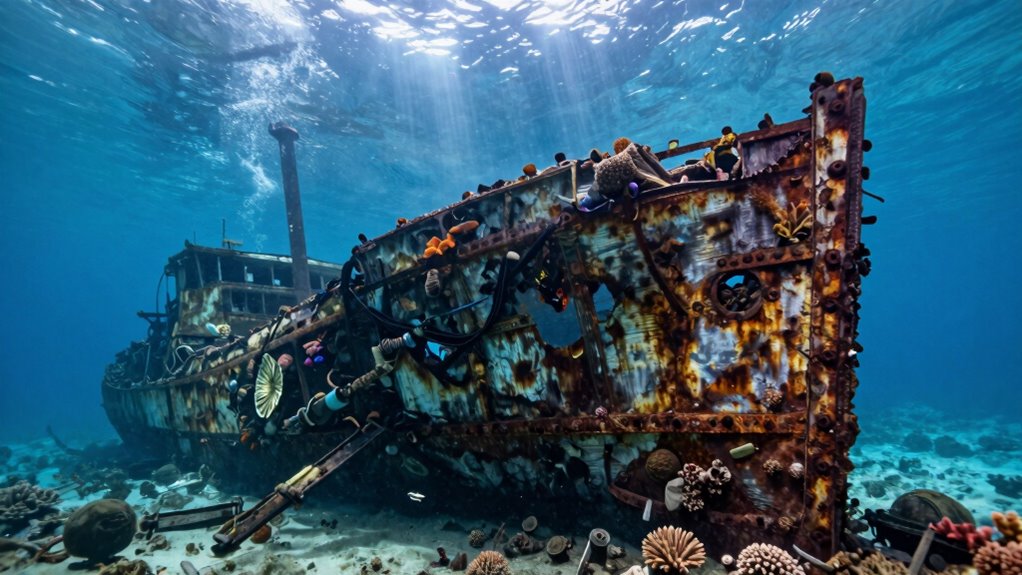
Shipwrecks serve as underwater time capsules, preserving artifacts and environments from their moment in history. When you explore these submerged relics, you’re basically stepping back in time, witnessing a snapshot of life, technology, and culture from the era when the ship sank. Maritime archaeology plays an essential role in uncovering these secrets, carefully excavating and studying wrecks to understand the stories they hold. This field combines scientific rigor with historical inquiry, allowing you to piece together the past from the remnants left behind. Underwater preservation is fundamental to this process, guaranteeing that delicate artifacts and ecosystems remain intact during the investigation. Underwater preservation techniques are crucial in ensuring that these precious remnants are safeguarded for future research and discovery. Proper techniques not only protect the artifacts but also help maintain the ecological balance of these underwater sites. Additionally, advances in marine conservation techniques continue to enhance our ability to protect these sites effectively, ensuring long-term preservation. Recognizing the importance of artificial reef creation, many shipwrecks are intentionally preserved to benefit marine life and promote ecological health.
Shipwrecks are underwater time capsules, preserving history and artifacts for future discovery and study.
You also benefit from the fact that shipwrecks often contain personal belongings, cargo, and even documents, providing invaluable insights into daily life, technology, and societal values of the past. These artifacts tell stories that no written record can fully capture, making each discovery a key piece of the historical puzzle. As you analyze these remnants, you’re not just uncovering objects—you’re uncovering stories of human endeavor, tragedy, and resilience. The underwater environment acts as a natural vault, shielding these items from the elements that typically cause deterioration on land. This natural preservation process is vital for maintaining the integrity of these discoveries over time. Recognizing how natural preservation functions helps archaeologists develop better methods for safeguarding underwater sites. In addition, technological advancements continue to improve the precision and safety of underwater excavations, allowing for more detailed and less invasive explorations. Overall, the combination of natural and artificial preservation methods enhances our ability to save these fragile relics for future generations.
In essence, shipwrecks are more than just sunken vessels; they’re preserved chapters of history waiting to be read. Thanks to the careful work of maritime archaeologists and the principles of underwater preservation, these submerged sites continue to reveal their secrets. They serve as priceless links to our past, offering a rare and tangible connection to the lives and events that shaped our world. When you study shipwrecks, you’re helping to keep history alive beneath the waves, guaranteeing that future generations can learn from the stories these underwater time capsules hold.
underwater metal detector for shipwrecks
As an affiliate, we earn on qualifying purchases.
As an affiliate, we earn on qualifying purchases.
Frequently Asked Questions
How Do Shipwrecks Preserve Artifacts Over Centuries?
You see, shipwrecks preserve artifacts over centuries because the oceanic environment slows down decay, creating ideal conditions for artifact preservation. The deep, cold, and low-oxygen waters limit corrosion and biological activity, helping preserve delicate items. Oceanic corrosion occurs gradually, protecting metal and organic materials from quick deterioration. This natural process turns shipwrecks into time capsules, allowing you to study artifacts that reveal historical stories buried beneath centuries of oceanic layers.
Are There Laws Protecting Shipwreck Sites Globally?
You’re right to wonder about protections for shipwreck sites. Globally, laws like maritime jurisdiction and salvage rights aim to safeguard these underwater treasures, ensuring they’re preserved for history and future generations. Countries establish regulations to prevent looting, damage, and illegal salvage. These laws honor the shipwreck’s cultural significance, protect the past, and promote responsible exploration, allowing us to learn from history while respecting the maritime environment.
What Technological Methods Are Used to Explore Deep-Sea Wrecks?
You use remote sensing techniques, like sonar and lidar, to locate deep-sea wrecks from the surface. Once identified, autonomous vehicles, such as remotely operated underwater drones, explore these sites more closely. These cutting-edge methods allow you to capture detailed images and data without risking human divers’ safety. Combining remote sensing with autonomous vehicles provides a powerful approach to uncovering and studying shipwrecks hidden in the depths.
How Do Shipwrecks Impact Local Marine Ecosystems?
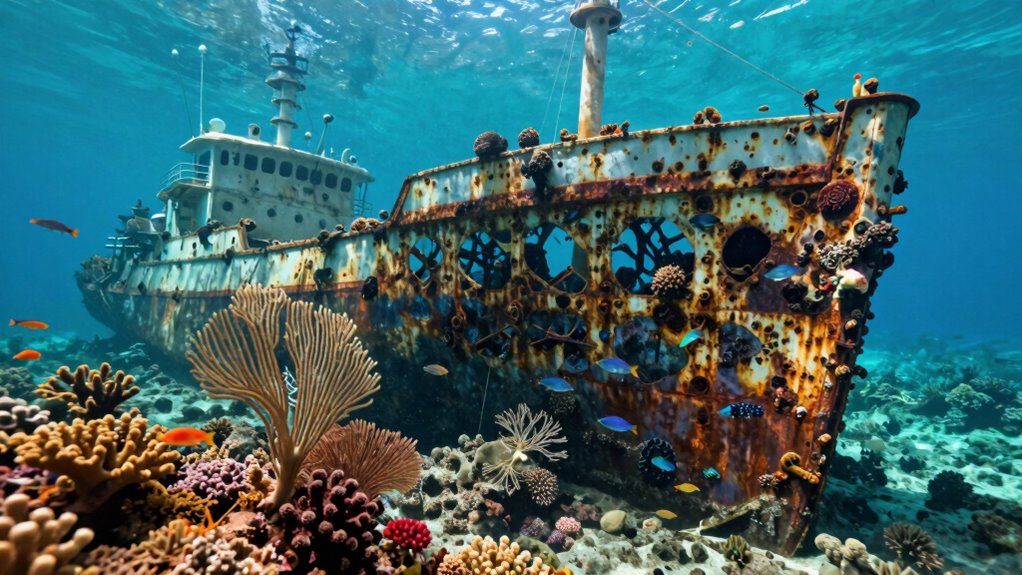
You might think shipwrecks harm marine ecosystems, but they actually boost marine biodiversity by providing new habitats. As ecological succession unfolds around the wreck, diverse species settle and thrive, creating vibrant underwater communities. Over time, wrecks become integral parts of the ecosystem, supporting fish, corals, and other marine life. This process demonstrates how shipwrecks serve as artificial reefs that enrich local ecosystems rather than harm them.
Can Shipwrecks Reveal Unknown Historical Events?
Yes, shipwrecks can reveal unknown historical events. You can explore maritime mysteries through underwater archaeology, uncovering artifacts and ship details that tell stories lost to time. These discoveries often challenge existing historical records and provide new insights into past civilizations, trade routes, or conflicts. By studying shipwrecks, you gain a deeper understanding of history’s complexities and uncover secrets hidden beneath the ocean’s surface.
marine archaeology excavation kit
As an affiliate, we earn on qualifying purchases.
As an affiliate, we earn on qualifying purchases.
Conclusion
As you explore shipwrecks, you realize how chance plays a role in preserving history. Sometimes, a storm or a sudden disaster seals a vessel’s fate, turning it into a time capsule buried in the ocean’s depths. It’s almost poetic how these accidental preservation sites offer a glimpse into the past, revealing stories that might have been lost forever. In this way, shipwrecks remind you that history often hinges on moments of unexpected coincidence.
As an affiliate, we earn on qualifying purchases.
marine conservation and reef restoration equipment
As an affiliate, we earn on qualifying purchases.
As an affiliate, we earn on qualifying purchases.
Fall Picks
fall essentials
As an affiliate, we earn on qualifying purchases.