
Archaeologists have recently discovered an ancient tomb at Saqqara belonging to a previously unknown Egyptian queen. This find offers new insights into Egypt’s royal lineage, funeral customs, and spiritual beliefs. The tomb features sophisticated architecture, colorful reliefs, and artifacts that highlight elaborate rituals and high status. Its unique design suggests it belonged to someone important, and its secrets can shed light on Egypt’s history. Continue exploring to uncover more fascinating details about this remarkable discovery.
Key Takeaways
- The tomb at Saqqara is a recently discovered, mysterious burial site believed to belong to an unknown Egyptian queen.
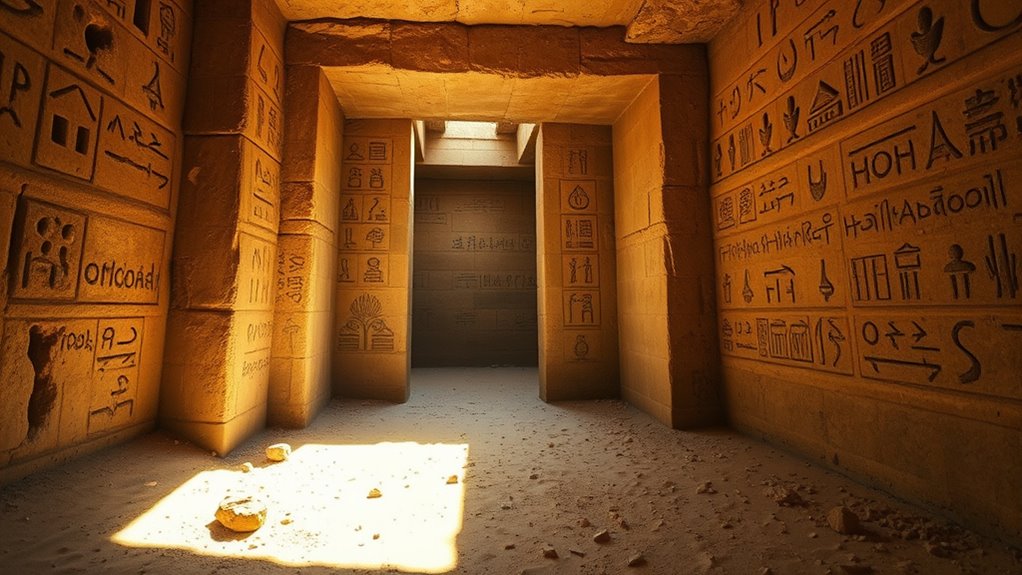
- Its architecture features elaborate chambers with painted reliefs and hieroglyphs depicting the queen’s life and funeral rituals.
- Artifacts such as statuettes and amulets found inside indicate preparations for an active afterlife and ritual significance.
- The tomb’s design and symbols suggest the queen held high status, reflecting Egyptian social hierarchy and divine reverence.
- The discovery offers new insights into Egypt’s royal lineage, spiritual beliefs, and ancient funeral practices.
Have you ever wondered how many secrets lie buried beneath Egypt’s sands? When archaeologists recently uncovered a mysterious tomb at Saqqara, that curiosity deepened. This discovery isn’t just about uncovering an ancient structure; it’s about revealing the life, death, and funeral rituals of a long-forgotten Egyptian queen. As you examine the tomb’s features, you realize that its design and artifacts offer a window into ancient Egyptian beliefs about the afterlife. The burial chamber design, in particular, reflects sophisticated craftsmanship and a profound understanding of spiritual symbolism. These chambers weren’t just resting places; they were carefully constructed spaces meant to guarantee the deceased’s transition into eternity. You notice the intricate layout—narrow corridors leading to a central chamber, often lined with painted reliefs and hieroglyphs that narrate the queen’s story and her divine status.
The funeral rituals associated with this tomb likely involved elaborate ceremonies designed to honor the queen and secure her soul’s safe passage. You can imagine priests performing rites, offering food, incense, and libations to appease gods and invoke protection. The artifacts found within suggest that the ancient Egyptians believed in an active afterlife, which required the deceased to be well-prepared. Items like statuettes, amulets, and daily life objects were placed meticulously within the burial chamber, emphasizing their role in assuring the queen’s comfort and security in the next world. The tomb’s design also reveals a lot about social hierarchy; the more elaborate the chamber, the higher the status of the individual buried within.
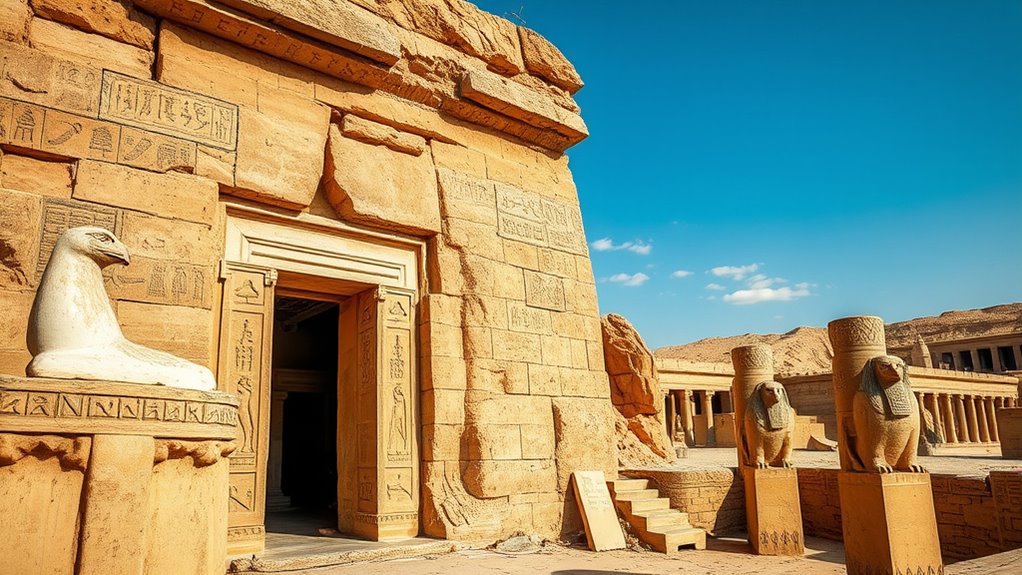
As you study the tomb’s architecture, you realize that it aligns with other royal tombs from that era, yet it holds unique features that might belong to this unknown queen. The presence of specific symbols and the craftsmanship of the inscriptions suggest she was of significant importance, even if her name has been lost to history. This discovery opens new questions about Egypt’s royal lineage and the many stories hidden beneath the desert’s surface. Understanding how funeral rituals shaped the tomb’s design helps you appreciate the ancient Egyptians’ deep spiritual beliefs and their desire to preserve their rulers’ legacy. Each carved relief and carefully placed artifact contributes to a narrative that spans thousands of years, waiting to be fully understood. In uncovering this tomb, you’re not just witnessing history—you’re piecing together a story that transcends time, revealing the enduring power of faith, tradition, and artistry buried beneath Egypt’s sands. Recognizing the Tomb Architecture used in these structures enhances our understanding of their cultural and religious significance.
Frequently Asked Questions
What Artifacts Were Found Inside the Tomb?
You find a variety of artifacts unearthed inside the tomb, including beautifully crafted jewelry, pottery, and carved statues. These burial treasures reveal the queen’s status and cultural significance. The artifacts also include amulets, inscribed ushabti figurines, and ceremonial tools, all offering insights into ancient Egyptian burial practices. These burial treasures help historians understand the era’s artistry and beliefs, making the tomb an invaluable archaeological discovery.
How Old Is the Tomb Exactly?
Like the sands of time slipping through your fingers, the tomb’s exact age is revealed through geological dating, suggesting it’s over 3,000 years old. This method helps preserve artifacts by providing precise timelines, ensuring their history remains intact. You can appreciate how each layer of earth acts as a silent witness, telling stories of ancient Egypt’s grandeur and the timeless effort to preserve its legacy.
Could This Discovery Change Egyptian History?
This discovery could profoundly change Egyptian history by shedding light on royal succession and revealing previously unknown aspects of their culture. The tomb’s archaeological significance lies in offering new insights into the period it belongs to, possibly rewriting parts of ancient Egypt’s story. You might find new clues about queenly roles, political shifts, and dynastic changes that reshape what we understand about Egypt’s royal lineage.
Are There Any Mummies in the Tomb?
No, you won’t find mummies lounging inside—at least, not yet. Archaeologists suspect burial rituals might have included mummification, but the tomb’s interior remains a mystery, leaving questions about mummy preservation unanswered. Perhaps ancient Egyptians left the queen’s remains elsewhere or their preservation techniques simply failed. So, for now, you can only imagine the mummies that might have once honored her, not see them yourself.
Will the Tomb Be Open to the Public?
The tomb won’t be open to the public just yet. Authorities are prioritizing preservation and following strict visitor guidelines to protect the site. Once it’s deemed safe and properly restored, public access may be granted, but for now, you should stay updated on official announcements. This approach guarantees the tomb remains intact for future generations and allows researchers to study the site thoroughly before welcoming visitors.
Conclusion
As you stand before this hidden tomb, it’s like revealing a silent guardian of history’s secrets. The carved stones whisper stories of forgotten royalty, while the darkness inside hints at mysteries still waiting to be uncovered. This discovery becomes a beacon of the past illuminating the present, symbolizing the enduring legacy of those long gone. Through its silent strength, the tomb reminds you that history’s true treasures are often buried just beneath the surface.