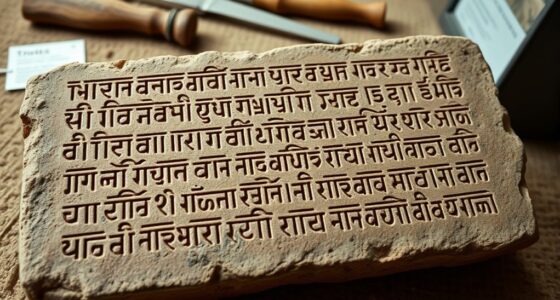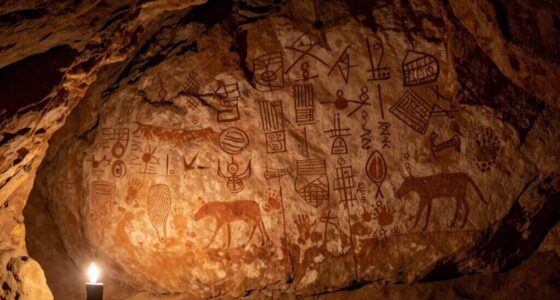

Ancient ruins tell stories long before words because their carved symbols, motifs, and architecture reveal beliefs, fears, and cultural values. You see gods, monsters, and legendary events etched into stone, acting as visual narratives that communicate complex ideas. As you explore these structures, you’ll notice how their evolving styles reflect societal growth and technological advances. If you keep exploring, you’ll uncover how these silent monuments hold the memories and identities of past civilizations, waiting to be uncovered.

Prime made for students and young adults
- Fast, free delivery for dorm and study essentials
- Prime Video and Amazon Music included
- Member-only deals
Key Takeaways
- Carved motifs and symbols depict gods, myths, and cultural values without relying on written language.
- Architectural features embody stories of creation, power, and societal beliefs through visual narratives.
- Ruins serve as collective memory, preserving traditions and histories beyond spoken or written records.
- Evolving architectural styles reflect societal development, technological progress, and cultural influences.
- Symbols and structures reveal fears, hopes, and worldview, conveying complex stories silently through design.
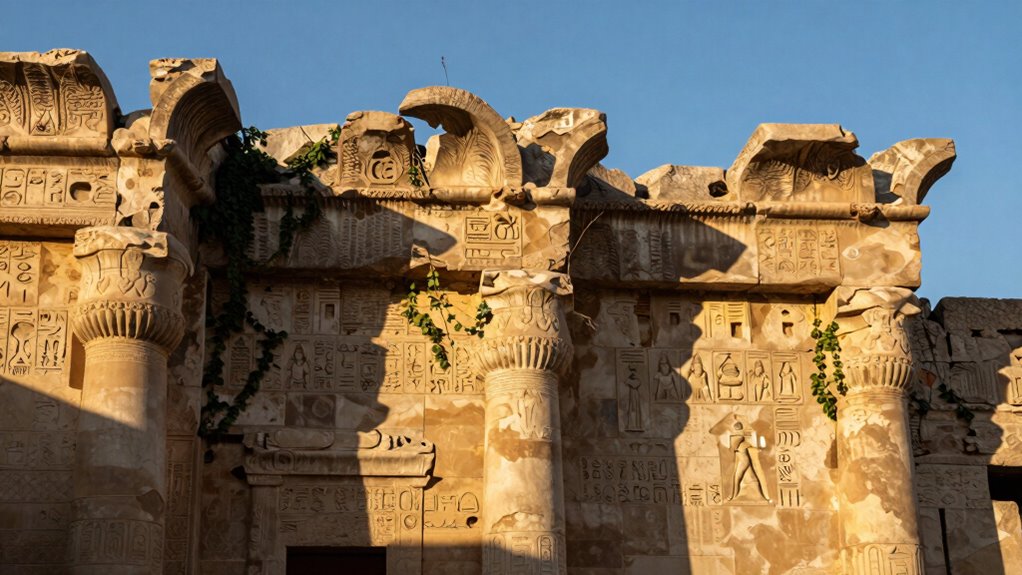
Ancient ruins hold the secrets of civilizations long gone, offering a window into their lives, beliefs, and achievements. When you stand amidst these remnants, you’re not just looking at broken stones; you’re observing a silent language of myth and meaning woven into every structure. Mythical symbolism plays a vital role in how these ruins tell their stories. You might notice carved figures or motifs that depict gods, monsters, or legendary events, serving as visual narratives that convey complex beliefs and cultural values. These symbols weren’t just decorative—they held sacred significance, acting as a bridge between the mortal world and the divine. Through them, you can grasp what the society revered, feared, and celebrated, even without written records. The symbols embed stories of creation, protection, and power directly into the architecture itself. Additionally, the architectural evolution seen in these structures reflects the society’s technological advancements and cultural influences over time. As these structures evolved, they often incorporated new techniques and styles, highlighting the society’s ongoing development and adaptation. Observing these architectural changes offers insight into the technological innovations that propelled civilizations forward. The architectural styles used in different periods reveal how societies adapted and responded to their changing environments and influences. Speaking of architecture, you’ll also see how architectural evolution reflects a society’s development over time. Early structures might be simple, functional, built with local materials, but as civilizations grow, so do their constructions. You’ll notice more elaborate designs, larger scale, and intricate details that demonstrate advanced building techniques and aesthetic sensibilities. These changes aren’t random; they chart the progress of technological innovations, cultural influences, and societal priorities. As you observe the progression from modest foundations to grand temples or palaces, you realize that each architectural phase encapsulates a story of expansion, spiritual devotion, or political power. This evolution tells you how societies prioritized their space, their gods, and their rulers, revealing layers of history etched into stone. Moreover, the cultural influences reflected in these structures often reveal interactions with neighboring civilizations, trade routes, and shared beliefs that shaped their development. The symbolic meanings embedded within the structures further deepen the understanding of the society’s worldview and values. Together, mythical symbolism and architectural evolution enrich these ruins with stories that words alone might never fully capture. You’re not just a visitor; you’re a witness to a narrative written across centuries. Every carved relief, every column, every foundation stone whispers tales of tradition, conquest, and faith. These structures embody the collective memory of a civilization, standing as monuments to their worldview and aspirations. When you interpret these elements, you begin to understand the mindset of those who built them, their hopes, fears, and reverence for the divine. Essentially, ancient ruins are a silent script, speaking long before words, inviting you to decipher their stories through symbols and structures that have withstood the test of time.
As an affiliate, we earn on qualifying purchases.
Frequently Asked Questions
How Do Archaeologists Decipher Ancient Symbols on Ruins?
You can understand ancient symbols on ruins by focusing on hieroglyph translation and symbol identification. Archaeologists analyze the symbols’ shapes, patterns, and contexts to match them with known symbols or related languages. They compare inscriptions across sites, use historical records, and look for recurring motifs. This process helps them decode the messages, revealing stories and cultural insights that long predate written language, making the symbols meaningful today.
Can Ruins Reveal Daily Life Details of Ancient Civilizations?
Imagine stepping into a silent, ancient theater where ruins whisper stories of daily life. You can uncover details of ancient rituals and daily artifacts by studying worn tools, pottery, and wall carvings. These remnants act like pages from a forgotten diary, revealing how people lived, worked, and worshipped. Through careful excavation and analysis, you piece together a vivid picture of their routines, beliefs, and social customs long before words were written.
What Tools Are Used to Preserve Fragile Ancient Structures?
You use specialized tools like scaffolding, laser scanning, and drones to assess fragile ancient structures. Restoration techniques involve careful consolidation and support, while preservation materials such as breathable paints, consolidants, and microcrystalline waxes help protect the ruins from further decay. These methods allow you to stabilize and conserve delicate sites, ensuring their stories remain accessible for future generations. Your work combines technology and tradition to safeguard history’s silent witnesses.
Are There Undiscovered Ruins Still Hidden Underground?
Yes, there are still undiscovered ruins hidden underground. You might find hidden chambers or underground tunnels when archaeologists use advanced technologies like ground-penetrating radar and drone surveys. These tools help reveal secrets beneath the surface without disturbing the site. As exploration continues, you could uncover more ancient structures, revealing stories long buried beneath layers of earth, waiting to be discovered by curious and dedicated researchers.
How Do Climate Changes Affect Ancient Site Preservation?
Imagine ancient stones weathered by relentless sun or soaked by sudden floods—that’s how climate impact influences preservation challenges. You see, rising temperatures, heavy rains, and shifting weather patterns accelerate erosion, degrade materials, and threaten these sites’ integrity. As climate changes, the fragile balance maintaining these ruins destabilizes, making preservation harder. You must act swiftly to protect history’s silent storytellers before they vanish beneath the changing sky.
As an affiliate, we earn on qualifying purchases.
Conclusion
So, next time you wander through ancient ruins, imagine the stories they hold—stories that predate even your favorite TikTok trends. These silent witnesses have seen empires rise and fall, whispering secrets to those willing to listen. It’s like discovering a vintage Instagram feed from a civilization long gone. Remember, even in the age of instant updates, these ruins remind us that some stories are best told without words—timeless, mysterious, and waiting for your discovery.
ancient symbols and motifs replica
As an affiliate, we earn on qualifying purchases.
As an affiliate, we earn on qualifying purchases.
As an affiliate, we earn on qualifying purchases.
Halloween Picks
halloween
As an affiliate, we earn on qualifying purchases.