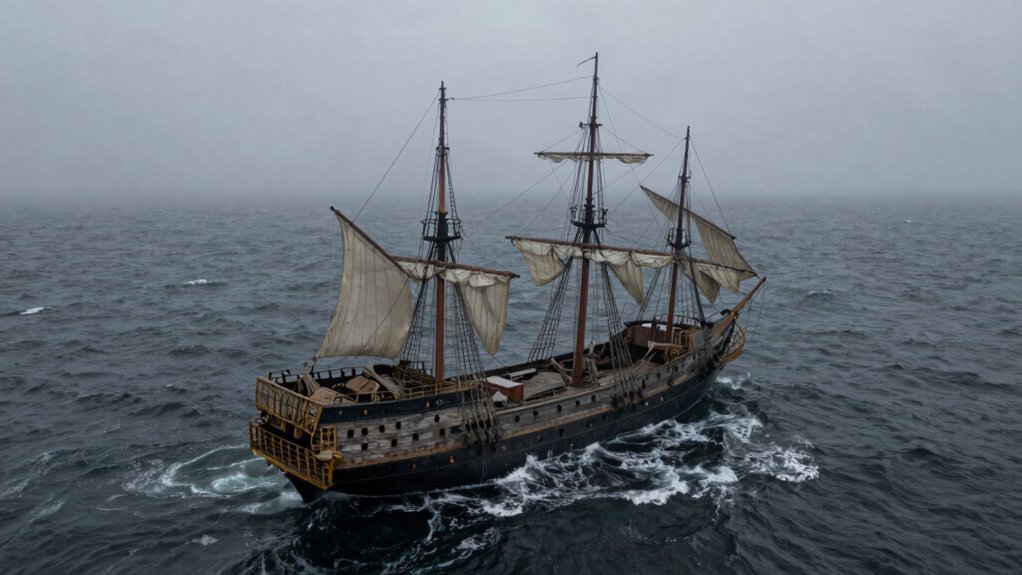

The mystery of the Mary Celeste suggests natural causes rather than ghosts or pirates. Evidence points to sudden weather changes, structural damage, or a gas leak causing the crew to abandon ship hastily, perhaps influenced by panic or alcohol. Calm sea conditions today challenge many supernatural theories. Human factors like stress or misjudgment also played a role. To uncover what truly happened, it’s worth exploring more details behind the ship’s history and investigations.
Key Takeaways
- Natural explanations like sudden storms, structural damage, and environmental factors most plausibly caused the ship’s abandonment.
- Crew panic, intoxication, or misjudgments likely triggered hasty departure without supernatural intervention.
- Damage patterns on the vessel suggest natural forces such as storms or collision, not foul play or supernatural causes.
- Calm weather conditions when found challenge theories of extreme weather forcing abandonment, emphasizing human factors.
- Modern investigations favor natural, environmental, and human error explanations over ghost stories or supernatural theories.
Historical Context of the Mary Celeste
The Mary Celeste was launched in 1861 during a period of maritime expansion and technological innovation, when steam and sail ships dominated global trade routes. At this time, maritime trade was booming, and 19th-century shipping relied heavily on wooden sailing vessels steering often treacherous waters. The ship’s voyage took place amid this busy era, marked by increased international commerce and expanding markets. As you consider the ship’s history, remember that many vessels faced dangers like storms, navigational hazards, and limited safety technology. The context of this thriving maritime trade helps explain why ships like the Mary Celeste were common, yet also vulnerable to sudden, unforeseen events. This background sets the stage for understanding the ship’s mysterious disappearance without resorting to supernatural explanations. Additionally, the reliance on wooden sailing vessels made ships susceptible to damage from weather and wear over time, contributing to the perilous conditions of the era.
Debunking Myths About the Mary Celeste: Ghosts, Pirates, and More
Many of the sensational stories about the Mary Celeste, such as ghosts and pirates, have persisted for decades, but most lack credible evidence. Supernatural theories, like ghostly apparitions or cursed ships, often stem from storytelling rather than fact. Similarly, pirate legends have fueled speculation that pirates attacked or hijacked the vessel, yet there’s little proof to support these claims. These myths thrive on imagination and fear, not reality. The idea of paranormal activity or pirate invasions distracts from more plausible explanations based on natural causes. By debunking these myths, you see that the true story of the Mary Celeste is rooted in logical, verifiable events, not supernatural or criminal legends. This helps clarify what really happened to the ship.
Evidence for Natural Causes in the Mary Celeste Disappearance
You might consider how sudden weather changes could have unsettled the crew and prompted hasty actions. The possibility that alcohol effects impaired judgment or caused disorientation also warrants attention. Additionally, clues of structural damage suggest natural events, like storms, could explain their disappearance without resorting to supernatural theories. Moreover, understanding Floating on Water theories might shed light on how the crew could have been overwhelmed by environmental factors. A deeper analysis of marine weather patterns prevalent during the time could provide further context. The role of contrast ratio in visual perception may seem unrelated but underscores how subtle environmental cues can impact decision-making in stressful situations. Exploring natural phenomena like rogue waves or sudden squalls could further illuminate plausible natural explanations for the vessel’s mysterious fate. Recognizing the significance of historical weather data can help reconstruct the conditions that might have led to such an event.
Sudden Weather Changes
Sudden weather changes could have played a crucial role in the mysterious disappearance of the Mary Celeste. Rapid climate shifts and unpredictable storm patterns in the Atlantic could create chaotic conditions at sea. These weather events might cause rough seas, high winds, or sudden storms that force ships to take evasive action or become disoriented. Such conditions could explain why the crew abandoned ship unexpectedly, fearing imminent danger or damage. Historical records show that storms in that era could intensify quickly, leaving little time for sailors to respond. Additionally, meteorological phenomena such as sudden squalls or shifting wind directions could have further contributed to the confusion and urgency faced by the crew. These natural weather phenomena, rather than foul play or supernatural causes, might account for the ship’s abrupt abandonment, providing a plausible and natural explanation for the vessel’s puzzling fate.
Possible Alcohol Effects
One compelling natural explanation for the Mary Celeste’s mysterious abandonment involves the effects of alcohol on the crew. If crew members consumed alcohol aboard, alcohol intoxication could have influenced their behavior, leading to confusion or panic. Drunken behavior might cause disorientation or impaired judgment, making them believe there was an emergency or threat. Such effects could have prompted hurried actions, like abandoning ship without clear reason, especially if they suspected a problem or feared an imminent danger. In addition, alcohol’s disorienting effects could have contributed to misinterpretations of the ship’s condition or surroundings, encouraging hasty decisions. The presence of alcohol and its intoxicating effects could also have affected the crew’s decision-making processes, leading to impulsive or irrational actions. While the ship was found intact, traces of alcohol or evidence of intoxication could suggest that alcohol played a role in the crew’s sudden departure. This explanation aligns with the possibility that alcohol effects, rather than supernatural causes, contributed to the vessel’s mysterious disappearance. Additionally, considering the performance ratings of various vessels, factors like crew impairment could have compromised their decision-making during a crisis.
Structural Damage Clues
Examining the structural damage on the Mary Celeste provides compelling evidence for natural causes behind its mysterious abandonment. A thorough ship structural analysis reveals hull damage clues indicating rough seas or accidental collisions. These damages suggest the crew might have faced sudden rough weather, forcing them to abandon ship quickly. The hull’s compromised areas, such as dented planks or broken frames, support this theory. Here’s a quick overview:
| Damage Type | Location | Possible Cause |
|---|---|---|
| Dented Planks | Starboard side | Storm impact |
| Broken Frames | Bow section | Collision or stress from waves |
| Loose Fastenings | Deck area | Rapid movement or rough seas |
| Water Ingress | Hull bottom | Structural weakness or breach |
| Overall Integrity | Entire hull | Long-term wear or sudden event |
These hull damage clues point toward natural forces rather than foul play or supernatural causes.
Weather and Sea Conditions During the Mary Celeste Incident
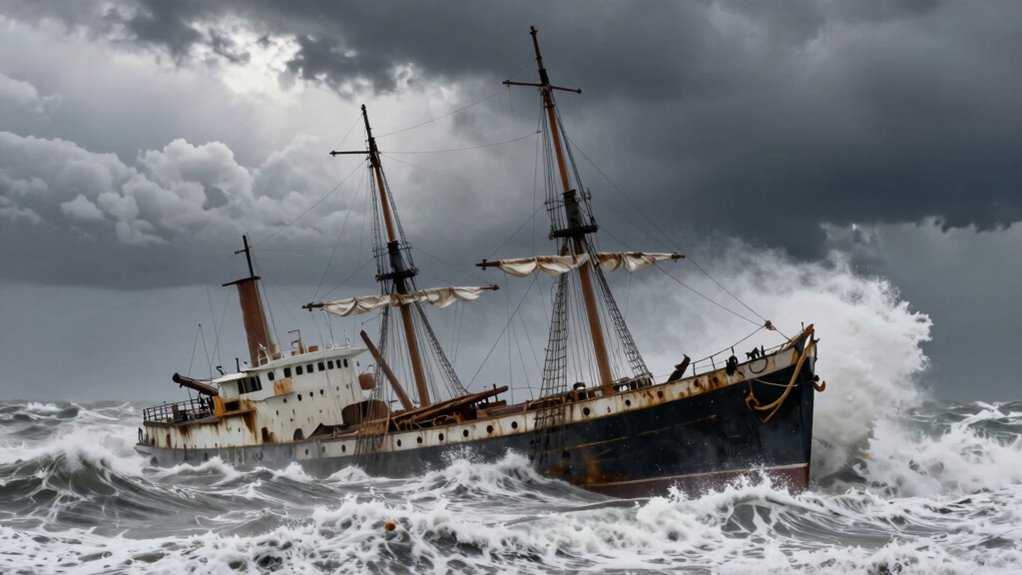
On the day the Mary Celeste was found abandoned, the weather and sea conditions were relatively calm, which makes the ship’s mysterious disappearance even more perplexing. Calm seas suggest that sudden storms or rough waters didn’t force the crew to abandon ship. Instead, other factors come into focus, like the role of ocean currents and shipwreck theories. These currents could have carried the vessel away or caused subtle damage unnoticed at first glance. The calm conditions also challenge explanations involving extreme weather events. Understanding these conditions helps eliminate some possibilities and supports theories that the disappearance wasn’t caused by natural disasters. The state of the sea offers clues that point away from chaos and toward more subtle, complex explanations. Additionally, analyzing sea conditions can provide insights into possible covert activities or human factors involved in the incident. Moreover, ocean currents can influence ship movements over long distances, complicating the search for direct causes. The presence of calm weather further indicates that the vessel’s disappearance was not caused by a sudden environmental catastrophe. Furthermore, the stability of the sea environment reduces the likelihood of sudden environmental triggers, emphasizing the need to explore human-related factors in the mystery.
Crew Behavior and Human Factors Explaining the Disappearance
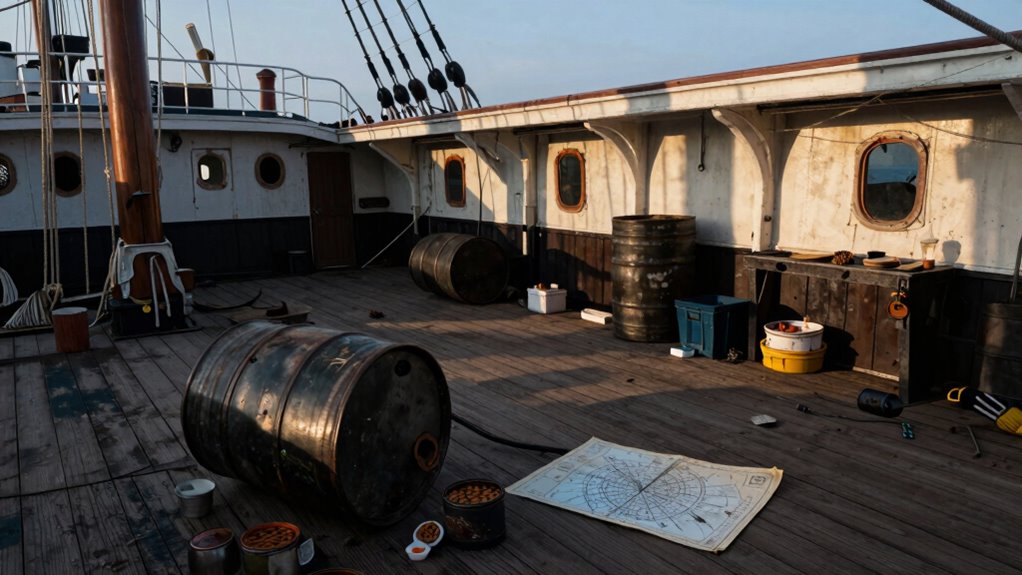
You might wonder if panic or hurried decisions caused the crew to abandon ship unexpectedly. Drinking or alcohol use could have impaired judgment, leading to chaos or confusion. Additionally, the crew’s leadership and decision-making skills likely influenced how they responded to the crisis. Proper toilet maintenance and understanding of emergency procedures could have also played a role in their actions during the crisis. Recognizing the importance of crew training in emergency response might help explain their behavior under stress. Furthermore, vetted waves and wind conditions could have contributed to the crew’s perception of danger, influencing their decisions during the incident. Considering navigation skills and their familiarity with the vessel might also shed light on their reactions in such extreme conditions. Analyzing crew communication could provide further insight into how information was shared and understood during the crisis.
Crew Panic and Flight
Despite the lack of definitive evidence, some theories suggest that crew members may have panicked and abandoned the ship in a state of distress. This crew panic could have triggered a rapid crew flight, leaving the vessel seemingly deserted. Such behavior often results from sudden fears or perceived threats, even if none are visible. You might consider that:
- Crew members believed the ship was sinking or on fire
- Rumors of pirates or mutiny spread panic
- Sudden storms or navigation errors caused alarm
- Stress and fatigue impaired decision-making
These factors could have led sailors to abandon ship hastily, without clear reason. The human response to perceived danger often overrides rational judgment, explaining why the crew might have fled, leaving the Mary Celeste intact but deserted.
Drinking and Alcohol Use
Some theories suggest that alcohol consumption among the crew might have played a role in their mysterious disappearance. If the crew indulged in alcohol, drunken behavior could have impaired their judgment and coordination, leading to chaos or mistakes. Heavy drinking might have caused confusion or panic, making rational decision-making difficult during a crisis. You might consider whether alcohol was accessible onboard and if it influenced the crew’s actions before the ship was abandoned. Drunken behavior could also explain why they left the ship suddenly or failed to respond properly to signals or threats. While there’s no definitive evidence, alcohol use remains a plausible human factor that might have contributed to the crew’s disoriented state, ultimately influencing the ship’s fate. The crew’s behavior and their potential intoxication could have significantly impacted their ability to respond effectively to emergencies.
Leadership and Decision-Making
The decisions made by the ship’s crew in the moments leading up to their disappearance likely played a crucial role in the vessel’s fate. Leadership ethics and decision-making processes influence how crew members respond to crises. Poor judgment or panic could lead to impulsive actions, worsening the situation. Consider these factors:
- A lack of clear command may cause confusion and miscommunication
- Fear or stress might override rational decision-making
- Leadership that neglects safety protocols increases risk
- Collective hesitation could delay critical responses
- Understanding decision-making processes helps explain how the crew’s reactions affected the outcome. Additionally, crew communication breakdowns could have contributed to misaligned actions during critical moments.
Your understanding of how human factors and leadership ethics shape decisions offers insight into the crew’s possible reactions. Their choices, whether rational or impulsive, directly impacted the ship’s mysterious fate, highlighting the importance of sound decision-making processes in survival scenarios.
What Really Happened to the Mary Celeste? Modern Investigations and Conclusions
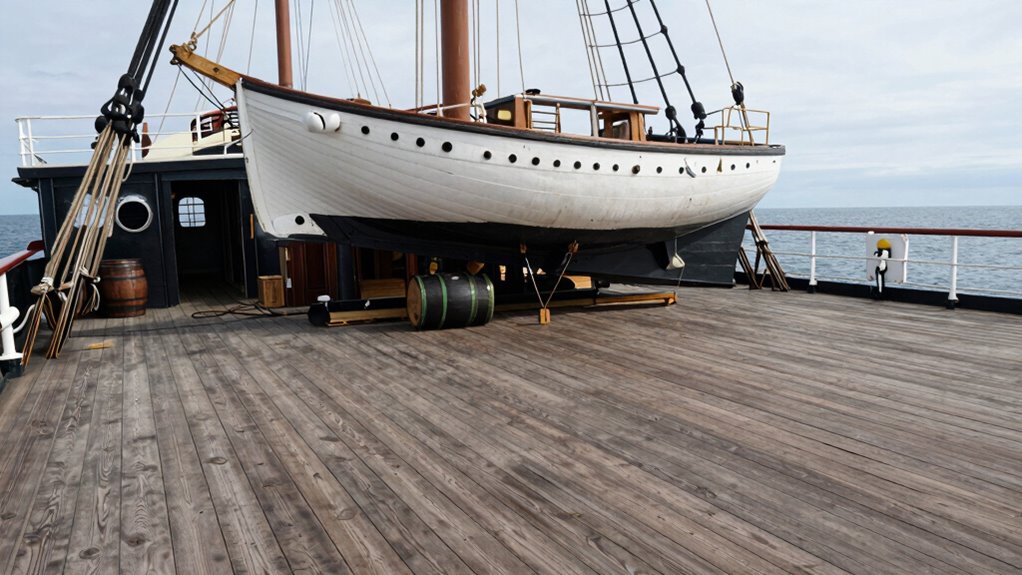
What truly happened to the Mary Celeste remains a subject of debate even today. Modern investigations suggest that a combination of maritime logistics challenges and captain responsibilities may explain the ship’s mysterious fate. Some experts believe that natural causes, like a sudden storm or a methane gas leak, caused panic onboard, prompting the crew to abandon ship temporarily. Others consider human error or misjudgments related to navigation or cargo stability. These scenarios highlight the importance of a captain’s responsibilities in ensuring safety and proper decision-making amid unpredictable conditions. Recent analyses focus on the ship’s condition, weather reports, and crew records, leading many to conclude that the disappearance was likely accidental, driven by the complexities of maritime logistics rather than supernatural forces. Additionally, understanding ship maintenance and safety protocols can shed light on the factors that contributed to the vessel’s mysterious disappearance. Furthermore, modern forensic techniques are being employed to analyze evidence from the ship, offering new insights into this enduring maritime mystery.
Frequently Asked Questions
Could There Have Been an Intentional Crew Abandonment?
Yes, it’s possible you could see crew abandonment as intentional, driven by crew psychology or navigational errors. If the crew experienced panic or confusion due to navigational mistakes or a perceived threat, they might have decided to abandon ship deliberately. Psychological stress, fear, or misjudgments could push them to leave the vessel, believing it was unsafe or doomed, especially if they misinterpreted signals or encountered unforeseen dangers.
What Role Did Possible Mutiny Play in the Disappearance?
Imagine the ship as a ticking time bomb, with crew psychology and mutiny motives simmering beneath the surface. It’s plausible mutiny played a role, as tensions and frustrations could have sparked a revolt. If crew members felt betrayed or desperate, they might have seized control, then vanished suddenly. Mutiny motives like dispute over leadership or a desire to escape could explain the ship’s eerie abandonment without ghostly intervention.
Were There Any Signs of Conflict or Struggle Onboard?
You notice no clear signs of conflict or struggle onboard the Mary Celeste, despite suspicions of pirate activity or a sudden storm. The ship’s condition shows no damage from a fight or forced entry, and cargo remains undisturbed. The crew’s belongings are untouched, suggesting they left voluntarily or were incapacitated by natural causes rather than violence. The absence of struggle clues away from violent conflict or a pirate attack.
How Reliable Are the Original Ship Logs and Reports?
You might think the original logs are like fragile glass, easily shattered, but they’re actually quite reliable given the era’s record-keeping standards. Despite log preservation challenges, they offer valuable insights into the ship’s last moments. Historical record accuracy varies, yet many reports remain intact, providing a trustworthy glimpse into what happened aboard the Mary Celeste, even if some details are open to interpretation.
Could Modern Technology Solve the Mystery Definitively?
Yes, modern technology like satellite imaging and drone reconnaissance could potentially solve the Mary Celeste mystery definitively. You could use satellite images to analyze the ship’s location and surrounding terrain for clues, while drones could inspect the wreck and nearby waters more closely. These tools allow you to gather fresh evidence, clarify the ship’s condition, and possibly uncover details missed by earlier investigations.
Conclusion
While the true story of the Mary Celeste remains elusive, examining the evidence gently guides us away from supernatural tales. Instead, natural explanations and human factors offer a more nuanced understanding of her mysterious fate. By approaching the incident with curiosity and respect, we honor the complexity of history’s enigmas. Ultimately, the vessel’s silent voyage reminds us that some mysteries are best appreciated as subtle whispers of the past, inviting reflection rather than certainty.