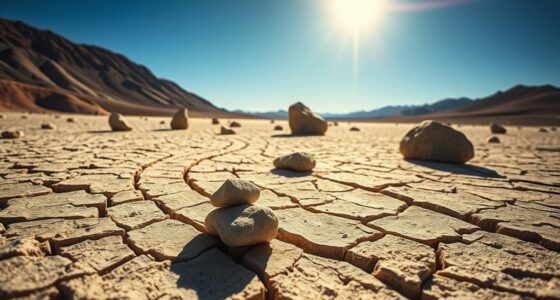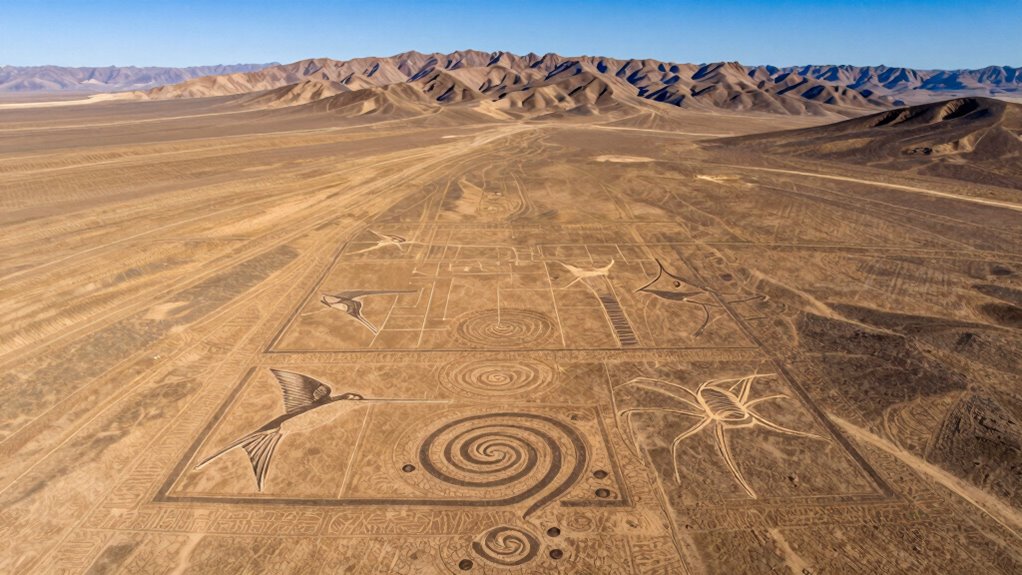
The Nazca Lines are ancient geoglyphs created by human societies in Peru, primarily for religious, astronomical, and environmental purposes. They were made by removing surface stones to reveal lighter soil underneath, likely using simple tools and careful planning aligned with celestial events. These lines probably served as ritual offerings, calendar markers, or water management guides, showing impressive environmental knowledge. To discover more about how these remarkable lines reflect human ingenuity, continue exploring their true origins and significance.
Key Takeaways
- The Nazca Lines were likely created for ceremonial and religious purposes, serving as offerings or spiritual markers.
- Their alignment with celestial events suggests they functioned as astronomical or seasonal calendars.
- The lines may have marked water sources or irrigation routes, integral to local agriculture in the desert environment.
- Construction techniques involved removing surface stones using simple tools, demonstrating human ingenuity and environmental management.
- Mythical alien explanations lack evidence; the lines primarily reflect cultural, environmental, and ritualistic practices of ancient Peruvians.
What Are the Nazca Lines and Where Are They Located?
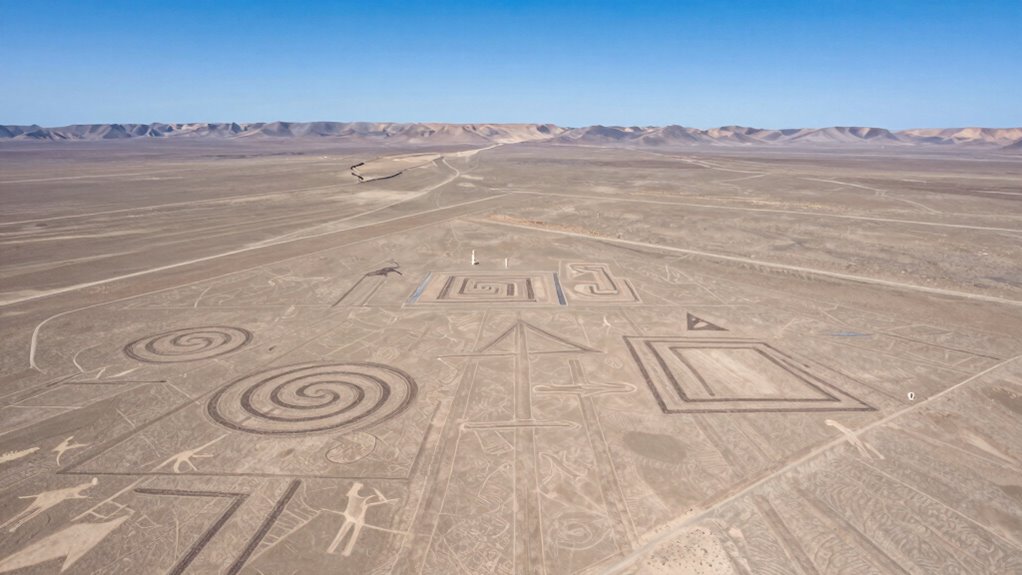
The Nazca Lines are a series of enormous geoglyphs etched into the desert floor of southern Peru. These mysterious figures, which include animals, plants, and geometric shapes, are renowned for their geoglyph significance, hinting at cultural or religious meanings. Located in the Nazca Desert, they cover about 450 square kilometers near the Nazca and Palpa valleys. As you explore their purpose, you’ll encounter ongoing archaeological debates about whether they served astronomical, ceremonial, or irrigation functions. These debates spark curiosity and drive research, making the lines a mesmerizing puzzle. Their sheer scale and preservation continue to fascinate scholars and visitors alike, emphasizing their importance in understanding ancient Peruvian civilizations. Additionally, the preservation of these geoglyphs is partly due to the dry desert climate, which helps prevent erosion and damage over centuries. The arid environment plays a crucial role in maintaining their visibility, ensuring that these ancient artworks remain largely intact for future generations. Furthermore, ongoing research into ancient civilizations seeks to uncover the true purpose behind these fascinating designs. Modern technological methods, such as satellite imagery, are increasingly used to study and interpret these enigmatic figures more accurately. The combination of natural preservation conditions and advanced technology continues to shed light on their historical significance.
How Were the Nazca Lines Created by Ancient Cultures?
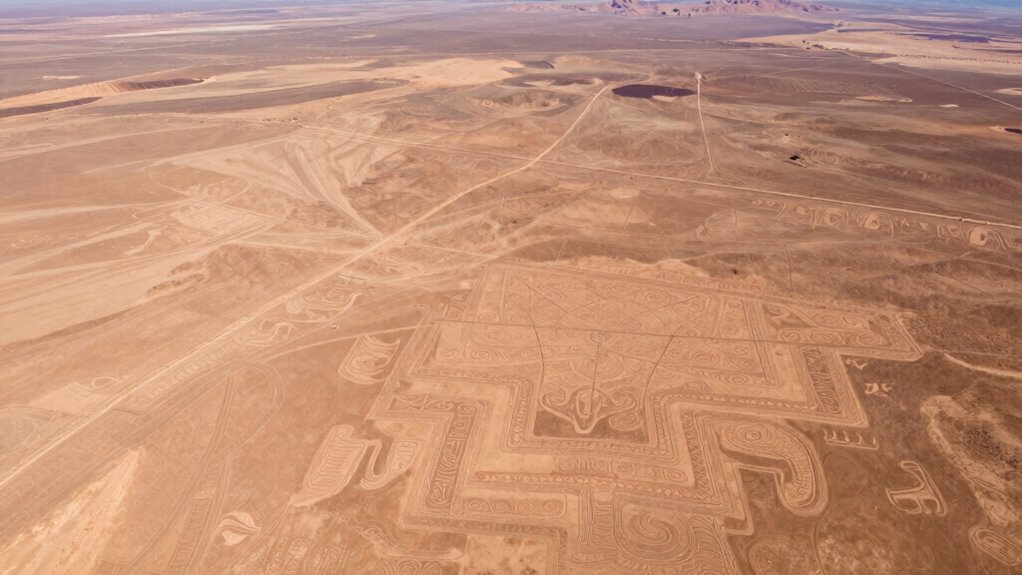
To create the Nazca Lines, ancient Peruvians carefully removed the dark surface stones of the desert to reveal lighter-colored soil beneath. This precise removal formed the giant figures visible today. Researchers believe they used simple tools like wooden stakes and ropes to guide their work, while geophysical surveys help confirm their methods. Cultural influences played a significant role, as these lines likely held religious or ceremonial importance. Here are some key points:
- They meticulously planned the lines’ layouts, possibly using stars or the sun for orientation.
- The community’s spiritual beliefs shaped the figures’ designs.
- Tools made from stone or wood allowed accurate removal of surface stones.
- Geophysical surveys reveal the underlying soil’s consistency, supporting traditional excavation techniques.
Additionally, the exact placement and scale of the lines suggest advanced understanding of environmental factors and landscape management, which contributed to their enduring preservation.
Furthermore, the careful alignment and orientation of the lines demonstrate an environmental awareness that was crucial for their longevity and visibility over centuries.
This combination of careful planning, cultural meaning, and simple tools enabled the creation of these extraordinary geoglyphs, showcasing the ancient Peruvians’ impressive environmental adaptation skills.
Recent studies also highlight the importance of landscape analysis in understanding the methods used to create and maintain these remarkable figures.
What Were the Primary Purposes of the Nazca Lines?
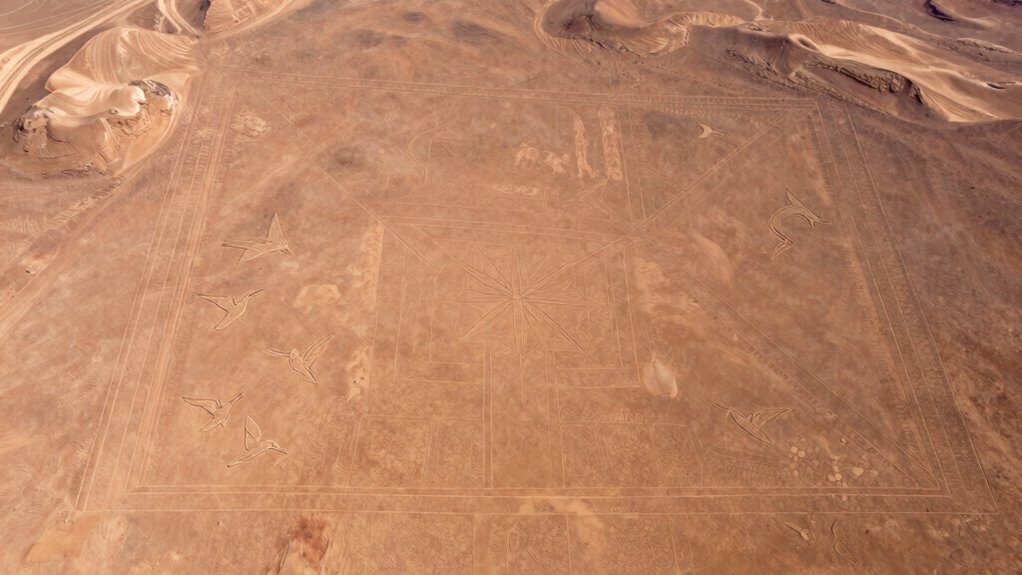
Have you ever wondered why the Nazca Lines were created? These vast geoglyphs likely held significant symbolism and cultural importance. Scholars believe they served as offerings to deities or spirits, reflecting religious beliefs. The lines may have have marked sacred sites or been part of rituals, emphasizing their cultural significance. To better understand, consider this table:
| Purpose | Explanation |
|---|---|
| Religious | Used in ceremonies honoring gods |
| Astronomical | Aligned with celestial events |
| Social | Signified community identity |
While some suggest astronomical functions, the primary purpose seems rooted in spiritual symbolism. The geoglyphs connected the people with their gods and land, embodying their cultural values and beliefs. Attention to detail is crucial for interpreting these ancient symbols accurately.
Did the Nazca Lines Have Astronomical or Calendar Significance?
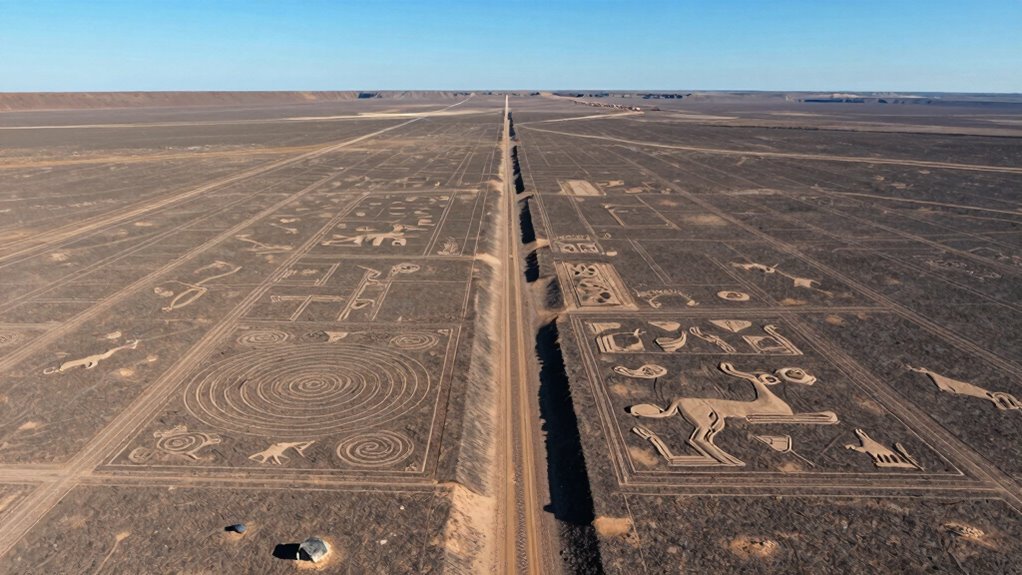
Many scholars have wondered whether the Nazca Lines served purposes beyond religious or cultural symbolism, particularly in relation to astronomy or calendars. Some believe the lines feature astronomical alignment or hold calendar significance. Here are four key points:
- Certain lines align with solstices or equinoxes, suggesting a possible astronomical purpose.
- Some geoglyphs point toward celestial events, indicating an awareness of the sky.
- The orientation of specific lines may mark important solar or lunar positions.
- These alignments could have helped ancient observers track seasonal changes or agricultural cycles.
While definitive proof remains elusive, these observations support the idea that the Nazca Lines might have been used as an astronomical or calendar tool, guiding timekeeping and seasonal rituals.
What Evidence Supports Religious and Ritual Uses of the Lines?
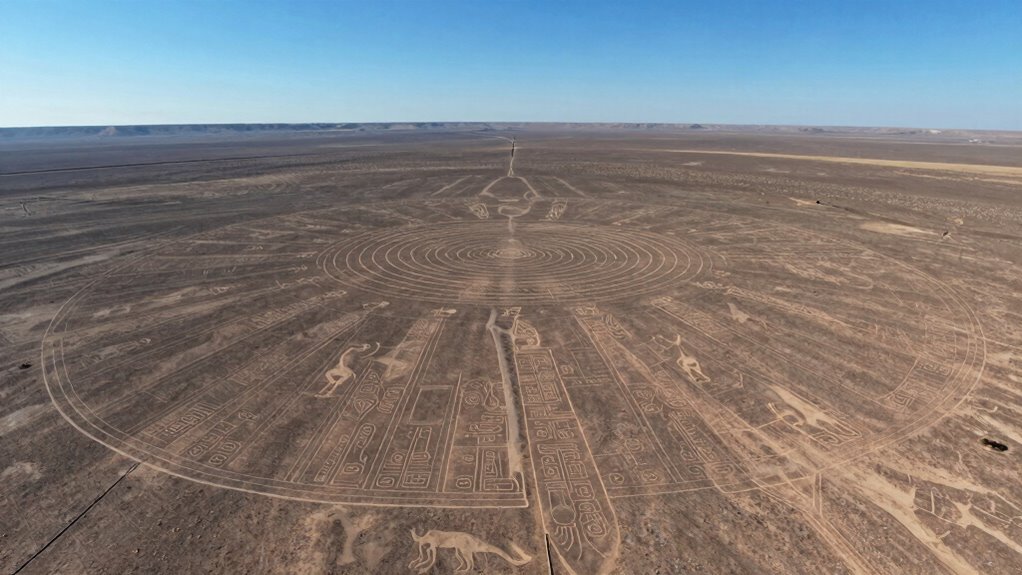
Evidence for the religious and ritual significance of the Nazca Lines comes from their complex shapes and strategic placement. Many of these figures are sacred symbols, such as animals and geometric patterns, that likely held spiritual meaning. The size and visibility of the lines suggest they were created for ritual practices, possibly connected to ceremonies or offerings to deities. Archaeological findings, like nearby pottery with religious motifs, support the idea that these lines played a role in spiritual activities. Additionally, the alignment of some figures with natural features indicates they may have been part of sacred landscapes. The Symbolic design and careful placement strongly point to their use in religious and ritual contexts, rather than simply for aesthetic or practical purposes. Moreover, the presence of ceremonial sites near certain figures implies a concentrated area for spiritual gatherings. The archaeological context surrounding the Nazca Lines further reinforces their importance as part of a complex cultural and spiritual system.
How Do Soil and Environmental Factors Explain the Lines’ Construction?
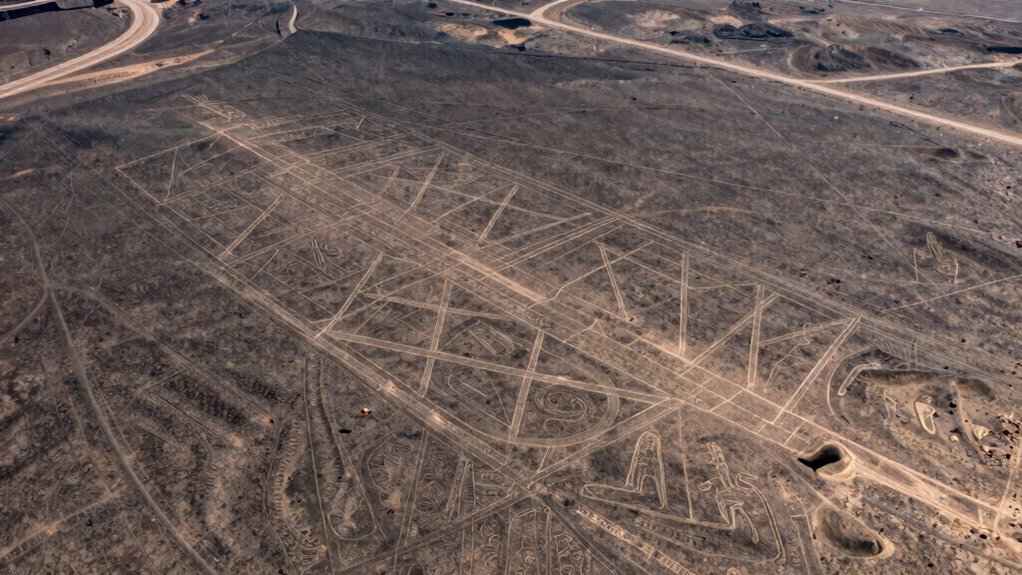
The construction of the Nazca Lines can be largely explained by the region’s unique soil and environmental conditions. The desert’s soil composition, mainly coarse gravel and compacted sand, allows for easy removal of surface layers, revealing the lighter substrate beneath. Erosion patterns, shaped by scarce rainfall and wind, help maintain the lines’ sharp edges over centuries. Here are some key points:
- The dry climate minimizes vegetation, making it easier to clear the topsoil precisely.
- Wind erosion helps keep the lines clean and well-defined.
- The soil’s composition ensures the contrasting colors that highlight the lines once the surface is removed.
- Erosion also limits overgrowth, preserving the clarity of the geoglyphs.
- The region’s soil and environmental factors have remained relatively stable over millennia, aiding in the preservation of the lines.
These environmental factors work together, enabling ancient creators to carve the lines with remarkable precision.
Are the Nazca Lines Practical Landmarks or Markings?
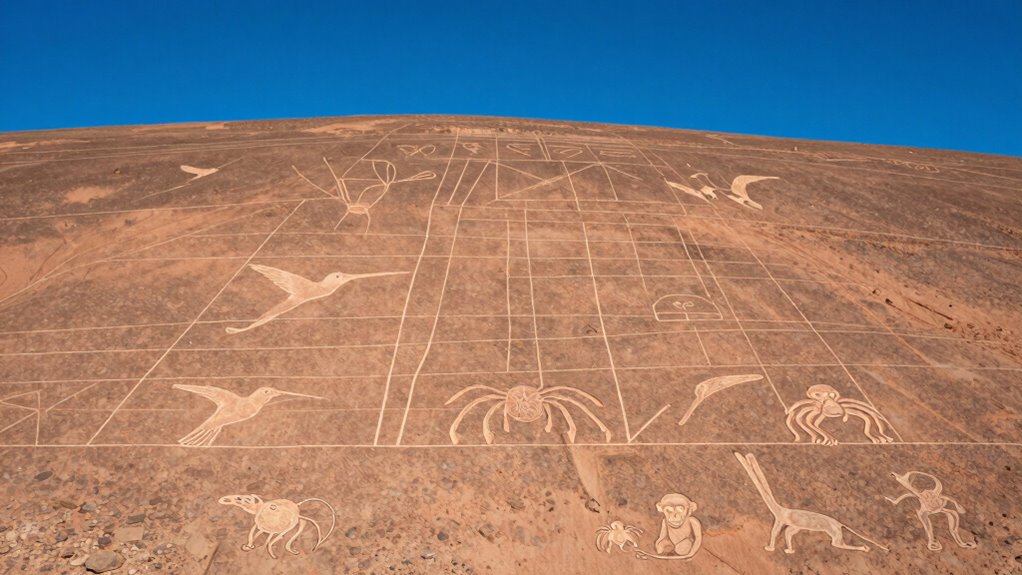
While some believe the Nazca Lines served practical purposes, evidence suggests they function more as symbolic or ceremonial markings. Many argue that these ancient markings weren’t meant as practical landmarks for navigation or terrestrial use. The lines’ size and complexity point to cultural or religious significance, possibly aligning with astronomical events. Additionally, their precise placement may reflect astronomical alignments, indicating a sophisticated understanding of celestial phenomena. The lines’ remote location and lack of clear functional features make it unlikely they served everyday practical needs. Instead, they seem designed to communicate messages to deities or ancestors, reinforcing social or spiritual bonds. Their cultural importance underscores their role in ritualistic practices rather than utilitarian functions. Although some have proposed practical uses, like guiding water or marking territories, the prevailing view is that these massive, intricate designs primarily held symbolic power rather than serving as practical landmarks. Understanding the purpose of the lines highlights their potential role in ritualistic or astronomical practices, emphasizing their cultural importance over utilitarian functions. Additionally, the alignment of certain lines with celestial events further supports their astronomical significance.
What Archaeological Discoveries Clarify the True Origins of the Lines?
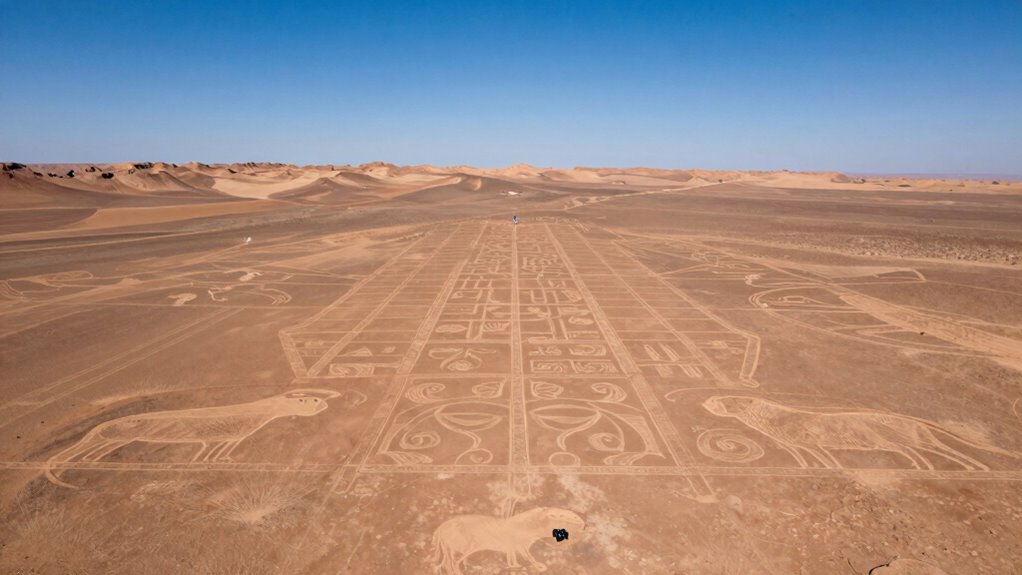
Recent archaeological discoveries have shed new light on the origins of the Nazca Lines, challenging earlier theories that emphasized their ceremonial or symbolic purposes. These findings highlight the importance of geoglyph preservation for understanding their true cultural significance. You can consider these key insights:
- Excavations reveal tools and materials indicating the lines were created by communities with practical, rather than purely ritual, motives. Material analysis shows the techniques used were accessible and utilitarian, supporting a more everyday function, which aligns with the evidence of environmental understanding in their activities. Additionally, the discovery of simple tools and materials suggests that the creators possessed technological skills suited to their practical needs. These skills demonstrate an applied knowledge of environmental adaptation, further emphasizing their utilitarian purpose.
- Evidence of water management systems suggests the lines may relate to local agricultural practices. These systems demonstrate the integration of environmental understanding into their daily activities.
- Carbon dating shows some lines date back to 500 BCE, indicating long-term usage and importance.
- Preservation efforts have uncovered that the lines were intentionally protected by wind and climate, emphasizing their cultural significance to early inhabitants. These discoveries clarify that the lines were integral to daily life and environmental understanding, and the archaeological context provides valuable insights into their true purpose.
What Myths and Misconceptions About the Nazca Lines Persist?
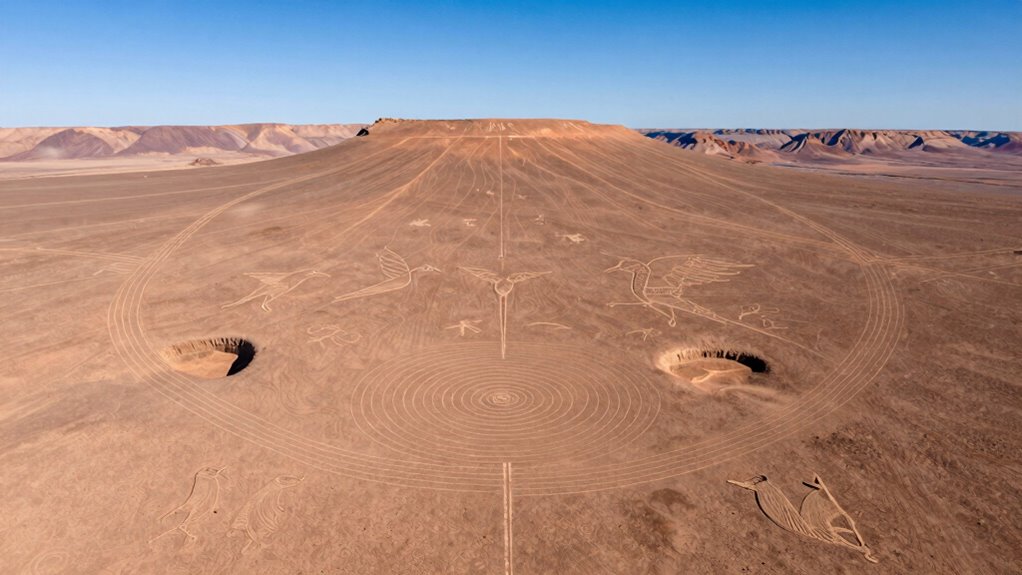
Many myths and misconceptions about the Nazca Lines still circulate, often overshadowing their true significance. One common myth is that they were created by aliens or extraterrestrial beings, but myth debunking shows this idea lacks evidence. People also believe the lines are only for visual entertainment or religious rituals, but misconception correction reveals they likely served astronomical or calendar functions. Some think the lines are too fragile to have been made so precisely, yet recent studies show the ancient Nazca people used simple tools and careful planning. By addressing these myths directly, you gain a clearer understanding of the Lines’ real purpose. Separating fact from fiction helps you appreciate their cultural and historical importance, beyond the sensational stories that often dominate popular imagination.
Why Do Human and Environmental Explanations Make the Most Sense?
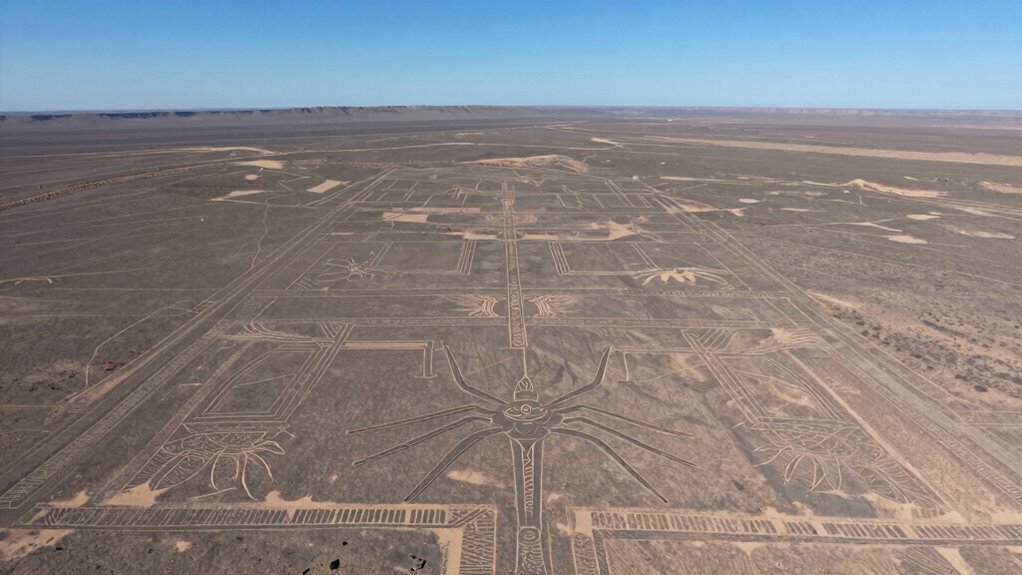
Understanding the true purpose of the Nazca Lines becomes clearer when you consider human ingenuity and environmental context. These geoglyphs likely served practical and cultural roles related to ancient agriculture and desert ecology.
Here are four reasons why human and environmental explanations make the most sense:
- They may have marked water sources or irrigation routes essential in arid desert conditions.
- The lines could have been part of rituals to pray for rainfall, indispensable for sustaining crops.
- Their placement aligns with fertile areas used for ancient agriculture, indicating a connection to land management.
- The designs might have helped ancient peoples understand seasonal cycles or environmental cues.
These explanations fit the landscape and cultural practices better than extraterrestrial theories.
Frequently Asked Questions
How Long Did It Take to Complete the Nazca Lines?
The construction timeline for the Nazca Lines spans over several centuries, with archaeological dating suggesting they were created between 200 BCE and 500 CE. You can imagine that it took generations to complete these intricate geoglyphs, as communities carefully planned and executed the designs. The process involved removing topsoil to reveal lighter earth beneath, and ongoing research continues to refine the estimated time needed for their creation.
Are There Any Modern Discoveries Still Being Made About the Lines?
You’re in for a surprise! Recent discoveries and technological advancements keep uncovering new secrets about the Nazca Lines. Researchers use drones and 3D imaging to find hidden geoglyphs and better understand their purpose. These modern tools reveal details we couldn’t see before, proving that even after centuries, the lines still hold mysteries. So, yes, new discoveries are constantly made, showing there’s always more to learn about these ancient masterpieces.
What Tools and Techniques Did Ancient Artists Use for the Designs?
You discover that ancient artists used simple yet effective tools like wooden sticks, stones, and brushes made from animal hair for creating the Nazca Lines. They employed basic artistic techniques such as clearing surface stones to reveal the lighter soil underneath, which made the designs stand out. These prehistoric tools and techniques allowed them to craft massive, precise geometric shapes and figures that have endured for centuries, showcasing their ingenuity and skill.
How Have Environmental Changes Affected the Preservation of the Lines?
You notice that environmental changes, like erosion patterns and climate impacts, threaten the preservation of the Nazca Lines. Heavy rains can wash away the surface, while wind erosion gradually wears down the intricate designs. Rising temperatures and shifting weather patterns accelerate these processes, making it harder to guarantee their survival, experts focus on monitoring climate impacts and implementing conservation efforts to mitigate damage.
Could the Lines Have Served as Territorial Boundaries?
Yes, the Nazca Lines could have served as territorial markers or ancient boundaries. You might see these geoglyphs as visual signals delineating different groups’ territories or sacred sites. Their strategic placement suggests they helped ancient cultures communicate boundaries or territorial claims across the desert landscape. While not definitively proven, the lines’ scale and location support the idea of their use as markers for territorial boundaries.
Conclusion
You now see the Nazca Lines as a tapestry woven by ancient hands, not aliens or mysteries. Each line and figure is a chapter in a story of cultural purpose, practicality, and spiritual significance. By understanding their true origins, you unravel a puzzle that’s been waiting patiently—like a river finding its course—guided by human ingenuity rather than extraterrestrial myths. The lines remind you that history’s most fascinating stories are often rooted in human experience.