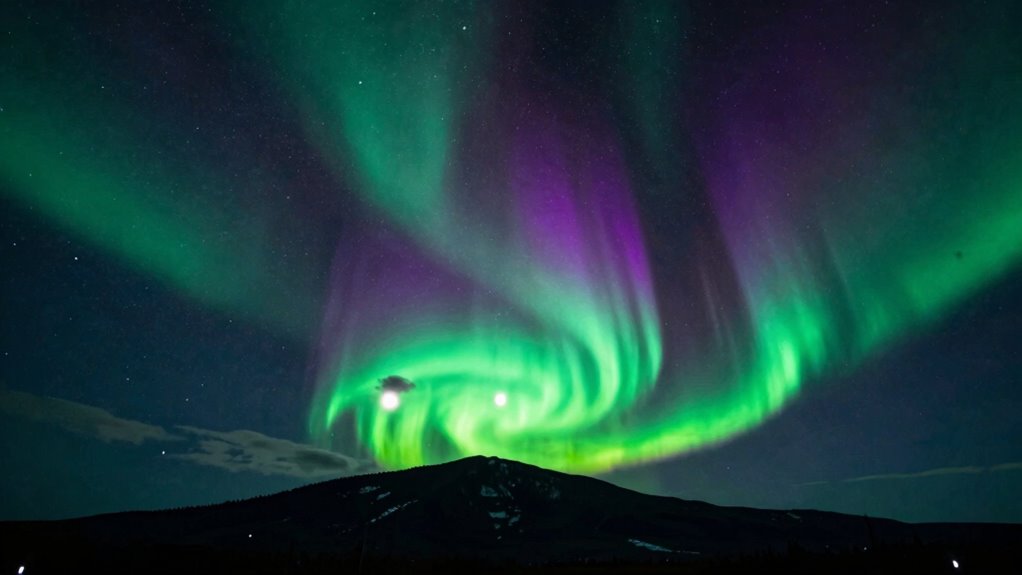

Strange lights in the sky often result from natural atmospheric effects, like airglow or reflections from clouds, moon, or city lights. Celestial events such as meteor showers also produce bright streaks as tiny particles burn up at high speeds. These phenomena happen due to interactions between light, Earth’s atmosphere, and cosmic debris. Understanding these processes helps you identify genuine astronomical events from illusions caused by the atmosphere. Keep exploring to uncover more about the intriguing science behind these mesmerizing sky displays.

Prime made for students and young adults
- Fast, free delivery for dorm and study essentials
- Prime Video and Amazon Music included
- Member-only deals
Key Takeaways
- Many strange sky lights are caused by natural atmospheric phenomena like airglow and reflections, not extraterrestrial activity.
- Meteor showers produce bright streaks when debris burns up in Earth’s atmosphere during specific predictable times.
- Light pollution and atmospheric conditions can create optical illusions, making lights appear unusual or mysterious.
- Reflections off clouds, ice crystals, or atmospheric layers can mimic or distort celestial events.
- Understanding atmospheric interactions helps distinguish genuine celestial phenomena from optical illusions.
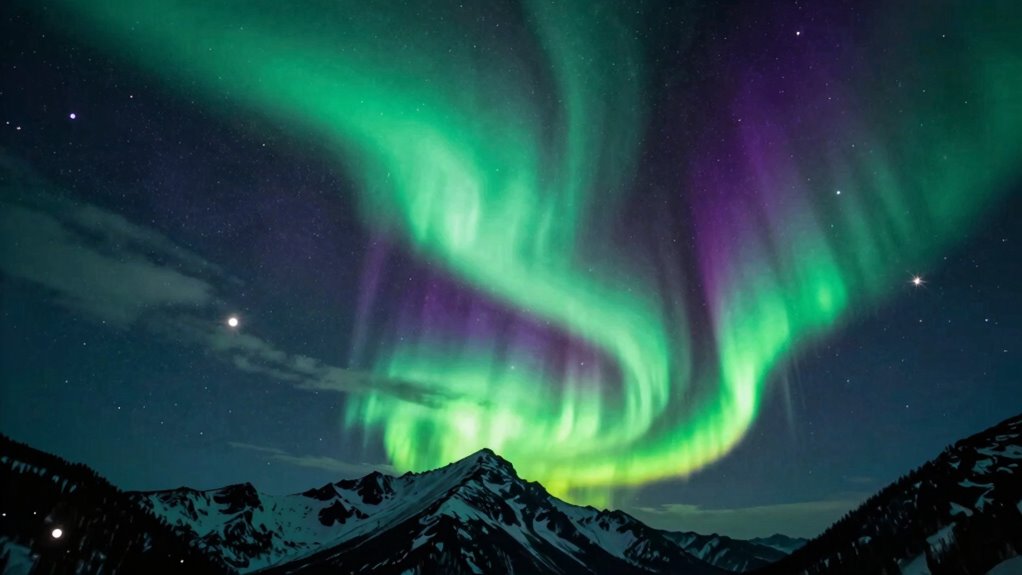
Have you ever looked up and wondered about those mysterious lights flickering across the night sky? You’re not alone. These dazzling displays often leave us captivated and curious, prompting questions about what’s causing them. One common explanation involves meteor showers—spectacular events where numerous meteors streak through the atmosphere, creating bright, fleeting streaks of light. During these showers, Earth passes through trails of debris left by comets or asteroids. When tiny particles collide with our atmosphere at high speeds, they burn up due to intense friction, producing the glowing trails we see as meteors. The more debris there is, the more meteors you’ll witness, especially during peak meteor showers like the Perseids or Geminids. These events can light up the sky for hours, giving you a fleeting but mesmerizing display.
But not all strange lights are meteors. Sometimes, what you see are atmospheric reflections—an optical illusion caused by the way light interacts with the Earth’s atmosphere. These reflections occur when light from distant sources, such as city lights, celestial bodies, or even the sun or moon, bounces or refracts off layers of the atmosphere. For example, the phenomenon called “airglow” produces a faint, greenish or reddish glow that can fill the night sky, giving it an eerie, otherworldly look. Similarly, city lights can reflect off clouds or ice crystals high in the atmosphere, creating bright spots or streaks that seem to flicker and dance across the sky. These reflections can sometimes be mistaken for UFOs or strange phenomena, but they’re just the atmosphere playing tricks on your eyes. Additionally, phenomena like meteor showers are predictable and give us a chance to observe these spectacular displays regularly. Understanding the atmospheric interactions involved helps us better interpret what we see when observing the sky at night. Moreover, light pollution can obscure or distort what we see, making it even more important to understand these natural effects. Recognizing optical illusions caused by atmospheric conditions can help you distinguish between genuine celestial events and atmospheric artifacts.
Understanding the science behind these lights helps you appreciate their beauty and rarity. Meteor showers remind us of the dynamic environment surrounding Earth—small particles hurtling through space and burning up in our atmosphere, a reminder of the cosmic debris constantly traveling through our solar system. Atmospheric reflections, on the other hand, showcase how the Earth’s layers and weather conditions influence what we see, sometimes amplifying or distorting light sources. When you observe a flickering light or a streak across the sky, ask yourself whether it’s a meteor blazing through space or an atmospheric reflection bouncing or refracting light. Recognizing these phenomena not only satisfies your curiosity but deepens your understanding of the complex interactions happening above your head every night.
night sky telescope for beginners
As an affiliate, we earn on qualifying purchases.
As an affiliate, we earn on qualifying purchases.
Frequently Asked Questions
Are There Documented Cases of Alien Encounters Related to These Lights?
There are no confirmed cases of alien encounters directly linked to strange lights, but many believe in extraterrestrial hypotheses. Some reports suggest these lights could be signals or craft from other worlds, though skeptics argue government cover-ups hide the truth. You should approach such claims critically, as often, these sightings are later explained by natural phenomena or military activities, leaving the question of alien contact open but unproven.
Can Weather Conditions Cause These Unusual Sky Phenomena?
Yes, weather conditions can cause these unusual sky phenomena. You might see meteorological illusions, atmospheric optics, and other natural effects that create mesmerizing lights. When temperature changes, light refracts differently, leading to mirages or halos. Humidity and clouds can reflect or scatter light, making the sky appear to glow or flicker. These atmospheric interactions produce stunning displays, reminding you that nature’s own optical tricks often explain strange lights in the sky.
How Do Military Activities Influence Sightings of Strange Lights?
Military activities can influence sightings of strange lights through drone surveillance and atmospheric anomalies. You might see unusual lights when drones operate at night, creating mysterious flashes or shapes in the sky. Additionally, military experiments can cause atmospheric anomalies, like shimmering or glowing effects, which enhance or mimic UFO sightings. These factors often lead people to interpret ordinary military operations as inexplicable or extraterrestrial phenomena.
Are There Any Historical Records of These Lights in Ancient Texts?
Yes, ancient texts often mention strange lights, linking them to celestial symbolism and divine phenomena. You’ll find references in myths and religious scriptures, describing luminous objects in the sky as symbols of gods or omens. These historical records suggest that humans have long interpreted mysterious lights as significant celestial events, reflecting their beliefs and understanding of the universe. Such stories reveal how ancient cultures perceived and explained these extraordinary skyward displays.
What Technologies Are Used to Study and Track These Sky Lights?
You’ll be interested to know that satellite imaging and spectroscopic analysis are key technologies used to study and track these sky lights. Satellite imaging captures high-resolution images from space, helping identify patterns and movement. Spectroscopic analysis examines the light spectra emitted by these phenomena, revealing their composition and origin. Combining these tools allows scientists to gain insights into mysterious sky lights, making it possible to analyze their behavior and potentially identify their sources more effectively.
meteor shower viewing binoculars
As an affiliate, we earn on qualifying purchases.
As an affiliate, we earn on qualifying purchases.
Conclusion
As you gaze up at those mysterious lights, think of yourself as a curious explorer in a vast, uncharted universe. Each flicker and glow is like a secret message from the cosmos, waiting for you to decode. Just as a lighthouse guides ships safely through darkness, understanding these strange lights illuminates the path of knowledge. Embrace your inner astronaut, and remember—every wonder in the sky is an invitation to learn more about the universe’s beautiful mysteries.
light pollution filter for telescopes
As an affiliate, we earn on qualifying purchases.
As an affiliate, we earn on qualifying purchases.
atmospheric phenomena educational kit
As an affiliate, we earn on qualifying purchases.
As an affiliate, we earn on qualifying purchases.
Halloween Picks
halloween
As an affiliate, we earn on qualifying purchases.