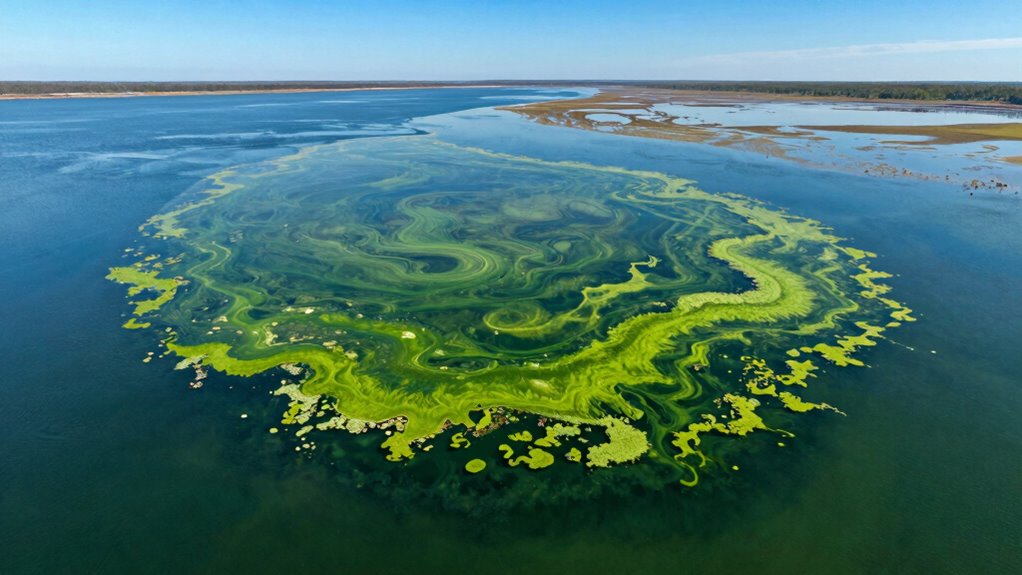

Lakes turn green when excess nutrients like nitrogen and phosphorus from human activities fuel algae growth. These algal blooms block sunlight, deplete oxygen when they die, and create dead zones where fish can’t survive. Factors like warm water, climate change, and pollution worsen the problem, disrupting ecosystems and harming health. To understand how these processes happen and what you can do about them, keep exploring the science behind algal blooms and dead zones.
Key Takeaways
- Excess nutrients like nitrogen and phosphorus from runoff promote algae overgrowth, causing lakes to turn green.
- Warmer water temperatures and climate variability accelerate algae growth and facilitate harmful blooms.
- Decomposition of algae consumes oxygen, leading to hypoxic dead zones unsuitable for aquatic life.
- Nutrient enrichment disrupts natural cycles, fueling dense algal populations and ecological imbalance.
- Human activities, including agriculture and urbanization, increase nutrient pollution, worsening algae proliferation and dead zones.

5Strands Blue Green Algae Test Kit (2 Pack), On Site Lake & Pond Water Testing, Water Safety Test, Algae Detection, Fast 15 Minute Results
What Is Blue-Green Algae? Blue-green algae is a type of cyanobacteria found in warm, nutrient-rich bodies of water…
As an affiliate, we earn on qualifying purchases.
As an affiliate, we earn on qualifying purchases.
Why Do Lakes Turn Green? The Role of Nutrients and Algae

Lakes turn green primarily because of an overgrowth of algae, which thrives when nutrients like nitrogen and phosphorus become abundant. This nutrient increase fuels phytoplankton diversity, leading to dense algal populations. As these microscopic organisms multiply, they influence lake color dynamics, turning clear waters into vivid green. The diversity of phytoplankton species affects the intensity and hue of the discoloration, with different algae producing various shades of green. When nutrient levels spike, algae reproduce rapidly, forming visible layers on the water’s surface. This process not only changes the lake’s appearance but also impacts its ecology. By understanding how nutrients drive phytoplankton diversity and influence lake color dynamics, you can better grasp why lakes turn green and how nutrient pollution plays a key role. Additionally, nutrient pollution can lead to hypoxic conditions, creating dead zones where aquatic life struggles to survive. Eutrophication accelerates these processes by adding excess nutrients to lakes, further promoting algal blooms and ecological imbalance. Recognizing the nutrient sources that contribute to this problem is crucial for effective lake management and pollution prevention. Moreover, monitoring algae populations helps scientists predict and mitigate harmful algal blooms before they become severe.

API POND MASTER TEST KIT Pond Water Test Kit 500-Test
Contains one (1) API POND MASTER TEST KIT Pond Water Test Kit 500-Test, including 6 bottles of testing…
As an affiliate, we earn on qualifying purchases.
As an affiliate, we earn on qualifying purchases.
How Do Algal Blooms Develop and Spread in Lakes?
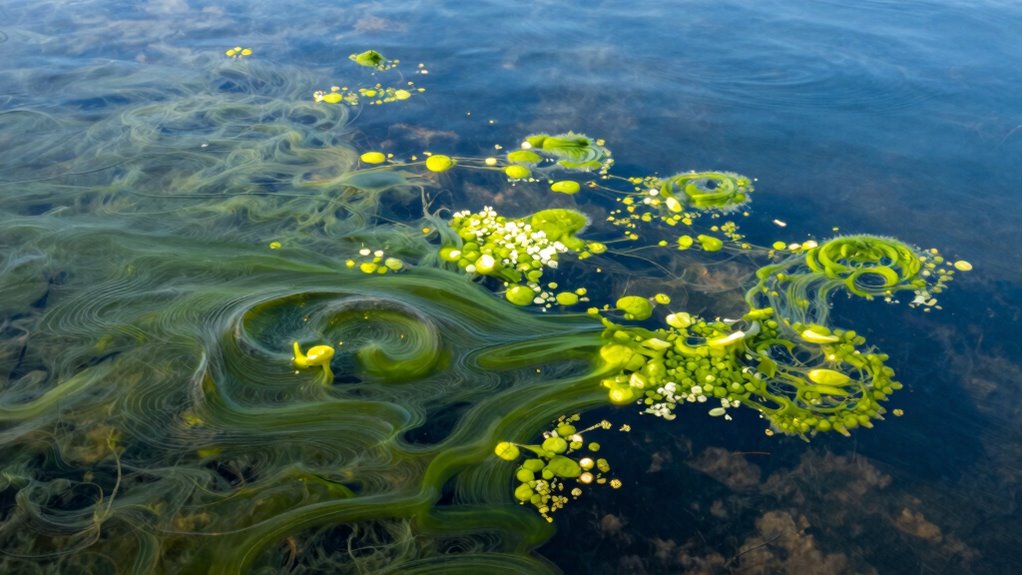
You might notice that when nutrients from runoff enter lakes, they fuel algae growth, leading to blooms. Warmer water temperatures also help algae multiply quickly and spread across the surface. Together, these factors create ideal conditions for lakes to turn green with algal blooms. Additionally, free floating algae can drift across large areas, further exacerbating the bloom. The presence of excess nutrients and favorable water conditions can also lead to the formation of dead zones, where oxygen levels drop dangerously low, making it impossible for most aquatic life to survive. These zones are often linked to eutrophication, a process driven by nutrient enrichment that accelerates algal overgrowth and oxygen depletion. Understanding the nutrient cycle in aquatic ecosystems helps explain how these harmful blooms develop and persist over time.
Nutrient Runoff Effects
Nutrient runoff from agricultural fields, urban areas, and sewage systems introduces excess nitrogen and phosphorus into lakes, providing ideal conditions for algal blooms to develop. Stormwater pollution carries these nutrients from streets and construction sites directly into water bodies during rain events. Agricultural practices, such as fertilizer application and livestock waste management, often result in nutrients leaching into nearby lakes. As these nutrients accumulate, they promote rapid algae growth, creating dense blooms that can spread across the water’s surface. This process is worsened when runoff is not properly managed, allowing nutrients to concentrate and fuel algae proliferation. The more nutrients that enter the lake, the faster and more widespread the algal blooms become, leading to ecological imbalance and water quality issues.
Water Temperature Rise
As water temperatures rise, algae find it easier to grow and spread within lakes. Warmer temperatures promote thermal stratification, where the water layers separate, trapping heat at the surface. This process increases heat retention, creating a stable environment that favors algae proliferation. Elevated temperatures boost algal metabolism and reproduction rates, leading to rapid blooms. As the upper layers warm, nutrients become more available to algae, fueling their growth further. The lack of mixing caused by stratification prevents nutrients and algae from dispersing throughout the water column, so they stay concentrated in the surface waters. This creates ideal conditions for algae to multiply and spread quickly across the lake, intensifying blooms and contributing to the development of dead zones when oxygen levels decline. Understanding stratification helps explain how these conditions intensify during warmer periods. Additionally, climate change is projected to further increase water temperatures, potentially exacerbating algal bloom occurrences and their impacts on aquatic ecosystems. thermal stratification plays a critical role in maintaining these conditions, making it a key factor in the development of harmful algal blooms. Moreover, nutrient loading from human activities can intensify these effects by providing additional fuel for algae during stratification.

API POND ALGAEFIX Algae Control 32-Ounce Bottle, FISHAQUARI (169G)
API POND ALGAEFIX – Helps resolve algae problems and controls the formation of new algae; works fast without…
As an affiliate, we earn on qualifying purchases.
As an affiliate, we earn on qualifying purchases.
What Are Dead Zones in Lakes, and How Do They Form?

Dead zones form when excess nutrients wash into lakes, fueling algae growth. As algae die and decay, oxygen levels drop dramatically. This oxygen depletion creates areas where fish and other aquatic life can’t survive. The process is often exacerbated by vetted wave and wind conditions that distribute nutrients and algae throughout the water column, making the dead zones more extensive. Additionally, nutrient runoff from agriculture and urban areas significantly increases the likelihood of dead zone formation, underscoring the importance of effective land management practices in prevention efforts.
Sources of Nutrients
When excess nutrients like nitrogen and phosphorus enter lakes, they can fuel the rapid growth of algae and aquatic plants. These nutrients often come from sources like agricultural runoff, sewage discharges, and stormwater. As nutrient levels rise, aquatic plants and algae flourish, disrupting natural nutrient cycling. This overabundance can lead to harmful algal blooms, which deplete oxygen and create dead zones. You might feel alarmed by how human activities accelerate this process, turning vibrant ecosystems into lifeless waters. Understanding nutrient sources helps reveal how our actions impact lakes and their delicate balance. Additionally, electric bikes are a sustainable transportation option that can help reduce pollution and lessen nutrient runoff from vehicles. Implementing best management practices can further mitigate nutrient pollution and protect aquatic ecosystems. Recognizing the importance of nutrient management is crucial for maintaining healthy lakes and preventing the formation of dead zones. Reducing stormwater runoff through infrastructure improvements can also significantly decrease nutrient inflow into lakes. Promoting community awareness about nutrient pollution can encourage more environmentally friendly practices.
Oxygen Depletion Processes
Oxygen depletion in lakes occurs when excessive algae and plant growth, fueled by nutrient pollution, leads to a decline in dissolved oxygen levels. As algae die and decompose, microbial activity increases, consuming large amounts of oxygen in the process. This oxygen consumption by bacteria causes oxygen levels to drop rapidly, creating hypoxic or anoxic conditions. Without enough oxygen, aquatic life such as fish and invertebrates struggle to survive, resulting in dead zones. The process is often self-perpetuating: as oxygen levels fall, decomposition accelerates, further reducing oxygen availability. This cycle can persist for weeks or months, especially in still, stratified lakes where oxygen cannot easily circulate. Understanding microbial activity and oxygen consumption is key to grasping how dead zones form and expand. External factors like temperature changes and water movement influence how quickly oxygen is replenished, impacting the severity of hypoxia. Additionally, human activities that increase nutrient input can exacerbate algal blooms, intensifying dead zone development. Moreover, the buildup of organic matter from decomposing algae can lead to the formation of dead zones, which severely impact local biodiversity and ecosystem health.

Design of Urban Stormwater Controls, MOP 23: MOP 23 (Water Resources and Environmental Engineering Series)
As an affiliate, we earn on qualifying purchases.
As an affiliate, we earn on qualifying purchases.
How Climate Change and Human Activities Make Lakes Turn Green

Climate change and human activities are driving lakes to turn green by fueling excessive algae growth. Rising temperatures and climate variability create warmer waters that promote algae blooms. Human actions, like urban planning, often lead to increased nutrient runoff from agriculture and city developments, feeding algae. These factors combine to make lakes more vulnerable to becoming green, often with harmful algae. You might notice how urban expansion accelerates pollution, while climate shifts extend growing seasons for algae.
- Increased nutrient pollution from poorly managed land use
- Rising temperatures prolong algae growth cycles
- Urban planning that neglects ecological impacts worsens water quality
What Are the Environmental and Health Impacts of Green Lakes and Dead Zones?

Green lakes and dead zones pose serious threats to ecosystems and human health. When these areas develop, aquatic biodiversity declines as fish, plants, and other species struggle to survive or migrate away. The loss of biodiversity disrupts food chains and weakens the resilience of aquatic environments. For people, contaminated water can threaten recreational safety, making swimming, fishing, and boating risky. Harmful algal blooms produce toxins that can cause skin irritations, respiratory issues, and even neurological problems in humans. Dead zones, where oxygen levels plummet, lead to massive fish kills and the collapse of local fisheries. Overall, these phenomena not only damage the natural balance but also jeopardize public health and the economic stability of communities dependent on healthy lakes.
How Can We Prevent or Reduce Algal Blooms and Dead Zones?
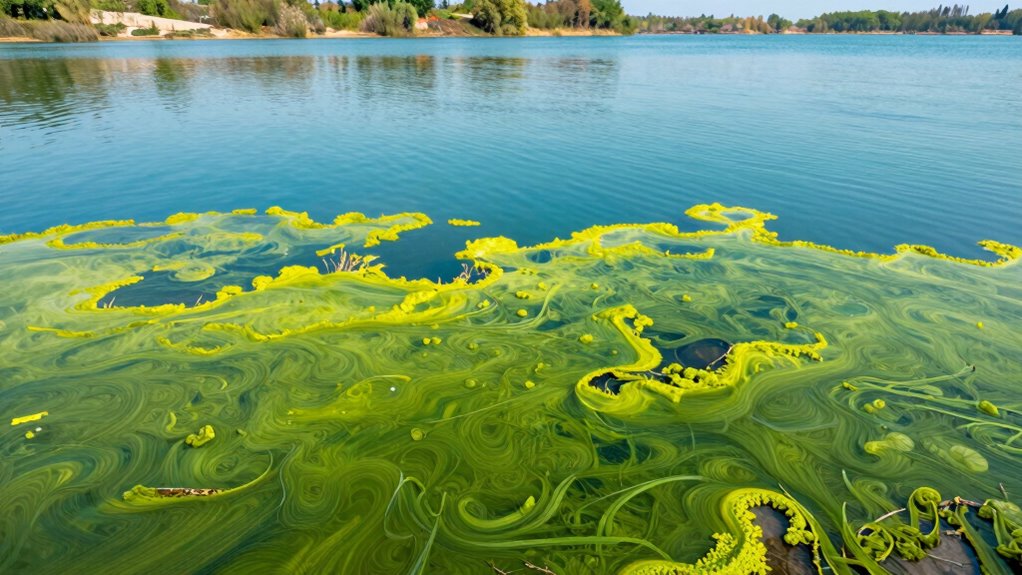
Reducing algal blooms and dead zones requires a combination of proactive strategies and responsible practices. Creating buffer zones along waterways helps filter runoff before it reaches lakes, cutting down on excess nutrients that cause blooms. Supporting public education efforts raises awareness about how everyday actions impact water quality, encouraging responsible farming, waste disposal, and land use. You can also advocate for policies that limit fertilizer use and protect natural habitats. By understanding the importance of healthy ecosystems, you’ll be part of the solution. Together, these efforts can restore balance to lakes and prevent harmful algal blooms from taking over. Taking action now safeguards water quality and preserves lakes for future generations. Every small step counts in making a meaningful difference.
Frequently Asked Questions
How Do Algae Affect Aquatic Ecosystems Beyond Producing Green Water?
Algae impact aquatic ecosystems by disrupting nutrient cycling and causing oxygen depletion. When algae die and decompose, they consume oxygen, leading to dead zones where fish and other species struggle to survive. Their rapid growth also blocks sunlight, affecting aquatic plants and altering the food web. You’ll notice how these changes threaten biodiversity, destabilize the ecosystem, and reduce water quality, making it harder for aquatic life to thrive beyond just turning the water green.
Are Certain Types of Algae More Harmful Than Others During Blooms?
Yes, some algae are more harmful during blooms due to their toxic effects. Algal toxicity varies by species, so identifying the specific algae involved is vital for evaluating danger. Certain species, like cyanobacteria, produce potent toxins that can harm aquatic life and humans. By conducting species identification, you can determine if the bloom poses health risks, making it essential for managing and mitigating harmful impacts effectively.
How Long Do Algal Blooms Typically Last in Affected Lakes?
They say, “Patience is a virtue,” and that’s true for algal blooms. Usually, bloom duration depends on environmental factors like temperature, nutrient levels, and sunlight. Typically, blooms last from a few days to several weeks, sometimes longer if conditions stay favorable. You should keep an eye on lake health, as prolonged blooms can harm ecosystems and water quality, making it essential to understand and manage these environmental influences.
Can Dead Zones Recover Naturally Without Intervention?
Dead zones can recover naturally over time through natural regeneration, but it depends on the ecosystem’s resilience. If the surrounding environment has healthy, balanced conditions, it can gradually restore oxygen levels and support marine life. However, if pollution persists or the ecosystem is severely stressed, recovery may take decades or might not happen without human intervention. Protecting water quality and reducing nutrient runoff are key to supporting natural recovery.
What Innovative Technologies Are Being Developed to Combat Algal Blooms?
Imagine a high-tech battle against green invaders, where innovative tools like algae monitoring act as your radar, spotting trouble early. You develop bioremediation techniques, releasing friendly microbes to munch on excess nutrients fueling blooms. Drones and sensors track changes in real time, helping you target interventions precisely. These cutting-edge methods empower you to control algal blooms more effectively, restoring lakes’ health and preventing them from turning into toxic green wastelands.
Conclusion
Remember, a stitch in time saves nine. By understanding how nutrients and human activities fuel algal blooms and dead zones, you can help protect lakes. Simple actions like reducing fertilizer use and supporting conservation efforts make a difference. Staying informed and proactive guarantees lakes stay healthy and vibrant. After all, an ounce of prevention is worth a pound of cure—so let’s work together to keep our lakes blue and beautiful for generations to come.