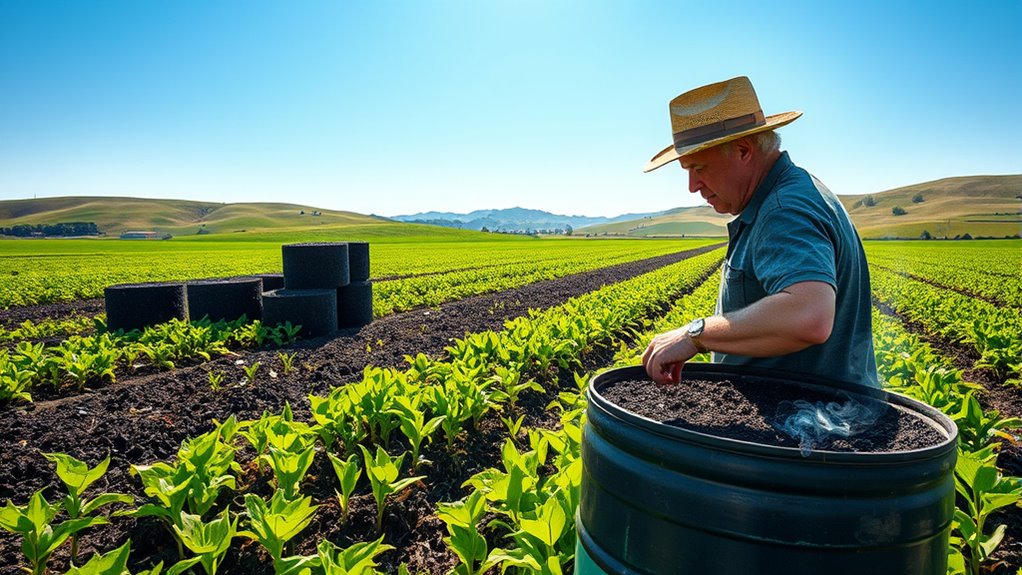
Yes, bio-char can turn agricultural waste into carbon gold by transforming plant residues into a stable, carbon-rich material that boosts soil health and fights climate change. When you process waste through controlled pyrolysis, it creates a porous, nutrient-retaining substance that sequesters carbon for decades. This sustainable method reduces pollution, enhances soil fertility, and helps lower greenhouse gases. Keep exploring to discover how this innovative approach can benefit your farming practices and the environment.
Key Takeaways
- Bio-char converts agricultural waste into a stable form of carbon, effectively turning waste into a valuable resource.
- It enhances soil fertility, increasing crop yields and promoting sustainable farming practices.
- The porous nature of bio-char traps carbon in soil, contributing to long-term carbon sequestration.
- Utilizing biomass for bio-char reduces waste pollution and prevents environmental harm from burning crop residues.
- Turning agricultural waste into bio-char aligns with eco-friendly, climate-smart agriculture by capturing atmospheric carbon.
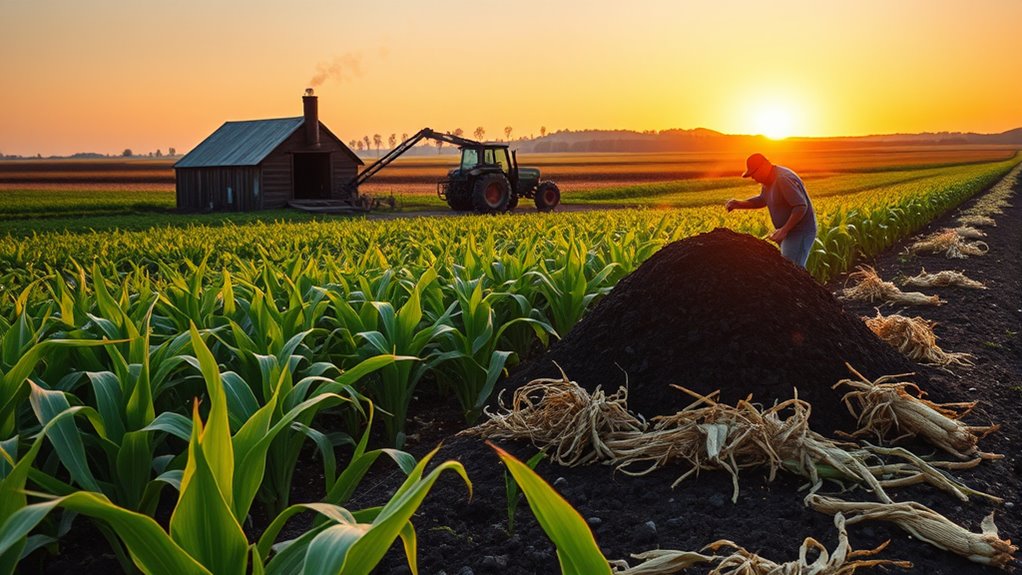
Bio-char, a form of charcoal produced from agricultural waste, offers a sustainable way to improve soil health and reduce environmental impact. When you incorporate bio-char into your soil, you’re not just enriching it; you’re actively enhancing its structure and fertility. The porous nature of bio-char helps retain moisture and nutrients, leading to better plant growth and increased crop yields. This soil enhancement process is essential for sustainable farming, especially in areas facing drought or nutrient depletion. As you add bio-char, you’re also contributing to a broader environmental goal: carbon sequestration. By converting agricultural waste into bio-char, you trap carbon that would otherwise be released back into the atmosphere as greenhouse gases. This process effectively locks carbon into the soil for decades, helping combat climate change. It’s a win-win situation—your soil gets healthier, and your farm’s carbon footprint diminishes.
The production of bio-char turns what would be waste into a valuable resource, making it a practical solution for managing agricultural byproducts. Instead of burning or discarding crop residues, you can convert them into bio-char, which serves multiple purposes. Not only does this reduce waste accumulation and pollution, but it also creates a soil amendment that contributes to long-term carbon storage. The carbon sequestration benefits are particularly significant because they help offset emissions from other farming activities. As biomass is heated in low-oxygen conditions, the carbon within it remains stable in the form of bio-char. When you apply this to your fields, you’re effectively removing carbon from the atmosphere and storing it safely underground. Additionally, high-quality projectors with precise calibration and technology can help you monitor and optimize soil conditions using digital tools, aligning with sustainable practices.
Using bio-char also boosts soil microbial activity, further promoting soil health and resilience. Its ability to improve soil structure means roots can penetrate more easily, enhancing plant stability and nutrient uptake. Over time, this leads to increased organic matter in the soil, which is essential for maintaining soil fertility without relying heavily on chemical fertilizers. The cumulative effect of these improvements makes bio-char a powerful tool for sustainable agriculture, aligning productivity with environmental stewardship. By integrating bio-char into your farming practices, you turn agricultural waste into a form of carbon gold—an asset that benefits your land, your crop yield, and the planet. It’s a practical, eco-friendly approach that transforms waste management into climate action, demonstrating how innovative solutions can address multiple challenges simultaneously.

Char Bliss (16 Qts) – Organic Biochar for Plants – OMRI-Listed Biochar Soil Amendment Organic – Bio Char for Plants – Horticultural Charcoal for Plants, Potting Soil, Garden Soil, & Potting Mixes
100% Natural Soil Amendment for Plants – Plantonix Char Bliss is an organic soil conditioner that’s been ethically…
As an affiliate, we earn on qualifying purchases.
As an affiliate, we earn on qualifying purchases.
Frequently Asked Questions
How Does Bio-Char Compare to Traditional Fertilizers in Crop Yield?
You’ll find that bio-char improves soil health by enhancing its structure and increasing water retention. Unlike traditional fertilizers, it slowly releases nutrients, boosting nutrient availability over time. This results in better crop yields, especially in poor soils. While fertilizers offer quick nutrient boosts, bio-char provides long-term benefits, making your soil more resilient and productive. Overall, combining bio-char with fertilizers can optimize crop growth and sustain healthy harvests.
What Are the Environmental Impacts of Large-Scale Bio-Char Production?
Imagine harnessing agricultural waste like a treasure chest, turning it into a treasure map for the environment. Large-scale bio-char production can be a double-edged sword; if not managed carefully, it risks soil contamination and could harm biodiversity impacts. You could create a healthier planet or inadvertently damage ecosystems, so it’s vital to balance benefits with potential risks and guarantee sustainable practices in bio-char production.
Can Bio-Char Effectively Reduce Greenhouse Gas Emissions From Farms?
You can see that bio-char effectively reduces greenhouse gas emissions from farms by enhancing soil and promoting carbon sequestration. When you apply bio-char, it improves soil quality, locking in carbon and preventing its release into the atmosphere. This process helps farms become more sustainable, lowering their net emissions. By adopting bio-char, you’re actively contributing to climate change mitigation while boosting soil health and crop yields.
What Types of Agricultural Waste Are Most Suitable for Bio-Char Production?
You should consider crop residues and fruit peels as ideal agricultural waste for bio-char production. These materials have high carbon content and are readily available on farms, making them suitable feedstocks. When you convert crop residues or fruit peels into bio-char, you can enhance soil health and reduce waste. Using these waste types maximizes resource efficiency and supports sustainable farming practices, turning waste into valuable carbon-rich bio-char.
Is Bio-Char Cost-Effective for Small-Scale Farmers?
Imagine turning your farm’s waste into a treasure chest—bio-char could be your goldmine. For small-scale farmers, its economic feasibility depends on market accessibility and initial costs. While it might seem like a steep climb, the long-term benefits—improved soil health and reduced fertilizer needs—can make it worthwhile. With supportive policies and local markets, bio-char can be a cost-effective way to boost productivity and sustainability.

Nisus Bac-Azap Odor Eliminator, Ready-to-Use Bio-Sanitization Liquid, Neutralizes Organic Waste Odors, Safe for Plumbing, 1 Gallon
POWERFUL ODOR CONTROL: This product eliminates tough organic odors at their source. It is excellent for drains, garbage…
As an affiliate, we earn on qualifying purchases.
As an affiliate, we earn on qualifying purchases.
Conclusion
Think of bio-char as your secret key, transforming humble waste into a treasure chest of potential. As you embrace this process, you’re planting seeds of change—turning ashes into gold, waste into wealth. Each batch you create symbolizes hope, a cycle of renewal. Let bio-char be the ember that ignites sustainable growth, reminding you that from the ashes of yesterday’s waste, tomorrow’s future shines brighter, richer, and more resilient.
Brightwell Aquatics BioFuel CWM – Carbon Source for Natural Phosphate & Nitrate Reduction in Temperate Marine Aquariums, 500 ml, 500ml
MULTI-CARBON FORMULA FOR NUTRIENT CONTROL Blended organic carbon sources fuel beneficial biological processes that help reduce nitrate and…
As an affiliate, we earn on qualifying purchases.
As an affiliate, we earn on qualifying purchases.
bio-char for crop yields
As an affiliate, we earn on qualifying purchases.
As an affiliate, we earn on qualifying purchases.