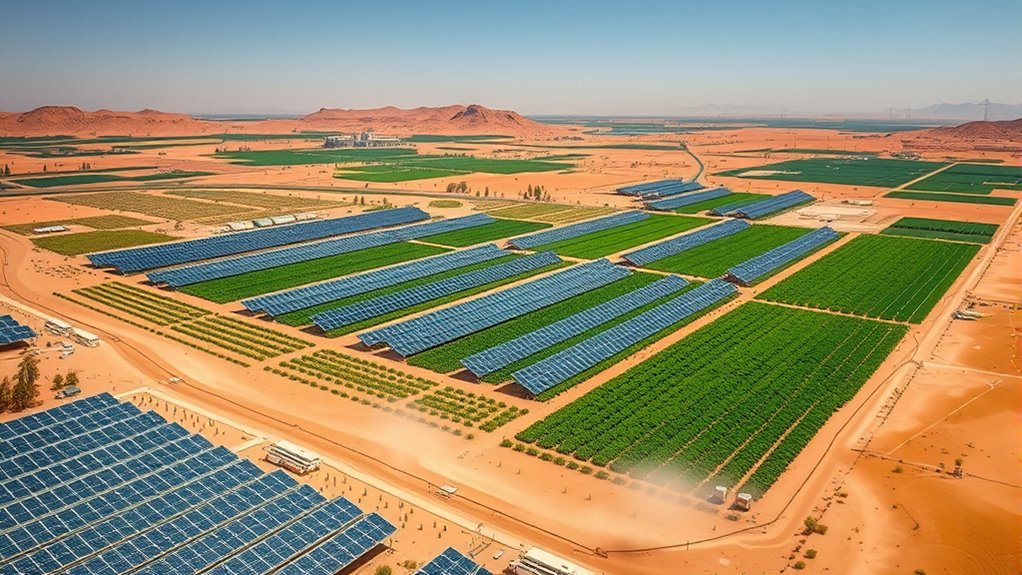

A desert greening project uses solar power to operate innovative drip irrigation systems that deliver water directly to plant roots, reducing waste and conserving resources. Native drought-resistant plants are added to thrive with minimal water, creating a sustainable ecosystem. Smart water management and soil sensors help optimize watering schedules, ensuring efficiency. By combining renewable energy, water conservation, and resilient plants, this project transforms barren land into productive farmland. Keep exploring to discover how these technologies work together for desert recovery.
Key Takeaways
- The project employs solar-powered irrigation systems to sustainably water and cultivate arid lands.
- Advanced drip irrigation and soil sensors optimize water use and prevent wastage.
- Native drought-resistant plants are integrated to enhance ecological balance and reduce water needs.
- Smart water management and real-time data analysis improve irrigation efficiency and resource conservation.
- The initiative promotes desert greening while minimizing energy consumption and carbon footprint through renewable energy.

The Desert Greening Project is transforming arid landscapes into thriving green spaces through innovative irrigation and planting techniques. You might wonder how such drastic change is possible in desert environments, but the key lies in sustainable irrigation practices coupled with water conservation strategies. By employing advanced drip irrigation systems and smart water management, the project minimizes water waste, ensuring each drop is used efficiently. These methods deliver water directly to plant roots, reducing evaporation and runoff, which are common issues in traditional watering systems. As a result, you can see how conserving water becomes integral to turning barren land into productive farmland. This approach not only saves precious water resources but also promotes the long-term sustainability of the project, making it feasible to maintain even in water-scarce regions.
Implementing reliable water-saving techniques is essential for the success and scalability of desert greening initiatives. You’ll notice that water conservation isn’t just a side benefit—it’s the backbone of the entire initiative. Using sensors and real-time data analysis, the project adjusts irrigation schedules based on weather conditions, soil moisture levels, and plant needs. This intelligent system prevents overwatering and helps you avoid depleting local water sources. As a result, the land remains hydrated enough for crops to grow without exhausting the underground aquifers. This careful balance ensures that every irrigation cycle contributes to the land’s gradual greening, without compromising the region’s water security. Furthermore, sustainable irrigation techniques like these also reduce energy consumption because they use less water, which in turn lowers the carbon footprint of the entire project.
The project also incorporates native plants that are adapted to the desert’s harsh conditions, further enhancing water efficiency. These plants require less water and are more resistant to drought, making them ideal for the arid environment you’re working to rehabilitate. By choosing resilient species and combining them with water-smart irrigation, the project maximizes growth potential while maintaining ecological balance. Over time, this approach creates a self-sustaining ecosystem that needs minimal intervention, which is crucial in remote desert areas where resources are limited. As you observe the transformation, it’s clear that sustainable irrigation and water conservation aren’t just technical details—they’re fundamental to restoring life to these once-barren lands. This innovative model demonstrates how careful resource management can turn deserts into fertile, productive farmland, proving that with the right techniques, even the harshest environments can be revived sustainably.

49FT Solar Drip Irrigation System, Auto Watering Kit for 15 Pots, Solar-Powered Plant Watering, 25 Timer Modes, 900ml/min Flow Indoor/Outdoor Garden, Balcony & Patio Irrigation System
【Indoor & Outdoor Versatility, All-Season Smart Irrigation】:HEKIWAY Designed for year-round convenience, this automatic drip irrigation system works seamlessly…
As an affiliate, we earn on qualifying purchases.
As an affiliate, we earn on qualifying purchases.
Frequently Asked Questions
What Is the Initial Cost of Implementing the Project?
You’ll need a significant initial investment for this project, typically ranging from millions to tens of millions of dollars, depending on the land size and technology used. Funding sources often include government grants, international aid, private investors, and public-private partnerships. This upfront cost covers solar infrastructure, soil improvement, and irrigation systems, but it’s an investment that aims to pay off with sustainable farmland and environmental benefits over time.
How Long Does It Take to See Results?
Like planting a seed in spring, you can expect visible results within a few months. Typically, the timeframe expectations for seeing initial changes are around 3 to 6 months, depending on the land’s condition and project scale. During this period, you’ll notice increased greenery, soil moisture, and early crop growth. Patience is key, but with consistent effort, the transformation will become more evident as the project progresses.
Are There Environmental Risks Involved?
Yes, there are environmental risks involved, like soil erosion and water pollution. You might notice increased soil erosion if vegetation isn’t properly maintained, which can degrade land quality. Water pollution could occur from runoff containing fertilizers or chemicals used in farming. To minimize these risks, it’s essential to implement sustainable practices, monitor water quality, and use eco-friendly inputs, ensuring the project benefits the environment as intended.
How Does the Project Impact Local Wildlife?
You might worry about wildlife disruption, but the project actually supports wildlife adaptation and habitat preservation. By carefully designing green spaces and water sources, it creates new habitats that encourage local species to flourish. Solar-powered irrigation minimizes environmental impact, helping animals adjust to changes. This approach ensures that wildlife can coexist with farmland, fostering a balanced ecosystem and promoting biodiversity even in transformed arid areas.
Can This Model Be Replicated Elsewhere Easily?
You can replicate this model elsewhere, but scalability challenges and regional applicability are key considerations. You’ll need to adapt the solar technology and irrigation methods to local climates and resources. While the core concept is scalable, factors like infrastructure, funding, and environmental conditions influence success. Careful planning and customization guarantee the project fits regional needs, making it more likely to thrive in different arid areas.
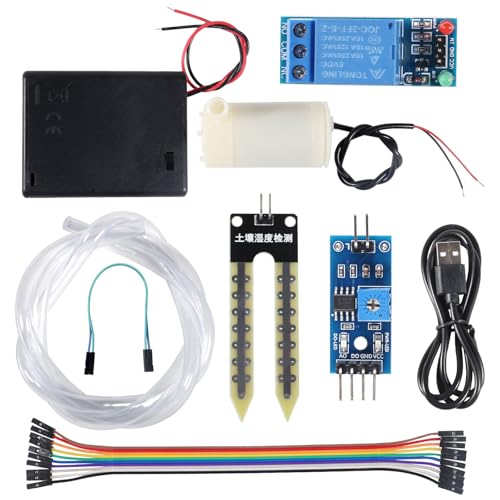
AEDIKO Upgrade Automatic Irrigation DIY Kit Self Watering System with Capacitive Soil Moisture Sensor 5V Relay Module and Water Pump + 50cm Silicone Tubing for Garden Plant Flower Watering DIY
Automatic Irrigation DIY Kit: LM393 Soil Moisture Detect Sensor,Mini Water Pump, Tubing, Battery Case,One Channel 5V Relay Module…
As an affiliate, we earn on qualifying purchases.
As an affiliate, we earn on qualifying purchases.
Conclusion
As you witness this desert turning green with the power of the sun, it’s hard not to wonder if nature itself is quietly supporting this transformation. The Desert Greening Project shows that innovation and hope can bloom even in the driest places, reminding us that sometimes, the most unexpected coincidences—like solar energy and arid land—can come together to create something extraordinary. Maybe, just maybe, this is the start of a sustainable new chapter.
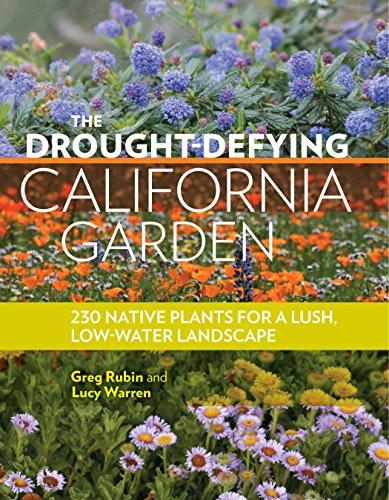
The Drought-Defying California Garden: 230 Native Plants for a Lush, Low-Water Landscape
As an affiliate, we earn on qualifying purchases.
As an affiliate, we earn on qualifying purchases.

RAINPOINT Bluetooth Water Timer, Sprinkler Timer for Garden Hose, Smart Automatic Irrigation System with Brass Inlet for Yard, Lawn, APP Remote Control via Bluetooth(Without Hub)
【Extended Bluetooth Range】Bluetooth sprinkler timer from up to 200ft away via Bluetooth, it connects to your phone for…
As an affiliate, we earn on qualifying purchases.
As an affiliate, we earn on qualifying purchases.