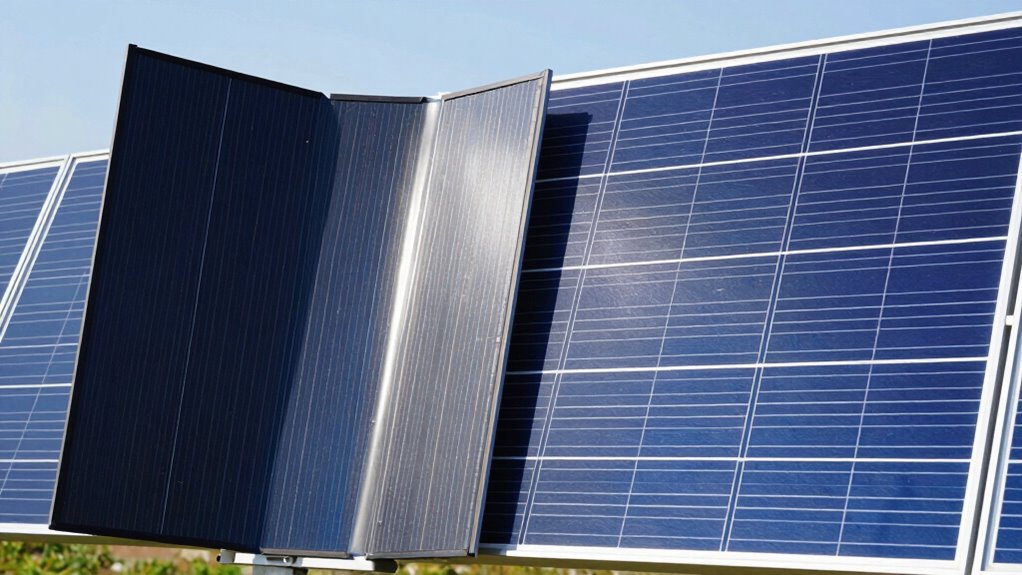

Foldable solar panels are portable, lightweight, and easy to set up, making them ideal for camping or mobile uses. Rigid panels are more efficient, durable, and suited for permanent installations, but they’re heavier and less flexible. While foldable panels sacrifice some efficiency for convenience, rigid panels offer long-term reliability. Understanding these differences helps you choose the right option for your needs—and there’s more to uncover if you explore further.
Key Takeaways
- Rigid panels offer higher efficiency and are ideal for permanent installations, while foldable panels prioritize portability and quick setup.
- Rigid panels are larger, heavier, and better suited for long-term outdoor use; foldable panels are lightweight and designed for mobility.
- Installation of rigid panels is complex and fixed; foldable panels are easy to set up and pack away quickly.
- Both types have improved weather resistance, but rigid panels are more durable for harsh, permanent outdoor environments.
- Cost and use cases differ: rigid panels suit stable, high-output needs; foldable panels are better for temporary, mobile, or emergency applications.
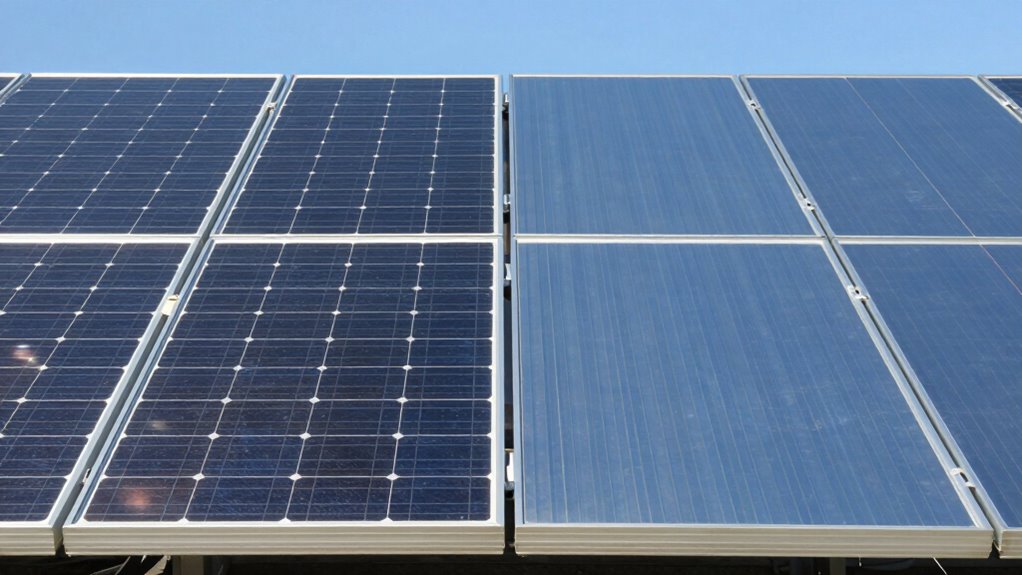
When choosing between foldable and rigid solar panels, understanding their differences can help you make an informed decision. Both types serve the same purpose—converting sunlight into electricity—but they do so with distinct advantages and limitations. One of the key factors to evaluate is solar panel efficiency. Rigid panels typically have a higher efficiency rate because they use more advanced, tightly packed photovoltaic cells. They’re designed to maximize energy output in a fixed position, making them ideal for permanent installations like rooftops. Foldable panels, on the other hand, often sacrifice a bit of efficiency for portability and convenience. Their flexible or semi-rigid design means they might not produce as much power under the same conditions, but they’re easier to transport and set up in different locations. Additionally, the materials used in foldable panels are often designed for lightweight durability to withstand outdoor conditions. Installation methods also play a vital role in your choice. Rigid solar panels usually require a more involved installation process. You’ll need mounting brackets, proper roofing alignment, and sometimes professional help to secure them safely. Once installed, they stay in one place, which means you won’t have to worry about moving or adjusting them. Foldable panels, however, are built for flexibility. They usually come with simple stands or straps that allow you to set them up quickly on various surfaces—like camping sites, boats, or off-grid locations. Their portability means you can pack them away after use or move them to optimize sunlight exposure throughout the day. This ease of setup makes foldable panels an excellent choice for temporary or mobile applications, whereas rigid panels suit long-term, fixed installations. Size and weight are additional factors influenced by your choice. Rigid panels tend to be larger and heavier, making them less practical to move frequently. Foldable panels are designed to fold into compact shapes, making them lightweight and easy to carry, which is perfect for outdoor adventures or emergency backup systems. Durability can also differ; rigid panels are built to withstand harsh weather conditions when properly installed, while foldable panels might be more vulnerable to damage if not handled carefully, though many are made with durable materials suited for outdoor use. In addition, advancements in material technology have improved the strength and weather resistance of foldable panels over time. For example, newer materials can enhance their resilience against harsh weather conditions and extend their lifespan. Moreover, considering cost-effectiveness is essential because the initial investment and long-term maintenance costs can vary significantly between the two types. It’s also worth noting that ongoing innovations in solar cell technology continue to improve the overall performance and durability of both foldable and rigid panels. By understanding these differences, you can better assess which type aligns with your biodiversity and sustainable living goals. Ultimately, your decision hinges on how you plan to use the solar panels. If you need a reliable, high-efficiency system for a permanent setup, rigid panels are your best bet. If portability, quick setup, and versatility matter more, foldable panels offer a practical solution. By considering solar panel efficiency, installation methods, size, and intended use, you’ll be better equipped to choose the right type for your energy needs.

SOLUPUP Solar Panels 30W Portable Foldable Solar Charger with 5V USB-A and USB-C Fast Charging Compatible with iPhone, iPad, Samsung, Power Banks, IPX5 Waterproof Perfect for Camping, Hiking, Outdoor
- High-Efficiency Solar Panel: 23%+ energy conversion rate for faster charging
- Dual USB Output Ports: Charges two devices simultaneously (USB-A and USB-C)
- Waterproof and Durable: IPX5 rated for rain, dust, and harsh conditions
As an affiliate, we earn on qualifying purchases.
As an affiliate, we earn on qualifying purchases.
Frequently Asked Questions
Are Foldable Solar Panels More Durable Than Rigid Ones?
Foldable solar panels aren’t necessarily more durable than rigid ones. Their flexibility advantages make them more prone to physical damage, like tears or creases, especially if mishandled. If you prefer an aesthetic that’s sleek and seamless, rigid panels might suit you better. Durability depends on materials and usage, so consider your environment and handling habits when choosing. Rigid panels generally withstand harsh conditions better, while foldables offer portability and flexibility for on-the-go use.
How Do Storage and Transportation Costs Compare?
Think of foldable panels like a suitcase—you can pack them easily, but they might cost more to ship because of their complexity. Rigid panels are like bulky furniture; they’re cheaper to store and transport thanks to simpler manufacturing. Overall, foldable panels often have higher transportation and storage costs, impacting cost efficiency. Their portability adds value, but consider these costs when planning your solar setup.
Can Foldable Panels Be Permanently Installed Outdoors?
Yes, you can permanently install foldable panels outdoors, but they’re mainly designed for portable setups. While they can withstand outdoor conditions, their hinges and joints may degrade over time if exposed continuously. If you prefer aesthetic integration and long-term outdoor use, rigid panels are more suitable. Foldable panels excel in portability, making them ideal for temporary setups or situations where mobility is essential, but they aren’t typically intended for permanent outdoor installation.
What Maintenance Is Required for Each Type?
Imagine your panels as diligent workers—rigid ones stay planted and need occasional cleaning, while foldables are the nomads, requiring careful handling after each fold. Both demand regular dusting and checking connections. In an efficiency comparison, rigid panels often maintain their output longer with less fuss, but foldables cost more in upkeep. A thorough cost analysis reveals that while foldables are portable, they need more attentive maintenance to keep performance high.
How Do They Perform in Extreme Weather Conditions?
Foldable solar panels, thanks to their flexibility, might bend or warp in extreme weather, reducing weather resilience. Rigid panels are sturdier and better suited for harsh conditions, resisting heavy rain, snow, or wind without damage. You should consider the environment where you’ll install them; if weather resilience is critical, rigid panels generally perform better. Always guarantee proper mounting and protection to maximize durability against severe weather.

Solar Panel Roof Mounting Kit,Complete 2 Panels Solar Rack System
- DIY Solar Installation: Easy, height-adjustable for standard panels
- Roof Mounting System: Securely fastens panels to roof with rails
- Mounting Rails and Clamps: Includes clamps, seals, and screws for waterproofing
As an affiliate, we earn on qualifying purchases.
As an affiliate, we earn on qualifying purchases.
Conclusion
Just like the legendary explorers charted unknown waters, choosing between foldable and rigid solar panels depends on your journey’s needs. If you seek flexibility and portability, foldables are your trusty vessel. For long-term, stationary power, rigid panels are your steadfast ship. Remember, the right choice illuminates your path, much like the stars guiding explorers through the night. Ultimately, your adventure in solar power begins with understanding how these options align with your goals.
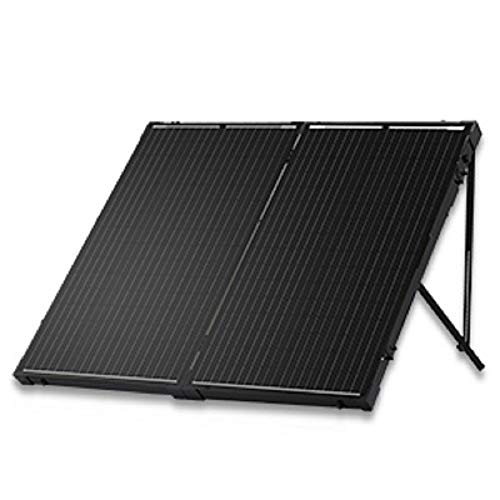
Renogy 200W 12V Portable Solar Panels Suitcase with Waterproof 20A Charge Controller, Foldable 200 Watt Solar Panel W/Adjustable Kickstand, Solar Charger for Power Station, RV, Camping, SUV, Off Grid
- High-Efficiency N-Type Cells: Up to 25% conversion efficiency
- Adjustable Aluminum Kickstand: Optimizes tilt for maximum sunlight
- Compact Foldable Design: Sleek, lightweight, easy to carry
As an affiliate, we earn on qualifying purchases.
As an affiliate, we earn on qualifying purchases.

Callsun N-Type 16BB 400W Bifacial Solar Panel, 2Pcs 200 Watt Solar Panel for 12V/24V Systems, 25% High Efficiency, Dual-Module Parallel Anti-Shade Design, for RV Van Marine Home Rooftop Off-Grid
- High-Efficiency N-Type Cells: Up to 25% conversion efficiency with advanced technology
- Bifacial Solar Technology: Captures sunlight from both sides for increased output
- Dual-Module Anti-Shade Design: Splits panel into two halves for better shading tolerance
As an affiliate, we earn on qualifying purchases.
As an affiliate, we earn on qualifying purchases.