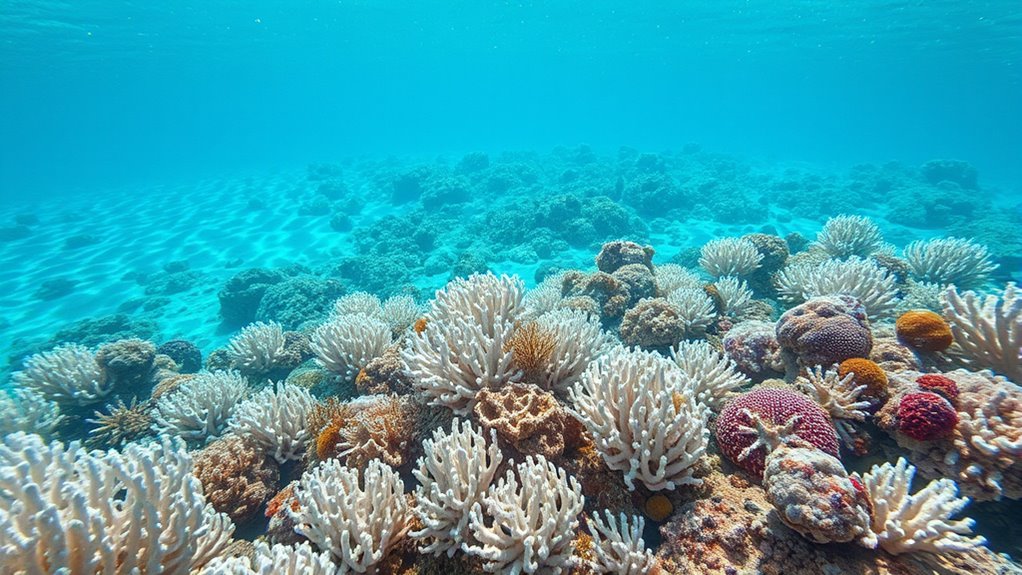

A major coral bleaching event has spurred global initiatives to restore and protect vulnerable reefs affected by climate change. As you see efforts to improve reef resilience, it’s clear that reducing local pollution, establishing protected areas, and supporting innovative restoration techniques are essential. These strategies aim to help corals recover and adapt despite ongoing threats. If you continue, you’ll discover more about how these plans work and what you can do to contribute.
Key Takeaways
- The unprecedented bleaching highlights urgent need for global reef recovery and climate adaptation strategies.
- Enhanced resilience efforts include reducing pollution, establishing marine protected areas, and promoting sustainable fishing.
- Innovative techniques like assisted gene flow aim to restore coral populations and improve resilience.
- Public support and policy advocacy are critical for funding conservation and addressing root causes of climate change.
- Global reef recovery plans focus on both immediate restoration and long-term climate mitigation efforts.

Coral bleaching occurs when rising ocean temperatures and stressors like pollution cause coral reefs to lose their vibrant colors and essential symbiotic algae. This process weakens the corals’ ability to survive, making them more vulnerable to disease and mortality. As these events become more frequent and severe, scientists and conservationists recognize the importance of understanding marine resilience—the capacity of coral ecosystems to recover from disturbances. By focusing on marine resilience, you can better appreciate how some reefs manage to bounce back despite ongoing stressors, offering hope for future preservation efforts. Climate adaptation strategies are increasingly crucial in this regard. They involve implementing measures to help coral reefs withstand the impacts of climate change, such as reducing local pollution, establishing protected areas, and encouraging sustainable fishing practices. These efforts aim to bolster the natural resilience of reefs, giving them a fighting chance against rising temperatures and other stressors. Additionally, fostering biological diversity within reef systems can enhance their ability to adapt and recover from bleaching events.
You can play a role in supporting climate adaptation by staying informed about reef conservation initiatives and reducing your carbon footprint. Every action counts when it comes to slowing down global warming, which directly influences ocean temperatures and, consequently, coral health. Local actions—like supporting policies that limit pollution and advocating for marine protected areas—help reinforce the resilience of nearby reefs. You might also participate in or donate to organizations dedicated to coral restoration projects, which often involve cultivating resilient coral strains capable of withstanding higher temperatures. Such initiatives are designed not just to repair damaged reefs but also to enhance their ability to adapt to changing conditions, strengthening their long-term survival prospects.
Understanding the link between marine resilience and climate adaptation can empower you to support solutions rooted in science and community involvement. It’s clear that addressing the root causes of climate change, while actively restoring and protecting reefs, is essential to prevent further bleaching events. As global efforts scale up, innovative techniques like assisted gene flow and selective breeding of resilient corals are being explored, giving reefs a better shot at survival amidst ongoing climate challenges. By staying engaged and advocating for policies that prioritize ecological resilience, you contribute to a broader movement aimed at safeguarding these crucial ecosystems. Your awareness and actions can help foster a future where coral reefs continue to thrive, even in the face of increasingly extreme climate conditions.
Frequently Asked Questions
How Long Will the Coral Bleaching Event Last Globally?
The duration of the global coral bleaching event depends on climate change mitigation efforts and marine conservation actions. Typically, if temperatures stay high, it could last several months to years, with some reefs taking longer to recover. You can help by supporting policies that reduce greenhouse gases and promote marine conservation, which are essential for speeding up reef recovery. Staying informed and advocating for change makes a difference in protecting these critical ecosystems.
What Immediate Actions Can Individuals Take to Help Reefs?
You can make a difference by supporting individual conservation efforts and raising reef awareness. Reduce your carbon footprint by using less energy and choosing sustainable transportation. Avoid products that harm marine life, like certain sunscreens, and support reef-friendly brands. Educate others about the importance of reefs and how they’re affected by climate change. Participating in local cleanups and advocating for marine protected areas also helps protect these essential ecosystems.
Are There Specific Regions More Affected Than Others?
You’ll notice that some regions bear the brunt of bleaching, acting like hotspots on a fiery map. These areas, often in the Caribbean and Southeast Asia, face more severe impacts due to regional disparities like higher water temperatures and pollution. While reefs worldwide suffer, understanding hotspot impacts helps target conservation efforts. By supporting local initiatives, you contribute to protecting these vulnerable regions and helping reefs recover from the devastating bleaching events.
How Is Coral Resilience Being Scientifically Measured Now?
You can measure coral resilience by examining genetic diversity and adaptive capacity. Scientists analyze genetic variation within coral populations to see how well they can withstand stressors like warming. They also assess adaptive capacity by studying traits that help corals survive changing conditions. These measures indicate how resilient a coral reef is, guiding conservation efforts to protect and restore vulnerable reefs effectively.
What Funding Sources Support Global Reef Recovery Initiatives?
You’ll find that global reef recovery initiatives are supported by diverse funding mechanisms, including government grants, international conservation organizations, and private donors. These sources prioritize marine conservation efforts, providing crucial resources for reef restoration projects. By tapping into these funding mechanisms, you can help guarantee the protection and resilience of coral reefs, promoting sustainable practices and fostering collaboration among scientists, policymakers, and local communities dedicated to preserving these vital ecosystems.
Conclusion
You now see how this unprecedented bleaching has impacted reefs worldwide, prompting urgent recovery efforts. Did you know that over 70% of the world’s coral reefs have experienced bleaching since 2010? This alarming statistic highlights the severity of the crisis and the need for immediate action. By supporting conservation initiatives and reducing climate change, you can contribute to restoring these essential ecosystems. Together, we can help reefs recover and thrive for future generations.