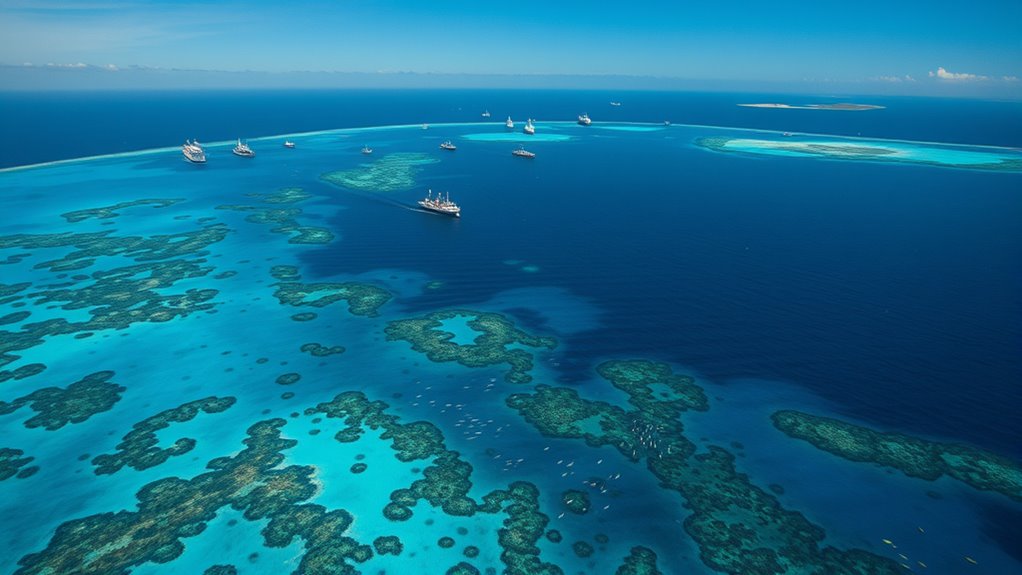

A global treaty has been agreed upon to protect 30% of the oceans by 2030, aiming to conserve marine ecosystems and promote sustainable use. It emphasizes international cooperation, shared responsibility, and the creation of protected areas to reduce threats like overfishing and pollution. The treaty also encourages involving indigenous communities and promoting scientific research. If you want to learn how this agreement can impact our planet’s future, keep exploring these promising conservation efforts.
Key Takeaways
- The treaty aims to protect 30% of the world’s oceans by 2030 through marine conservation frameworks.
- It emphasizes international cooperation, shared responsibility, and transparent decision-making for effective ocean governance.
- Designating protected zones helps ecosystems recover, reduce human impacts, and safeguard endangered species.
- Countries are required to report progress regularly and implement measures ensuring tangible conservation results.
- The treaty promotes inclusive governance by involving indigenous communities and ensuring equitable benefits from marine protected areas.
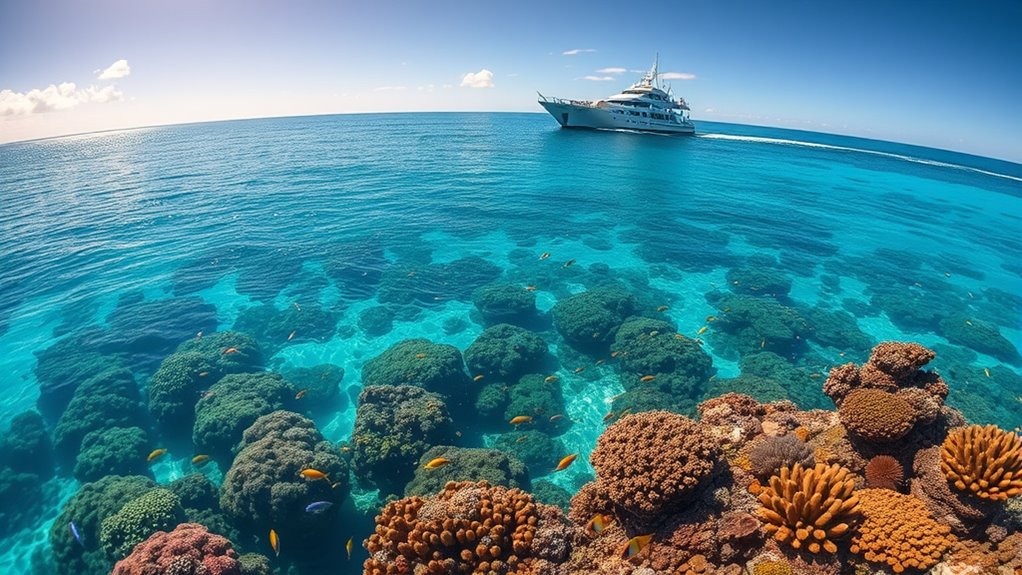
A global treaty has been proposed to protect 30% of the world’s oceans, marking a significant step toward safeguarding marine ecosystems. This ambitious initiative aims to establish a robust framework for marine conservation, ensuring that essential habitats and species receive the protection they deserve. As you consider the importance of ocean health, it becomes clear that effective ocean governance is essential to achieving these goals. The treaty emphasizes international cooperation, recognizing that no single country can preserve the ocean’s vast and interconnected ecosystems alone. It calls for shared responsibility, where nations commit to establishing protected areas and regulating activities that threaten marine life, such as overfishing, pollution, and habitat destruction.
You might wonder how this treaty influences marine conservation on a practical level. By designating protected zones, you help reduce harmful human impacts, allowing ecosystems to recover and thrive. These zones serve as sanctuaries for endangered species and breeding grounds for fish populations, which ultimately benefits global food security and biodiversity. The treaty also encourages the development of sustainable practices, so industries like fishing and shipping adapt to minimize their footprint. This collaborative approach promotes better ocean governance, where transparent decision-making and enforcement are prioritized, fostering trust among nations and local communities alike. Additionally, understanding the importance of marine protected areas can inspire greater support for conservation efforts worldwide.
Designating protected zones reduces human impact, helping ecosystems recover and ensuring sustainable practices for healthier oceans and communities.
As you follow the treaty’s implementation, you’ll see that it establishes clear targets and accountability measures. Countries will need to report progress regularly, ensuring that commitments translate into tangible results. This transparency helps maintain momentum and inspires further action. It also creates opportunities for scientific research and innovation, as protected areas become living laboratories for understanding marine ecosystems and climate change impacts. You’re part of a global effort that recognizes the intrinsic value of healthy oceans—not just for marine life, but for humanity’s well-being as well.
The treaty also underscores the importance of engaging indigenous peoples and local communities in conservation efforts. Their traditional knowledge and stewardship are essential in creating effective marine protected areas. By integrating diverse perspectives, you help foster inclusive ocean governance that respects cultural practices and promotes equitable benefits. Ultimately, this treaty represents a collective commitment to securing the future of our oceans, emphasizing that protecting 30% by 2030 is both an environmental necessity and a moral obligation. Your role, whether as a consumer, policymaker, or advocate, is fundamental in supporting the policies and actions that will make ocean preservation a reality for generations to come.
Top picks for "global treaty agre"
Open Amazon search results for this keyword.
As an affiliate, we earn on qualifying purchases.
Frequently Asked Questions
How Will Enforcement of the Treaty Be Monitored Globally?
You’ll find that enforcement of the treaty relies on satellite monitoring and compliance reporting. Satellites track activities like illegal fishing and habitat destruction, providing real-time data to authorities. Meanwhile, nations submit regular compliance reports to demonstrate their efforts. This combination guarantees transparency and accountability, making it easier to identify violations and enforce the treaty effectively on a global scale.
What Are the Economic Impacts on Fishing Industries?
You’ll likely see economic benefits over time as healthier oceans boost fish populations, supporting sustainable fishing. However, fishing restrictions may initially limit catches, impacting your income and industry profits. In the long run, protected areas can lead to more resilient ecosystems, creating new opportunities and stability. Balancing these restrictions with conservation efforts aims to guarantee both environmental health and economic sustainability for fishing communities like yours.
How Are Indigenous Communities Involved in the Treaty?
Imagine vibrant coastal villages where indigenous communities stand as guardians of the sea. They actively participate in shaping the treaty, ensuring their voices are heard. By emphasizing indigenous sovereignty and community participation, the treaty recognizes their essential role in ocean conservation. You see elders sharing stories beneath the sun, their knowledge guiding sustainable practices. Their involvement helps protect marine life, honoring tradition while fostering stewardship for future generations.
Will There Be Funding for Protected Area Management?
Yes, funding mechanisms are in place to support protected area management. You’ll find that the treaty emphasizes sustainable management strategies, ensuring resources are allocated effectively. These mechanisms help communities and governments develop and implement conservation plans, providing financial support for enforcement, monitoring, and habitat restoration. By focusing on robust management strategies, the treaty aims to create lasting protections that benefit ecosystems and local communities alike.
How Does This Treaty Interact With Existing Maritime Laws?
You’ll find that the treaty complements existing maritime laws by strengthening international cooperation aimed at protecting marine biodiversity. It sets global targets that encourage countries to align their national regulations, ensuring a unified effort to conserve ocean ecosystems. This interaction helps close legal gaps, promotes shared responsibilities, and fosters collaboration, making it easier to enforce protections and sustain marine biodiversity across different jurisdictions.
Conclusion
This global treaty is like planting a mighty seed in the ocean’s heart, promising a lush, thriving future. By protecting 30% of our waters, you become a guardian of the world’s blue treasure, ensuring it blooms for generations to come. Imagine the oceans as a vast, shimmering tapestry—each protected patch adding strength and color. Together, you hold the brush to paint a healthier, more vibrant world beneath the waves, where life continues to dance and flourish.