The collapse of the Antarctic ice shelf has revealed a rare ecosystem that has remained sealed beneath ice for over 100,000 years. This exposes ancient microbial life, offering unique insights into Earth’s hidden biospheres and climate history. These microbes show remarkable resilience and may hold keys to understanding past climate changes. If you want to discover more about how this discovery impacts our understanding of Earth’s deep environments, keep exploring the details behind this extraordinary event.
Key Takeaways
- The collapse exposes ancient microbial ecosystems sealed beneath the ice for over 100,000 years.
- Melting ice reveals hidden biospheres that have remained isolated in extreme conditions.
- These ecosystems provide insights into Earth’s early life and climate history.
- Studying the microbes helps understand resilience and adaptation in extreme environments.
- The event underscores climate change’s role in unveiling Earth’s deep, previously inaccessible ecosystems.
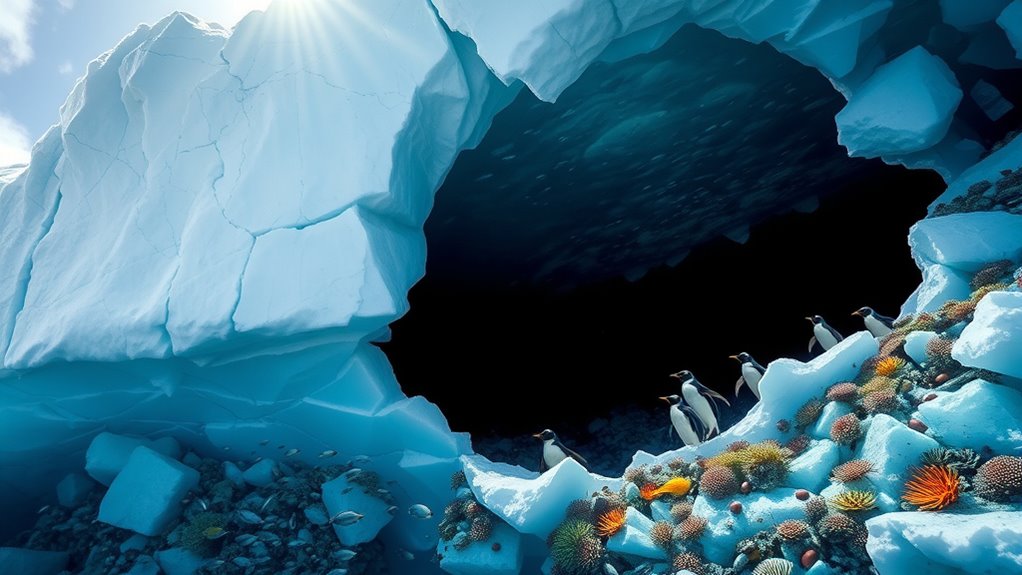
The Antarctic ice shelves are rapidly weakening, and recent collapses threaten to accelerate sea level rise worldwide. As these massive formations break apart, they reveal ecosystems that have remained sealed off for over 100,000 years, offering a rare glimpse into ancient microbial life. These microbes, trapped beneath thick layers of ice and ice-locked sediments, have survived through millennia of extreme cold and darkness, adapting in ways scientists are only beginning to understand. The uncovering of such ancient life forms highlights the profound impact of climate change, not just on the ice itself but on the hidden biospheres that have persisted in isolation. When the ice shelves melt or collapse, they expose these ancient microbial communities to sunlight and changing environmental conditions, potentially disrupting their fragile balance. This process underscores how climate change impacts extend beyond surface-level effects, infiltrating deep into Earth’s most secluded ecosystems.
You might not realize it, but the collapse of Antarctic ice shelves serves as a stark warning about the interconnectedness of climate systems. The melting ice accelerates warming in the region, creating a feedback loop that further destabilizes ice formations. As temperatures climb, the once-permanent ice cover becomes vulnerable to breakage, exposing microbial ecosystems that have remained intact for tens of thousands of years. These microbes are more than just relics; they play vital roles in the ancient Antarctic environment, influencing past climate conditions and holding genetic clues about Earth’s history. Their survival strategies provide insights into resilience and adaptation under extreme conditions, which could inform predictions about how life might endure in changing climates elsewhere.
The recent collapses also shed light on the potential for discovering unique life forms that have survived in extreme environments. As scientists study these exposed ecosystems, they’re uncovering microbial communities with ancient DNA signatures, revealing evolutionary links to life on Earth billions of years ago. This discovery emphasizes the importance of understanding climate change impacts, not only for current ecosystems but also for the hidden, ancient biospheres that may hold keys to our planet’s past and future. By observing how fragile these microbial habitats are and how swiftly they are exposed to new environmental pressures, you can see firsthand how climate change acts as a catalyst for revealing secrets buried beneath ice for millennia. The unfolding story of Antarctic ice shelf collapse is a reminder that the effects of climate change reach into the deepest layers of Earth’s history, reminding us of the urgent need to address global warming to preserve both visible and hidden ecosystems.
Frequently Asked Questions
How Will the Collapse Affect Global Sea Levels Long-Term?
The collapse will cause sea level rise, impacting coastlines worldwide long-term. As ice shelves break apart, more ice from the continent’s interior melts into the ocean, accelerating climate impact. You might notice higher flood risks, erosion, and habitat loss over time. This process underscores how Antarctic changes can profoundly influence global sea levels, making it essential for you to stay informed and support climate action to mitigate these effects.
What Undiscovered Species Might Be Revealed by the Ice Melt?
You might uncover ancient microorganisms and hidden marine species as the ice melts. These organisms have been trapped in the ice for thousands of years, preserved in icy vaults. When the ice recedes, you could discover microbes with unique adaptations or even previously unknown marine creatures, offering new insights into evolutionary history. This discovery could markedly expand your understanding of ancient ecosystems and biodiversity.
Could This Event Accelerate Climate Change Worldwide?
Imagine you’re watching a sci-fi movie where an ancient secret is liberated—this collapse could indeed accelerate climate change. As ice melts, it triggers climate feedbacks, releasing stored greenhouse gases and warming the planet further. While ecosystems show resilience, this sudden change might destabilize global climate patterns. You should stay alert, because such events underscore the urgent need to reduce emissions and protect our climate for future generations.
Are There Any Potential Human Health Risks From the Newly Exposed Ecosystem?
Yes, there are potential human health risks from the newly exposed ecosystem. You could be exposed to ancient pathogens that have been dormant for thousands of years, which might cause new or unexpected diseases. Additionally, unknown toxins released from the ancient environment could pose health threats. It’s essential to study this ecosystem carefully before any human interaction to prevent possible outbreaks or exposure to harmful substances.
How Can Scientists Predict Future Ice Shelf Collapses Accurately?
Think of predicting ice shelf collapses as reading a complex map. You can do this through ice shelf monitoring, which keeps a close eye on changes, and predictive modeling, like forecasting weather but for ice stability. Combining real-time data with advanced models helps you anticipate future collapses more accurately. This way, you stay ahead of potential shifts, understanding the icy landscape’s secrets before dramatic changes happen.
Conclusion
As you witness the Antarctic ice shelf’s collapse, remember that every action has consequences. You’ve uncovered a hidden ecosystem, long buried and now exposed, reminding us that nature’s secrets can resurface unexpectedly. Like the saying goes, “The more things change, the more they stay the same.” This event shows that even in the face of change, some truths remain buried until the right moment to reveal them. Stay aware—our actions shape the world’s future.