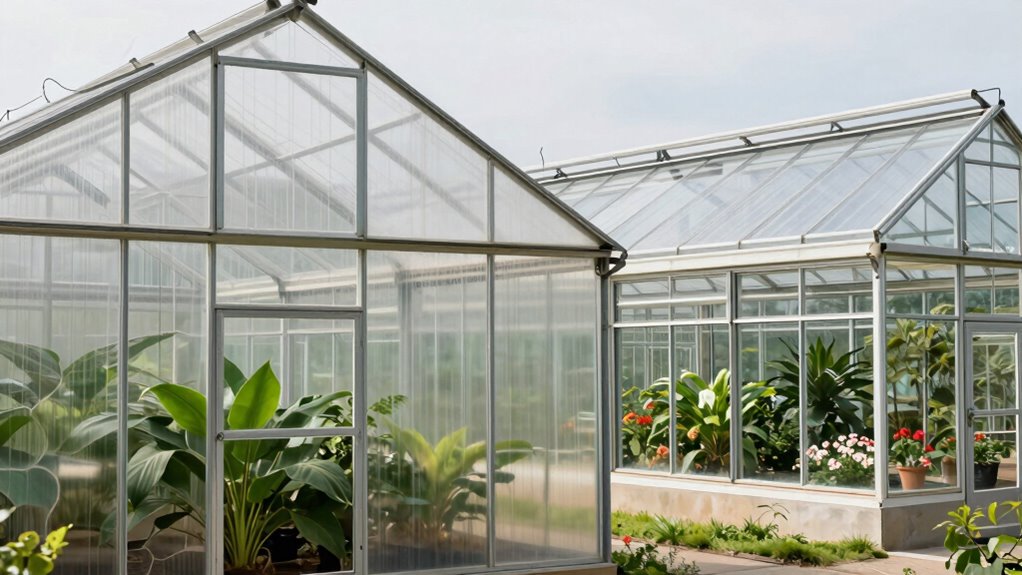

Switching from glass to polycarbonate greenhouses changes how you manage climate control, as polycarbonate handles temperature swings better and offers improved insulation, reducing heating and cooling costs. It’s more durable, less likely to break, and easier to install, which saves time and money. While glass provides better light and aesthetics, polycarbonate’s functional benefits might outweigh its appearance. Keep exploring to see how these differences can influence your greenhouse practices and long-term sustainability.

Prime made for students and young adults
- Fast, free delivery for dorm and study essentials
- Prime Video and Amazon Music included
- Member-only deals
Key Takeaways
- Polycarbonate greenhouses require less structural reinforcement due to their lightweight nature.
- Installation is quicker and more cost-effective with polycarbonate compared to heavier glass structures.
- Climate control practices shift towards leveraging polycarbonate’s insulation to minimize heating and cooling needs.
- Maintenance routines favor polycarbonate’s impact resistance, reducing repair frequency and operational disruptions.
- Aesthetic considerations may influence design choices, with glass offering higher light transmission and visual appeal.
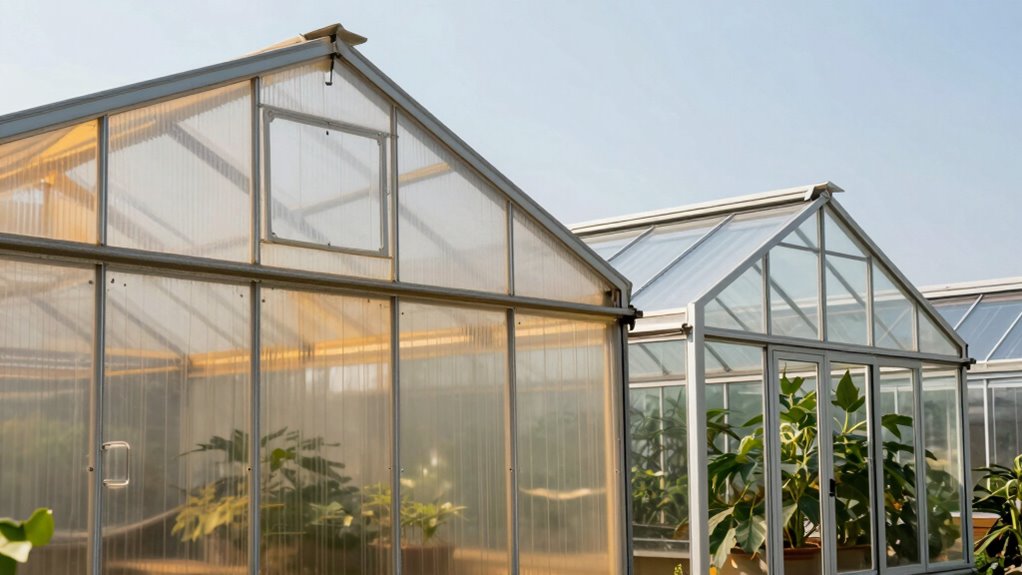
When choosing a greenhouse material, understanding the differences between polycarbonate and glass is essential, as each offers distinct advantages and drawbacks. Your decision impacts not just the structure’s durability but also how you manage climate and expenses. Polycarbonate, for example, provides greater climate flexibility. Its design allows it to withstand extreme temperatures, resist impacts, and diffuse sunlight evenly, creating a more stable environment inside. This means you can better control temperature fluctuations, reducing the risk of plant stress or damage during sudden weather changes. Glass, on the other hand, is less forgiving in harsh weather. It’s more susceptible to breakage and less effective at insulating, which can lead to temperature swings that are challenging to manage. If climate stability is a priority, especially in areas with unpredictable weather, polycarbonate offers a significant advantage.
Cost efficiency is another critical factor. Polycarbonate tends to be more affordable initially, especially because it’s lighter and easier to install. Its lightweight nature means you save on structural reinforcement, lowering overall construction costs. Plus, its durability reduces long-term maintenance and replacement expenses. Glass, while often considered more aesthetically pleasing and offering superior light transmission, can be more costly upfront due to material and installation expenses. Over time, glass can also incur higher costs from repairs or replacements if it’s broken or damaged. If budget constraints are a concern, polycarbonate’s combination of lower initial costs and reduced maintenance makes it a more cost-effective choice for many growers. Additionally, material properties influence not only durability but also how well the greenhouse supports sustainable practices and energy efficiency. Understanding the thermal performance of each material can help optimize energy consumption and environmental impact, especially as advancements in insulation technology continue to improve.
In practice, your choice between polycarbonate and glass influences your greenhouse’s daily operation. Polycarbonate’s resilience and flexibility mean fewer worries about weather-related damage and climate control challenges. It’s easier to keep a stable environment, which benefits plant health and growth consistency. Glass, conversely, might require additional heating or cooling systems to mitigate temperature swings, adding to operational costs and complexity. The impact of material choice isn’t solely about initial investment; it’s also about how you plan to manage climate and costs in the long run. If you prioritize durability, climate stability, and cost efficiency, polycarbonate often emerges as the smarter option. However, if you value maximum light transmission and aesthetic appeal, glass might still have its place, despite the higher costs and climate management challenges.
As an affiliate, we earn on qualifying purchases.
Frequently Asked Questions
How Do Maintenance Requirements Differ Between Polycarbonate and Glass Greenhouses?
You’ll find that maintenance differs mainly in cleaning protocols and pest control. Polycarbonate requires gentle cleaning with non-abrasive solutions to avoid scratches, and pest control is generally easier due to its impact-resistant surface. Glass needs more frequent cleaning to prevent dirt buildup and uses specific pest control methods, since cracks can harbor pests. Overall, polycarbonate tends to demand less intensive upkeep, but both need regular checks to keep your greenhouse in top shape.
Which Greenhouse Material Offers Better Resistance to Hail Damage?
Polycarbonate offers better hail resistance due to its superior material strength, making it more durable under storm conditions. Its impact resistance is considerably higher than glass, which tends to crack or shatter easily when hit by hail. If you’re concerned about hail damage, choosing polycarbonate can save you maintenance costs and prevent crop loss, as it withstands hail better and maintains its integrity longer in adverse weather conditions.
Are There Specific Climates Where One Material Outperforms the Other?
In hot, humid, and coastal climates, polycarbonate performs better due to its superior climate adaptability and resilience against moisture and salt. Glass, however, excels in colder, drier environments, offering classic clarity and material efficiency. You’ll find polycarbonate’s durability and insulation ideal for challenging conditions, whereas glass’s transparency and thermal properties shine in temperate zones. Choose based on your climate’s specific needs for best greenhouse growth.
How Do the Initial Costs Compare for Polycarbonate Versus Glass Greenhouses?
The cost comparison shows that polycarbonate greenhouses are generally more affordable upfront than glass options, making them a smart choice if you’re on a tight budget. Although glass greenhouses may cost more initially due to material and installation expenses, they often offer better long-term durability. When considering your budget considerations, weigh the initial costs against potential longevity and maintenance needs to choose the best fit for your greenhouse project.
What Are the Long-Term Durability Differences Between the Two Materials?
You might be surprised by the long-term durability differences. Polycarbonate often outlasts glass, resisting impacts and weathering better over time. Its material transparency remains stable, ensuring your greenhouse stays bright and functional. Plus, polycarbonate generally has a lower environmental impact due to its energy-efficient production and better insulation. This means fewer replacements and less waste, making it a smarter choice for sustainable, long-term greenhouse use.
glass greenhouse replacement panels
As an affiliate, we earn on qualifying purchases.
As an affiliate, we earn on qualifying purchases.
Conclusion
Choosing between polycarbonate and glass greenhouses depends on your needs, but did you know polycarbonate panels are up to 200 times more impact-resistant than glass? This means fewer breakages and lower maintenance costs. Whether you prioritize durability or clarity, understanding these differences helps you make an informed decision. By selecting the right material, you can create a more efficient, long-lasting greenhouse tailored to your gardening goals. Your plants will thank you for it!
impact resistant greenhouse glazing
As an affiliate, we earn on qualifying purchases.
As an affiliate, we earn on qualifying purchases.
As an affiliate, we earn on qualifying purchases.
Halloween Picks
halloween
As an affiliate, we earn on qualifying purchases.