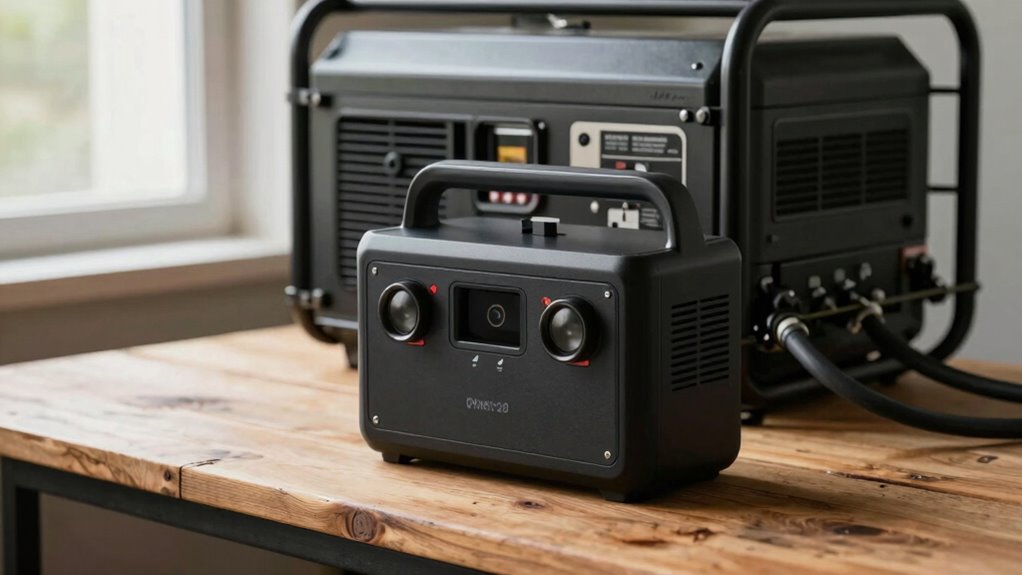

Deciding between a portable power station and a generator depends on your priorities. If you want an eco-friendly, quiet option that’s easy to move, a power station is ideal. But if you need large amounts of power and can handle noise and fuel refills, a generator suits you better. Your choice hinges on factors like sustainability, noise, capacity, and portability. Keep exploring, and you’ll discover more about which option fits your needs best.

Prime made for students and young adults
- Fast, free delivery for dorm and study essentials
- Prime Video and Amazon Music included
- Member-only deals
Key Takeaways
- Eco-friendliness and noise levels favor portable power stations over generators for environmentally conscious and noise-sensitive situations.
- Power capacity and fuel flexibility are better with generators for heavy-duty or long-term energy needs.
- Portability and ease of use are greater with power stations, ideal for outdoor activities and quick setup.
- Generators require more maintenance and produce noise, making them less suitable for quiet or short-term use.
- The decision hinges on priorities: sustainability and quiet operation versus raw power and extended runtime.
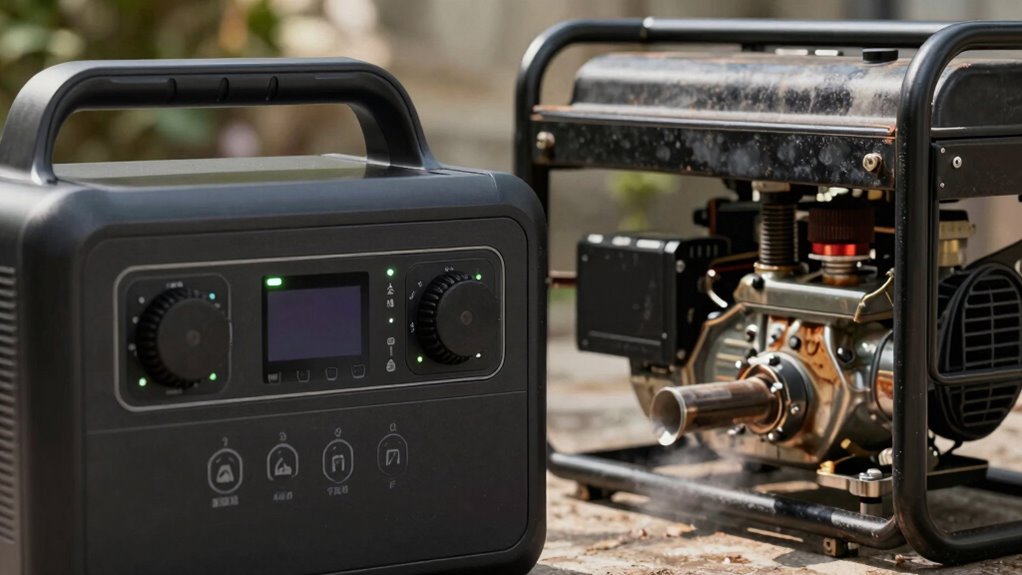
When choosing between a portable power station and a generator, understanding their key differences can help you make the right decision for your needs. One of the most important factors to weigh is the energy source each device uses. Portable power stations often rely on rechargeable batteries, which can be charged using renewable sources like solar panels or wall outlets. This makes them an excellent choice if you want an eco-friendly option that reduces your carbon footprint. Generators, on the other hand, typically run on gasoline, diesel, or propane, which are fossil fuels. They can produce substantial power but aren’t as sustainable over the long term, especially if you’re aiming to decrease environmental impact. If renewable sources are a priority, a portable power station offers a cleaner, quieter alternative, especially since they don’t emit fumes or pollutants during operation.
Portable power stations use rechargeable batteries, making them eco-friendly and ideal for reducing your carbon footprint.
Noise levels are another critical consideration. Generators tend to be loud, with some models reaching noise levels that can be disruptive, especially when you’re camping or in a residential area. This noise can be a major drawback if you need a device that operates quietly, whether for comfort or legal reasons. Portable power stations operate silently or with minimal noise, making them ideal for situations where noise restrictions are a concern. If peace and quiet are essential, a portable power station clearly has the advantage. Additionally, the maintenance and operational simplicity of portable power stations make them more convenient for everyday use or short-term emergencies. They require little more than recharging and occasional upkeep, whereas generators need fuel refills, oil changes, and regular maintenance to keep running smoothly. Moreover, the advanced battery technology used in these devices can also contribute to faster recharge times, further enhancing their practicality.
Size and portability are also significant factors. Portable power stations are generally lightweight, compact, and easy to carry, making them suitable for outdoor adventures, camping trips, or backup power on the go. Generators tend to be bulkier, heavier, and often require a stable setup, which can limit mobility. If you need a versatile power source that’s simple to transport, a portable power station is likely your best bet. However, if you need a high-capacity power solution for extended periods or larger appliances, a generator might be necessary despite its size and noise. Considering power capacity, both devices can vary greatly, influencing your choice based on your energy needs.
Ultimately, your decision hinges on what’s most important for your specific situation—whether it’s eco-friendliness and quiet operation or raw power and fuel-based flexibility. Both options have their merits, but understanding these differences helps you pick the right device to meet your needs efficiently and sustainably.
portable power station with solar charging
As an affiliate, we earn on qualifying purchases.
As an affiliate, we earn on qualifying purchases.
Frequently Asked Questions
How Long Do Portable Power Stations Typically Last on a Single Charge?
You can typically expect a portable power station to last between 3 to 8 hours on a single charge, depending on the device’s battery lifespan and the power draw. Its longevity depends on the number of charging cycles it has undergone—more cycles can reduce capacity. To maximize runtime, avoid overusing high-wattage devices and keep the power station properly maintained, ensuring it delivers peak performance during your outings.
Are Portable Power Stations Suitable for High-Power Appliances?
While portable power stations shine in portability, they aren’t ideal for high-power appliances. Their battery capacity limits how much energy they can deliver at once, making them unsuitable for heavy-duty devices. You might find yourself concerned about portability concerns if you try to power large appliances, as larger units become bulkier. For high-power needs, a generator offers the sustained, robust power you require, unlike most portable stations.
What Is the Environmental Impact of Generators Versus Power Stations?
Generators typically have a higher environmental impact than portable power stations because they burn fossil fuels, increasing your carbon footprint and emitting pollutants. In contrast, portable power stations often use renewable energy sources like solar panels, making them cleaner and more sustainable. By choosing a power station, you reduce harmful emissions and support environmental conservation, whereas generators contribute more to pollution and climate change.
Can Portable Power Stations Be Expanded for Higher Capacity?
Yes, you can expand portable power stations for higher capacity through battery scalability and storage expansion. You simply connect additional batteries or modules to increase energy storage, allowing you to power more devices or run longer during outages. This modular approach makes your power station adaptable, flexible, and capable of growing with your needs. By focusing on storage expansion, you guarantee your portable power station remains useful and efficient over time.
What Maintenance Is Required for Portable Power Stations and Generators?
You need to regularly check your portable power station or generator to guarantee peak performance. For power stations, monitor the battery lifespan and keep the unit charged according to manufacturer instructions. For generators, refuel with clean fuel to maintain fuel efficiency and prevent engine issues. Regularly inspect parts, clean filters, and perform necessary maintenance to extend lifespan and keep your devices running smoothly.
quiet portable power station for camping
As an affiliate, we earn on qualifying purchases.
As an affiliate, we earn on qualifying purchases.
Conclusion
Ultimately, choosing between a portable power station and a generator is like deciding whether to rely on a lighthouse or a bonfire—both illuminate your path, but one offers steady, clean energy, while the other fuels your adventure with raw power. Think about your needs, environment, and future plans. Just as the wise say, “Know thyself,” understanding your energy demands will guide you to the best choice, ensuring your outdoor ventures shine brightly without unexpected storms.
gasoline generator for outdoor use
As an affiliate, we earn on qualifying purchases.
As an affiliate, we earn on qualifying purchases.
compact portable power generator
As an affiliate, we earn on qualifying purchases.
As an affiliate, we earn on qualifying purchases.
Halloween Picks
halloween
As an affiliate, we earn on qualifying purchases.