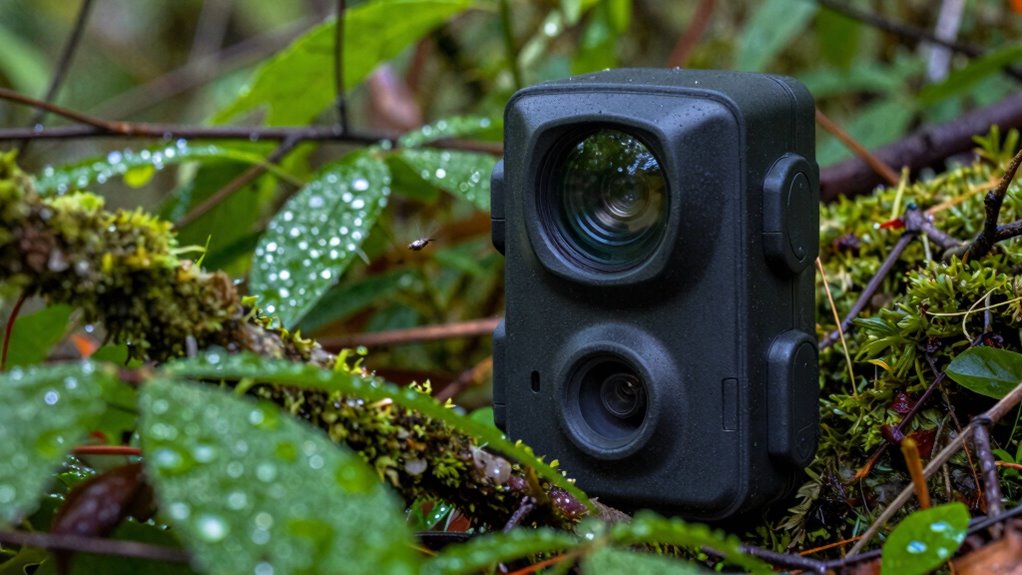
A wildlife camera is worth setting up when it’s placed strategically near water, trails, or feeding spots at eye level with an angle that covers a broad area without obstructions. You want a durable, weather-resistant model with long battery life or solar power to keep it running through harsh conditions. Good image quality and easy setup are essential for capturing clear footage. Keep your camera well-maintained to guarantee reliable, high-quality wildlife monitoring—learn more about optimizing your setup below.

Prime made for students and young adults
- Fast, free delivery for dorm and study essentials
- Prime Video and Amazon Music included
- Member-only deals
Key Takeaways
- Proper placement near wildlife activity areas ensures clear, high-quality footage and reduces false triggers.
- Weather-resistant design guarantees durability in harsh outdoor conditions for reliable long-term use.
- Extended battery life and power management minimize maintenance and maximize continuous monitoring.
- Advanced image quality and easy setup features improve species identification and streamline installation.
- Regular maintenance and durable construction protect your investment and ensure consistent, reliable performance.
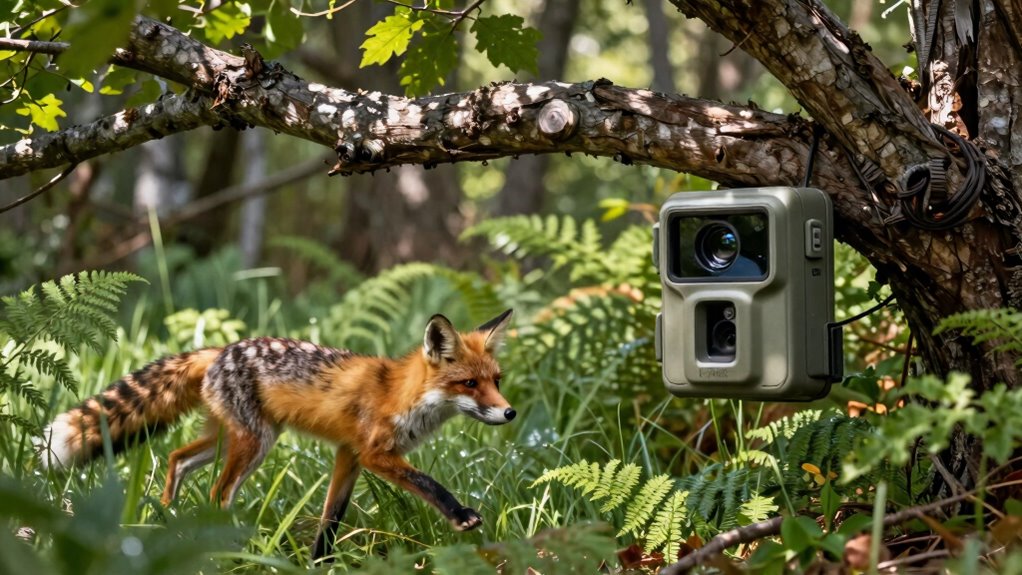
Setting up a wildlife camera can transform your outdoor experience by capturing incredible moments you might never see firsthand. To get the most out of your camera, paying attention to camera placement is essential. Think about where animals are most likely to pass through—near water sources, game trails, or feeding areas. Position your camera at a height that aligns with the animals’ typical eye level, usually around 2–3 feet off the ground. Make sure it’s angled to cover a broad area without obstructing the view with branches or tall grass. Proper camera placement not only increases your chances of capturing clear images but also helps avoid false triggers from moving objects like leaves or shadows. Weather resistance is also *vital*; your camera should withstand rain, snow, and dust, especially if you plan to set it up in rugged outdoor locations. Battery life is another *crucial* factor when considering what makes a wildlife camera worth setting up. The longer your camera can operate without needing a recharge or new batteries, the less you’ll have to check on it, which is especially helpful if you’re monitoring a remote spot. Look for models with extended battery life—some can run for weeks or even months on a single set of batteries. This *ensures* continuous footage collection during key wildlife activity periods, like dawn or dusk, without interruptions. If you’re using a solar-powered camera, check how well it integrates with sunlight to keep the batteries charged, particularly in shady or cloudy areas. Prioritize cameras with battery-saving features that allow you to customize settings, such as motion detection sensitivity and trigger delay, to optimize power consumption. Additionally, selecting a camera with advanced image quality can significantly enhance the clarity of your footage, making it easier to identify species and behaviors. Considering camera durability is also important, especially in harsh weather conditions, to ensure your investment remains functional over time. Incorporating proper maintenance routines can further extend the lifespan of your wildlife camera and ensure consistent performance. Moreover, choosing a camera with easy setup features can save you time and frustration during installation, particularly if you’re new to wildlife monitoring.
wildlife trail camera with long battery life
As an affiliate, we earn on qualifying purchases.
As an affiliate, we earn on qualifying purchases.
Frequently Asked Questions
How Long Do Wildlife Cameras Typically Last on a Single Battery?
Wildlife cameras typically last between a few weeks to several months on a single battery, depending on factors like battery longevity and power management. To extend their life, you should enable power-saving features, reduce activity triggers, and choose cameras with efficient power management systems. Using high-quality batteries also helps maximize usage time, ensuring your camera captures wildlife activity longer without frequent replacements.
Can Wildlife Cameras Record in Low-Light or Nighttime Conditions?
Yes, wildlife cameras can record in low-light or nighttime conditions thanks to night vision and infrared illumination. These features automatically activate when lighting drops, allowing you to capture clear images and videos of nocturnal animals without disturbing them. Infrared illumination emits no visible light, so animals remain undisturbed. This technology guarantees you get detailed footage regardless of the time, making your wildlife monitoring more effective and extensive.
Are Wildlife Cameras Weatherproof and Suitable for Outdoor Use?
Like a knight’s armor, a wildlife camera’s weatherproof design shields it from the elements, making it perfect for outdoor use. You’ll find that camera durability guarantees it withstands rain, snow, and dust, while battery efficiency keeps it running longer without frequent changes. With these features, you can confidently place your camera in any environment, capturing wildlife activity regardless of weather conditions, and ensuring your investment remains protected and functional.
What Is the Best Placement Height for Capturing Wildlife Activity?
You should place your wildlife camera at about 3 to 4 feet high for maximum activity capture. Use camouflage techniques to hide it from animals and humans, reducing disturbance. Adjust the camera angle slightly downward or upward to get clearer shots of animal paths or feeding areas. Regularly check and adjust the height and angle to guarantee it stays hidden and captures the most natural wildlife behavior.
Do Wildlife Cameras Have Features to Avoid False Triggers?
Wildlife cameras often include features to avoid false triggers, enhancing motion detection accuracy. Look for models with infrared sensors, adjustable sensitivity settings, and multiple detection zones. These features help filter out non-target movements like leaves or branches, ensuring you capture genuine wildlife activity. By choosing a camera with false trigger prevention, you’ll get clearer, more reliable footage, making your wildlife monitoring efforts more efficient and productive.
weatherproof wildlife camera with solar power
As an affiliate, we earn on qualifying purchases.
As an affiliate, we earn on qualifying purchases.
Conclusion
Setting up a wildlife camera isn’t just about capturing images—it’s about forging a connection with the wild world around you. When you choose a camera worth setting up, you open a window into nature’s secrets, witnessing moments that stir your soul and remind you of life’s fragile beauty. Think of it as planting a seed of curiosity; with patience, that seed blossoms into a lifelong appreciation for the wilderness. So, make it count—your adventure awaits.
easy setup trail camera for wildlife monitoring
As an affiliate, we earn on qualifying purchases.
As an affiliate, we earn on qualifying purchases.
high resolution wildlife camera with motion detection
As an affiliate, we earn on qualifying purchases.
As an affiliate, we earn on qualifying purchases.
Fall Picks
fall essentials
As an affiliate, we earn on qualifying purchases.