

Biodiversity isn’t just about counting species; it’s about creating stable ecosystems that can resist and recover from disturbances. When you preserve a variety of plants and animals, you boost resilience, so ecosystems bounce back from storms, droughts, or diseases more easily. Genetic diversity within species adds to this strength, helping populations survive tough conditions. If you want to understand how protecting these intricate connections keeps life-support systems functioning, keep exploring the deeper importance of biodiversity.

Prime made for students and young adults
- Fast, free delivery for dorm and study essentials
- Prime Video and Amazon Music included
- Member-only deals
Key Takeaways
- Biodiversity enhances ecosystem resilience, enabling it to withstand and recover from environmental disturbances.
- Genetic diversity within species increases the ability to adapt to changing conditions and stresses.
- Ecosystem stability relies on a diverse network of species that support and compensate for each other during crises.
- Protecting biodiversity safeguards the web of life, ensuring the continued functioning of life-support systems.
- Loss of biodiversity reduces resilience, making ecosystems more vulnerable to collapse and environmental shocks.
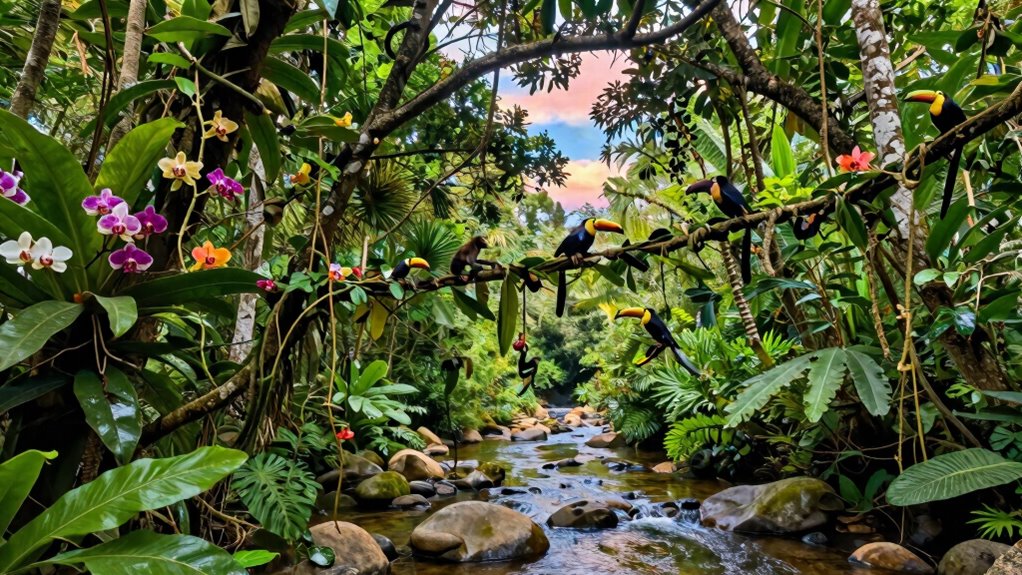
Have you ever wondered why biodiversity matters beyond just spotting a variety of species? It’s because biodiversity is fundamental to maintaining the stability of ecosystems. When we talk about stability, we’re referring to an ecosystem’s ability to withstand and recover from disturbances—like storms, droughts, or disease outbreaks. This resilience depends heavily on the diversity of life within that system. The more varied the species, the better your ecosystem can adapt to changes and bounce back after disruptions. This is where ecosystem resilience becomes crucial. A diverse ecosystem isn’t just a collection of different plants and animals; it’s a robust network capable of supporting each part during tough times. When one species declines or disappears, others can often fill its role, preventing the entire system from collapsing. If biodiversity drops, resilience diminishes, making ecosystems more vulnerable to environmental shocks.
You might also consider the importance of genetic diversity in maintaining stability. Every species is composed of individuals with genetic differences, which give rise to traits that help them survive under different conditions. The more genetic diversity a species has, the more likely some individuals can adapt to challenges like changing climate or new pests. This, in turn, supports the overall health of the ecosystem. For example, a plant population with high genetic variation can withstand drought better than a uniform one. This resilience at the genetic level ensures that populations don’t just survive but thrive amid adversity, ultimately bolstering the stability of the entire ecosystem. Maintaining genetic diversity is crucial for ecosystem resilience, as it provides the raw material for adaptation and survival in changing environments. Without this diversity, entire communities become fragile, and the risk of collapse increases.
Understanding that biodiversity isn’t just about seeing colorful birds or rare flowers helps you appreciate its role in stability. It’s a vital safeguard against environmental fluctuations and human-induced disturbances. When ecosystems are rich in species and genetic variation, they’re better equipped to handle stresses and recover quickly. Additionally, species interactions within diverse communities often create mutual benefits that enhance overall stability. That’s why conserving biodiversity isn’t just about protecting individual species; it’s about maintaining the resilient web of life that supports human existence as well. The health of the planet hinges on this balance—on the diversity that underpins stability. So next time you hear about endangered species or habitat loss, remember it’s not just about preserving nature’s beauty—it’s about securing the stability of the life-support systems we all depend on.
As an affiliate, we earn on qualifying purchases.
Frequently Asked Questions
How Does Biodiversity Influence Climate Change Mitigation?
Biodiversity helps you mitigate climate change by boosting genetic diversity, which strengthens species’ ability to adapt to environmental shifts. Healthy, diverse ecosystems are more resilient, meaning they can recover quickly from disturbances and continue sequestering carbon effectively. By preserving biodiversity, you support ecosystem resilience, ensuring ecosystems function at their best to absorb greenhouse gases and stabilize the climate for the future.
What Are the Economic Benefits of Biodiversity Conservation?
You gain economic benefits through biodiversity conservation by recognizing its true value. Economic valuation highlights how preserving diverse ecosystems boosts local economies, while ecotourism potential attracts visitors and generates revenue. Protecting biodiversity creates jobs, supports sustainable industries, and enhances ecosystem services like clean water and air. These benefits foster economic resilience, making conservation not just an environmental priority but a smart financial move that sustains communities and promotes long-term growth.
How Do Invasive Species Affect Ecosystem Stability?
Invasive species disrupt ecosystems by outcompeting native plants and animals, which destabilizes the natural balance. When invasive species take over, they often cause ecosystem disruption, leading to loss of biodiversity and the decline of native species. This imbalance reduces the ecosystem’s ability to recover from disturbances, affecting services like pollination, water filtration, and climate regulation. Your actions to prevent invasive species help maintain ecosystem stability and protect biodiversity.
Can Urban Areas Effectively Contribute to Biodiversity?
Yes, urban areas can effectively contribute to biodiversity through thoughtful planning. By creating urban green spaces, you provide habitats for various species, supporting city wildlife. Establishing city wildlife corridors connects these green areas, enabling animals to move safely and thrive. When you prioritize these features, you foster a healthier, more resilient ecosystem within the city, helping maintain biodiversity and ecosystem stability amid urban development.
What Role Do Keystone Species Play in Maintaining Stability?
Keystone species, such as keystone predators and ecosystem engineers, play a vital role in maintaining stability in ecosystems. You see, keystone predators control prey populations, preventing any one species from dominating, which keeps the ecosystem balanced. Meanwhile, ecosystem engineers modify habitats, supporting diverse life forms. Without these keystone species, ecosystems could become unstable, leading to loss of biodiversity and ecosystem collapse. Their presence guarantees resilience and long-term health of the environment.
ecosystem resilience educational kits
As an affiliate, we earn on qualifying purchases.
As an affiliate, we earn on qualifying purchases.
Conclusion
So, remember, biodiversity isn’t just about variety for its own sake; it’s about resilience, adaptability, and stability. It’s about creating ecosystems that can withstand change, recover from disruptions, and sustain life in all its forms. Embrace the complexity, support diversity, and recognize that thriving ecosystems depend on a balance of many parts working together. Because in the end, stability isn’t a static state—it’s a dynamic process built on the richness of life around you.
As an affiliate, we earn on qualifying purchases.
wildlife habitat preservation tools
As an affiliate, we earn on qualifying purchases.
As an affiliate, we earn on qualifying purchases.
Fall Picks
fall essentials
As an affiliate, we earn on qualifying purchases.