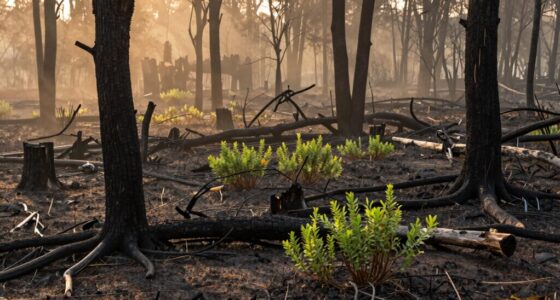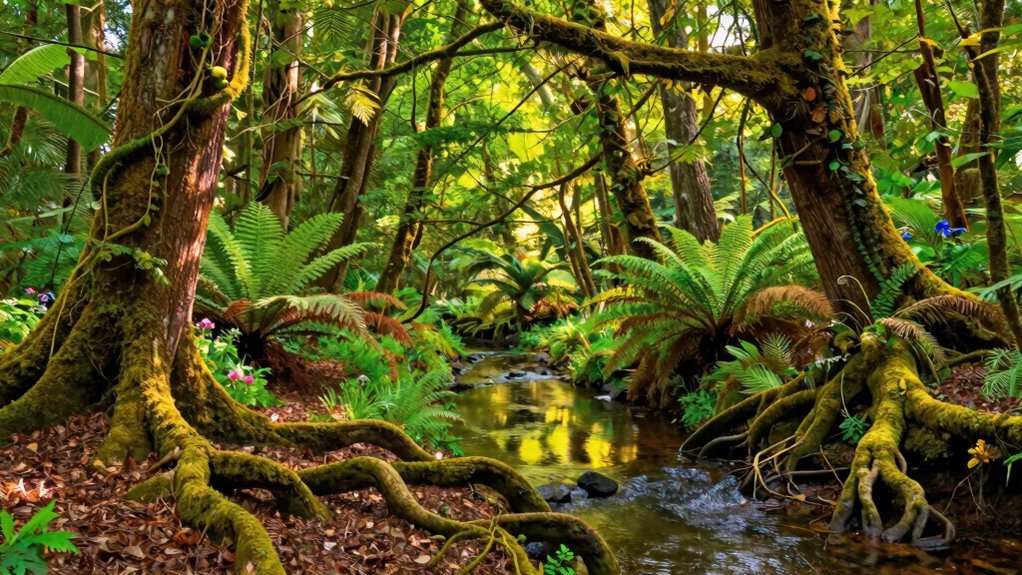

Forests do more than just store carbon; they support incredible biodiversity, acting as habitats for countless species. They help regulate your local climate by cooling the air and influencing rainfall. Forests also provide crucial ecosystem services like preventing soil erosion and supporting food sources and medicine. Their health impacts global climate regulation and resilience against extreme weather. Protecting forests is essential for a sustainable future—discover how their many roles keep Earth balanced and alive.

Prime made for students and young adults
- Fast, free delivery for dorm and study essentials
- Prime Video and Amazon Music included
- Member-only deals
Key Takeaways
- Forests support vast biodiversity, providing habitats for countless plant, animal, and microbial species beyond carbon storage.
- They regulate local and regional climates by moderating temperatures and influencing rainfall patterns.
- Forests sustain ecosystem services like soil stability, erosion prevention, and water filtration essential for environmental health.
- They act as natural air conditioners through transpiration, creating microclimates and mitigating urban heat islands.
- Protecting forests ensures the preservation of ecological balance and contributes to climate change mitigation beyond just carbon sequestration.
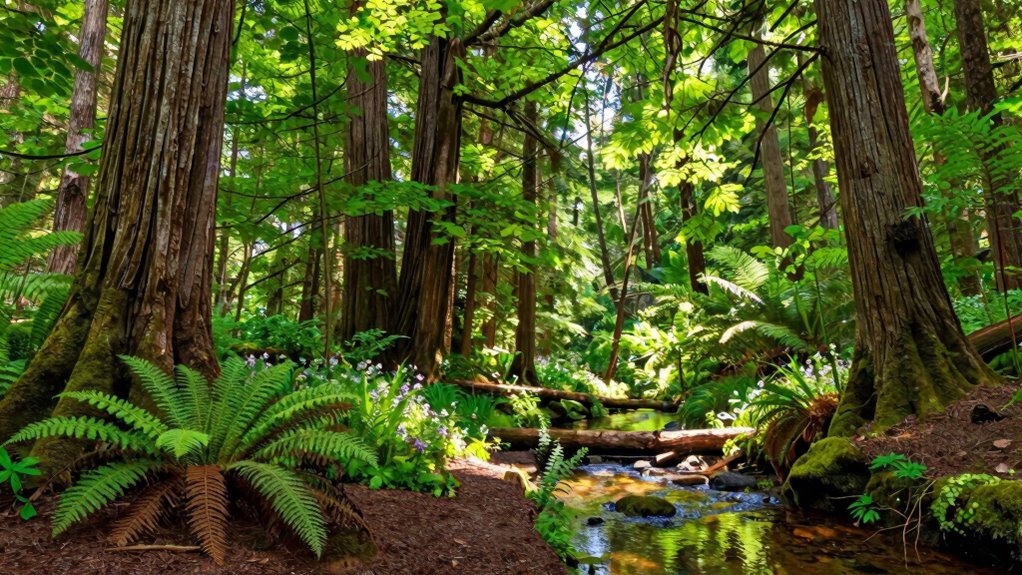
Have you ever wondered why forests are often called the lungs of the Earth? It’s because they do so much more than just absorb carbon dioxide; they’re vital to maintaining life on our planet. Forests are rich in biodiversity hotspots, meaning they host a vast array of plant, animal, and microbial species. This incredible diversity isn’t just beautiful—it’s essential for ecosystem resilience, food security, and medicinal resources. When you think about forests, know that they’re pivotal in supporting these thriving ecosystems that sustain life far beyond their boundaries. Protecting these biodiversity hotspots helps preserve global ecological balance and ensures that countless species, many yet undiscovered, continue to thrive.
Forests are vital biodiversity hotspots that support global ecological balance and countless undiscovered species.
Beyond their role in supporting life forms, forests are crucial players in climate regulation. They act as natural air conditioners, moderating temperatures and influencing weather patterns. When you walk through a lush forest, you’re experiencing a microclimate that’s cooler and more humid than surrounding areas. This isn’t coincidental; forests absorb sunlight and transpire water, which cools the air and boosts local humidity. This process helps mitigate the urban heat island effect in cities and stabilizes regional climates. Forests also influence rainfall patterns, encouraging precipitation that supports agriculture and water supplies. By doing so, they help prevent droughts and floods, providing a buffer against the extreme weather events linked to climate change. Ecosystem resilience is strengthened when forests maintain their health and diversity, allowing them to adapt to changing conditions and continue providing these vital services. Additionally, healthy forests contribute to biodiversity preservation, which is essential for maintaining ecological balance and resilience. The interconnectedness of these functions highlights the importance of forest health in sustaining our environment. A further benefit of maintaining forest health is that it supports the protection of soil stability, preventing erosion and land degradation that can threaten ecosystems and human communities alike. Recognizing that forests are complex systems, their health depends on the balance of various ecological processes, including the interconnectedness of species and habitats.
They’re also critical in storing carbon, but their benefits extend far beyond that. Forests act as massive carbon sinks, pulling CO2 from the atmosphere and reducing greenhouse gases that accelerate global warming. Their ability to regulate climate hinges on their size, health, and diversity. When forests are healthy and intact, they provide a natural buffer against the worst impacts of climate change, helping to stabilize global temperatures. Deforestation, on the other hand, diminishes these benefits, releasing stored carbon and disrupting local and global climate systems.
In essence, forests do more than just store carbon—they’re the backbone of ecological stability. They sustain biodiversity hotspots, regulate climate, and provide countless resources and services that benefit everyone. When you understand their full importance, it’s clear that protecting forests isn’t just about conserving trees; it’s about safeguarding the intricate web of life that keeps Earth habitable. Their health directly influences your own well-being, making forest conservation a vital part of fighting climate change and ensuring a sustainable future for all.
As an affiliate, we earn on qualifying purchases.
Frequently Asked Questions
How Do Forests Influence Local Weather Patterns?
Forests influence local weather patterns through forest microclimates and canopy shading. You’ll notice cooler temperatures beneath the canopy, as trees provide shade that reduces heat. Forests also increase humidity through transpiration, affecting local rainfall. These microclimates help stabilize the weather, making nearby areas more comfortable. By moderating temperature and moisture, forests shape local weather, benefiting ecosystems and communities alike.
What Role Do Forests Play in Preventing Soil Erosion?
When you realize that forests prevent soil erosion, it’s no coincidence—they’re nature’s safeguard. Their roots stabilize the soil, offering essential support against wind and water runoff. This root stabilization promotes soil preservation, ensuring nutrients stay put and preventing landslides or barren land. By maintaining healthy forests, you’re directly protecting the land beneath your feet, creating a resilient environment that sustains life and prevents erosion’s destructive effects.
Can Forests Help in Controlling Water Quality?
Yes, forests help control water quality through forest filtration and water purification. When you’re near forests, their roots filter pollutants and sediments from rainwater, improving water clarity. The vegetation absorbs excess nutrients and contaminants, reducing runoff into nearby water bodies. This natural filtration process helps maintain clean water sources, supporting aquatic life and human needs. Forests play a crucial role in ensuring healthy, high-quality water for ecosystems and communities alike.
How Do Forests Support Medicinal Plant Diversity?
Think of forests as vibrant tapestries, each thread representing medicinal biodiversity. You support plant conservation by exploring and preserving these unique habitats, ensuring diverse medicinal plants thrive. Forests serve as living pharmacies, housing countless species with healing properties. By protecting these lush ecosystems, you help sustain this natural pharmacy, safeguarding medicinal plant diversity for future generations and maintaining the delicate balance that keeps these essential resources alive and accessible.
What Is the Impact of Forests on Urban Air Quality?
Forests markedly improve urban air quality by reducing forest pollution and providing cleaner air. They filter pollutants and dust, helping you breathe easier. Additionally, forests promote urban cooling, lowering temperatures and mitigating the heat island effect. As a result, cities become healthier and more comfortable places to live. By preserving and expanding urban forests, you support better air quality and enjoy cooler, cleaner environments in your community.
urban heat island cooling products
As an affiliate, we earn on qualifying purchases.
As an affiliate, we earn on qualifying purchases.
Conclusion
So, next time you think about forests, remember they’re not just giant carbon vaults—they’re your life’s heartbeat, bursting with biodiversity, water, and countless benefits. Without forests, our world would collapse faster than a house of cards in a hurricane. They’re truly nature’s superheroes, tirelessly working behind the scenes to keep our planet thriving. Protecting them isn’t just wise; it’s the most important thing you’ll do to guarantee a vibrant future for all living things.
As an affiliate, we earn on qualifying purchases.
water filtration systems for home
As an affiliate, we earn on qualifying purchases.
As an affiliate, we earn on qualifying purchases.
Halloween Picks
halloween
As an affiliate, we earn on qualifying purchases.